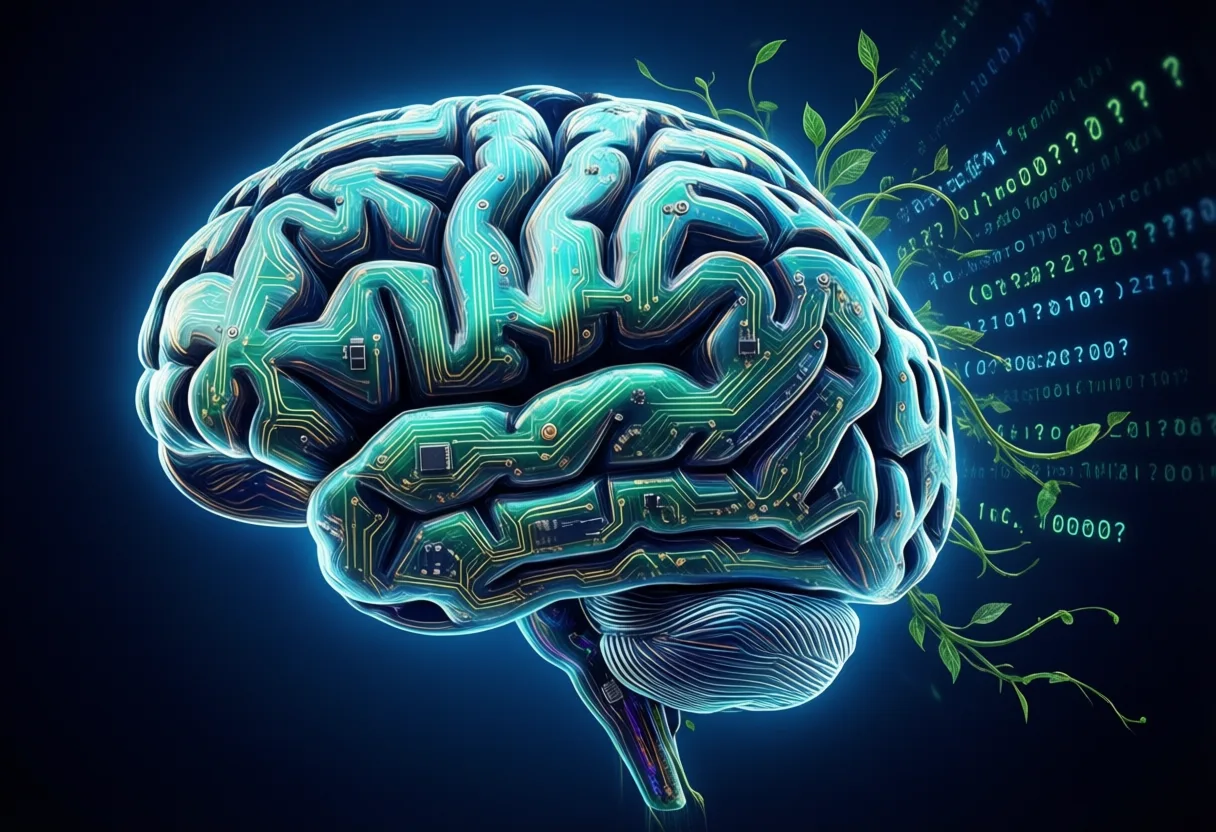
How well do you really understand artificial intelligence? You hear the term daily-on the news, in boardrooms, even at dinner tables. But can you separate the science from the sci-fi?
Think You Know Machine Learning? Test Yourself Here
We’re not asking if you’ve built a neural network or trained a transformer model. We’re asking if you grasp the logic beneath the hype. Because in an age where algorithms shape what we see, buy, and believe, Understanding AI isn’t optional-it’s essential.
This isn’t a test to trick you. It’s a mirror. A chance to see how clearly you see the machine.
Can You Tell the Difference Between AI and Human Decision-Making?
What happens when a loan gets denied? A human might cite income or credit history. An AI might weigh thousands of invisible correlations-some meaningful, some accidental.
Human decisions are messy. They’re shaped by emotion, ethics, and experience. AI decisions? They’re Math wrapped in data. Fast, scalable, consistent-but only as wise as the patterns it’s learned.
Can AI “understand” the consequences of saying no to a mortgage? No. It predicts based on past approvals, not empathy. It doesn’t feel the weight of a family turned away.
- Humans reason with context. AI operates within boundaries defined by training.
- Humans adapt instantly to new moral dilemmas. AI adapts only when retrained.
- Humans can explain their choices. AI often cannot-its logic buried in layers of computation.
So here’s the real question: When an AI makes a call, are we outsourcing judgment-or just calculation?
What Actually Powers Today’s Most Common AI Tools?
Open your phone. Scroll your feed. Play a song. Behind each action, Machine learning Models are guessing your next move.
These tools don’t “think.” They predict. And they do it by finding patterns in mountains of past behavior. The more data, the sharper the guess.
Most AI today is narrow-designed for one job. Recommendation engines, voice assistants, spam filters. They excel within their lane but stumble outside it.
- Your streaming service suggests shows based on users like you-not because it “gets” your taste.
- Virtual assistants parse speech using models trained on millions of voice samples.
- Fraud detection systems flag transactions by comparing them to known patterns of abuse.
None of this is magic. It’s Statistics, scale, and speed. And it’s why understanding the engine matters more than marveling at the motion.
For more on how these systems shape daily life, explore Applications of Artificial Intelligence: Top 5 Uses Today.
Where Does Supervised Learning Apply - and Where Does It Fail?
Imagine teaching a child to spot dogs. You show them photos-labeled “dog” or “not dog.” That’s supervised learning in a nutshell.
It works when you have Clear labels and consistent examples. Email spam detection? Perfect. Medical diagnosis from scans? Promising, but risky if the data’s flawed.
But what happens when the world changes? Or when the Training data Misses rare but critical cases?
- Supervised models struggle with edge cases-like a self-driving car seeing a deer for the first time.
- They inherit biases in the labels. If past hiring favored men, the AI will too.
- They assume the future looks like the past. When it doesn’t, they fail silently.
So yes, supervised learning powers much of today’s AI. But Accuracy on paper doesn’t guarantee safety in practice.
How Do Language Models Generate Coherent Responses?
Type a question. Get an answer that sounds human. Where does it come from? Not Knowledge. Not consciousness. But Probability.
Language models don’t “know” facts. They predict the next word-then the next-based on patterns from vast text datasets.
They’re like expert improvisers: fluent, confident, and occasionally full of nonsense.
- Each word is chosen because it statistically fits the sequence.
- The model has no memory of past interactions unless prompted.
- It can mimic expertise without understanding a single concept.
So when an AI writes an essay or summarizes a meeting, ask: Is this insight-or illusion?
What Makes a System “Intelligent” - and Who Decides?
Is a chess-playing AI smart? It beats grandmasters. But ask it to play checkers, and it’s lost.
Intelligence in machines isn’t singular. It’s Task-specific, brittle, and narrowly defined.
We call it “intelligent” when it does something we once thought only humans could do-until they do it.
- Intelligence in AI means performance, not awareness.
- There’s no universal test-just benchmarks for specific skills.
- The bar keeps moving. What amazed in 1997 is routine today.
So maybe the better question isn’t “Is it intelligent?” But “What problem does it solve-and how?”
Can AI Ever Be Truly Neutral or Bias-Free?
Bias isn’t a glitch. It’s Baked into the data, the design, and the decisions to deploy.
An AI trained on historical hiring data will reflect historical biases. Same for policing, lending, or healthcare.
Even with good intentions, neutrality is a myth. Because the past wasn’t neutral-and AI learns from the past.
- Algorithms can amplify inequality without malice.
- Removing sensitive variables (like race) doesn’t erase proxy patterns.
- Fairness is a human goal. AI only follows the math.
So the real work isn’t in cleaning data. It’s in Recognizing that AI reflects us-flaws and all.
What Happens When AI Systems Make Mistakes?
A self-driving car misreads a truck. A facial recognition system misidentifies a face. A hiring tool filters out qualified candidates.
Mistakes happen. But unlike human error, AI errors scale instantly and silently.
One flawed model can affect millions before anyone notices.
- Errors aren’t random-they cluster around edge cases and underrepresented groups.
- Debugging is hard when the logic is distributed across millions of parameters.
- Accountability gets murky. Who’s responsible-the developer, the user, the data?
The danger isn’t that AI fails. It’s that we trust it before we understand How It fails.
How Is AI Used Behind the Scenes in Daily Digital Life?
You don’t need to “use AI” to be shaped by it. It’s already in the shadows-curating, filtering, deciding.
Every scroll, click, and search feeds systems that learn how to keep you engaged.
- Social media feeds are optimized by AI to maximize attention.
- Search engines rank results using models trained on user behavior.
- Customer service chats often start with AI parsing your intent.
These systems aren’t passive. They’re Shaping what you see, think, and do-without asking.
For more on how AI quietly influences your world, explore Applications of Artificial Intelligence: Top 5 Uses Today.

What Are the Limits of Current Generative Models?
AI can write poetry, paint portraits, and compose music. Impressive. But is it creative?
Generative models remix-not invent. They’re Dreams built on data, not imagination.
They can’t want. Can’t feel. Can’t mean what they say.
- They lack intent. A poem is just a sequence of likely words.
- They hallucinate facts-confidently and convincingly.
- They can’t reflect on their output. There’s no “self” to do the reflecting.
So when an AI generates a script or designs a logo, remember: it’s not creating. It’s Recombining.
Where Should Humans Still Stay in the Loop?
In medicine, law, journalism-high-stakes fields where mistakes cost lives or liberty.
AI can draft, suggest, analyze. But Judgment, ethics, and empathy remain human.
The best systems don’t replace people. They empower them.
- Doctors use AI to flag tumors-but interpret results in context.
- Journalists use AI to parse data-but decide what’s newsworthy.
- Judges get risk assessments-but weigh them against fairness.
The loop isn’t a backup. It’s the Last line of defense.
Beyond the Quiz: Why Foundational Knowledge Matters
This wasn’t just a test of facts. It was a test of clarity. Of skepticism. Of responsibility.
AI isn’t coming. It’s here. And it’s shaping decisions in ways most people don’t see-or understand.
You don’t need a PhD to get it. But you do need to ask: What’s really happening behind the screen?
Because the future won’t be decided by machines alone. It’ll be shaped by those who understand them.
And that, ultimately, is the most important test of all.
Think You Know AI? These Brain-Tickling Facts Might Surprise You
How Smart Are the Machines We’re Building?
Artificial intelligence isn’t just about robots taking over-it’s already part of your daily life in ways you might not notice. Ever used a smartphone keyboard that predicts your next word? That’s a simple form of AI learning from how you type. The idea behind machine learning is surprisingly straightforward: instead of programming every single rule, we let systems learn patterns from data. One early “aha” moment came in the 1950s when a computer learned to play checkers better by playing against itself-essentially teaching Itself Through trial and error.
Quirky Moments in AI History
AI hasn’t always been smooth sailing. In fact, there was a period called the “AI winter” when funding dried up because early hype didn’t match reality. Researchers promised machines that could think like humans, but the tech just wasn’t ready. Fast forward to today, and AI can generate art, write poetry, and even mimic voices-but it still struggles with basic common sense. For example, an AI might know that cats purr, but not understand why one would stop if the battery in a robotic toy runs out. That gap between pattern recognition and real understanding keeps engineers busy.
Why Quizzes Make AI Smarter (and More Fun)
Testing AI knowledge isn’t just for humans-it helps improve the systems too. When developers quiz AI models with different questions, they uncover blind spots and biases hidden in the training data. Some AI chatbots have even taken standardized tests, scoring surprisingly well on some sections while failing others in bizarre ways. One famously answered complex science questions correctly but tripped up on simple arithmetic. So next time you take an AI quiz, remember: you're not just being tested-your answers might help shape smarter machines down the line. Explore more stories, videos, and creators on Loaded.
Frequently Asked Questions
What is the main difference between human and AI decision-making?
Human decisions are shaped by emotion, ethics, and experience, while AI decisions are math wrapped in data. AI operates within boundaries defined by training and lacks empathy or contextual reasoning.
How do language models generate human-like responses?
Language models predict the next word based on patterns from vast text datasets. They do not understand concepts or possess memory beyond the current input.
Can AI be truly neutral or free of bias?
No, bias is baked into AI through data, design, and deployment decisions. AI learns from the past, which was not neutral, and can amplify existing inequalities.
What are the limits of current generative AI models?
Generative models remix existing data rather than inventing or imagining. They lack intent, cannot feel or reflect, and often hallucinate facts confidently.
This article was produced with AI assistance. How Neuron Magazine uses AI.
Malik dissects how artificial intelligence transforms decision-making in governments and corporations, tracking algorithmic power shifts and policy gaps. He writes with clarity and urgency, making high-stakes tech strategy accessible without oversimplifying its risks.