
What does it take for a machine to learn? Not just follow instructions-but truly learn, adapt, and improve?
We’re not waiting for the future. It’s already here, running in data centers, shaping search results, driving cars, and diagnosing diseases. And at the heart of it all? Artificial intelligence training-the invisible forge where raw data becomes intelligent behavior.
How Do Machines Learn to Think Like Humans?
The Hidden Engine Behind Smarter Algorithms
Can a computer ever Think? Not like us-not with emotion or consciousness-but can it mimic the way we learn from experience? Yes. And the mechanism is simpler than you might think.
Machines don’t “understand” in the human sense. They detect patterns. They adjust probabilities. They tune millions of tiny switches-called parameters-Until Their output matches what we expect.
This process isn’t magic. It’s math, scaled to planetary levels.
- A machine sees thousands of cat photos.
- It adjusts internal weights to recognize edges, shapes, textures.
- Over time, it learns: This Combination means “cat.”
It’s not unlike how a child learns-but faster, broader, and without awareness.
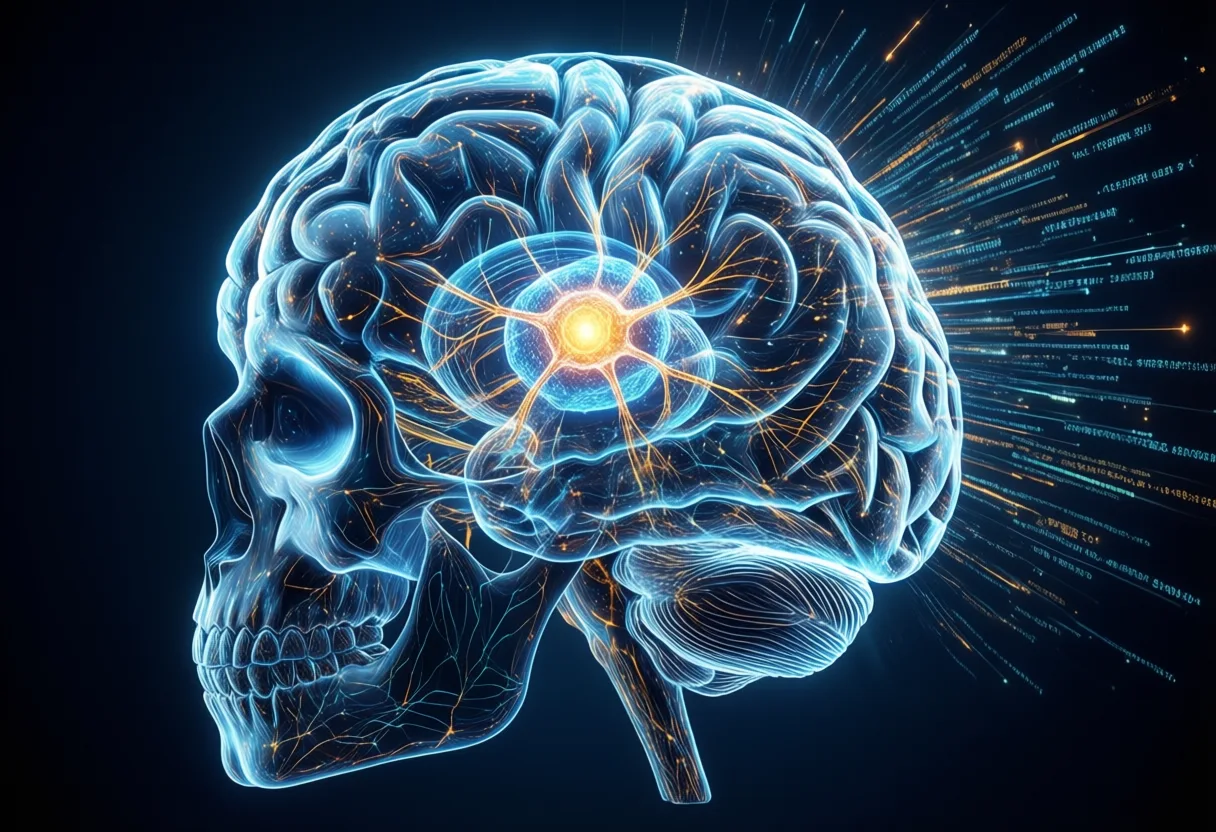
The engine driving this? Neural networks. Inspired by the brain’s structure, these systems use layers of interconnected nodes to process information. Each layer extracts more complex features-from pixels to concepts.
And the fuel? Data, computation, and feedback. Without them, no learning happens.
But how does this training actually work? What turns a blank model into a decision-making machine?
What Is AI Training, Really?
Breaking Down the Learning Loop
Imagine teaching a student to play chess. You don’t just hand them the rules and expect mastery. You let them play, lose, adjust, and play again.
AI training follows the same loop: Input, prediction, error, correction.
At the start, the model is clueless. It guesses randomly. But every guess is measured. Was it right? Close? Way off?
The difference between the guess and the truth is the Error. That error is sent backward through the network-a process called backpropagation-tweaking each parameter to reduce future mistakes.
This happens millions, even billions, of times.
Each cycle sharpens the model’s instincts. It’s like tuning a radio: at first, static. Then, faint signals. Finally, clear sound.
Three core ingredients make this possible:
- Labeled data – Examples with known answers (e.g., “this image is a dog”).
- Loss function – A scoreboard that measures how wrong the model is.
- Optimizer – The algorithm that decides how to adjust the model to lower the score.
Without any one of these, the loop breaks.
And this loop isn’t passive. It’s relentless. Brutal, even. The model gets punished for every mistake-until it learns to avoid them.
Why Data Shapes Intelligence
The Role of Patterns in Machine Mastery
Garbage in, garbage out. That old rule still rules AI.
No matter how powerful the hardware or elegant the code, A model is only as good as the data it learns from. Biased data? Biased AI. Incomplete data? Fragile intelligence.
Data is the curriculum. It defines what the machine Can Know.
Think of it like a student who’s only ever read history books from one country. Their worldview will be narrow. Skewed. Missing key perspectives.
AI faces the same risk.
Patterns emerge not from truth, but from repetition. If a model sees more images of men in labs than women, it may “learn” that scientists are male. Not because it’s true-but because the data says so.
And patterns aren’t always obvious. They can be subtle: lighting, background, even pixel noise. Sometimes, the model learns the Wrong Pattern-like identifying cows only when there’s grass in the picture.
So quality matters. Diversity matters. Context matters.
- More data usually helps-but only if it’s relevant.
- Clean data prevents noise from distorting learning.
- Balanced data ensures fairness across categories.
The goal isn’t just volume. It’s Representative truth.
Because intelligence isn’t just about accuracy. It’s about reliability across real-world conditions.
When Mistakes Fuel Progress
Learning from Errors in Neural Networks
Would you rather never fail-or learn from every failure?
AI chooses the second path. Mistakes aren’t setbacks-they’re signals.
Every error is a clue. A direction. A step toward improvement.
In neural networks, errors flow backward, recalibrating connections. This is how the model evolves: not by being told the answer, but by feeling the cost of being wrong.
It’s a process of trial, error, and adjustment-like a sculptor chipping away at stone.
Consider image recognition. At first, the model might confuse a raccoon for a panda. But the error triggers a cascade of tiny corrections. Next time, it’s less likely to repeat the mistake.
Over thousands of iterations, these micro-adjustments add up. The model doesn’t memorize-it Generalizes.
And here’s the twist: Too few errors, and learning stalls. If the data is too easy, the model doesn’t grow. It needs challenge. Pressure. Friction.
That’s why training datasets include edge cases-blurry images, odd angles, rare conditions. These are the moments that force adaptation.
Failure, in AI, isn’t the opposite of success. It’s the engine of it.
Can Systems Improve Without Supervision?
Exploring Unsupervised and Reinforcement Approaches
What if you had no answer key? No labels. Just raw, unstructured reality.
That’s the world of unsupervised learning. And it’s where AI starts to mimic how humans learn-through observation, not instruction.
Instead of being told “this is a cat,” the model looks for clusters. Patterns. Anomalies. It asks: What groups naturally exist in this data?
It might discover that certain pixel patterns appear together. That some sounds repeat in similar contexts. That user behaviors fall into distinct profiles.
No labels needed. Just structure.
Then there’s reinforcement learning-where AI learns by doing, like an athlete training through repetition.
- The model takes an action.
- It receives a reward or penalty.
- It adjusts its strategy to maximize future rewards.
This is how AI masters games like chess or Go-by playing millions of games against itself, learning which moves lead to victory.
No human tells it what to do. It figures it out.
And in the real world? Robots use this to walk. Algorithms use it to optimize delivery routes. Systems learn to navigate complexity without a script.
But here’s the catch: These methods are slower, riskier, and harder to control. Without clear feedback, progress can stall-or go off track.
Yet they’re essential. Because the real world rarely hands us labeled examples.

The Balancing Act of Overfitting and Generalization
Avoiding the Trap of Memorization
What’s worse: a student who memorizes answers but can’t apply them-or one who guesses wildly?
In AI, this is the battle between Overfitting and underfitting.
Overfitting happens when a model learns the training data Too well-memorizing noise, quirks, and irrelevant details. It performs perfectly in class but fails the real test.
It’s like a student who aces practice exams but crumbles on a new question.
Underfitting is the opposite: the model is too simple. It misses patterns. It’s rigid, inaccurate, and blind to nuance.
The goal? Generalization. The ability to apply learning to new, unseen situations.
How do we achieve it?
- Validation sets Test performance on fresh data during training.
- Regularization Penalizes over-complexity, keeping the model lean.
- Dropout layers Randomly disable neurons, forcing redundancy and resilience.
It’s a constant tug-of-war. Push too hard for accuracy, and you risk memorization. Pull back too far, and the model stays dumb.
The sweet spot? A model that captures True Patterns-not just coincidences.
Because intelligence isn’t about perfect recall. It’s about Adapting to the unknown.
From Recognition to Reasoning
Scaling Capabilities Through Layered Learning
Can AI reason? Not like humans-yet. But it’s climbing the ladder.
Early models recognized patterns: This is a face, that’s a voice. Now, deeper networks are starting to chain ideas together.
How? Through Layered learning.
Each layer in a neural network extracts higher-level features. The first sees edges. The next, shapes. Then objects. Then scenes. Then context.
It’s like building a skyscraper-each floor rests on the one below.
In language models, this means going from letters to words, to phrases, to meaning, to intent. A system doesn’t just recognize “rain” - it understands Why Someone might check the forecast.
These deep networks can now:
- Link cause and effect (“The road is wet Because It rained”).
- Follow multi-step logic (“If A, then B; if B, then C”).
- Generate plausible continuations (“She left her umbrella because…”).
But reasoning isn’t just chaining words. It’s Consistency, coherence, and common sense. And that’s still a work in progress.
Current models can Simulate Reasoning-by predicting what a reasoning being would say. But they don’t Know They’re reasoning.
Still, the trajectory is clear: from recognition, to prediction, to inference.
And each layer brings us closer.
What Holds AI Back from True Understanding?
Limits of Current Training Frameworks
We’ve built machines that Act Intelligent. But do they Understand?
No. Not yet.
Today’s AI lacks Context, consciousness, and causality. It sees correlations-but doesn’t grasp Why Things happen.
It can write a poem about love-but has never felt it.
It can diagnose a disease-but doesn’t know what pain is.
The training frameworks we use are powerful, but narrow. They optimize for accuracy on specific tasks, not broad comprehension.
And they’re data-hungry. Energy-intensive. Brittle when faced with the unexpected.
Three major limits stand in the way:
- Lack of world models – AI doesn’t build internal simulations of how things work.
- No persistent memory – Learning resets between tasks; no lifelong accumulation.
- Shallow causality – It knows What Follows What, but not Why.
A child learns that pushing a cup off a table causes it to fall. AI would need thousands of examples to learn the same-without understanding gravity.
We’re teaching machines to imitate, not to comprehend.
And imitation has limits.
Until AI can build its own mental models-test hypotheses, imagine alternatives, reflect on errors-it will remain smart, but shallow.
How Real-World Feedback Closes the Loop
Iterative Refinement in Dynamic Environments
What happens when AI leaves the lab?
It gets tested. Hard.
In controlled environments, models shine. But the real world is messy. Unpredictable. Full of surprises.
That’s why Feedback loops are critical.
When an AI recommends a product, and the user ignores it-that’s data. When a self-driving car hesitates at a crosswalk, that’s a signal.
Real-world performance feeds back into training. Models are retrained, refined, redeployed.
This cycle turns static intelligence into Adaptive intelligence.
Consider search engines. Every click, every skipped result, every correction trains the system. Over time, it learns what users Really Want-not just what they type.
Same with voice assistants. Misheard commands? They’re logged, analyzed, used to improve.
Even failures become fuel.
And unlike humans, AI can scale this learning across millions of users-simultaneously.
But speed brings risk. Bad feedback can corrupt the model. Biased behavior can amplify.
So monitoring is key. Safeguards. Human oversight.
Because learning doesn’t stop at deployment. It accelerates.
Beyond Imitation: Building Adaptive Intelligence
Toward Lifelong Learning Systems
Today’s AI learns in bursts. Train. Deploy. Repeat.
But real intelligence learns continuously. From every conversation. Every mistake. Every new experience.
The next leap? Lifelong learning systems.
Imagine an AI that doesn’t forget old skills when learning new ones. That builds knowledge cumulatively-like a scientist, not a student cramming for a test.
Current models suffer from Catastrophic forgetting-learn Spanish, and they “forget” French.
We need architectures that allow Progressive knowledge integration.
Systems that:
- Retain core skills while adding new ones.
- Transfer learning across domains (e.g., use vision knowledge to improve robotics).
- Self-assess when they’re uncertain-then seek clarification.
This isn’t just about more data. It’s about smarter learning strategies.
And it’s not science fiction. Early research is exploring neural plasticity, memory replay, modular networks.
The goal? Machines that learn like humans-gradually, flexibly, endlessly.
Not just trained. Educated.
The Next Frontier: Smarter, Faster, More Efficient Learning
We’re hitting limits. Not of intelligence-but of cost.
Training today’s largest models demands massive energy, time, and hardware. Is this sustainable?
No.
The future isn’t bigger. It’s Smarter.
We need algorithms that learn faster, with less data, and less power.
Think: a child learns to recognize a giraffe from one picture. AI needs thousands.
That gap is unacceptable.
The next breakthrough won’t come from scaling up-it’ll come from Scaling insight.
Efficient architectures. Better initialization. Meta-learning-where models learn how to learn.
We’re moving from brute force to elegance.
And with it, AI will become more accessible, more adaptable, more human-like in its efficiency.
Not just smarter machines. Wiser ones.
The age of artificial intelligence training is just beginning. And the best is not behind us-it’s ahead.
How AI Learns to Think
Learning from Mistakes, Just Like Us
Artificial intelligence training might sound like teaching robots in a sci-fi movie, but it’s closer to how humans learn-through trial and error. AI systems start with simple rules and get better by making countless guesses, checking results, and adjusting their internal settings. This process, called machine learning, relies on massive amounts of data so the system can spot patterns and improve over time. For example, an AI trained to recognize cats doesn’t memorize cat photos-it learns which features, like pointy ears or whiskers, tend to appear together.
The Power of Neural Networks
At the core of most modern AI is something inspired by the brain: artificial neural networks. These aren’t physical neurons but layers of digital “nodes” that pass information back and forth. During training, connections between nodes are strengthened or weakened based on how accurate the AI’s answers are. It’s kind of like tuning a guitar-one small adjustment at a time until everything sounds right. Some of today’s largest models have hundreds of billions of these connections, making them incredibly good at tasks like translating languages or generating text.
Training Takes Serious Power
Here’s a fun twist: training a single AI model can use as much electricity as several homes consume in a year. That’s because the math behind learning happens billions of times per second, requiring powerful computers running nonstop for days or even weeks. But once trained, the final AI can run on a smartphone or tiny device, doing things like predicting your next word or sorting photos. It’s like raising a racehorse-intense effort upfront, but then it runs fast on its own.
Frequently Asked Questions
How do machines learn to recognize patterns like cats in images?
Machines learn by adjusting internal weights to recognize edges, shapes, and textures after seeing thousands of labeled cat photos. They detect patterns in data rather than memorizing images.
What is the role of errors in artificial intelligence training?
Errors are used to improve the model through backpropagation, where each mistake triggers adjustments to reduce future errors. Mistakes are essential signals that drive learning.
What are neural networks and how do they work?
Neural networks are systems of interconnected nodes inspired by the brain. They process information in layers, extracting increasingly complex features from raw input like pixels to concepts.
Can AI learn without labeled data or supervision?
Yes, through unsupervised learning, AI finds patterns and clusters in unlabeled data. Reinforcement learning also allows AI to learn by doing, using rewards and penalties to guide behavior.
This article was produced with AI assistance. How Neuron Magazine uses AI.
Malik dissects how artificial intelligence transforms decision-making in governments and corporations, tracking algorithmic power shifts and policy gaps. He writes with clarity and urgency, making high-stakes tech strategy accessible without oversimplifying its risks.