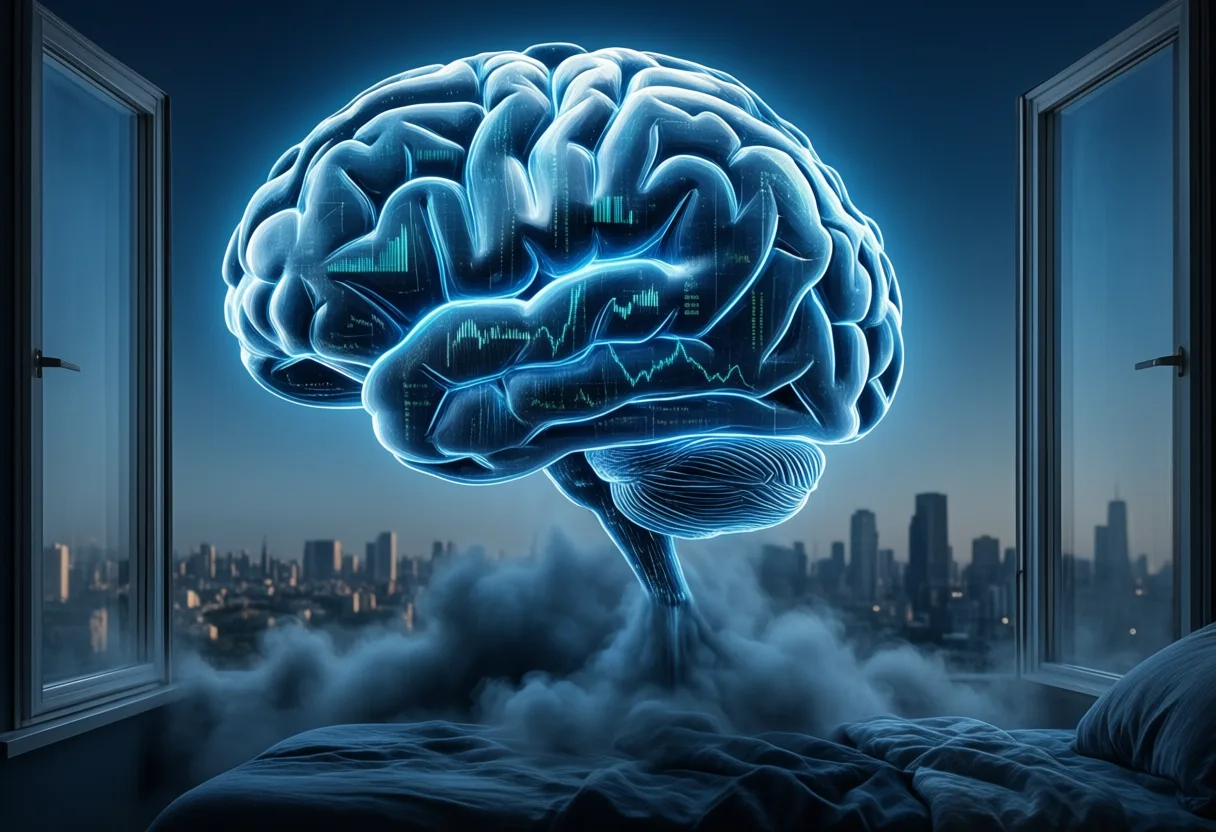
How Much Sleep Do We Really Need - And Can We Catch Up on Weekends?
Sleep is not a luxury. It is a biological imperative, as essential to survival as oxygen or water, and yet one of the most commonly sacrificed rhythms in our modern lives. The Body’s Need for rest unfolds like a carefully calibrated experiment: too little, and systems begin to misfire; too much, and cognitive sharpness dulls, as if the brain has oversaturated its circuits.
Most adults require between seven and nine hours of sleep per night To maintain optimal function across cognitive, Metabolic, and immune domains. This range isn't arbitrary-it reflects decades of observational and experimental data showing that individuals who consistently fall below this threshold face increased risks of cardiovascular disease, insulin resistance, and mood disorders. The brain uses this quiet time to flush out metabolic waste through the glymphatic system, consolidate memories, and recalibrate neural networks, processes that cannot be rushed or outsourced.
But what about the weekend? Many attempt to repay their “sleep debt” by sleeping longer on days off, hoping to reset the internal clock. While some studies suggest partial recovery of alertness and metabolic markers is possible with extended weekend sleep, This strategy does not fully Reverse The damage of chronic weekday deprivation. In fact, erratic sleep schedules-especially those that shift wake times by several hours-can disrupt circadian alignment, leading to a phenomenon known as social jet lag.
- Consistent timing matters more than isolated catch-up.
- Circadian rhythm thrives on regularity.
- Recovery sleep may ease symptoms but doesn’t erase long-term consequences.
Ultimately, treating sleep as a weekly balance sheet misses the point: each night is an irreplaceable opportunity for restoration. There is no true substitute for rhythm, and no algorithm can perfectly compensate for the body’s nightly demand to pause, reset, and dream.
Are Plant-Based Diets Actually Better for the Planet?
The plate has become a political statement, a battleground of values where personal choice collides with planetary consequence. As global food systems strain under climate pressures, the question arises: can shifting toward plant-based eating meaningfully alter our environmental trajectory?
Across multiple analyses, Diets centered on plants generally require fewer natural resources and generate lower greenhouse gas emissions Than those heavy in animal products. Raising livestock demands vast tracts of land, enormous volumes of freshwater, and produces methane-a potent contributor to atmospheric warming. Replacing even a portion of meat consumption with legumes, grains, and vegetables reduces pressure on ecosystems and frees up arable land for rewilding or sustainable agriculture.
Yet nuance tempers enthusiasm. Not all plant-based foods are created equal-industrial monocultures of soy or almonds can degrade soil and deplete aquifers, while processed meat alternatives may carry high carbon footprints due to manufacturing intensity. Similarly, pastoral communities relying on grazing animals often steward biodiverse landscapes in ways that defy simplistic categorization.
Consider these realities:
- Local context shapes impact: a grass-fed cow in a rotational system differs vastly from a feedlot-raised steer.
- Transportation, packaging, and spoilage also factor into a food’s true cost.
- Equity must guide transition-dietary shifts should not impose burdens on low-income populations.
A truly sustainable diet respects both ecological limits and cultural continuity. The answer isn’t dogma, but discernment: choosing whole, minimally processed plant foods whenever possible, reducing waste, and recognizing that no single solution fits every biome or community.
Can Exercise Offset the Risks of Sitting All Day?
We sit more than any generation before us-commuting, working, entertaining, even exercising via screens. The human body, evolved for movement, now endures hours of stillness, raising urgent questions about how to mitigate the toll of sedentary life.
Prolonged sitting correlates with increased risk of cardiovascular disease, type 2 diabetes, and premature mortality, independent of whether someone exercises later. This suggests that physical activity, while beneficial, may not completely cancel out the physiological stagnation caused by uninterrupted sitting. Muscles go dormant, blood flow slows, and metabolic enzymes responsible for processing fats and sugars lose activation.
However, emerging evidence indicates that Regular movement breaks can disrupt these harmful patterns. Short bouts of standing, stretching, or walking-even just two minutes every hour-appear to improve glucose regulation and vascular function. When combined with moderate-to-vigorous exercise five days a week, such micro-movements form a dual defense against the inertia of modern work.
Strategies that help include:
- Using standing desks or treadmill stations
- Scheduling walking meetings
- Setting reminders to rise every 30–60 minutes
- Incorporating bodyweight movements during screen time
Exercise remains vital, but it functions best not as a penance for sitting, but as part of a broader ecology of motion. The goal isn’t simply to hit 10,000 steps, but to restore movement as a constant thread woven throughout the day.
Is There a Limit to Human Lifespan - Or Can We Keep Breaking Records?
Jeanne Calment lived 122 years and 164 days-the longest verified human lifespan on record-and since her death in 1997, no one has come close. This milestone looms like a ceiling, prompting fierce debate: is it a temporary plateau or a hard boundary written into biology?
Some researchers argue that the human body accumulates molecular damage-telomere shortening, protein misfolding, DNA mutations-at a Rate That inevitably leads to systemic failure. From this view, There may be a natural limit around 120 years, beyond which repair mechanisms falter irreversibly. Even with perfect healthcare and ideal environments, the engine wears down.
Others believe we’ve merely scratched the surface of longevity science. Advances in senolytics (drugs that clear aged cells), gene editing, and regenerative medicine suggest that aging itself could become a modifiable condition. If age-related diseases like Alzheimer’s, heart failure, and cancer can be delayed or prevented, The span between healthspan and lifespan might finally converge.
Still, ethical dimensions linger:
- Who would have access to life-extending therapies?
- Could societies absorb generations living decades longer?
- Would extended life enrich experience-or prolong suffering?
Perhaps the real question isn’t how long we can live, but how well. The future may not belong to those who break records, but to those who redefine what it means to age with vitality, dignity, and purpose.
What’s Behind the Rise in Myopia Among Children Worldwide?
Once a relatively rare condition, myopia-nearsightedness-is now surging across continents, particularly in urban areas of East Asia, where over 80% of young adults are affected. But the trend is global, and children are developing it earlier, progressing Faster, and facing higher risks of vision-threatening complications.
One dominant hypothesis centers on reduced exposure to natural daylight. Spending fewer hours outdoors appears to interfere with dopamine release in the retina, a signal believed to regulate eye growth during development. Without sufficient outdoor light, the eyeball may elongate excessively, causing light to focus in front of the retina rather than directly on it.
Simultaneously, near-work activities-reading, screen use, digital learning-Have Increased dramatically, especially among school-aged children. While not definitively proven as a direct cause, prolonged focusing at close distances may contribute to visual stress, particularly when combined with limited daylight exposure.
Protective factors include:
- At least two hours daily of outdoor activity, regardless of physical exertion
- Regular breaks using the 20-20-20 rule: every 20 minutes, look at something 20 feet away for 20 seconds
- Well-lit study environments and proper screen distance
This epidemic is not genetic-gene pools don’t shift in decades-but environmental. The remedy lies not in eliminating technology, but in rebalancing children’s relationship with light, space, and time.

Do Air Purifiers Make a Meaningful Difference in Indoor Health?
Indoor air can be two to five times more polluted than outdoor air, laden with dust, pet dander, mold spores, volatile organic compounds, and ultrafine particles from cooking or cleaning. For those with asthma, allergies, or respiratory conditions, the stakes are high-every breath becomes a potential trigger.
Air purifiers equipped with HEPA filters can significantly reduce airborne particulate matter, capturing particles as small as 0.3 microns with over 99% efficiency. In controlled settings, their use correlates with improved lung function, reduced allergy symptoms, and better sleep quality. During wildfire seasons or high-pollution events, they serve as critical buffers against toxic influx.
But effectiveness depends on proper implementation. A unit too small for the room, placed in a corner behind furniture, or running only intermittently will yield minimal benefit. Additionally, Air purifiers do nothing for gases like carbon monoxide or radon, nor do they eliminate allergens settled on surfaces.
To maximize impact:
- Choose units sized appropriately for the room
- Position them where air circulates freely
- Replace filters according to manufacturer guidelines
- Combine with source control (e.g., no smoking indoors) and ventilation
They are not magic boxes, but tools-one part of a holistic approach to indoor wellness. When used wisely, they quietly do the work of safeguarding breath, molecule by molecule.
Why Are Some Vaccines Less Effective Over Time?
Immunity is not static. It waxes and wanes, shaped by memory, exposure, and the ever-evolving nature of pathogens. Some vaccines confer lifelong protection after one course; others require boosters because their shield gradually dims.
Waning immunity occurs when antibody levels decline below protective thresholds, a natural process following initial immune activation. This is especially true for vaccines targeting rapidly mutating viruses, such as influenza or SARS-CoV-2, where new variants can partially evade prior immune recognition. Each infection or booster shot refines the body’s defenses, broadening its capacity to respond.
Additionally, the strength and duration of vaccine-induced immunity depend on multiple factors:
- The type of vaccine platform (mRNA, viral vector, protein subunit)
- Individual characteristics like age and underlying health
- Frequency of pathogen exposure in the environment
This doesn’t mean the vaccines have failed. Even when they don’t prevent infection entirely, they often still protect against severe illness, hospitalization, and death-redirecting the immune response from total blockade to rapid containment.
Booster doses aren’t admissions of weakness-they’re acknowledgments of complexity. They reflect a dynamic arms race between human ingenuity and microbial adaptation, fought not on battlefields, but within lymph nodes and bone marrow.
Will Fusion Energy Ever Be Practical?
Fusion powers the stars. It fuses light atomic nuclei-like hydrogen-into heavier ones, releasing colossal energy without long-lived radioactive waste or greenhouse gases. For decades, scientists have pursued it as the ultimate clean energy source, promising abundance with minimal harm.
But replicating stellar conditions on Earth requires temperatures exceeding 100 million degrees Celsius and immense pressure to overcome electrostatic repulsion between nuclei. Containing such plasma demands magnetic fields of extraordinary precision or laser-driven inertial confinement-all while extracting net energy from the reaction.
No experiment has yet achieved sustained energy gain under practical conditions, though recent milestones show progress. The challenge isn’t theoretical-it’s engineering at the edge of material endurance, computational modeling, and financial commitment.
Key hurdles remain:
- Developing materials that withstand neutron bombardment over decades
- Scaling prototypes into reliable power plants
- Reducing costs to compete with existing energy sources
Optimism persists. Private ventures and international collaborations continue refining tokamaks, stellarators, and alternative approaches. If solved, fusion wouldn’t just replace fossil fuels-it would redefine humanity’s relationship with energy. But patience is required: the sun took billions of years to ignite. Our version may take a little longer.

Can Gut Bacteria Influence Mental Health?
Deep within the abdomen, trillions of microbes perform silent alchemy, breaking down food, synthesizing vitamins, and shaping immune responses. Increasingly, scientists recognize another role: Communicating with the brain via the gut-brain axis, a bidirectional network linking digestion and cognition.
Certain gut bacteria produce neurotransmitters or precursors-like serotonin, GABA, or short-chain fatty acids-that influence mood, anxiety, and stress responses. Signals travel along the vagus nerve, through immune mediators, and via circulating metabolites, suggesting that microbial imbalance could contribute to neuropsychiatric conditions.
Animal studies demonstrate compelling links: transplanting gut microbiota from depressed humans into germ-free mice induces depressive-like behaviors. In humans, preliminary trials show that specific probiotics may modestly improve symptoms of anxiety and depression, though results vary widely.
Important caveats apply:
- Correlation does not prove causation-mental health affects gut health too
- No universal "psychobiotic" exists yet
- Diet, antibiotics, and lifestyle profoundly shape microbial communities
The gut is not a second brain, but it may be a whispering companion to the first. Understanding this dialogue opens new paths-not for replacing therapy or medication, but for integrating biology into holistic care.
Are We Misjudging the Risks of Artificial Intelligence in Medicine?
AI promises to transform medicine: detecting tumors in scans, predicting patient deterioration, accelerating drug discovery. Algorithms trained on vast datasets can spot patterns invisible to human eyes, offering speed, consistency, and scalability.
But enthusiasm must be tempered with vigilance. Algorithms reflect the data they’re fed-and biased or incomplete datasets can lead to flawed or inequitable outcomes. An AI trained primarily on images from one demographic may misdiagnose patients from underrepresented groups, reinforcing disparities rather than eliminating them.
Moreover, reliance on black-box models-systems whose decision-making processes aren’t transparent-raises concerns about accountability. If an AI recommends a treatment, clinicians need to understand why. Blind trust undermines medical ethics; blind skepticism stifles innovation.
Balancing progress requires:
- Rigorous validation across diverse populations
- Regulatory oversight focused on safety and fairness
- Clinician education on interpreting AI outputs
- Patient consent regarding data use and algorithmic involvement
The greatest risk may not be machines replacing doctors, but humans abdicating judgment to systems they don’t fully understand. The future of AI in medicine should be collaborative-not autonomous.
What Happens to the Body During Extreme Heat?
When temperatures soar, the body becomes a battlefield of thermodynamics, fighting to maintain a core temperature near 37°C. Failure means heat exhaustion, heat stroke, organ failure-even death.
Sweating is the primary cooling mechanism: as moisture evaporates from the skin, it carries heat away. But in high humidity, evaporation slows, rendering this system inefficient. Blood vessels dilate to release heat, increasing strain on the heart, which must pump faster to sustain circulation and cooling.
Electrolytes leach out through sweat, disrupting nerve signaling and muscle function. Dehydration thickens blood, raises clotting risk, and impairs kidney filtration. Prolonged exposure can overwhelm regulatory systems, leading to confusion, seizures, or multi-organ collapse.
Vulnerable populations-older adults, young children, those with chronic illnesses-are at heightened risk, but even healthy individuals can succumb under extreme conditions.
Protective measures include:
- Staying hydrated with electrolyte-balanced fluids
- Avoiding outdoor exertion during peak heat
- Wearing loose, light-colored clothing
- Seeking shade or air-conditioned spaces
Heat doesn’t announce itself like a storm. It creeps in, insidious and relentless. Respecting its power means listening to the body’s warnings-dizziness, nausea, fatigue-and acting before crisis strikes.
Curious Minds Want to Know
Why Do We Yawn?
Yawning isn’t just about being tired-scientists still aren’t completely sure what triggers it, but one strong theory suggests it helps regulate brain temperature. When your brain heats up from mental effort or drowsiness, a big yawn pulls in a rush of cool air, helping to lower its temperature and keep you alert. That might explain why we often yawn before bed or upon waking, when our brain’s thermal balance is shifting. Interestingly, yawning is contagious in humans and some social animals, possibly tied to empathy-but trying to resist a yawn when someone else does it? Nearly impossible.
Can Plants Really Hear?
Plants don’t have ears, but they can respond to sound vibrations in surprising ways. Recent experiments show that certain plants grow faster when exposed to specific sound frequencies, like the humming of pollinators. One study observed that flowers bent slightly toward the sound of buzzing bees, potentially improving pollen collection. While they’re not “hearing” like we do, their cells react to mechanical vibrations in the air, suggesting a form of environmental awareness we’re only beginning to understand. It turns out, your houseplants might appreciate background noise more than you thought.
How Fast Does a Sneeze Travel?
Hold onto your hat-a sneeze can blast air out of your nose at speeds up to 100 miles per hour, sending tiny droplets flying across a room. That explosive force is your body’s way of clearing irritants like dust or pollen from your nasal passages. Despite common belief, your heart doesn’t stop during a sneeze, though the pressure change in your chest can briefly alter your heartbeat rhythm. And no, your eyes won’t pop out if you sneeze with them open-it’s a myth, but one that sticks around like pollen on a jacket. Explore more stories, videos, and creators on Loaded.
Frequently Asked Questions
How much sleep do most adults need per night?
Most adults require between seven and nine hours of sleep per night to maintain optimal cognitive, metabolic, and immune function.
Can weekend sleep make up for weekday sleep deprivation?
Partial recovery of alertness and metabolic markers is possible with extended weekend sleep, but it does not fully reverse the damage of chronic weekday deprivation.
Do air purifiers help with indoor air quality?
Air purifiers with HEPA filters can significantly reduce airborne particulate matter, capturing over 99% of particles as small as 0.3 microns in controlled settings.
Why do some vaccines require booster doses?
Booster doses are needed when antibody levels decline below protective thresholds or when pathogens mutate, reducing prior immune recognition.
This article was produced with AI assistance. How Neuron Magazine uses AI.
Zahra explores the frontiers of human enhancement, from neural implants to gene editing, with a focus on ethical implications and lived experience. She blends scientific rigor with intimate storytelling to illuminate how technology reshapes identity and lifespan.