How Hidden Clues in Headlines Reveal Bigger Scientific Shifts
The headlines arrive daily-another gene edited, another neural pathway mapped, another material engineered at atomic precision. Each story stands alone, a capsule of progress sealed in the language of certainty. Yet beneath the surface, a quieter truth unfolds: these discoveries are not isolated sparks but fragments of a vast, evolving network of understanding, slowly Revealing The shape of what comes next.
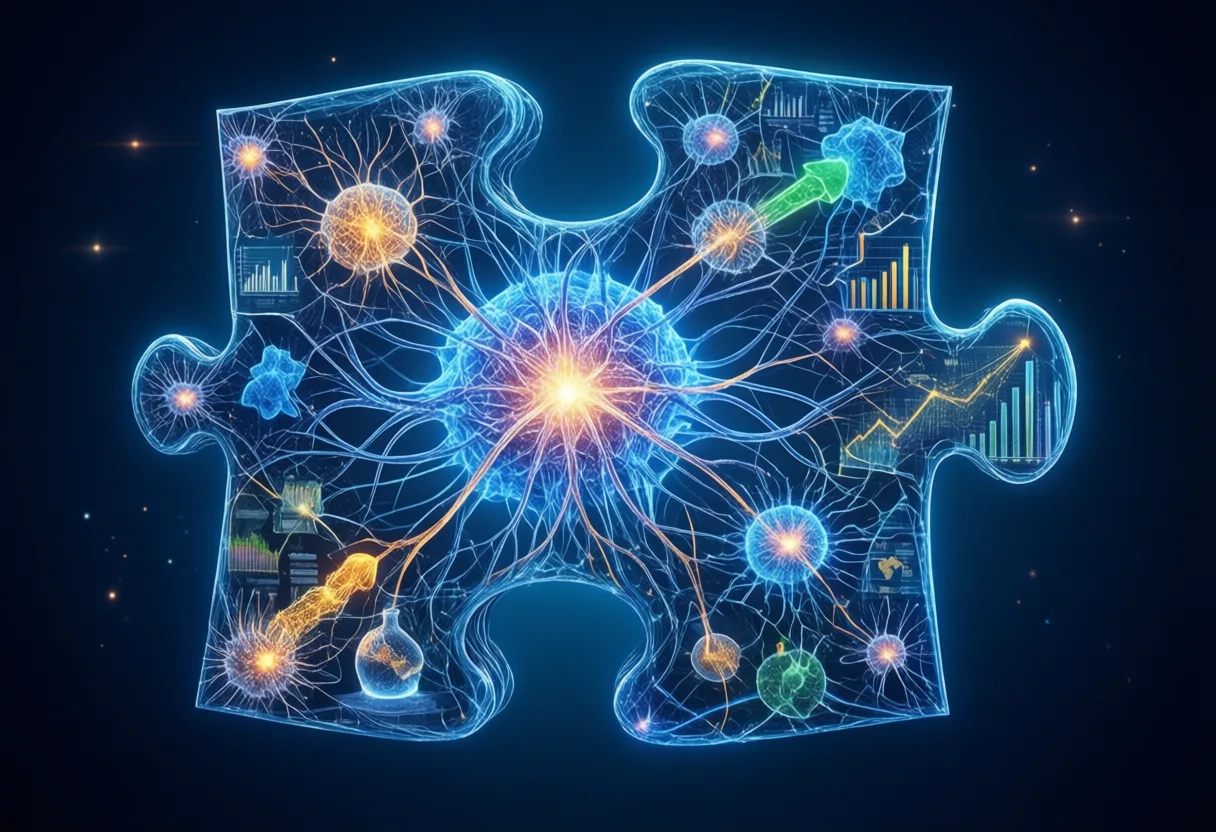
When a Research team Announces a refined method for measuring protein folding in neurodegenerative diseases, it may seem like a narrow advance. But paired with parallel work on synaptic resilience and glial cell signaling, it begins to suggest a broader pivot-away from treating symptoms and toward intercepting disease at its molecular origins. These subtle shifts in emphasis, repeated across journals and labs, form an invisible scaffold beneath the noise.
What often goes unreported is not just what was found, but how it was sought. The tools, assumptions, and collaborations behind a study can be more telling than the result itself. A growing reliance on AI-driven simulations, for instance, signals not just efficiency but a transformation in how hypotheses are generated-less trial and error, more prediction and refinement. This quiet migration in methodology is one of the most reliable indicators of where science is headed.
Why Some Breakthroughs Feel Like Pieces of a Larger Puzzle
When CRISPR first entered the public imagination, it was framed as a scalpel for the genome. Today, its applications stretch from resurrecting ancient regulatory sequences to reprogramming immune cells with surgical precision. What once seemed like a single innovation has become a thread woven through immunology, evolutionary biology, and regenerative medicine.
This sense of interconnectedness is not coincidence. Major advances rarely emerge in isolation-they cluster, echo, and amplify one another. The development of organoids, for example, did not merely advance cancer modeling; it reshaped ethical frameworks, redefined preclinical testing, and accelerated personalized therapy design. Each new paper builds not only on data but on infrastructure, insight, and shared vocabulary.
Even in fields as disparate as quantum sensing and neuroprosthetics, similar principles apply: miniaturization, real-time feedback, and Adaptive learning Systems. These convergences are not random. They reflect a deeper alignment-researchers solving similar problems with analogous tools, often without realizing they’re part of the same intellectual wave.
The Pattern Behind Isolated Science Stories
Look closely at a month’s worth of high-impact publications, and patterns begin to emerge. Multiple teams, across continents, probing the role of circadian rhythms in cellular repair. Others refining non-invasive brain-computer interfaces with increasing spatial resolution. Still more mapping the gut-brain axis with metabolomic precision once thought impossible.
These are not coincidences. They are Symptoms of a field reaching critical mass, where foundational knowledge, technological readiness, and funding priorities align. The repetition of themes-resilience, modulation, integration-suggests a collective intuition that certain frontiers are now within reach.
Consider the quiet surge in studies linking mitochondrial dynamics to cognitive aging. No single paper dominates the conversation, yet the volume and consistency of findings point to a field coalescing. This kind of momentum often precedes transformative applications-ones that, in hindsight, seemed inevitable.
When a Single Study Sparks Dozens of Follow-Ups
Rarely does one paper change everything. But sometimes, a single insight acts as a key, unlocking doors across disciplines. A demonstration that epigenetic markers can be reversibly altered in vivo didn’t just advance longevity research-it catalyzed new approaches in trauma recovery, metabolic disease, and even behavioral neuroscience.
What followed was not a wave, but a cascade. Labs repurposed existing models. Clinicians designed pilot trials. Ethicists revisited frameworks for intergenerational interventions. The original study became a node, radiating influence far beyond its initial scope.
This ripple effect reveals a fundamental truth: Science progresses not just by discovery, but by resonance. The most impactful findings are those that fit seamlessly into the existing fabric of knowledge, pulling adjacent threads into alignment. They don’t shout; they hum, vibrating through the undercurrents of inquiry.
Misconception: Science Advances Are Random and Unconnected
It’s easy to see each headline as a lottery ball-pulled at random from a rotating drum of curiosity. A new battery chemistry here, a fossil discovery there, a drug trial paused or accelerated. But this view obscures the deeper architecture of progress.
Science is not a series of accidents strung together by press releases. It is a directed, cumulative effort, shaped by funding trends, technological bottlenecks, and the slow accretion of data. What appears chaotic at the surface is, in fact, highly structured beneath.
Even serendipitous findings-like the unexpected stability of a synthetic protein-gain meaning only when placed in context. They are outliers only until the pattern becomes clear. Then, they become harbingers.
Context: How Incremental Findings Build Unexpected Momentum
Breakthroughs are rarely born in a flash. More often, they emerge from years of incremental work-refinements in imaging, calibration in measurement, subtle improvements in reproducibility. These quiet advances rarely make headlines, yet they form the bedrock of transformation.
Consider the evolution of neural decoding. For decades, researchers struggled to interpret brain signals with meaningful accuracy. Then, bit by bit, algorithms improved, electrode arrays miniaturized, and training protocols adapted. The result? Systems that now allow paralyzed individuals to communicate at near-natural speeds.
This kind of progress is invisible until it isn’t. It accumulates in labs, in code repositories, in the margins of peer-reviewed methods sections. But when the threshold is crossed, it feels sudden-even though it was inevitable all along.
What Recurring Themes Say About Where Research Is Headed
A careful reader of science news begins to notice certain motifs. Self-repair. Adaptation. Feedback loops. These are not just biological concepts-they are design principles now embedded in materials science, AI, and synthetic biology.
The repeated emphasis on resilience, both in cells and systems, suggests a paradigm shift: from control to collaboration. Instead of overriding biological processes, researchers increasingly seek to modulate them-nudging, tuning, listening.
We are moving from a world where technology imposes its will on nature to one where it learns to converse with it. This is evident in everything from microbiome therapies to closed-loop neuromodulation devices that respond in real time to brain activity.

Practical Takeaways: Reading Between the Lines of Science Reporting
To follow science deeply is to learn how to read not just the findings, but the framework. Ask not only What Was discovered, but How-what tools were used, what assumptions were challenged, what collaborations made it possible.
Pay attention to repetition. When multiple teams report similar results using different models, it’s a sign the field is converging. When a new method appears across disciplines, it’s likely transformative.
Finally, resist the urge to demand immediate applications. The most important discoveries often begin as curiosities. Their value lies not in what they solve today, but in what doors they open tomorrow.
The Quiet Signal Beneath the Noise of Daily Discoveries
Amid the flurry of announcements, corrections, and retractions, a rhythm persists-one of refinement, integration, and quiet escalation. The future is not arriving in headlines. It is being assembled, molecule by molecule, algorithm by algorithm, in the spaces between.
We are not passive observers. We are witnesses to a slow reweaving of what is possible-a redefinition of the boundary between biology and design, between aging and intervention, between thought and action.
And if we listen closely, we can hear it: the steady pulse of a new era, not shouted, but whispered in data, in code, in the careful language of those who know that truth is not found in a single revelation, but in the pattern that emerges when the pieces finally align.
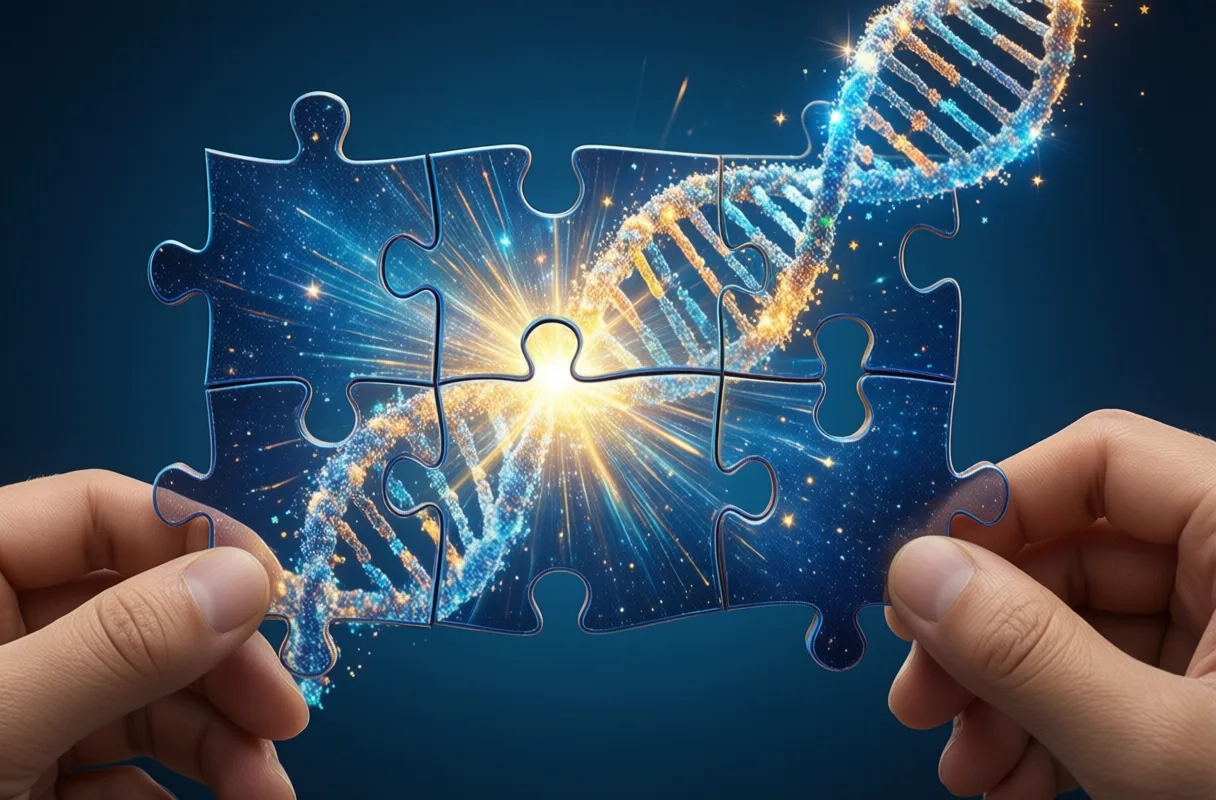
How Science News Puzzles Connect the Dots
The Brain Teaser Effect
Ever tried solving a crossword clue about CRISPR or a sudoku themed around planetary orbits? Science news puzzles turn real discoveries into playful challenges. They’re not just time-fillers-they help our brains spot connections between seemingly unrelated studies, like linking a new exoplanet find with fresh insights into galaxy formation. When facts become clues, remembering them feels less like studying and more like cracking a code.
Patterns in Plain Sight
These puzzles often highlight how similar methods pop up across fields. For instance, scientists studying ancient climates and those tracking virus spread might both rely on pattern recognition in data-just like puzzle solvers do. Spotting recurring themes, like the use of AI in decoding brain signals or monitoring wildlife, becomes second nature when you're trained to look for hidden sequences. It’s surprising how often the same logic used in a jigsaw also applies to reconstructing evolutionary trees.
Why Our Brains Love the Game
Working through science puzzles gives a small dopamine kick every time a piece fits-same as nailing a tough trivia question. That buzz isn’t random; it rewards curiosity and reinforces learning. Plus, turning headlines into riddles makes dense topics approachable. Suddenly, quantum entanglement isn’t intimidating-it’s the answer to “Spooky action at a distance, briefly?” (Answer: QE). Playful engagement doesn’t dumb down science; it invites us to stay longer, look closer, and remember more. Explore more stories, videos, and creators on Loaded.
Frequently Asked Questions
How do science news puzzles help reveal patterns in research?
Science news puzzles train the brain to spot connections between seemingly unrelated studies. By turning facts into clues, they make it easier to recognize recurring themes and methods across scientific fields.
What do recurring themes in science headlines suggest about research trends?
Recurring themes like resilience, adaptation, and feedback loops indicate a collective shift in research focus. They reflect a move toward modulation and integration rather than control in biology and technology.
Why are incremental scientific advances important even if they don’t make headlines?
Incremental advances in measurement, imaging, and reproducibility form the foundation for major breakthroughs. They accumulate quietly until a threshold is crossed, making transformative progress possible.
How can one identify transformative scientific methods across disciplines?
A method is likely transformative if it appears across different fields. Repeated use of AI-driven simulations or real-time feedback systems in diverse areas signals a deeper, shared shift in scientific approach.
This article was produced with AI assistance. How Neuron Magazine uses AI.
Zahra explores the frontiers of human enhancement, from neural implants to gene editing, with a focus on ethical implications and lived experience. She blends scientific rigor with intimate storytelling to illuminate how technology reshapes identity and lifespan.