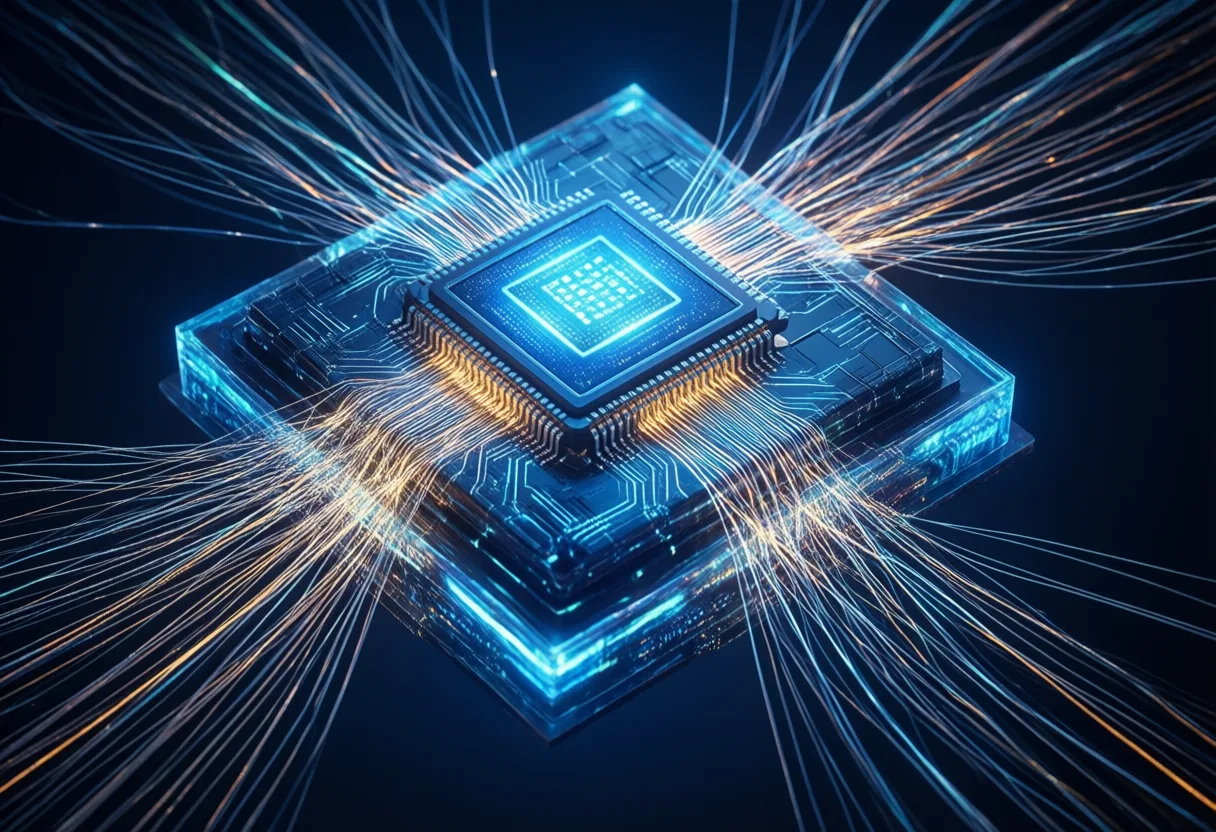
In the quiet hum of supercooled chambers, where quantum bits flicker between existence and possibility, a quiet revolution has begun-not with a bang, but with precision, patience, and the steady unraveling of noise. For decades, the dream of practical Quantum computing Has been shackled by fragility: qubits, those delicate carriers of quantum information, collapse at the slightest disturbance, turning promise into error. Now, a pivotal leap in error correction has emerged, not by building bigger machines, but by rethinking how we protect the very fabric of quantum truth.
This is not merely an engineering tweak-it is a recalibration of how we trust the Quantum realm To compute reliably, a necessary step toward unlocking medicines, materials, and models beyond classical reach.
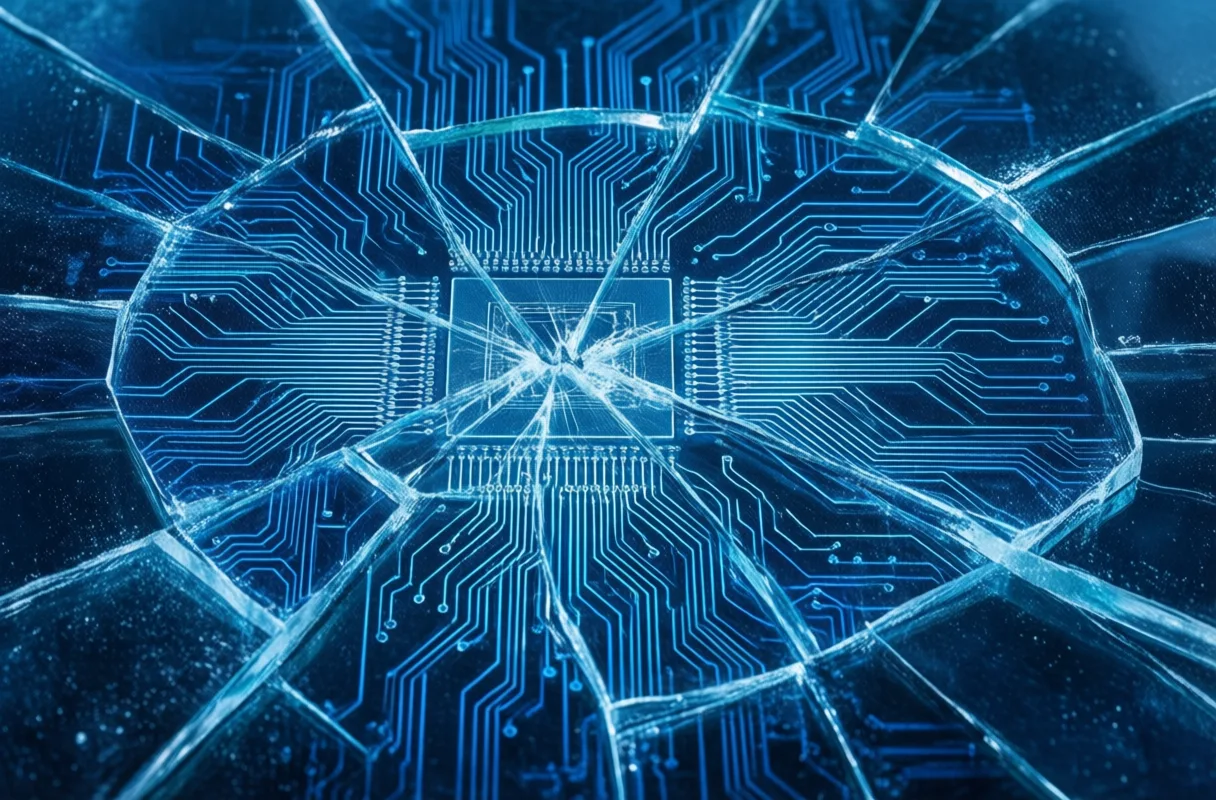
The Fragile Heart of Quantum Computation
Quantum computers Do not simply speed up calculations-they rewrite the rules. Where classical bits are either 0 or 1, qubits exist in superpositions, spinning in multiple states at once, entangled across distances in ways that defy everyday intuition. This allows them to explore vast computational landscapes in parallel, solving problems intractable for even the mightiest supercomputers.
But this power comes at a cost: Qubits are exquisitely sensitive, disturbed by heat, electromagnetic fields, even the faint whisper of cosmic rays. These disturbances introduce errors that, left unchecked, render computations meaningless. Until now, the primary defense-quantum error correction-required massive overhead, demanding dozens or even hundreds of physical qubits to represent a single stable, logical qubit.
The new approach changes the calculus. By refining the architecture of error-detecting codes and synchronizing measurement cycles more efficiently, researchers have dramatically reduced the time needed to identify and correct errors. This means logical qubits can remain coherent longer, not because the hardware is colder or purer, but because the software of quantum resilience has matured.
It’s akin to discovering a way to hear a single voice in a storm-not by shouting louder, but by learning to listen more wisely.
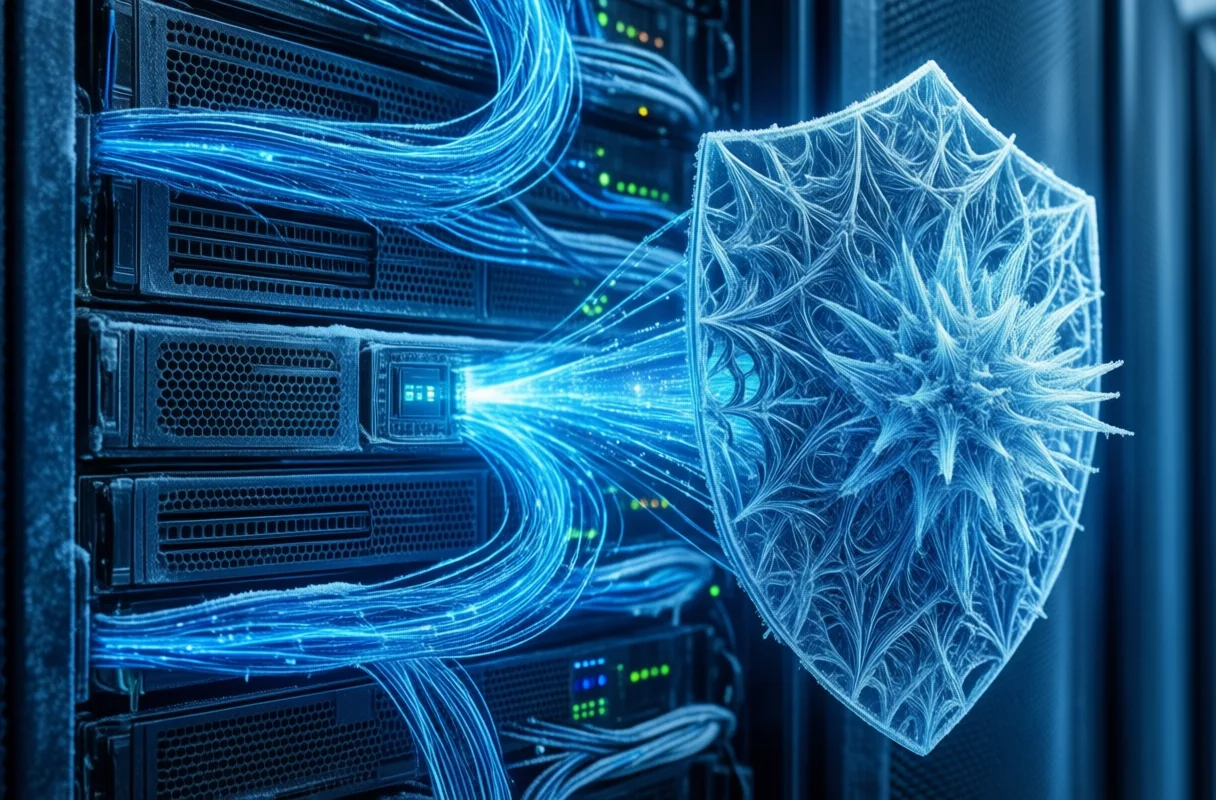
A New Architecture for Quantum Resilience
At the core of this breakthrough lies a reimagined lattice of qubit interactions, where information is encoded not in individual particles, but in the collective relationships between them. These topological arrangements-geometric scaffolds of quantum correlation-allow errors to be detected through subtle shifts in global patterns, rather than direct observation, which would collapse the state.
One innovation involves Adaptive syndrome measurement, a method that prioritizes error checks based on real-time risk assessment, avoiding redundant scans and conserving precious coherence time. Another advances the timing and sequencing of quantum gates, ensuring that corrections are applied before small errors cascade into irreparable noise.
These refinements do not require new materials or exotic physics-instead, they exploit existing hardware with greater intelligence. Think of it as upgrading the immune system of a quantum computer: not stronger cells, but smarter surveillance, faster response, and fewer false alarms.
The implications ripple outward. Simulations of molecular dynamics, once bottlenecked by error accumulation, may now run longer and with higher fidelity. Optimization problems in logistics, finance, and energy networks could see quantum advantage emerge not in a decade, but in years.
Toward Machines That Think in Probabilities
Quantum computing has long been framed as a race to scale-more qubits, colder systems, bigger budgets. But this breakthrough reminds us that The path to utility is not just vertical, but deep. It is not enough to build larger quantum circuits; we must learn to sustain them, to shepherd their fragile states through the gauntlet of decoherence.
What excites researchers most is not a single record or headline, but the opening of a new design space-one where error correction is no longer a burden, but an integrated rhythm of computation. Future systems may dynamically adjust their error protocols based on task complexity, much like the human brain modulates attention depending on cognitive load.
And with each refinement, we inch closer to machines that do not just calculate, but explore-probing quantum chemistry for novel catalysts, simulating high-temperature superconductivity, or optimizing neural network training in ways we’ve yet to imagine.
This is not the end of the quantum journey. It is the moment the trail becomes visible.
Cracking the Code: Inside Quantum Computing’s Latest Leap
Why Error Correction Matters More Than You Think
Quantum computers aren’t just souped-up versions of your laptop-they play by entirely different rules. Instead of bits that are either 0 or 1, they use qubits, which can be both at the same time thanks to superposition. This lets them tackle problems in seconds that would take regular machines millennia. But there’s a catch: qubits are fragile. The slightest vibration, temperature shift, or electromagnetic whisper can throw off their state, leading to errors. That’s why error correction isn’t just helpful-it’s essential for any real-world use. Without it, quantum calculations collapse like a house of cards.
A Shortcut Through the Noise
Traditionally, fixing errors in quantum systems meant using many extra qubits just to monitor and correct one working qubit-sometimes dozens per single logical qubit. It made scaling up incredibly hard. The recent breakthrough changes that game. Scientists have developed a smarter way to detect and fix errors faster, slashing the number of supporting qubits needed. This efficiency boost means quantum processors can now aim for practical tasks sooner, like simulating complex molecules for drug discovery or optimizing large networks. Think of it like upgrading from dial-up to broadband-but for quantum stability. Explore more stories, videos, and creators on Loaded.
Fun Facts from the Quantum World
- The word “qubit” is short for Quantum bit, but you won’t find them in any hardware store. Some are built from tiny superconducting circuits cooled to near absolute zero-colder than outer space.
- In 2019, Google claimed “quantum supremacy” when its Sycamore processor solved a specific problem in 200 seconds that would supposedly take a supercomputer 10,000 years. Debate followed, but it spotlighted how fast this field moves.
- Trapped ions, photons, and even defects in diamond crystals are all being tested as qubit platforms. Each has pros and cons, like how long they can hold information or how easily they can be linked together.
- Quantum error correction borrows ideas from classical coding theory-like how scratched DVDs still play-but adapts them to the weirdness of quantum mechanics, where you can’t even measure a qubit directly without disturbing it.
Frequently Asked Questions
Why is error correction important in quantum computing?
Qubits are fragile and easily disturbed by heat, electromagnetic fields, or cosmic rays, which introduces errors. Without error correction, these errors make quantum computations meaningless.
How does the new error correction method improve quantum computing?
The new approach reduces the time needed to detect and correct errors by refining error-detecting codes and synchronizing measurement cycles more efficiently. This allows logical qubits to remain coherent longer using existing hardware more intelligently.
What role do qubits play in quantum computing?
Qubits exist in superpositions, allowing them to be in multiple states at once, and can be entangled across distances. This enables quantum computers to explore vast computational landscapes in parallel.
What are some platforms used to build qubits?
Qubits are built from superconducting circuits cooled near absolute zero, trapped ions, photons, and defects in diamond crystals. Each platform has different strengths in information retention and connectivity.
This article was produced with AI assistance. How Neuron Magazine uses AI.
Zahra explores the frontiers of human enhancement, from neural implants to gene editing, with a focus on ethical implications and lived experience. She blends scientific rigor with intimate storytelling to illuminate how technology reshapes identity and lifespan.