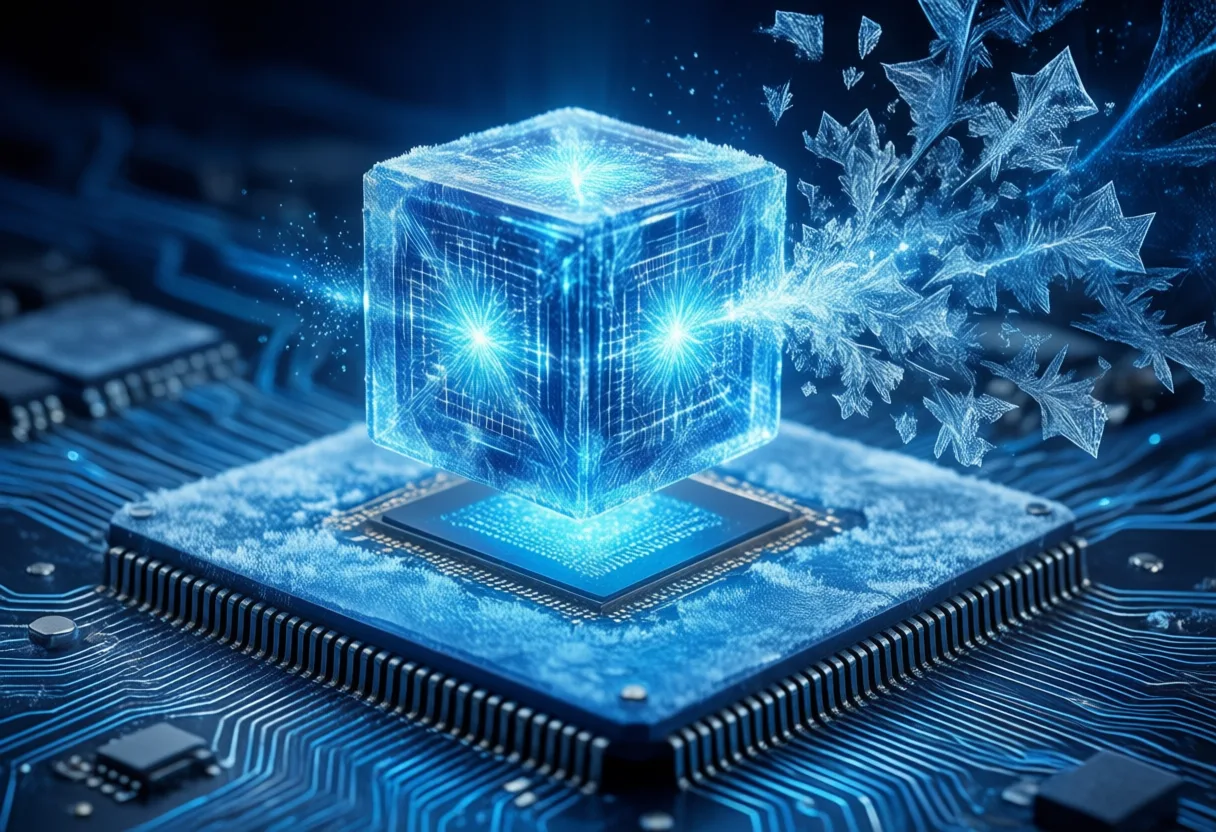
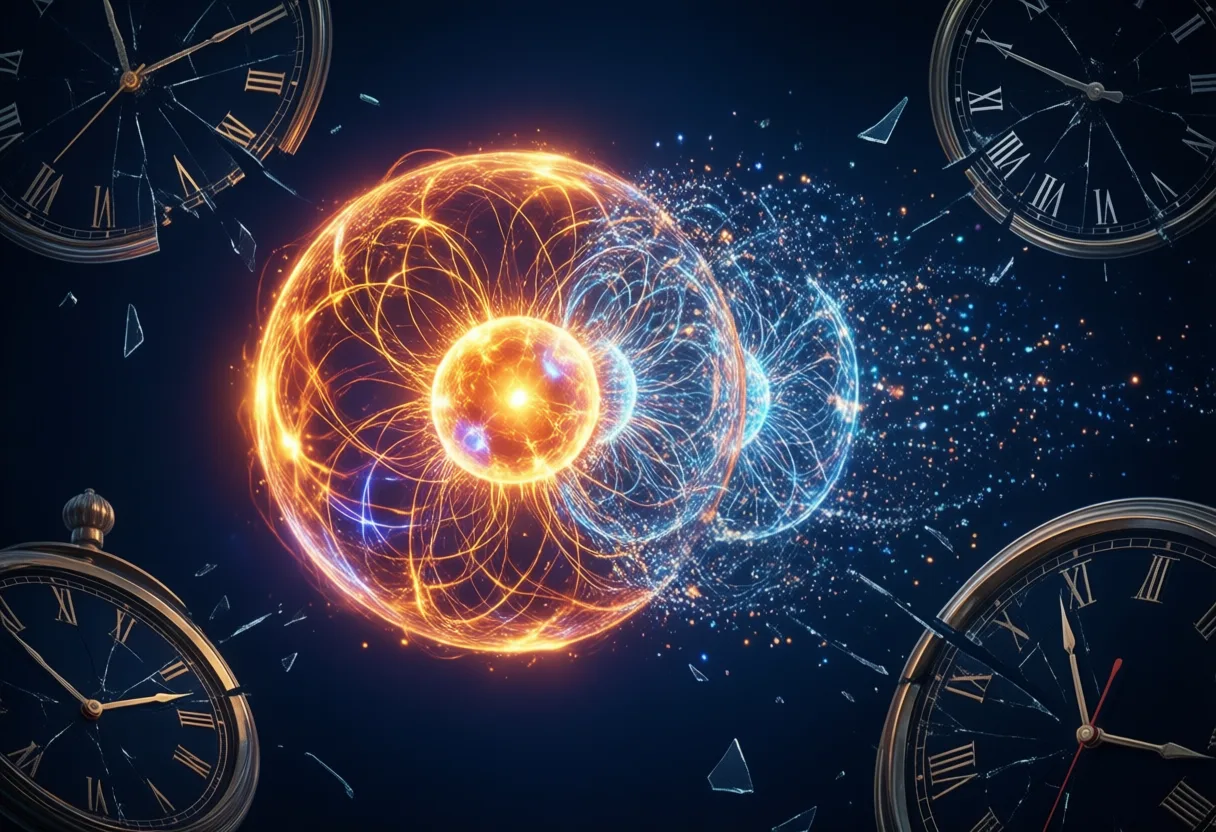
How Quantum Superposition Challenges Classical Reality
We used to think the world was solid, predictable-drop a ball, it falls. Flip a switch, the light turns on. But peer beneath the surface, down into the realm of the unimaginably small, and none of that holds. Here, particles don’t just Do One thing. They Do everything-until you look.
Quantum superposition Isn’t just a quirk. It’s a fundamental rewrite of how we understand existence. In this domain, an electron doesn’t settle into a single position or energy level. Instead, it exists in a blend of possibilities, like a spinning coin that hasn’t yet landed. Only when measured does it “choose” a state-up or down, here or there.
It’s not that we’re ignorant of the outcome. It’s that No outcome exists Until observation forces one into being. This isn’t philosophy. It’s mathematics confirmed by decades of experiment. And every time we run the numbers, the universe insists: Reality at its core is probabilistic, not deterministic.
Think of it like a jazz musician improvising. There’s a chord progression-the rules-but the next note isn’t written until it’s played. The particle doesn’t follow a script. It Creates The script in real time.

When Particles Exist in Multiple States at Once
You’ve heard the thought experiment: Schrödinger’s cat, both alive and dead. It sounds absurd. And that’s the point. Our brains evolved to track lions on the savanna, not electrons in a vacuum. We’re not wired for And. We’re wired for Either/or.
But in the quantum world, And Is the default. A particle can spin both clockwise and counterclockwise. It can take two Paths through An experiment at once. Not alternately. Not quickly. Simultaneously. Interference patterns in double-slit experiments don’t lie-particles behave as if they’re ghosts passing through two doors at the same time.
We’ve seen this in trapped ions, in superconducting circuits, in molecules large enough to be seen under specialized microscopes. The evidence is overwhelming. The particle isn’t in one state Or Another. It’s in a Coherent superposition, a mathematical combination of all possible states, each with its own weight, its own phase.
And when you finally measure it?
- The superposition collapses.
- One outcome emerges.
- The rest vanish like unplayed notes.
But here’s the twist: collapse isn’t destruction. It’s resolution. The potential was real. The wave function wasn’t a placeholder. It was the thing itself-until interaction with the larger world forced a decision.
Why Quantum Tunneling Defies Everyday Intuition
Imagine walking toward a brick wall every day. One morning, you step forward-and appear on the other side. No hole. No damage. Just you, suddenly where you shouldn’t be. That’s quantum tunneling, and it happens constantly, trillions of times per second, inside every atom.
Particles don’t always need energy to overcome barriers. Sometimes, they just… Leak Through. Not because they’re fast. Not because the wall is thin. But because their wave function extends into forbidden zones, giving them a non-zero chance to materialize on the far side. It’s like knocking on a door, only to find you were already inside.
This isn’t theoretical hand-waving. Tunneling powers the sun. Without it, hydrogen nuclei wouldn’t fuse. The temperatures in the sun’s core aren’t high enough to push protons together-yet fusion happens. Why? Because quantum mechanics allows them to tunnel through the repulsive barrier, like ghosts slipping through locked doors.
In Technology, tunneling enables:
- Scanning tunneling microscopes, which image individual atoms.
- Flash memory, where electrons cross insulating layers to store data.
- Quantum dots, where confinement and tunneling shape electronic behavior.
We’ve built tools that harness what should be impossible. And still, we struggle to Feel Its truth. Our instincts scream: Solid is solid. But the universe whispers back: Probability is everywhere.
Can Quantum Behavior Scale Beyond Subatomic Levels?
For years, the assumption was clear: quantum weirdness stays small. Scale up, and everything smooths out. But recent experiments whisper otherwise. Superposition and entanglement aren’t just for electrons and photons. They’ve been observed in molecules with hundreds of atoms-objects almost visible to the naked eye.
Could larger systems, even biological ones, host quantum effects? Some researchers suspect photosynthesis might exploit coherent energy transfer. Bird navigation? Possibly guided by quantum-entangled radicals in their eyes. The brain? Too warm, too wet, most say-but the door isn’t shut.
The real question isn’t just Can Quantum effects scale, but How far can coherence stretch before the world forces a choice? We’re not seeing cats in superpositions. But we Are Seeing quantum signatures in systems once thought too chaotic, too big, too Classical.
And each time, the boundary blurs.
- Quantum states persist longer than expected.
- Control improves with better isolation and cooling.
- New materials reveal macroscopic quantum phenomena.
The dream of quantum computing rests on this: that we can protect fragile states long enough to do useful work. Not by fighting decoherence, but by outsmarting it-like building a quiet room inside a storm.

What Decoherence Tells Us About the Quantum-to-Classical Transition
So why don’t we see quantum magic in daily life? Why don’t baseballs tunnel? Why don’t people exist in two places at once? The answer isn’t size alone. It’s Decoherence-the process by which quantum systems lose their magic through interaction with the environment.
Every collision with an air molecule, every stray photon, every thermal jiggle leaks information into the world. That leakage destroys phase relationships, turns superpositions into probabilities, and makes the quantum fade into the classical. It’s not a sudden switch. It’s a slow leak, like air from a tire.
Decoherence explains why the moon is always in the sky, even when no one looks. It’s not that observation by a human matters. It’s that the moon is constantly “observed” by sunlight, cosmic rays, dust, gravity-its quantum state is continuously measured by the universe itself.
Three things accelerate decoherence:
1. Temperature – more heat, more noise, faster collapse.
2. Size – more particles, more ways to interact.
3. Complexity – more connections, more information leakage.
But decoherence isn’t a wall. It’s a gradient. And with enough control-ultra-cold temps, vacuum chambers, magnetic traps-we can stretch coherence further than ever. The quantum-to-classical transition isn’t a line. It’s a slope we’re learning to climb.
Beyond the Hype: Separating Misconceptions from Quantum Mechanics
Let’s be clear: quantum physics is strange. But it’s not magic. It doesn’t mean “anything is possible.” It doesn’t prove consciousness creates reality. It doesn’t validate pseudoscience. The math is precise. The predictions, exact. The mystery lies in interpretation, not mechanism.
Superposition doesn’t mean “both at once” in a mystical sense. It means the system evolves as a wave of possibilities, governed by the Schrödinger equation. When we say an electron is in two places, we mean its probability amplitude is non-zero in both locations. That’s measurable. That’s testable. That’s science.
And no, quantum mechanics doesn’t imply we can manifest our dreams with positive thinking. The observer effect isn’t about mindfulness. It’s about physical interaction-detectors, photons, electrons colliding. A camera recording an experiment causes collapse just as much as a human watching the playback.
We must guard against:
- Overextending metaphors until they break.
- Confusing mathematical tools with ontological claims.
- Selling uncertainty as license for fantasy.
The truth is strange enough. We don’t need to dress it up. Quantum mechanics works. It’s been verified to astonishing precision. But it doesn’t overthrow logic. It expands it.

Ripples in the Field: How New Insights Shape Technology
Every decade, quantum insights seep into the real world in quiet revolutions. Transistors. Lasers. MRI machines. None of this happens without understanding how particles behave when no one’s looking. Today, that ripple is accelerating.
Quantum sensors now detect gravitational shifts with unprecedented sensitivity. Quantum clocks redefine timekeeping. And quantum communication offers encryption so secure, any eavesdropping leaves a trace-because measurement changes the state. You can’t spy without being seen.
But the big bet is quantum computing. Not because it’ll replace your laptop. It won’t. But because it might solve problems that would take classical computers longer than the age of the universe. Simulating molecules. Optimizing supply chains. Cracking certain codes.
Progress isn’t linear.
- Qubits are fragile.
- Error correction is hard.
- Scaling is messy.
But each breakthrough-longer coherence, better gates, smarter algorithms-narrows the gap between theory and utility. This isn’t science fiction. It’s engineering with a quantum rulebook.
Where the Frontiers of Particle Behavior Still Remain Unclear
We know a lot. But the deeper we go, the more questions emerge. What Is Wave function collapse? Is it real, or just an artifact of our perspective? Are there hidden variables we haven’t found? Or is randomness truly fundamental?
We can predict outcomes with stunning accuracy. But we still argue about what it Means. The Copenhagen interpretation. Many-worlds. Pilot waves. Each explains the data, but paints a wildly different picture of reality. And none can yet be proven or discarded.
And what about gravity? We’ve unified electromagnetism with the nuclear forces. But gravity resists. It doesn’t play by quantum rules-at least, not in any way we’ve detected. The dream of a unified theory remains just that: a dream.
Frontiers remain in:
- The nature of quantum measurement.
- The role of time in quantum evolution.
- The possibility of quantum effects in complex, warm systems.
We’re not lost. We’re just early. Like astronomers before the telescope, we’re squinting at shadows, sketching maps of a universe that refuses to sit still. But every experiment, every insight, brings us closer.
The particles keep dancing. And we’re learning-slowly, humbly, joyfully-how to watch.
Peering Into the Quantum World
Spooky Action at a Distance Isn’t Just Science Fiction
Quantum entanglement sounds like something from a sci-fi movie, but it’s very real-and experimentally confirmed. When two particles become entangled, their properties link up so tightly that measuring one instantly determines the state of the other, no matter how far apart they are. Einstein famously called this “spooky action at a distance,” skeptical of such strange behavior. Yet today, labs worldwide routinely demonstrate entanglement, using it as a foundation for emerging technologies like quantum cryptography and quantum computing.
Particles Can Be in Two Places at Once-Seriously
One of the core ideas in quantum physics is superposition. Unlike everyday objects, quantum particles aren’t limited to being in just one state or location at a time. An electron, for example, can exist in multiple energy levels simultaneously until it’s measured. This isn’t a lack of knowledge-it’s how the universe actually works at tiny scales. The famous double-slit experiment shows this clearly: when unobserved, electrons behave like waves and pass through two slits at once, creating an interference pattern. But when scientists watch them closely, they act like solid particles again. The act of observation changes the outcome.
Quantum Tunneling Lets Particles Walk Through Walls
Imagine walking straight through a brick wall without breaking it. That seems impossible-but in the quantum world, particles do something similar all the time. Quantum tunneling allows particles to pass through energy barriers they shouldn’t classically be able to overcome. It’s not magic; it’s a result of their wave-like nature giving them a small probability of appearing on the other side. This effect powers essential technologies like flash memory and scanning tunneling microscopes, which can image individual atoms. Without tunneling, the sun wouldn’t shine either-protons rely on it to fuse and release energy in the core of stars. Explore more stories, videos, and creators on Loaded.
Frequently Asked Questions
What is quantum superposition?
Quantum superposition means a particle exists in a blend of possible states until measured. At that point, it collapses into one definite state.
How does quantum tunneling work?
Particles can pass through energy barriers because their wave function gives them a non-zero chance to appear on the other side. This powers the sun and technologies like flash memory.
Why don’t we see quantum effects in everyday life?
Decoherence causes quantum systems to lose their properties through interactions with the environment. Larger, warmer, more complex systems decohere faster.
Can quantum effects occur in large systems?
Yes, superposition and entanglement have been observed in molecules with hundreds of atoms. Research continues on how far coherence can stretch.
This article was produced with AI assistance. How Neuron Magazine uses AI.
Saoirse investigates how automation, remote systems, and AI reshape labor, careers, and human purpose. She centers worker voices and cultural change, blending data with narrative depth to reveal what the future feels like on the ground.