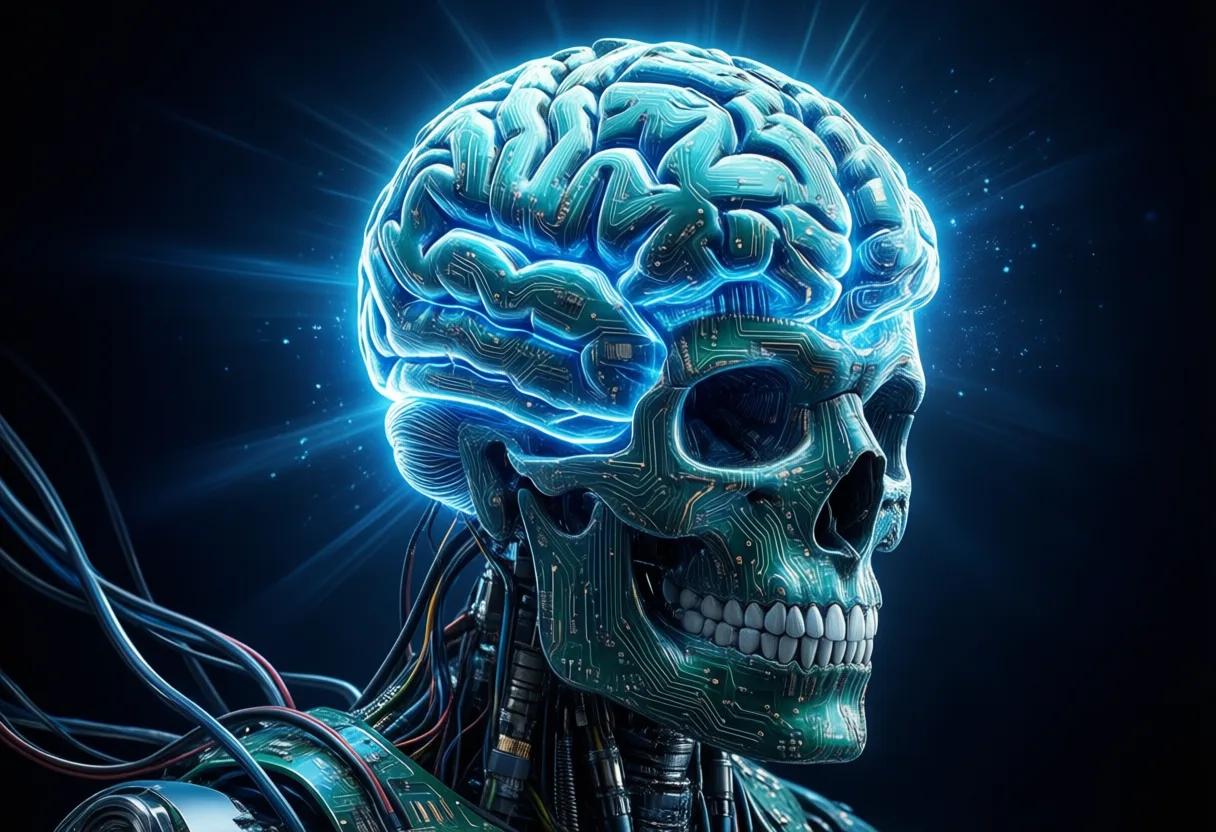
In dimly lit server farms and gleaming university labs alike, a quiet revolution is unfolding-not in the circuits or code alone, but in how we understand what Machines Can Think. For decades, intelligence was a human monopoly, measured in IQ scores and academic prowess, but as algorithms now diagnose diseases, compose symphonies, and pilot vehicles through chaotic city streets, the question has shifted: how do we quantify the mind-like capabilities of something that doesn’t have a mind? The emergence of a new metric-sometimes called the artificial intelligence quotient-signals a turning point, not just in engineering, but in philosophy, ethics, and our species’ evolving relationship with the tools we create.
This isn’t about building Smarter gadgets; it’s about redefining cognition itself, peeling back layers of perception, learning, and decision-making to assess not only what machines Do, but how they Reason. And as we edge closer to systems that adapt, generalize, and even surprise us, the need for a coherent, standardized measure of machine intelligence grows urgent-both to guide innovation and to safeguard human agency.
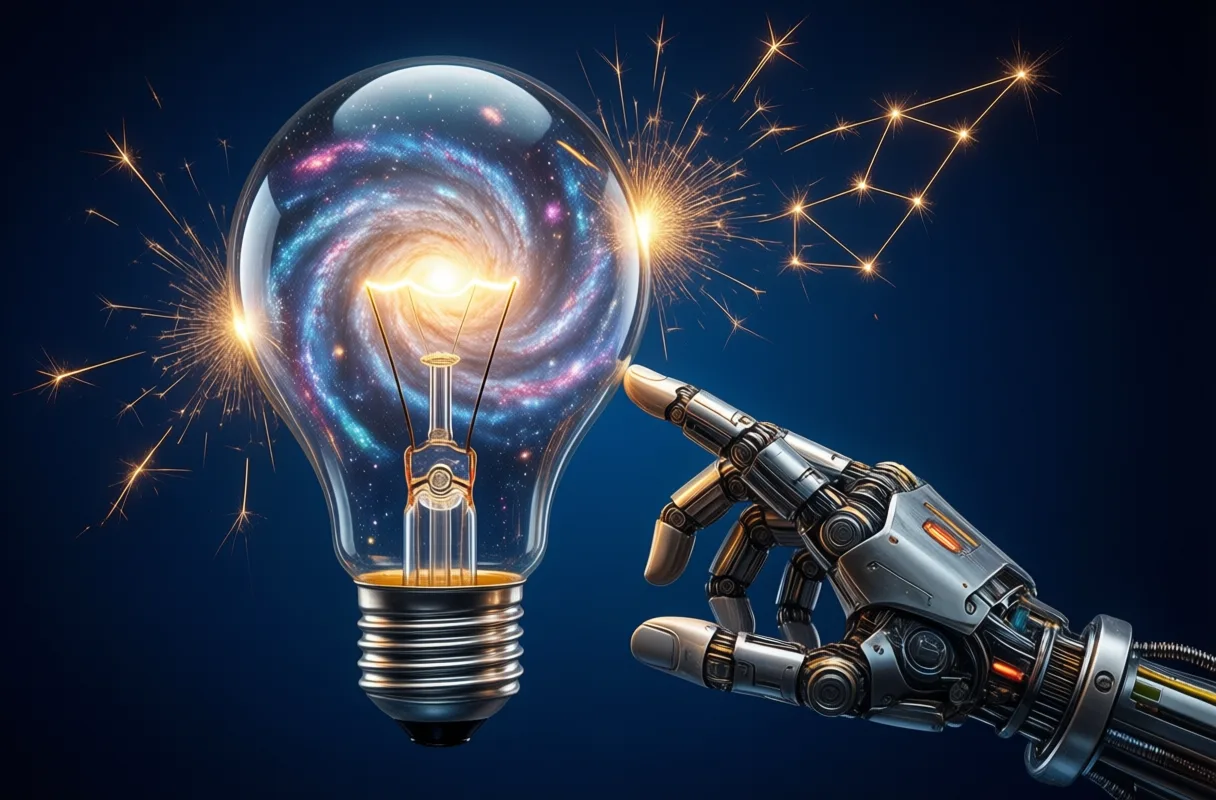
Beyond Human Benchmarks: Rethinking Intelligence Metrics
Traditional intelligence tests were designed for brains wired by evolution, not silicon trained by gradients. They measure memory, pattern recognition, linguistic fluency-abilities honed over millennia, now being replicated in months by neural networks fed petabytes of data. But when a machine identifies a rare tumor in a medical scan or predicts protein folding with atomic precision, is it “intelligent” in the same way a radiologist or biochemist is? The answer depends on how we define the very concept of Understanding.
The artificial intelligence quotient, where discussed, attempts to move beyond task-specific benchmarks-like winning at chess or generating grammatically flawless text-toward a more holistic evaluation of Cognitive breadth. It asks: Can a system transfer knowledge from one domain to another? Does it recognize the limits of its own knowledge? Can it adapt to novel environments without retraining? These are not just technical challenges; they are the hallmarks of general intelligence, the kind that allows humans to thrive in unpredictable worlds.
Consider a self-driving car navigating a sudden snowstorm in a city it’s never seen. A narrow AI might fail, its models calibrated only for clear conditions and familiar layouts. A system with higher cognitive flexibility-potentially reflected in a robust Artificial intelligence Quotient-might infer road boundaries from context, adjust speed based on dynamic risk assessment, and communicate uncertainty to passengers. Such behaviors suggest not just computation, but a form of situational awareness.
- Generalization across environments
- Self-monitoring of confidence and error
- Transfer of learning between unrelated tasks
These capabilities are increasingly vital as AI moves from controlled labs into homes, hospitals, and highways. And while no universal standard yet exists, researchers are converging on frameworks that evaluate not just accuracy, but adaptability, efficiency, and even ethical reasoning. The goal is not to Humanize machines, but to understand them on their own terms-neither overestimating their wisdom nor underestimating their impact.
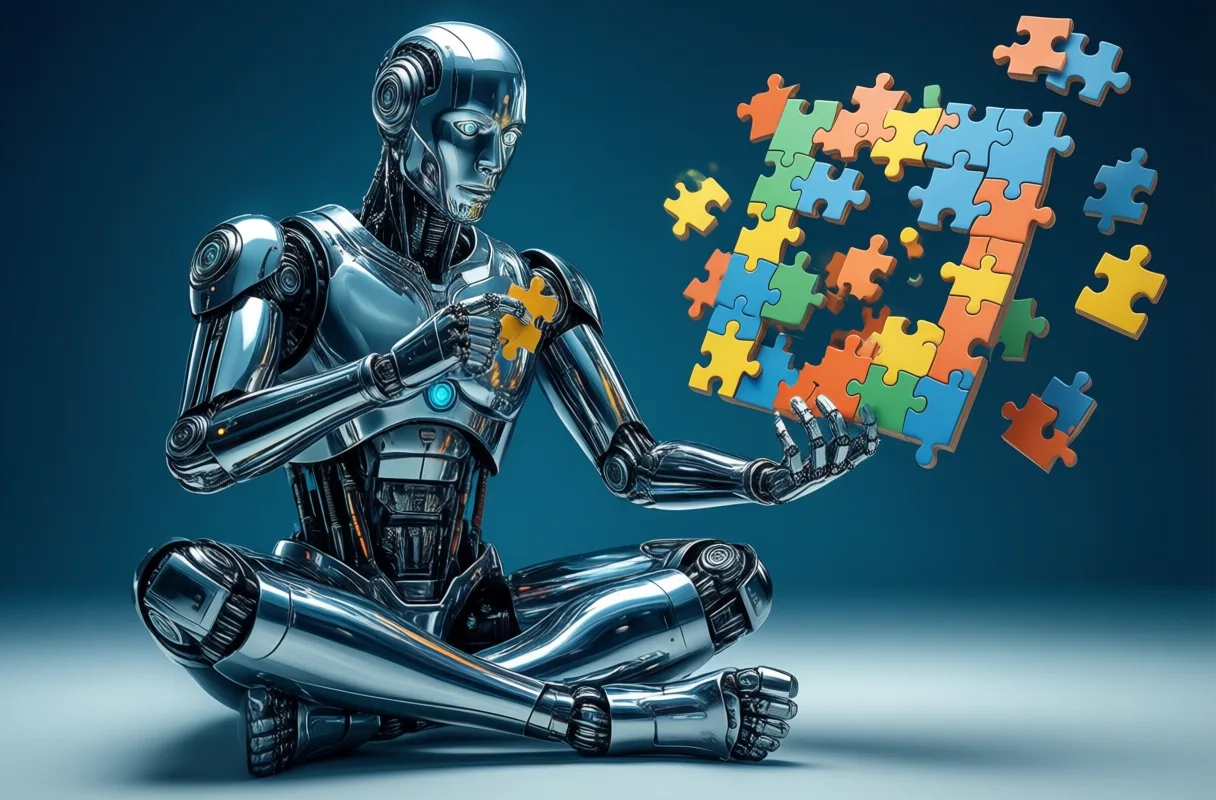
Measuring the Mind of the Machine
Assessing machine cognition demands more than speed or scale; it requires probing the architecture of thought itself. Unlike humans, who develop intuition through lived experience, machines build “understanding” through statistical correlations in data. This difference is fundamental: a language model can write a poem about grief without ever feeling loss, and a robot can sort recyclables without knowing what waste is. So how do we measure intelligence when the inner experience is absent?
One approach is to design multi-domain challenges that mimic the complexity of real-world problem-solving. Imagine an AI presented with a malfunctioning appliance, a handwritten manual in a foreign language, and a video of someone trying-and failing-to fix it. To succeed, the system must parse text, interpret visual cues, infer intent, and generate actionable steps. Success here reflects not isolated skills, but integrated cognition, a hallmark of higher-order intelligence.
Another dimension is metacognition-the ability to know what one knows. Humans pause when uncertain; they ask questions, seek clarification. Some advanced AI systems now do the same, flagging low-confidence predictions or requesting additional data before acting. This self-awareness, though algorithmic, is a critical component of reliable intelligence, especially in high-stakes applications like healthcare or disaster response.
Applications of Artificial Intelligence: Top 5 Uses Today highlights how these systems are already transforming industries, from automating supply chains to accelerating drug discovery. But behind each application lies a deeper question: is the AI merely executing instructions, or is it reasoning its way toward solutions? The distinction matters, because the former can be optimized, while the latter must be understood.
As these systems grow more autonomous, the need for transparent, interpretable metrics becomes a moral imperative. We cannot delegate life-impacting decisions to black boxes if we cannot measure their judgment. The artificial intelligence quotient, in whatever form it eventually takes, must not only reflect capability but also accountability.

The Human Mirror: What AI Intelligence Reveals About Us
Every attempt to measure machine intelligence ends up reflecting something back at us-our biases, our aspirations, our fears. When we build systems that learn, create, and decide, we are not just engineering tools; we are holding up a mirror to the human mind. What we see there is both familiar and alien: logic without emotion, memory without narrative, perception without sensation.
This mirror forces uncomfortable questions. If a machine can outperform humans on cognitive tests, does that make it “smarter”? Or does intelligence require consciousness, purpose, or moral agency-qualities we still struggle to define in ourselves, let alone code into software? The pursuit of an artificial intelligence quotient is as much a journey into human self-understanding as it is a technical endeavor.
Moreover, as AI systems begin to operate in social spaces-mediating conversations, curating information, even offering companionship-we risk projecting human traits onto entities that simulate empathy without feeling it. This anthropomorphism can lead to misplaced trust, especially when systems appear fluent but lack true comprehension. A high artificial intelligence quotient should not be mistaken for wisdom.
Ultimately, the value of such a metric lies not in ranking machines, but in guiding their development toward alignment with human flourishing. We don’t need AI that thinks Like Us-we need AI that thinks With Us, augmenting our limitations without replacing our values. In that sense, the most important measure of machine intelligence may not be a number at all, but the quality of the partnership it enables.
Measuring Machine Minds
What Even Is an AI Quotient?
You’ve heard of IQ for people, but what about machines? The idea of an Artificial Intelligence Quotient, or AIQ, pops up now and then as a playful nod to how smart machines seem. Unlike human IQ, which has standardized tests, AIQ isn’t an official score you’ll find on a robot’s report card. It’s more of a conceptual tool researchers sometimes use to compare how well different AI systems handle tasks like learning, reasoning, or adapting to new situations. Think of it as a rough way to ask, “Can this AI figure things out like a person might-only faster or in ways we never could?”
Fun Facts from the Field
Some AI systems have already aced parts of human IQ tests, especially the logic puzzles and pattern recognition bits. But don’t be fooled-passing a test doesn’t mean the AI Understands It the way we do. It’s like a parrot saying “I love you” without feeling a thing. One quirky experiment showed an AI solving Raven’s Progressive Matrices-a classic nonverbal IQ challenge-by spotting pixel-level patterns humans would never notice, essentially "cheating" by seeing the world differently. And while no machine has a certified AIQ score like 120 or 150, some experts joke that certain models might score off the charts in narrow areas, like chess or protein folding, while flunking basic common sense.
Smarts Aren’t Everything
Here’s a twist: being “smart” in one area doesn’t mean an AI can generalize that knowledge. A system that diagnoses diseases from scans might not know how to order a sandwich online. That’s why researchers stress the difference between narrow AI-super skilled at one job-and general AI, which remains science fiction for now. So while the idea of measuring machine smarts is fun and useful for progress, it’s not about turning robots into geniuses. It’s about building tools that think in ways that complement our own, not copy them. Explore more stories, videos, and creators on Loaded.
Frequently Asked Questions
What is an Artificial Intelligence Quotient (AIQ)?
The Artificial Intelligence Quotient is a conceptual tool used to compare how well AI systems learn, reason, and adapt. It is not an official score but a way to assess machine cognitive abilities across tasks.
Can AI pass human IQ tests?
Some AI systems have aced parts of human IQ tests, especially logic and pattern recognition. However, this does not mean they understand the tasks the way humans do.
How do AI systems differ from humans in problem-solving?
AI systems solve problems through statistical correlations in data, not lived experience. They can spot pixel-level patterns humans miss, but lack understanding, emotion, and common sense.
What are the key traits of general machine intelligence?
General machine intelligence involves knowledge transfer across domains, self-monitoring of confidence, and adaptation to novel environments without retraining. These reflect cognitive flexibility beyond narrow task performance.
This article was produced with AI assistance. How Neuron Magazine uses AI.
Zahra explores the frontiers of human enhancement, from neural implants to gene editing, with a focus on ethical implications and lived experience. She blends scientific rigor with intimate storytelling to illuminate how technology reshapes identity and lifespan.