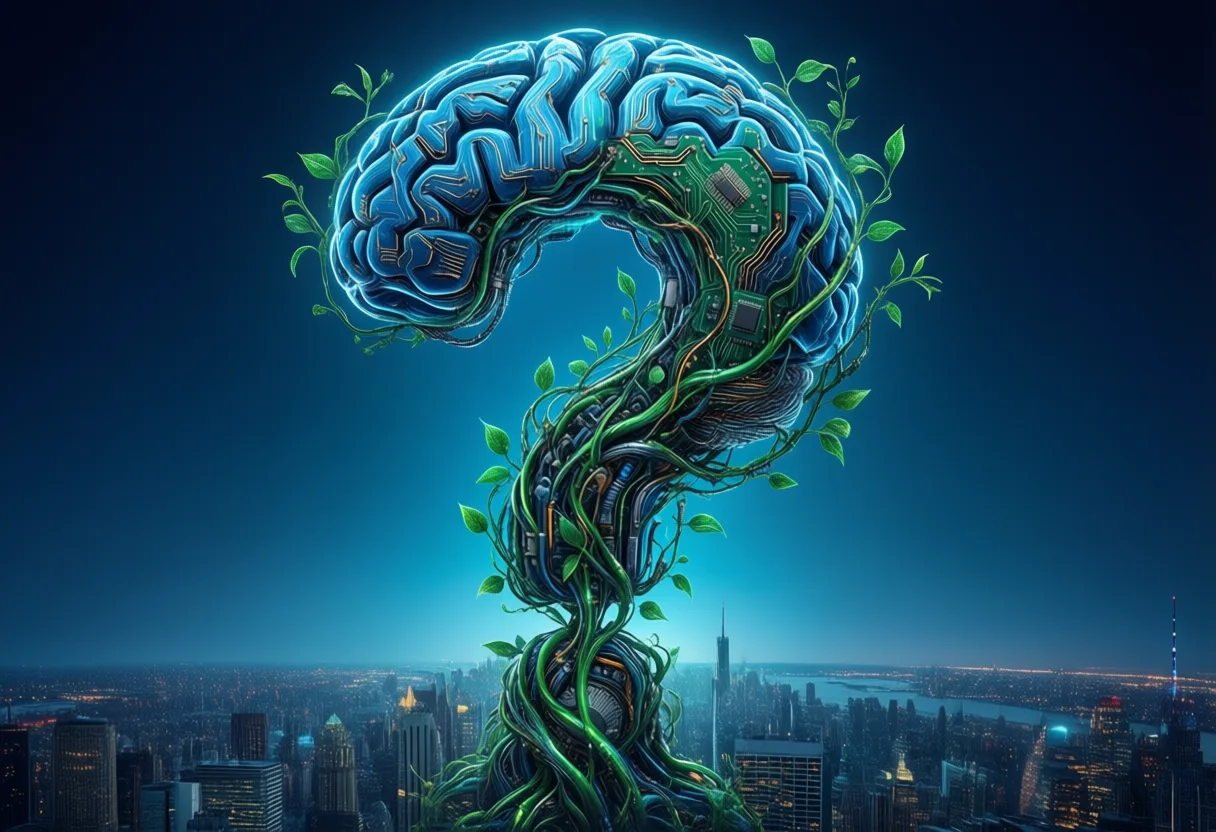
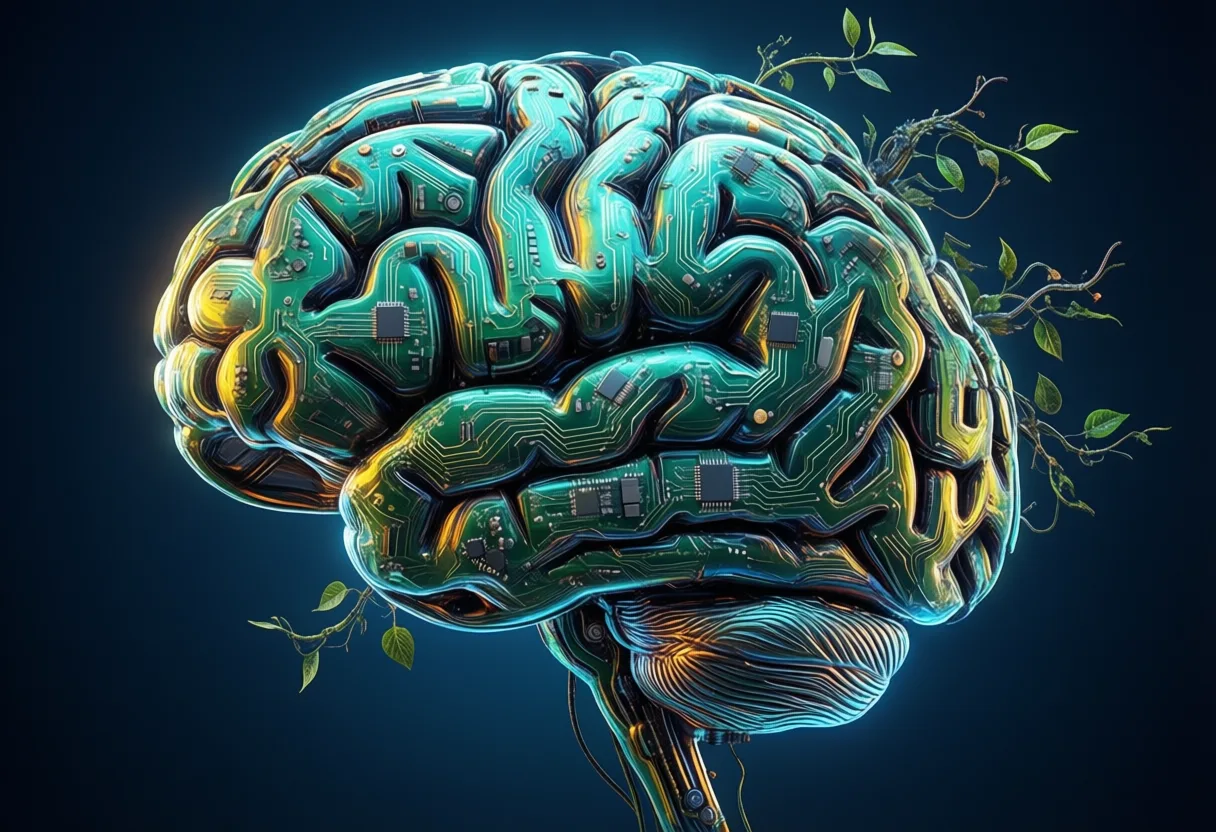
What if Machines Could learn from experience? What if software didn’t need step-by-step commands-but could adapt, predict, and even surprise us?
Welcome to the era of artificial intelligence. It’s not science fiction. It’s in your phone, your car, and the apps you use every day. And it’s evolving faster than most people realize.
What Exactly Is Artificial Intelligence?
Artificial intelligence is software that performs tasks typically requiring human cognition. These include recognizing speech, identifying images, making decisions, or translating languages. Unlike traditional programs that follow rigid rules, AI systems detect patterns and adjust responses based on data.
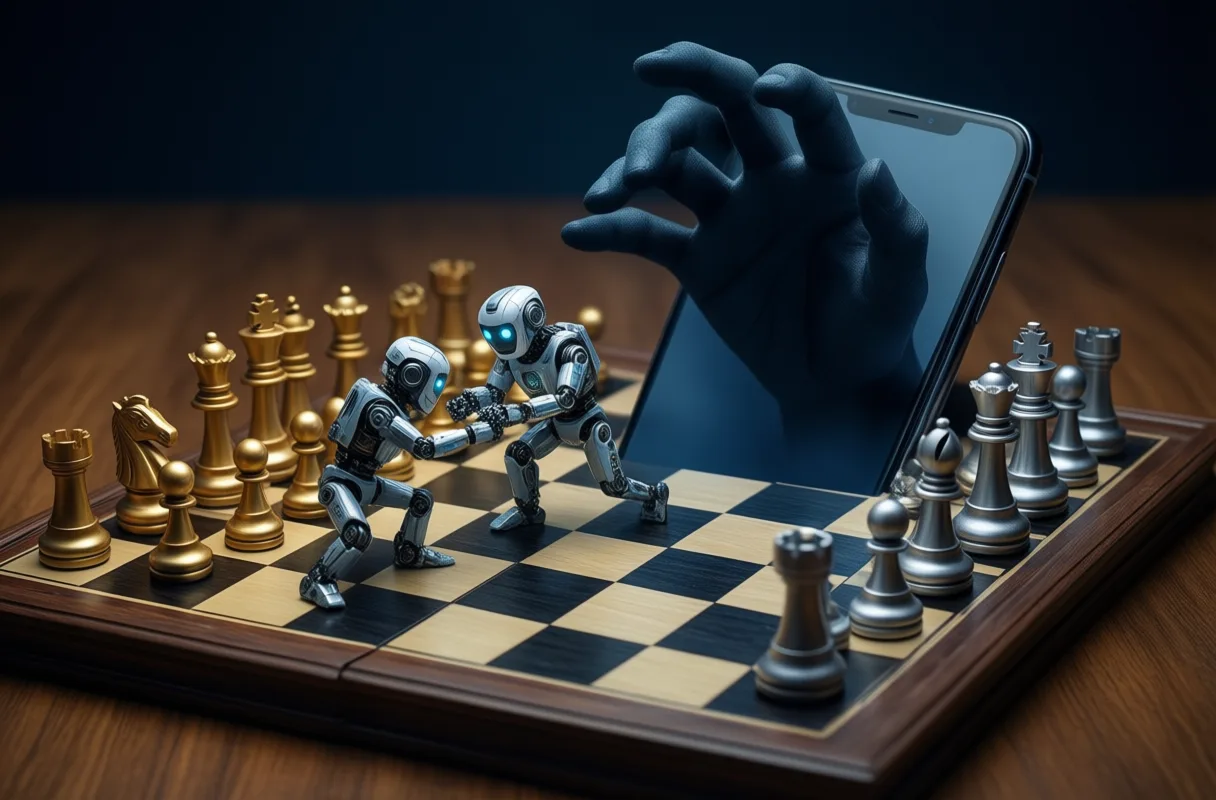
Think of it like a chess player who doesn’t just memorize moves-but studies thousands of games to anticipate an opponent’s strategy. That’s the core idea: Machines Improving through exposure, not explicit instruction.
AI isn’t one Technology. It’s a spectrum-from simple algorithms that sort emails to complex models generating lifelike text. Some systems react to immediate inputs. Others plan multiple steps ahead. All share the goal of simulating intelligent behavior.
How Machines Learn Without Being Explicitly Programmed
How does a machine “learn” without being told exactly what to do? The answer lies in data and feedback loops. Instead of coding every rule, engineers feed examples to algorithms and let them find underlying patterns.
This process is called Machine learning. It works like teaching a child to recognize dogs-not by listing features, but by showing hundreds of dog photos and correcting mistakes. Over time, the system builds its own internal model of what a dog looks like.
There are different ways this happens: - Supervised learning: The system learns from labeled data (e.g., “this image contains a cat”). - Unsupervised learning: It finds hidden structures in unlabeled data (e.g., grouping customers by behavior). - Reinforcement learning: It learns by trial and error, rewarded for success and penalized for failure.
Each method has strengths. Together, they power everything from fraud detection to recommendation engines.

Can AI Truly Think Like a Human?
No. Not even close. AI can mimic aspects of human thought-but it doesn’t understand, feel, or reason the way we do. When a model generates a poem or answers a question, it’s not drawing from emotion or lived experience. It’s calculating probabilities based on patterns.
Human thinking is messy, intuitive, and context-rich. We draw connections across domains-music, memory, emotion-with ease. AI operates in silos. A model trained to diagnose disease can’t suddenly write a screenplay.
And while AI can process information at superhuman speed, it lacks Common sense. It might know that water is wet, but not grasp why someone would slip on a wet floor-unless explicitly trained on that scenario.
So no, AI doesn’t “think.” It predicts. And that distinction matters.
Why AI Systems Sometimes Make Baffling Mistakes
Have you ever seen an AI label a school bus as a zebra? Or recommend a horror movie to a child? These errors seem absurd-because they are. But they reveal a truth: AI doesn’t understand context like humans do.
These mistakes happen when models encounter data outside their training. An algorithm trained mostly on cars might misidentify a rare vehicle. Or one trained on clean audio might fail with accents or background noise.
More troubling: sometimes errors stem from Biased or incomplete training data. If a facial recognition system sees mostly light-skinned faces during training, it may struggle with darker skin tones. The flaw isn’t in the code-it’s in the data.
Even small oversights can lead to big consequences. That’s why testing, transparency, and diverse data matter more than ever.
Where AI Excels-and Where It Still Falls Short
AI dominates tasks involving speed, scale, and repetition. It scans medical scans for tumors faster than radiologists. It detects credit card fraud in milliseconds. It powers search engines, navigation apps, and voice assistants.
In structured environments, AI is unmatched. Consider warehouse robots that optimize packing routes or algorithms that predict equipment failures before they happen. These are real-world wins, happening now.
But AI still stumbles where humans excel: Adaptability, empathy, and judgment. It can’t comfort a grieving patient. It can’t negotiate a delicate business deal. It can’t improvise when rules change unexpectedly.
Even in creative fields, AI supports-but doesn’t replace-human talent. Writers use it for drafts. Designers for inspiration. But the final call? That stays with people.
For a deeper look at how AI is already shaping industries, explore Applications of Artificial Intelligence: Top 5 Uses Today.
Is Artificial General Intelligence Around the Corner?
Artificial General Intelligence (AGI)-a machine with human-level reasoning across any domain-remains theoretical. Despite rapid progress, we’re nowhere near building a system that learns, understands, and applies knowledge as flexibly as a person.
Current AI is narrow. It excels in one area but fails outside it. A language model can write essays but can’t tie shoelaces. A self-driving car navigates streets but can’t cook dinner.
Some experts believe AGI could emerge in decades. Others say it’s centuries away-or impossible. The truth? We don’t know. What we do know is that today’s breakthroughs don’t guarantee tomorrow’s sentience.
AGI isn’t just about more data or faster chips. It’s about understanding consciousness, learning, and reasoning at a fundamental level. And that’s still a mystery.
How Bias Creeps Into AI Models-and What Can Be Done
Bias in AI isn’t always intentional. It often sneaks in through data. If a hiring algorithm is trained on historical resumes-and past hires favored certain demographics-the model may repeat those imbalances.
This isn’t AI being “racist” or “sexist.” It’s reflecting patterns in the data it learned from. Garbage in, gospel out. The model treats biased history as truth.
Fixing this requires action at every stage: - Diversify training data. - Audit models for fairness. - Involve multidisciplinary teams in development. - Allow for human oversight in high-stakes decisions.
Bias isn’t a technical glitch. It’s a systemic challenge. And addressing it means combining engineering rigor with ethical responsibility.
What Role Do Large Language Models Play in Today’s AI Landscape?
Large language models (LLMs) are the engines behind AI writing assistants, chatbots, and search enhancements. Trained on vast amounts of text, they predict the next word in a sequence-generating coherent, often convincing responses.
They don’t “know” facts. They predict plausible answers based on patterns. That’s why they can write poetry, summarize articles, or mimic coding styles-with occasional hallucinations or inaccuracies.
LLMs are transformative-but not infallible. They amplify both the best and worst of their training data. That includes knowledge, creativity, and yes, misinformation.
Their power demands caution. Used wisely, they boost productivity. Used blindly, they spread errors at scale.
Do We Need New Rules for an AI-Driven World?
When technology outpaces regulation, risks grow. AI already influences hiring, lending, policing, and healthcare. Shouldn’t we have clear rules for how it’s built and used?
Some countries are moving fast. Others lag behind. But consensus is forming: Transparency, accountability, and safety Must be baked into AI systems, not added later.
Imagine a world where every high-impact AI must pass an audit-like cars or pharmaceuticals. Where users know when they’re interacting with a machine. Where harmful models can be traced and corrected.
That future is possible. But it requires cooperation between governments, companies, and citizens. Innovation without guardrails isn’t progress-it’s gambling.

Can AI Be Creative, or Is It Just Mimicking Patterns?
Can a machine be creative? It depends on how you define creativity. AI can generate novel combinations-music in the style of Bach, art that mimics Van Gogh, stories with surprising twists.
But it doesn’t Choose To create. It doesn’t feel inspiration. It remixes what it’s seen, guided by prompts and probabilities. There’s no intent, no emotion, no personal stake.
So is it creative? Not in the human sense. It’s more like a mirror-reflecting and recombining cultural inputs with astonishing speed.
Yet, in collaboration with humans, AI becomes a powerful creative tool-expanding possibilities, not replacing them.
How Everyday Tools Rely on AI Without Advertising It
You don’t need to “use AI” to be shaped by it. It’s already embedded in plain sight. Your email filters spam using machine learning. Your phone enhances night photos with AI processing. Streaming services recommend shows based on your habits.
Even spell check and auto-complete now rely on predictive models trained on massive datasets. These features don’t flash “AI inside”-they just work, quietly making life easier.
The most effective AI is invisible. It’s not in flashy robots. It’s in the background, optimizing, predicting, and personalizing.
And that’s exactly why understanding it matters.
What Should You Believe About the Future of AI?
The future of AI won’t be decided by algorithms. It will be shaped by choices-about ethics, access, control, and purpose. Hype will come and go. Headlines will scream breakthroughs and dangers.
Stay grounded. Ask questions. Demand clarity. Technology should serve people-not the other way around.
AI is a tool. A powerful one. But like fire or electricity, its impact depends on how we wield it.
The best way forward? Informed skepticism, relentless curiosity, and human judgment at the helm.
Curious Minds Want to Know
How Smart Is AI, Really?
Artificial intelligence can do some pretty wild things-like beat world champions at chess or generate art that looks like it came straight from a Renaissance master. But here’s a fun twist: most AI today isn’t “thinking” at all. Instead, it’s spotting patterns in massive piles of data. Think of it like a supercharged autocomplete that’s been trained on nearly every book, website, and image online. That’s why asking an AI “What’s the meaning of life?” Might get you a poetic answer-but not because it understands philosophy. It’s just predicting what words come next based on what it’s seen before.
The Name Game
The term "artificial intelligence" wasn’t born in a Silicon Valley lab-it dates back to a 1956 workshop at Dartmouth College. Back then, scientists were dreaming up machines that could mimic human reasoning, and they needed a catchy name. “AI” stuck, even though their early creations could barely solve basic logic puzzles. Fast forward to today, and the same label covers everything from voice assistants to self-driving cars. It’s kind of like calling both a tricycle and a rocket ship “vehicles”-they’re technically in the same family, but don’t expect the tricycle to leave the atmosphere.
Frequently Asked Questions
What is artificial intelligence?
Artificial intelligence is software that performs tasks typically requiring human cognition, such as recognizing speech, identifying images, making decisions, or translating languages. It detects patterns and adjusts responses based on data rather than following rigid rules.
Can AI think like a human?
No, AI does not think like a human. It predicts outcomes based on patterns in data without understanding, feeling, or reasoning. It lacks common sense and operates within narrow, specific domains.
Why do AI systems make strange mistakes?
AI makes baffling errors when it encounters data outside its training or when trained on biased or incomplete data. It doesn’t understand context like humans, leading to misidentifications or inappropriate recommendations.
What role do large language models play in AI?
Large language models generate text by predicting the next word in a sequence, powering chatbots, writing assistants, and search tools. They produce coherent responses but can hallucinate or spread misinformation due to their reliance on training data patterns.
This article was produced with AI assistance. How Neuron Magazine uses AI.
Malik dissects how artificial intelligence transforms decision-making in governments and corporations, tracking algorithmic power shifts and policy gaps. He writes with clarity and urgency, making high-stakes tech strategy accessible without oversimplifying its risks.