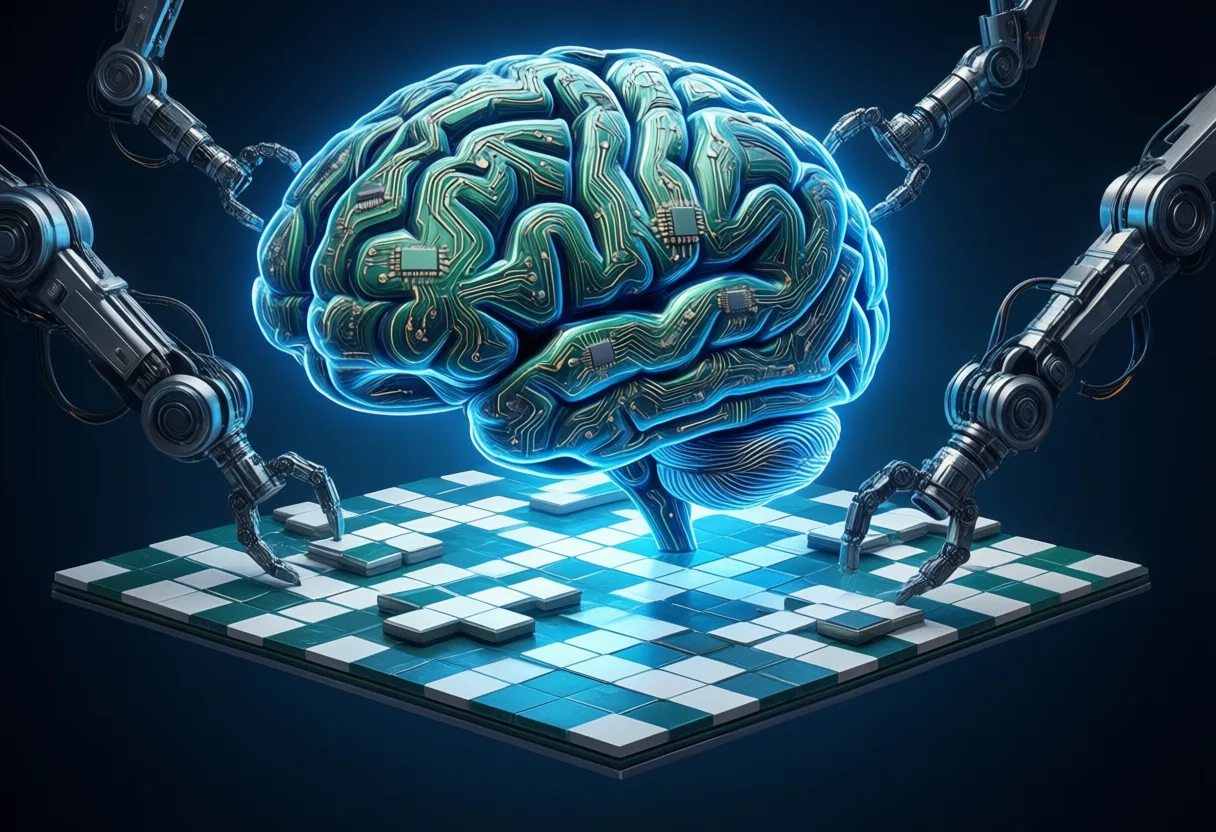
Artificial intelligence is no longer a distant vision shimmering on the horizon of science fiction-it is here, woven into the fabric of daily life, reshaping how we work, learn, and connect. From the algorithms that suggest your next favorite song to the systems guiding medical diagnoses, AI operates quietly but powerfully beneath the surface of Modern experience.
Understanding its basics is no longer optional for the Curious mind; it is a necessary step toward informed citizenship in a rapidly evolving world.
What Is Artificial Intelligence?
Artificial intelligence refers to machines designed to perform tasks that typically require human cognition-learning, reasoning, problem-solving, perception, and even language understanding. These systems are not sentient, nor do they possess consciousness, but they can mimic patterns of thought through vast data processing and iterative learning.
At its core, AI functions by identifying relationships within data, adjusting its internal models over time, and improving performance without explicit reprogramming. This ability to adapt gives rise to Applications That feel almost intuitive, such as voice assistants responding to natural speech or recommendation engines predicting preferences with uncanny accuracy.
While the term may evoke images of humanoid robots, most AI today is narrow-engineered for specific functions rather than general intelligence. The journey from rule-based programs of the 1980s to today’s deep learning models has been marked by exponential growth in computing power and data availability.
Why Understanding AI Matters Now
We live in an era where decisions-about jobs, loans, Healthcare, and security-are increasingly influenced by algorithms trained on historical data. These systems can amplify biases or create feedback loops if not carefully designed, making public literacy around AI not just useful but ethically urgent.
A foundational grasp of AI allows individuals to ask better questions: Who trained this model? What data was used? Could it be wrong, and if so, who bears the cost? These are not technical details reserved for engineers-they are civic concerns.
Moreover, as automation transforms industries, understanding AI empowers workers to adapt, retrain, and advocate for equitable transitions. It also opens doors to innovation, enabling more people to contribute ideas that shape how technology serves society.
Education in AI should not be gatekept by jargon or advanced mathematics. Clear, accessible resources can demystify the field and invite broader participation in its development.
One effective way to test and reinforce understanding is through interactive learning tools like an Artificial Intelligence Quiz with answers, which helps learners identify gaps and solidify concepts at their own pace.
Top 5 Real-World Uses of AI Today
AI is not a speculative future technology-it is already embedded in systems we interact with daily. Its most impactful applications span healthcare, transportation, finance, education, and environmental science.
- Medical Diagnostics: AI models analyze medical images such as X-rays and MRIs to detect anomalies earlier than traditional methods, supporting radiologists with faster, more consistent insights.
- Autonomous Vehicles: Self-driving cars use AI to interpret sensor data, predict pedestrian behavior, and make split-second navigation decisions.
- Fraud Detection: Financial institutions deploy machine learning to monitor transactions in real time, flagging unusual patterns that may indicate fraud.
- Personalized Learning: Educational platforms adapt content to individual student performance, offering tailored exercises and feedback.
- Climate Modeling: AI accelerates simulations of complex climate systems, helping scientists predict extreme weather events and assess mitigation strategies.
Each of these applications reflects a blend of technical sophistication and human oversight. The true power of AI emerges not when it replaces people, but when it augments human judgment and expands what is possible.
For those seeking to explore how these technologies function in practice, Applications of Artificial Intelligence: Top 5 Uses Today offers a detailed look at current implementations and their societal implications.
How to Test Your AI Knowledge
Engaging with AI doesn’t require writing code or building models-beginning with conceptual understanding is both valid and valuable. Quizzes serve as effective tools to assess comprehension, challenge assumptions, and reinforce key ideas in a low-pressure environment.
An effective quiz covers fundamental concepts such as machine learning versus rule-based systems, the role of training data, and the difference between narrow and general AI. It should also touch on ethical considerations, including algorithmic bias and data privacy.
Questions might include:
- What is supervised learning?
- Can AI make decisions without human input?
- How does natural language processing enable chatbots?
Answer explanations are crucial-they transform a simple assessment into a learning opportunity. When crafted thoughtfully, these explanations clarify misconceptions and connect abstract ideas to real-world examples.
Taking an Artificial Intelligence Quiz with answers allows learners to measure progress, build confidence, and prepare for deeper study or professional application.

The Future of AI Literacy
As AI becomes as ubiquitous as electricity, the ability to understand its mechanisms and limitations will be a cornerstone of modern education. Just as we teach students to interpret media or evaluate scientific claims, we must equip them to navigate algorithmic systems critically.
This literacy should emphasize not only how AI works, but also how it affects power, equity, and autonomy. Technology is never neutral-its design reflects choices made by developers, companies, and policymakers.
Fostering widespread understanding ensures that these choices are subject to public scrutiny and democratic input. It also encourages diverse voices to enter the field, bringing new perspectives to the design of future systems.
The path forward lies not in passive acceptance, but in engaged curiosity-asking questions, seeking clarity, and demanding transparency. Whether through reading, discussion, or interactive tools like quizzes, every step toward understanding strengthens our collective agency in the age of machines.
Think You Know AI? Test Your Smarts
How Smart Are the Machines?
Artificial intelligence isn’t just sci-fi anymore-it’s in your phone, your car, and even your toaster. But here’s a fun twist: the term “artificial intelligence” was first coined back in 1956 during a summer workshop at Dartmouth College. That small gathering of scientists kicked off decades of research that eventually gave us voice assistants and self-driving cars. Early AI systems were shockingly basic by today’s standards; some could only solve logic puzzles or play checkers, yet they laid the groundwork for everything that followed.
One of the oldest ways to test if a machine can “think” is the Turing Test, proposed by Alan Turing in 1950. The idea? If a human can’t tell whether they’re chatting with a person or a machine, the machine passes. No AI has fully nailed it under strict conditions, but some chatbots have come close by mimicking conversation styles. Interestingly, AI doesn’t “learn” like humans do-it finds patterns in massive amounts of data, which is why feeding it good information is key. And despite how smart they seem, today’s AI still can’t feel emotions or understand context the way people do. They’re brilliant pattern matchers, not conscious beings. Explore more stories, videos, and creators on Loaded.
Frequently Asked Questions
What is artificial intelligence?
Artificial intelligence refers to machines designed to perform tasks that typically require human cognition, such as learning, reasoning, problem-solving, perception, and language understanding. These systems mimic patterns of thought through data processing and iterative learning.
When was the term 'artificial intelligence' first coined?
The term 'artificial intelligence' was first coined in 1956 during a summer workshop at Dartmouth College. That event marked the beginning of decades of AI research.
What is the Turing Test?
The Turing Test, proposed by Alan Turing in 1950, assesses whether a machine can exhibit human-like conversation. If a human cannot distinguish between a person and a machine during a chat, the machine passes the test.
Can AI feel emotions or understand context like humans?
No, AI cannot feel emotions or understand context the way people do. It operates by identifying patterns in data and is not conscious, despite its ability to mimic human behavior.
This article was produced with AI assistance. How Neuron Magazine uses AI.
Zahra explores the frontiers of human enhancement, from neural implants to gene editing, with a focus on ethical implications and lived experience. She blends scientific rigor with intimate storytelling to illuminate how technology reshapes identity and lifespan.