The machines are not rising. They are Learning-quietly, methodically, reshaping the world in ways both visible and invisible. From the rhythm of your morning playlist to the unseen algorithms guiding medical diagnoses, artificial intelligence is no longer a vision of tomorrow; it is woven into the fabric of today.
What Exactly Is Artificial Intelligence?
Artificial intelligence refers to systems or machines that perform tasks typically requiring human cognition-Learning From experience, recognizing patterns, making decisions, and interpreting language. These systems do not “think” in the way we do, but they simulate aspects of thought through structured data processing and rule-based logic. Instead of consciousness, they operate on probability, correlation, and optimization, turning vast streams of information into actionable outcomes.
At its core, AI is built upon layers of Mathematical models That mimic neural pathways, allowing computers to adapt their behavior based on feedback. This does not mean the machine understands joy, sorrow, or intent-only that it can identify the conditions under which such concepts are expressed. It’s less about sentience and more about precision: refining predictions until they feel almost intuitive.
Consider how a navigation app recalculates your route when traffic slows-not because it empathizes with your frustration, but because it has learned the statistical likelihood of delay and adjusts accordingly. These are not acts of will, but triumphs of design, where Intelligence is measured not by awareness, but by utility.
Breaking Down the Hype: How Machines Learn to Think
The phrase “Machines That think” conjures images of sentient robots debating philosophy, but in reality, machine learning is far more grounded. It begins with data-thousands or millions of examples fed into algorithms so the system can detect underlying structures. Over time, it learns to generalize from these examples, much like a student improves at recognizing bird species after studying dozens of field guides.
There are Different approaches Within this domain. Supervised learning uses labeled data-such as photos tagged “cat” or “dog”-to train models to classify new inputs accurately. Unsupervised learning, meanwhile, uncovers hidden patterns without guidance, clustering similar data points together, like grouping customers by purchasing habits without predefined categories. Reinforcement learning operates differently still, rewarding correct actions and penalizing errors, akin to training a dog with treats and corrections.
None of these processes involve understanding in the human sense. A model identifying tumors in X-rays doesn’t “know” what cancer is-it only recognizes pixel patterns associated with prior diagnoses. The power lies not in comprehension, but in consistency: an ability to process more images in an hour than a radiologist might see in a decade. For those seeking clarity amid the noise, exploring Applications of Artificial Intelligence: Top 5 Uses Today offers tangible insight into how these abstractions become real-world tools.
Can AI Really Think Like a Human?
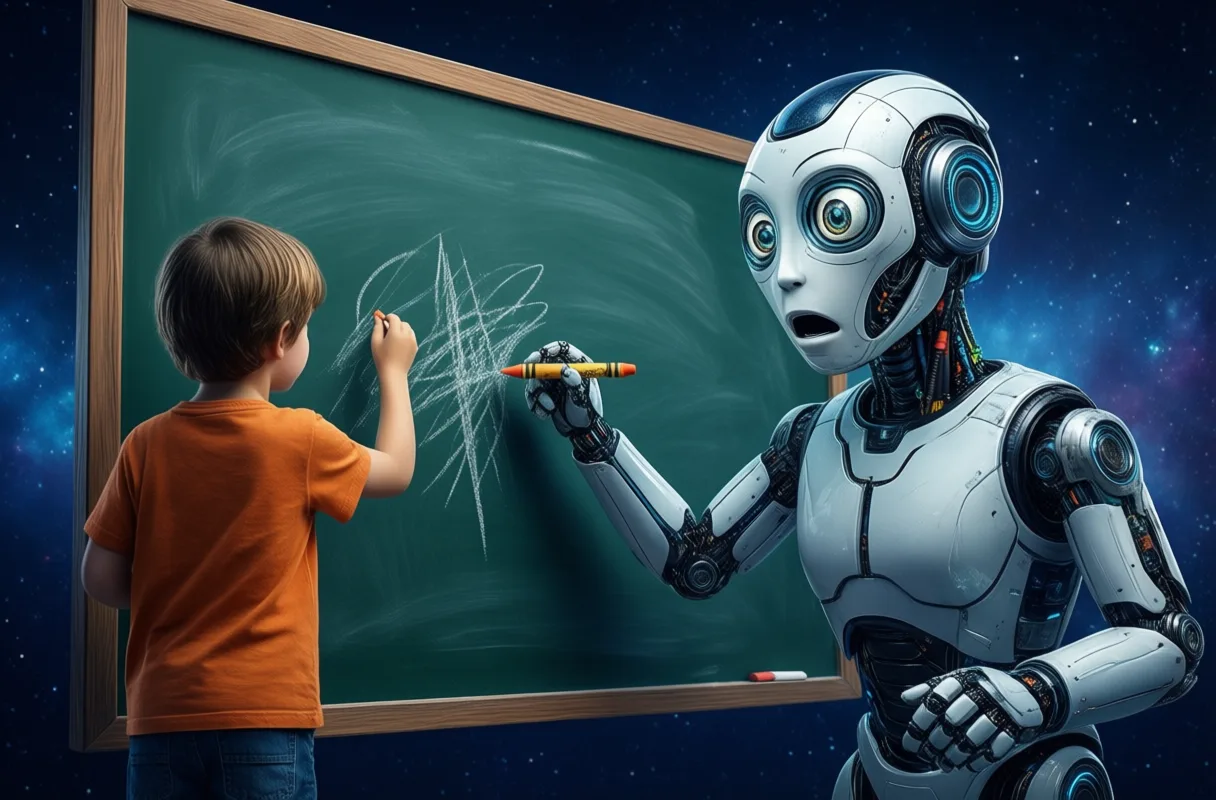
No-artificial intelligence does not think like a human, nor was it designed to replicate the full breadth of human cognition. Our minds blend emotion, memory, instinct, and social context into decisions often made unconsciously, while AI follows computational paths optimized for efficiency and accuracy. Where humans excel at ambiguity, AI thrives on structure, turning uncertainty into quantifiable risk.
Human thought is deeply embodied: shaped by sensory input, fatigue, culture, and even gut microbiota. AI lacks embodiment entirely-it has no body, no subconscious, no dreams. It cannot feel boredom during a long meeting or inspiration during a walk in the rain. Its "insights" emerge not from intuition, but from statistical inference across datasets too large for any person to parse.
This divergence matters ethically and practically. Mistaking pattern recognition for understanding Leads To overtrust-assuming a language model knows truth when it merely predicts plausible words. We must resist anthropomorphizing code, remembering that A machine can imitate empathy without ever feeling it. The goal isn't to build artificial humans, but intelligent tools that augment our uniquely biological wisdom.
Where Is AI Already Part of Daily Life?
You interact with artificial intelligence daily, often without realizing it. When your email filters spam automatically, when your phone unlocks using facial recognition, or when a streaming service recommends a film you end up loving-these are all moments shaped by AI. Behind each convenience lies a complex network trained to anticipate needs before they’re spoken.
In healthcare, AI assists doctors by flagging anomalies in medical scans faster than the human eye could detect. In transportation, ride-sharing platforms use predictive modeling to estimate arrival times and optimize routes in real time. Even agriculture now employs AI-driven drones to monitor crop health, adjusting irrigation and fertilization with microscopic precision.
These applications reflect a quiet revolution-one not marked by fanfare, but by incremental improvements in speed, safety, and personalization. The integration is seamless because it must be: technology that disrupts too loudly risks rejection, while subtle enhancement becomes indispensable. As adoption grows, so too does the need for transparency about how these systems influence choices, from what news we read to who gets hired.
How Do Machines Get Smarter Over Time?
Machines improve not through sudden epiphanies, but through iterative refinement-a continuous loop of trial, error, and adjustment. Each interaction generates data, and every piece of data becomes fuel for retraining models to perform better next time. A voice assistant mishearing “call Mom” may fail once, but if enough users correct it, the system updates its phonetic database globally.
This evolution depends heavily on feedback mechanisms. In supervised settings, engineers label correct outputs to guide learning. In reinforcement scenarios, AI agents explore environments, receiving digital rewards for success and penalties for failure, gradually discovering optimal strategies. Autonomous vehicles, for instance, simulate millions of driving hours in virtual worlds, encountering edge cases too dangerous to test on real roads.
Yet improvement is not infinite. Models eventually plateau, constrained by data quality, algorithmic limits, or computational resources. Moreover, smarter doesn’t always mean safer-increased complexity can make systems less interpretable, creating “black boxes” even their creators struggle to understand. Progress, then, requires not just technical innovation, but humility in knowing when to slow down.
Is Artificial Intelligence Always Autonomous?
Contrary to popular belief, most AI systems today are not autonomous actors making independent decisions. They function best as collaborators-enhancing human judgment rather than replacing it. A diagnostic tool may highlight potential issues in a brain scan, but the final interpretation rests with a physician. An AI writing assistant suggests phrasing, but the author retains creative control.
Autonomy exists on a spectrum. Some systems operate independently within narrow boundaries: automated trading bots executing microsecond transactions, or warehouse robots navigating predefined paths. But full autonomy-the kind that adapts to novel situations with human-like flexibility-remains elusive. Even advanced self-driving cars require human oversight under unpredictable conditions.
The distinction matters profoundly. Framing AI as inherently autonomous risks absolving responsibility-suggesting mistakes are the machine’s fault, not the designers’, deployers’, or regulators’. In truth, Every AI reflects the values, biases, and priorities embedded in its creation. Recognizing this dependency ensures accountability remains centered where it belongs: with people.
What Are the Risks of Relying on AI?
As dependence on AI deepens, so do vulnerabilities. Systems trained on biased historical data may perpetuate discrimination, silently influencing hiring, lending, or policing decisions. A model predicting job performance might favor candidates from certain backgrounds not because they’re more qualified, but because past hires reflected systemic inequities. The danger lies in mistaking statistical trends for objective truth.
Another concern is fragility. AI excels within familiar parameters but falters when confronted with the unexpected. A facial recognition system might work flawlessly indoors yet fail in bright sunlight due to glare patterns it never encountered during training. Such brittleness can lead to catastrophic failures in high-stakes domains like aviation or emergency response.
Then there’s the erosion of human skill. When algorithms manage schedules, write emails, or navigate cities, we risk losing the cognitive muscles needed to do these things ourselves. Reliance becomes a form of quiet surrender-convenient in the short term, potentially disempowering in the long. To prevent this, we must design AI not as a crutch, but as a coach-one that supports growth without supplanting agency.
Can Anyone Build an AI System Today?
Yes-building basic AI systems is more accessible than ever, thanks to open-source frameworks, cloud computing, and online education platforms. With foundational knowledge in programming and data analysis, individuals can create models that classify images, generate text, or predict trends using publicly available tools. You no longer need a PhD or corporate lab to experiment meaningfully.
Beginners often start with Python, leveraging libraries like TensorFlow or PyTorch to construct neural networks without coding every mathematical operation from scratch. Pretrained models allow developers to fine-tune existing systems for specific purposes, reducing the need for massive datasets. A small business owner, for example, might adapt a sentiment analysis model to monitor customer reviews.
Still, accessibility doesn’t guarantee responsibility. Without proper training in ethics, statistics, and system limitations, well-intentioned projects can produce harmful outcomes. Building AI should include asking: Who benefits? Who could be harmed? What assumptions am I encoding? Technology democratized without wisdom can amplify harm as easily as innovation.
What Should Beginners Focus on First?
Start with data-its quality, origin, and implications. No matter how elegant the algorithm, poor data yields flawed results. Understand how datasets are collected, whether they represent diverse populations, and what gaps might exist. Garbage in, gospel out: modern AI often treats input as sacred, replicating errors at scale.
Next, master the fundamentals of machine learning types: supervised, unsupervised, and reinforcement learning. Know when each applies and what trade-offs they entail. Equally important is learning to evaluate performance-not just accuracy, but fairness, robustness, and interpretability. A model that works 95% of the time may still fail catastrophically for marginalized groups.
Finally, cultivate interdisciplinary thinking. AI intersects with psychology, law, economics, and philosophy. Reading beyond code builds moral imagination-the ability to foresee consequences before deployment. For newcomers navigating this terrain, reviewing practical implementations can help ground theory in reality. Exploring Applications of Artificial Intelligence: Top 5 Uses Today provides concrete examples of how abstract concepts translate into everyday impact.

How Is AI Shaping the Future of Work?
Automation powered by AI is transforming industries, eliminating repetitive tasks while creating demand for new skills. Roles centered on routine data entry, assembly-line inspection, or basic customer service face displacement, but emerging positions in AI supervision, ethics auditing, and hybrid human-machine coordination are growing rapidly. The future workplace won’t eliminate humans-it will redefine collaboration.
Workers who integrate AI fluently-using it to analyze reports, draft communications, or visualize data-will gain competitive advantage. However, this shift demands lifelong learning. Education systems must evolve to emphasize critical thinking, emotional intelligence, and adaptability-qualities machines cannot replicate. The most resilient careers will combine technical proficiency with deeply human capabilities.
Organizations, too, must reconsider structure and equity. If AI boosts productivity, who benefits-the shareholder, the worker, or both? Will algorithmic management deepen surveillance or enable flexible, personalized workflows? These questions have no predetermined answers; they depend on choices made today by leaders, policymakers, and citizens alike.
What Ethical Questions Must We Address Now?
We must confront the ethics of AI not as an afterthought, but as a foundation. Who owns the data used to train these systems? How do we protect privacy when behavior is constantly monitored and monetized? And when an AI makes a harmful decision-denying a loan, misidentifying a suspect-how do we assign accountability?
Bias is perhaps the most urgent challenge. Algorithms trained on historical data inherit society’s prejudices, potentially reinforcing racial, gender, or socioeconomic disparities. Detecting and correcting these flaws requires diverse teams, transparent methodologies, and ongoing audits. Fairness cannot be assumed; it must be engineered deliberately.
Beyond bias, we face existential questions about autonomy, consent, and dignity. Should AI be allowed to manipulate emotions through hyper-personalized content? Can we preserve meaningful human connection in a world saturated with synthetic interactions? The answers require not just technologists, but philosophers, artists, and communities-because Ethics is not coded; it is cultivated.
Beyond the Hype: Building a Practical Understanding
Artificial intelligence is neither magic nor menace-it is a mirror reflecting our intentions, priorities, and blind spots. To engage with it wisely, we must move beyond sensational headlines and embrace nuance. Real progress lies not in chasing breakthroughs, but in asking better questions: What problem are we solving? At what cost? For whom?
Beginners need not master every equation to contribute meaningfully. Curiosity, skepticism, and compassion are equally vital tools. Whether you're designing a model, regulating its use, or simply using an AI-powered app, your awareness shapes its trajectory. Technology unfolds like a chemical reaction-each variable matters, each condition alters the outcome.
Let us build intelligently-not just efficiently, but justly. Let us remember that the most advanced algorithm is still crafted by human hands and guided by human hearts. And let us ensure that as machines learn to serve, we continue learning how to lead-with courage, clarity, and care.
Curious About AI? You’re Not Alone
How Smart Is AI, Really?
Artificial intelligence might seem like it knows everything, but it doesn’t “think” like we do. Instead, it spots patterns in massive amounts of data-like how streaming services suggest your next favorite show based on what you’ve watched before. One fun twist? The term “artificial intelligence” was first coined back in 1956 at a conference in New Hampshire, long before smartphones or modern computing power. Early researchers were optimistic, even predicting that machines would soon be able to do any task a human can. Spoiler: we’re still working on that.
AI Shows Up in the Strangest Places
You’ve probably used AI today without even realizing it. Ever gotten a spam email filtered out automatically? That’s AI learning what junk looks like. Or when your phone unlocks using facial recognition-another AI trick. Some systems have even learned to generate art or music, raising questions about creativity and authorship. One surprising fact: AI once analyzed thousands of recipes to create entirely new dishes, like a dessert combining chocolate and beetroot. It didn’t win any culinary awards, but it shows how AI can mix ideas in ways humans might never try. Explore more stories, videos, and creators on Loaded.
Frequently Asked Questions
What is artificial intelligence?
Artificial intelligence refers to systems or machines that perform tasks typically requiring human cognition, such as learning, recognizing patterns, making decisions, and interpreting language. These systems simulate thought through data processing and mathematical models, not consciousness.
Can AI think like a human?
No, AI does not think like a human. It processes data using probability and correlation without emotion, memory, or subconscious influences. Its insights come from statistical inference, not intuition or understanding.
Where is AI used in daily life?
AI is used in email spam filtering, facial recognition for phone unlocking, streaming service recommendations, medical scan analysis, ride-sharing arrival estimates, and crop monitoring in agriculture. These applications often work seamlessly in the background.
Can anyone build an AI system today?
Yes, building basic AI systems is accessible with programming knowledge, open-source tools like TensorFlow or PyTorch, and online resources. Beginners can create models for classification, prediction, or text generation without advanced degrees.
This article was produced with AI assistance. How Neuron Magazine uses AI.
Zahra explores the frontiers of human enhancement, from neural implants to gene editing, with a focus on ethical implications and lived experience. She blends scientific rigor with intimate storytelling to illuminate how technology reshapes identity and lifespan.