
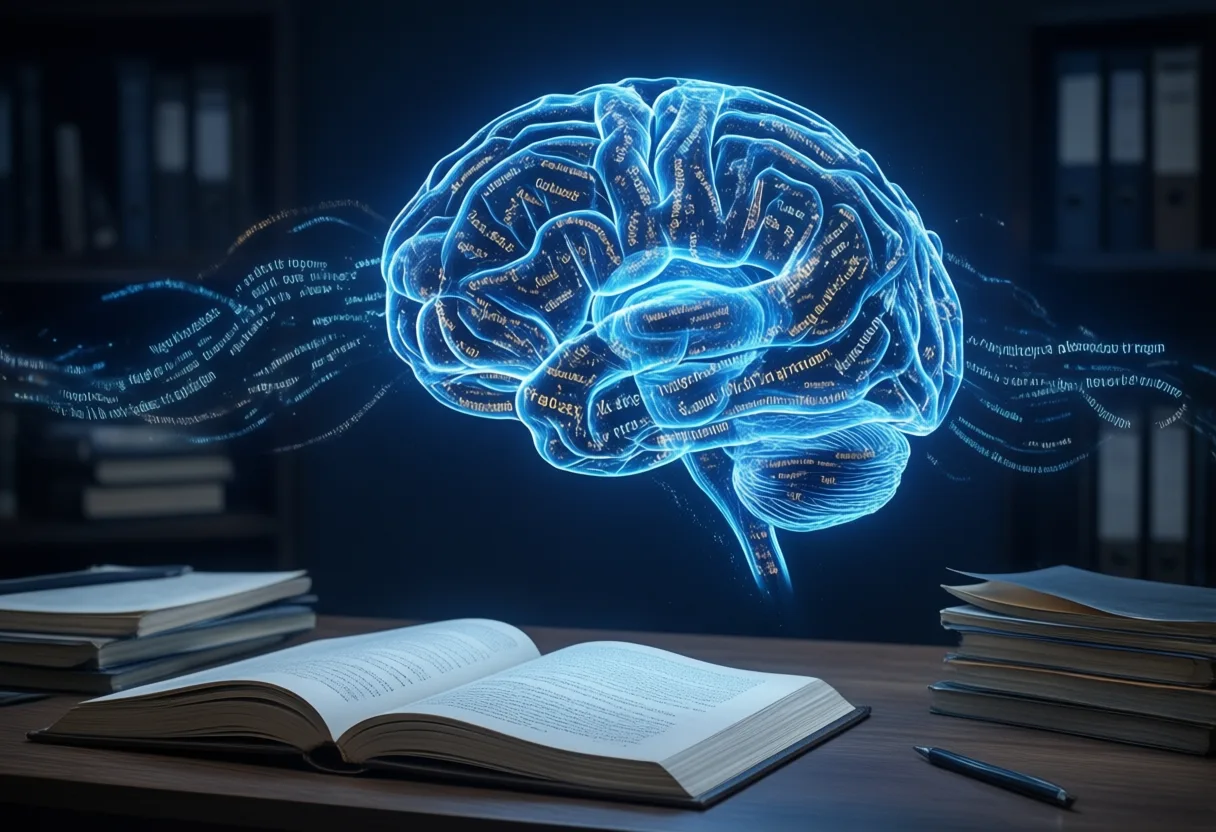
A machine does not think as we do-there is no flicker of consciousness behind its responses, no inner voice mulling over meaning-yet it can produce text so fluid, so seemingly insightful, that we forget we are reading the output of patterned computation rather than human reflection. This is the quiet marvel of modern Artificial intelligence: not sentience, but an unprecedented ability to mimic the contours of understanding with startling fidelity. What emerges is not a mind, but a mirror-one that reflects our language, our logic, and sometimes, our deepest assumptions, all woven into paragraphs that read as if written by someone who truly knows.
What Exactly Is an Artificial Intelligence Paragraph?
An artificial intelligence paragraph is a sequence of sentences generated not through lived experience or deliberate thought, but through statistical inference trained on vast corpora of human language. These models learn the likelihood of word sequences, internalizing grammar, tone, and even rhetorical structure-not by grasping their meaning, but by recognizing recurring patterns across billions of documents. When Prompted To explain a concept, the system does not retrieve a fact like a library; instead, it Constructs A plausible narrative based on contextual cues, assembling sentences that align with how such ideas are typically expressed.
The result often reads as coherent, authoritative, and complete-qualities we instinctively associate with understanding. But this coherence is emergent, not intentional. There is no “aha” moment within the machine, no sudden clarity dawning in silicon. What we see is the product of layered mathematical operations, each step nudging the next word choice Toward higher Probability, until a paragraph forms that satisfies the statistical architecture of fluency.
And yet, for all its synthetic origin, the paragraph can inform, persuade, even surprise. It may introduce a reader to a scientific principle with elegant simplicity or unpack a complex idea in Accessible terms. This is not because the AI Understands The concept, but because it has seen countless human explanations and learned to replicate their form with remarkable precision.
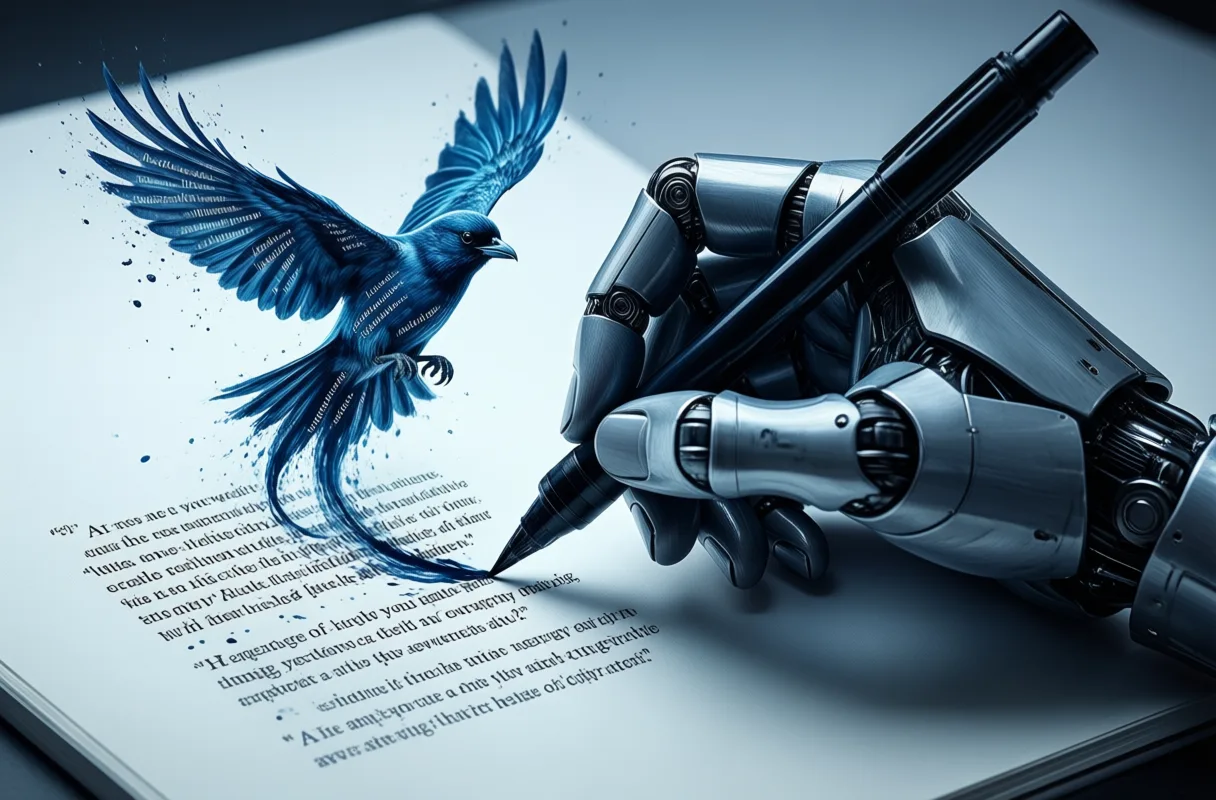
Why Clarity Matters in AI-Generated Text
The Line Between Fluency and Understanding
Clarity in AI-generated text is not a sign of comprehension-it is a byproduct of optimization. Models are trained to minimize confusion, reduce ambiguity, and align with human expectations of logical flow. Fluency does not imply awareness. A sentence can be perfectly formed, its ideas sequentially linked, and still lack any grounding in truth or intent. The danger lies in mistaking this fluency for insight, in assuming that because something is well said, it must be well known.
Consider a model explaining quantum entanglement. It may use precise terminology, cite common analogies, and structure its explanation with pedagogical care. To a novice, this reads as mastery. But the model does not visualize particles or grasp the philosophical implications of non-locality-it draws on textual patterns associated with authoritative explanations. It mirrors understanding without inhabiting it.
This distinction is not trivial. When we conflate clarity with cognition, we risk attributing agency where none exists. The AI does not believe what it writes, nor does it care whether it is right. It generates text that Looks like An explanation because that is what the data has taught it to do. The elegance of the paragraph becomes a kind of camouflage, hiding the absence of an inner world behind the façade of reason.
How Context Shapes Machine-Written Responses
Context in AI is not interpreted as humans interpret it-through memory, emotion, or cultural awareness-but through positional encoding and attention mechanisms that weigh the relevance of prior words. When a user asks for a simple explanation of climate change, the model does not draw on lived experience of weather patterns or ecological concern. Instead, it identifies the most probable sequence of words that follow such a prompt in its training data, shaped by the statistical weight of similar past queries.
This means the response is not About Climate change in any ontological sense-it is About What people typically say about climate change. The AI has no access to the physical world, no sensor to feel rising heat or melting ice. Its Knowledge Is entirely secondhand, mediated through text, and thus constrained by the biases, errors, and omissions of that corpus.
Yet, within these limits, it can produce something useful. A well-crafted prompt can yield a response that distills complex ideas with remarkable economy. But the usefulness of the output depends not on the AI’s Intelligence, but on the quality of the patterns it has absorbed-and the reader’s ability to discern signal from statistical noise.

Can a Machine Truly Explain Something?
Breaking Down the Illusion of Insight
To explain is to illuminate-to guide another mind from confusion to comprehension. It requires a shared frame of reference, an awareness of the listener’s starting point, and a desire to bridge the gap. A machine does none of these things. It does not perceive confusion, nor does it feel the satisfaction of clarity achieved. When it generates an explanation, it does so without purpose, without intent, without even the concept of teaching.
And yet, we learn from it. Students grasp scientific principles from AI-written summaries. Professionals clarify technical concepts using machine-generated analogies. The paradox is real: a system without understanding can still foster understanding in others. This is not because the machine knows, but because the patterns it replicates were forged by those who did.
The illusion of insight arises when we project our own cognitive journey onto the text. We read a clear paragraph, feel the click of comprehension, and assume a mind like ours must have crafted it. But the machine did not experience that click. It did not struggle with the idea and then overcome the struggle. It simply produced what Looks like The product of such a process.
When Coherence Doesn’t Mean Comprehension
Coherence in language is often taken as evidence of thought. We assume that if a text flows logically, someone must have thought it through. But AI demonstrates that coherence can emerge from computation alone. A paragraph may build argument upon argument, each sentence following naturally from the last, and still be devoid of understanding.
This is not a flaw-it is a feature of the system’s design. The model is optimized to generate sequences that satisfy human expectations of logic and continuity. It does not verify truth, nor does it test premises. It predicts words that are likely to follow other words, not ideas that are likely to be correct.
Therefore, a coherent explanation from an AI is not a guarantee of accuracy. It may contain subtle errors, outdated assumptions, or misleading simplifications-wrapped in the velvet of fluency. The reader must remain vigilant, not swayed by elegance, but anchored in critical thinking. The clearest paragraph is still only as reliable as the data it was trained on and the discernment of the one who reads it.
Beyond Word Prediction: What’s Really Happening?
The Role of Patterns in Generating Clear Explanations
At its core, modern AI operates through a form of statistical pattern recognition on an unprecedented scale. It does not store facts in discrete files, nor does it retrieve definitions like a dictionary. Instead, it builds a high-dimensional representation of language, where words, phrases, and concepts are encoded as vectors in a mathematical space. Relationships between ideas-such as cause and effect, similarity, or contrast-are captured not through logic, but through proximity in this space.
When asked to explain something, the model navigates this landscape, selecting paths that maximize coherence and relevance based on its training. The clarity of the resulting text emerges not from insight, but from the density and consistency of the patterns it has internalized. The more frequently a concept was explained in a certain way across the training data, the more likely the model is to reproduce that form.
This is why AI often defaults to consensus views-because dominant narratives leave stronger statistical traces. It is also why it can struggle with nuance, irony, or emerging ideas that lack widespread textual representation. The model is not evaluating truth; it is reflecting frequency.
Limitations Hidden Behind Polished Prose
Polished prose can be deceptive. A well-structured paragraph may appear authoritative, but its surface smoothness can obscure gaps in reasoning, outdated information, or oversimplification. The AI does not know when it is outdated, only when its response aligns with common phrasing. It cannot consult new data unless retrained, nor can it recognize when a consensus has shifted.
Moreover, the model has no memory of past interactions and no persistent identity. Each response is generated in isolation, shaped only by the immediate prompt and the vast, frozen dataset it was trained on. It cannot learn from the conversation, adapt its worldview, or acknowledge error. It produces confidence without accountability.
These limitations are not flaws to be fixed, but inherent features of the architecture. Recognizing them is not a dismissal of AI’s utility, but a necessary step in using it wisely. The clarity it offers is real, but so are its blind spots. The reader must remain the steward of meaning.

Making Sense of AI Writing: A Reader’s Guide
Trusting the Output Without Overestimating the Mind
We can trust AI-generated text as a tool, not a teacher. It excels at summarizing widely accepted knowledge, rephrasing complex ideas, and offering starting points for inquiry. But trust must be tempered with discernment. The absence of intent does not invalidate usefulness-but it does demand vigilance.
Read not with passive acceptance, but with active engagement. Ask: Does this align with other sources? Does it acknowledge uncertainty? Does it invite questioning, or present itself as final? The most responsible use of AI is not to replace human judgment, but to extend it.
Clarity, in this context, is not a measure of truth, but of form. A clear paragraph may still mislead if its foundation is flawed. The reader, not the machine, bears the responsibility of verification.
What We Should Expect from Intelligent-Seeming Text
We should expect utility, not omniscience. We should expect fluency, but not fidelity. We should expect reflection, not originality. The AI is a mirror of human knowledge-imperfect, incomplete, and shaped by the biases of its source material.
What we must not expect is understanding. No matter how elegantly a concept is explained, no matter how natural the rhythm of the prose, the mind behind the text is a metaphor. There is no mind. There is only mathematics, trained on language, producing language in return.
And yet, within these constraints, something profound emerges: a new way of accessing knowledge, not through direct instruction, but through patterned synthesis. It is not thinking. But it can help us think. And in that, there is value-careful, measured, and always held with humility.
A Closer Look at AI and the Paragraph
You’ve probably read a paragraph generated by artificial intelligence without even realizing it. From quick summaries in search results to automated customer service replies, AI-written text is quietly woven into everyday digital life. What’s surprising? These systems don’t “think” like humans-they learn patterns from massive amounts of text, then use that knowledge to predict the next word, and the next, building sentences that sound natural.
How One Paragraph Can Reveal a Lot
A single AI-generated paragraph can actually showcase several core concepts of artificial intelligence. Take coherence, for example. Early AI models often produced text that drifted off-topic or repeated itself, but newer versions maintain focus over several sentences, mimicking human flow. That’s not because the AI understands meaning the way we do, but because it’s gotten incredibly good at mimicking structure and context from the data it’s trained on.
Another fun fact: AI doesn’t “know” facts the way a database does. Instead, it generates responses based on patterns-so if you ask it to write a paragraph about, say, penguins in the Arctic, it might confidently describe a scene that’s completely wrong (penguins live in the Antarctic!). This highlights a key limitation: fluency doesn’t equal truth. The AI isn’t aiming for accuracy-it’s aiming to sound right. That’s why understanding the difference between plausible-sounding text and verified information matters more than ever. Explore more stories, videos, and creators on Loaded.
Frequently Asked Questions
What is an artificial intelligence paragraph?
An artificial intelligence paragraph is a sequence of sentences generated through statistical inference trained on vast amounts of human language. It mimics understanding by recognizing patterns in word sequences without actual comprehension.
Can AI truly understand the concepts it explains?
No, AI does not understand concepts. It generates text based on patterns learned from training data, replicating the form of human explanations without insight, intent, or awareness.
Why does AI-generated text often sound clear and logical?
AI text sounds clear because models are optimized for fluency, coherence, and alignment with human expectations. This coherence emerges from pattern recognition, not from reasoning or truth verification.
How should readers approach AI-generated explanations?
Readers should treat AI output as a tool, not an authority. They must verify information, remain critical of fluent prose, and recognize that clarity does not guarantee accuracy or understanding.
This article was produced with AI assistance. How Neuron Magazine uses AI.
Zahra explores the frontiers of human enhancement, from neural implants to gene editing, with a focus on ethical implications and lived experience. She blends scientific rigor with intimate storytelling to illuminate how technology reshapes identity and lifespan.