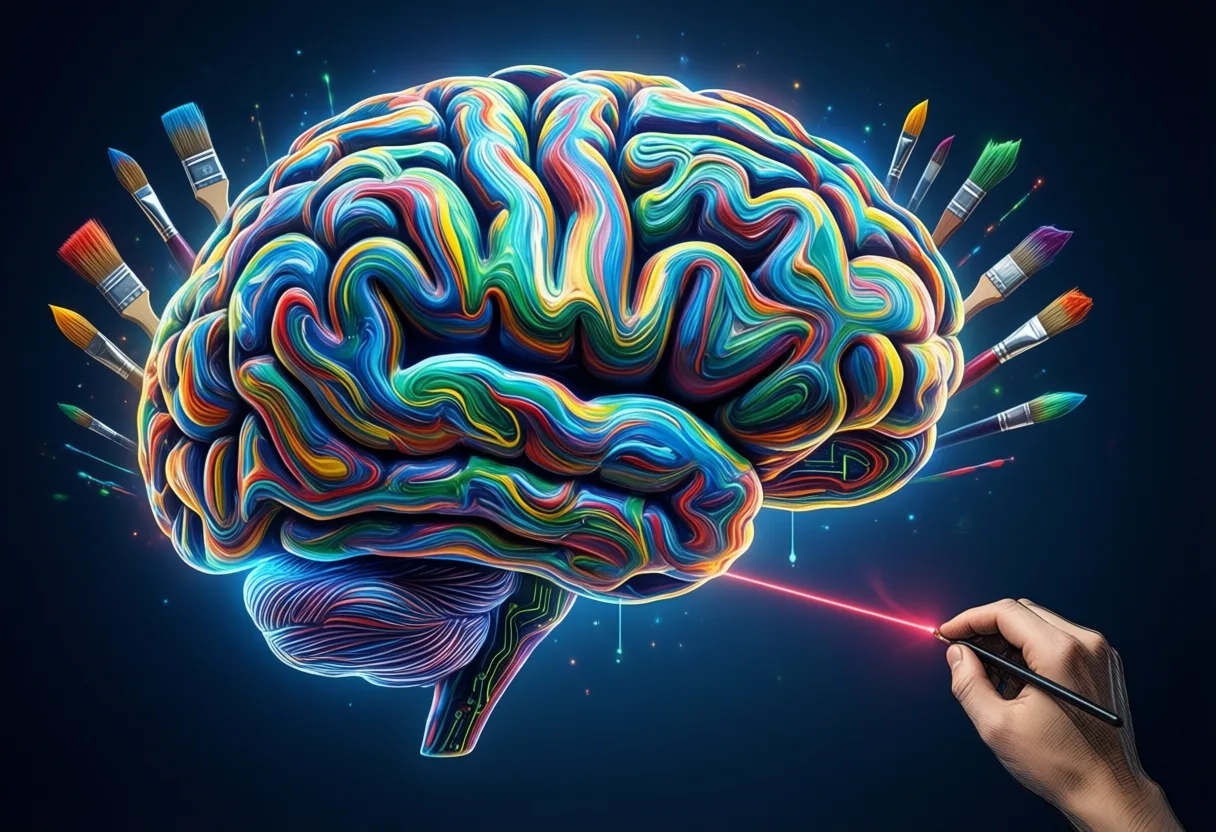
What if a single sentence could birth an entire universe? What if imagination no longer needed years of technical training to become visible, tangible, real?
That future is here. And it’s not arriving quietly-it’s exploding across screens, studios, and smartphones, rewriting the rules of visual creation.
Text-to-Image Models That Turned Words Into Visual Worlds
Remember when generating an image required a mouse, a tablet, or months of coding? That world is fading Fast.
Today, a few well-chosen words can conjure photorealistic landscapes, surreal dreamscapes, or hyper-stylized characters in seconds. Text-to-image models have collapsed the distance between thought and image. No longer must artists translate Vision through Layers of software tools. Now, language is the interface.
These models don’t just recognize words-they understand context, style, and composition. Ask for a "cyberpunk samurai riding a wolf under neon rain," and the system doesn’t balk. It synthesizes. It interprets. It creates.
- The model parses each element: genre, subject, action, environment, mood.
- It cross-references vast datasets of visual patterns and artistic conventions.
- Then, in seconds, it assembles a novel image that’s never existed before.
This isn’t automation. It’s Collaborative ideation at the speed of thought. Artists aren’t replaced-they’re amplified. A concept sketch that once took hours now takes 30 seconds, freeing time for refinement, storytelling, and experimentation.
And the implications? They’re not limited to digital art. Film pre-visualization, game design, fashion prototyping-entire pipelines are being rethought. Why storyboard manually when you can generate 20 variations in the time it takes to brew coffee?
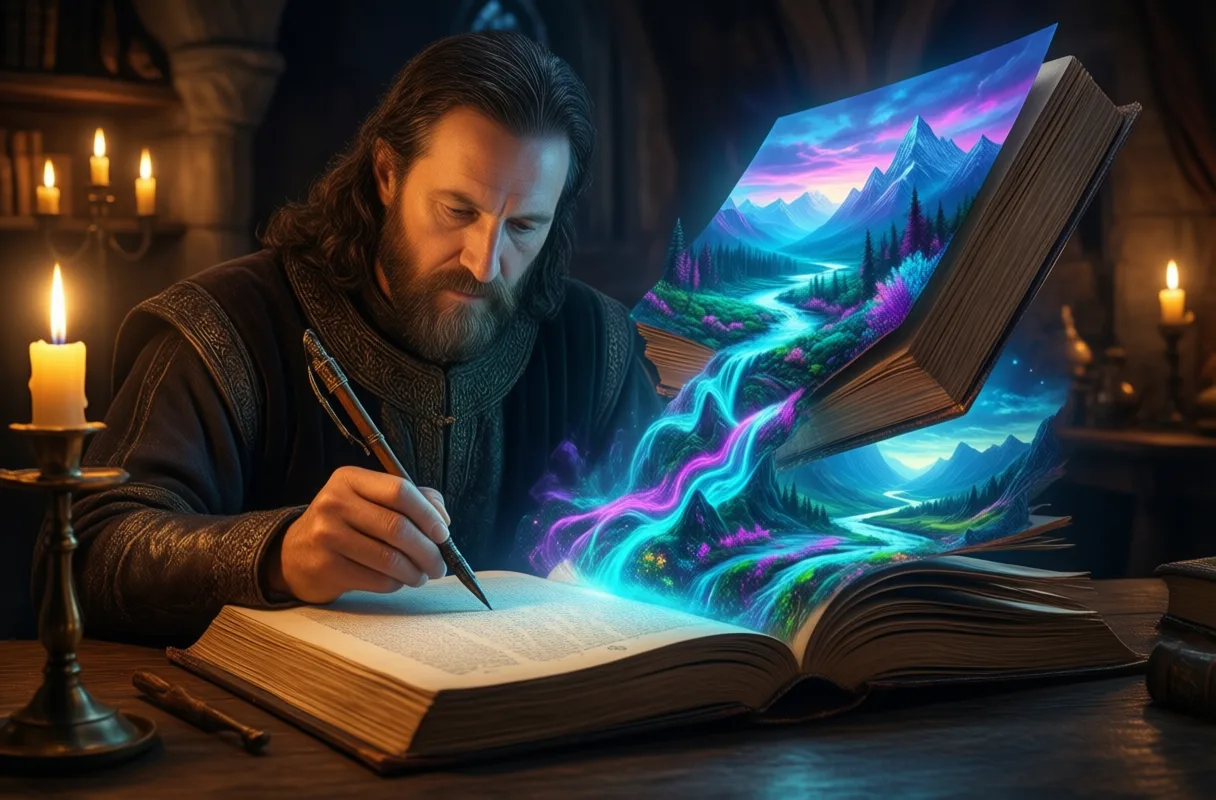
Open-Source Frameworks Empowering Independent Creators
Big tech didn’t keep this power to itself-and that’s what changed everything.
Open-source frameworks have torn down the gates. Now, anyone with a decent GPU and curiosity can run, tweak, and redistribute advanced image-generating models. No corporate API keys. No paywalls. Just code, community, and creativity.
This is the democratization of Creative infrastructure. A student in Nairobi, a designer in Buenos Aires, a hobbyist in Helsinki-they all have access to the same core tools as studios in Silicon Valley.
These frameworks thrive on transparency: - Developers publish model weights, training data summaries, and architecture blueprints. - Communities build plugins, user interfaces, and optimization tools. - Bugs are fixed in hours, not weeks. Features emerge overnight.
The result? A global feedback loop of innovation. One person’s tweak becomes another’s breakthrough. A bug fix in Berlin improves rendering quality in Bangkok.
And because the code is open, trust increases. Users know what the model can do-and what it can’t. They can audit biases, limit outputs, or train on ethical datasets. Control shifts back to the creator.
This isn’t just about art. It’s about autonomy. When tools are open, power is distributed. And when power is distributed, revolutions happen quietly-but they happen.
Real-Time Rendering Systems Enabling Instant Iteration
Speed used to be the enemy of quality. Not anymore.
Real-time rendering systems now let artists adjust prompts, styles, and parameters while the image updates-live. No more waiting 90 seconds per Generation. No more batch processing. Feedback is immediate, fluid, intuitive.
Imagine sculpting light and color like clay, with every twist reflected instantly. That’s the experience now. Dial up the drama. Shift the palette. Swap the era. See it. Fix it. Improve it.
These systems leverage optimized neural networks and efficient memory management to run on consumer hardware. What once required a data center now runs on a laptop.
Key capabilities include: - Live parameter sliders For style intensity, realism, and composition. - Prompt refinement suggestions Based on semantic coherence. - Multi-view generation, where one prompt spawns variations in layout and perspective.
This isn’t just faster-it’s fundamentally different. It turns creation into a conversation. The machine doesn’t just obey-it responds, suggests, surprises.
And in high-pressure environments-ad agencies, film pre-production, product design-this speed is transformative. Decisions happen in minutes, not days. Iteration becomes the default, not the luxury.
Platforms That Democratized Access to Advanced Design
You don’t need a PhD to use AI-driven art tools anymore. You don’t even need to install software.
Platforms have emerged that put powerful image generation behind clean, intuitive interfaces. Drag. Type. Click. Done. Complexity is hidden. Creativity is prioritized.
These platforms act as gateways for millions who never considered themselves artists. Teachers. Entrepreneurs. Social media managers. They’re now generating custom visuals for presentations, campaigns, and personal projects-without hiring a designer.
What makes these platforms powerful isn’t just ease of use. It’s integration: - Templates guide users through effective prompt construction. - Style libraries offer curated aesthetics-vintage, minimalist, futuristic. - Export options support web, print, and animation workflows.
And behind the scenes, these platforms handle the heavy lifting: server scaling, model updates, security. Users focus on vision, not infrastructure.
This is Democratization in action. Not just access to tools-but access to quality, speed, and polish once reserved for professionals.
The barrier to entry isn’t lowering. It’s dissolving.
Integration With Traditional Software for Hybrid Workflows
AI isn’t replacing Photoshop. It’s joining it.
Major design suites now embed AI image generation directly into their workflows. Artists can summon a background, generate a texture, or prototype a character-all without leaving their familiar environment.
This hybrid approach is where the real power lies. AI handles the heavy lifting of ideation and iteration. Humans handle refinement, narrative, and intention.
Consider a concept artist designing a sci-fi city: 1. Generate a base skyline with a text prompt. 2. Import it into a compositing tool. 3. Paint over details, adjust lighting, add motion.
The AI accelerates the start. The artist owns the finish.
Plugins and APIs enable seamless data flow: - Generated images appear as layers. - Prompts are saved alongside project files. - Edits feed back into refinement cycles.
This isn’t disruption. It’s evolution. Like the shift from paint to digital brushes, the tools change-but the craft endures.
And for studios, this means Faster turnaround, lower costs, and higher creative throughput. AI becomes a team member, not a replacement.
Mobile Applications Bringing AI Art to Everyday Users
Your phone is now a portable art studio.
Mobile applications have brought AI-driven image creation to billions. No high-end hardware. No technical knowledge. Just a Device You already carry.
Snap a photo. Type a prompt. Transform it. Share it. All in under a minute.
These apps leverage on-device processing and cloud-based models to deliver speed and quality. Some offer real-time filters that reimagine your surroundings through artistic lenses-van Gogh on a city street, Studio Ghibli in your backyard.
Features include: - One-tap style transfer With popular aesthetics. - Custom prompt libraries For holidays, memes, or social trends. - Social sharing tools Built directly into the interface.
But beyond fun, these apps are training a new generation of creators. Kids learn how prompts shape outcomes. Adults experiment with visual storytelling. Creativity becomes habitual, not heroic.
And as mobile hardware improves, so does capability. What runs in the cloud today may run locally tomorrow-faster, private, always available.
This is mass adoption. Not in labs. Not in studios. In pockets, palms, and daily life.
Customizable Models Trained on Niche Aesthetics
Not every artist wants photorealism. Not every brand fits a mainstream style.
That’s why customizable models are rising fast. Artists and studios now train their own versions of AI models-on personal portfolios, brand assets, or cultural archives.
This shifts AI from generic to authentic. Instead of mimicking broad trends, the model learns a specific voice. A fashion house trains it on its runway history. An illustrator fine-tunes it to match their hand-drawn line.
The process works like this: - Collect a dataset of desired visuals-50, 100, 500 images. - Fine-tune the base model to align with those aesthetics. - Lock in the style, then generate new work in that voice.
The result? AI that doesn’t just create-it Resonates. It understands nuance: brushstroke texture, color psychology, compositional rhythm.
And because these models can be shared or deployed privately, they protect intellectual property while boosting output.
This isn’t about replacing originality. It’s about Scaling it. One artist’s vision can now populate a campaign, a book, a world-without losing its soul.
In the end, the most powerful AI images aren’t the most realistic. They’re the most True.
How AI Is Redrawing the Lines of Digital Art
From Text to Masterpiece in Seconds
Imagine typing “a fox wearing a top hat, painted in the style of Van Gogh” and having a vivid image appear in seconds. That’s the magic behind today’s AI image generators. These tools use massive collections of existing artwork and photos to learn how visuals connect to words. When you give a prompt, the AI doesn’t pull from a database-it creates something entirely new by predicting what pixels should go where. Some models have been trained on billions of image-text pairs, which explains why they can handle surreal requests like “a jellyfish made of stained glass floating in a library.”
The Speed and Surprise Factor
One of the wildest parts of AI art isn’t just how fast it works-it’s how it surprises even its creators. Artists using these tools often describe the process as collaborative, like brainstorming with a machine that thinks in visuals. Some AI-generated pieces have already won awards in digital art contests, sparking debates about creativity and authorship. While the technology can produce polished results in seconds, many artists still tweak the output in traditional software to add personal touches. The blend of human intuition and machine speed is redefining what it means to make art in the digital age. Explore more stories, videos, and creators on Loaded.
Frequently Asked Questions
How do text-to-image models create visuals from words?
Text-to-image models understand context, style, and composition. They synthesize elements from a prompt by cross-referencing vast datasets of visual patterns and artistic conventions to create novel images.
What role do open-source frameworks play in AI image generation?
Open-source frameworks allow anyone with a decent GPU and curiosity to run, tweak, and redistribute advanced models. They promote transparency, community collaboration, and creator control.
How do real-time rendering systems improve the creative process?
Real-time rendering systems let artists adjust prompts and parameters live, with immediate visual feedback. This enables fluid, intuitive iteration without waiting between generations.
Can AI-generated art reflect a specific artistic style or brand?
Yes, customizable models can be trained on personal portfolios, brand assets, or cultural archives to generate work in a specific, authentic voice rather than generic styles.
This article was produced with AI assistance. How Neuron Magazine uses AI.
Malik dissects how artificial intelligence transforms decision-making in governments and corporations, tracking algorithmic power shifts and policy gaps. He writes with clarity and urgency, making high-stakes tech strategy accessible without oversimplifying its risks.