The morning commute is a ritual of motion and momentum-stepping into the current of city life, briefcase in hand, mind still steeped in the quiet of Home. For many, the only anchor is the warmth of a coffee cup, a small vessel of comfort that should, by all logic, remain hot from the first sip to the last. Yet so often, that promise evaporates before the train even reaches midtown.
What Keeps Your Morning Brew Hot During the Daily Grind?
The Science Behind Staying Steaming Through Rush Hour
Thermodynamics doesn’t care about your schedule. Heat escapes from any liquid exposed to cooler air, and nowhere is that more evident than in the hands of a commuter balancing a to-go cup between subway doors and sidewalk crowds. The difference between a tolerable morning and a truly resilient one lies not in willpower, but in engineering. A well-designed travel mug doesn’t just contain coffee-it orchestrates a microclimate, a sealed environment where temperature is not surrendered to entropy without a fight.
The best Designs treat Heat retention not as a feature, but as a function of layered precision. From the material of the inner wall to the vacuum between layers, every choice either resists thermal transfer or surrenders to it. And while marketing may glorify aesthetics or branding, the real story unfolds in the silence between sips-when the liquid still carries the echo of steam, hours after the brew finished dripping.
This is not merely about convenience. It is about consistency-about the quiet dignity of starting your day on your terms, not the mercy of flawed design. In a world that demands constant adaptation, the humble coffee cup becomes a quiet act of defiance.
1. Double-Wall Vacuum Insulation: The Non-Negotiable Core
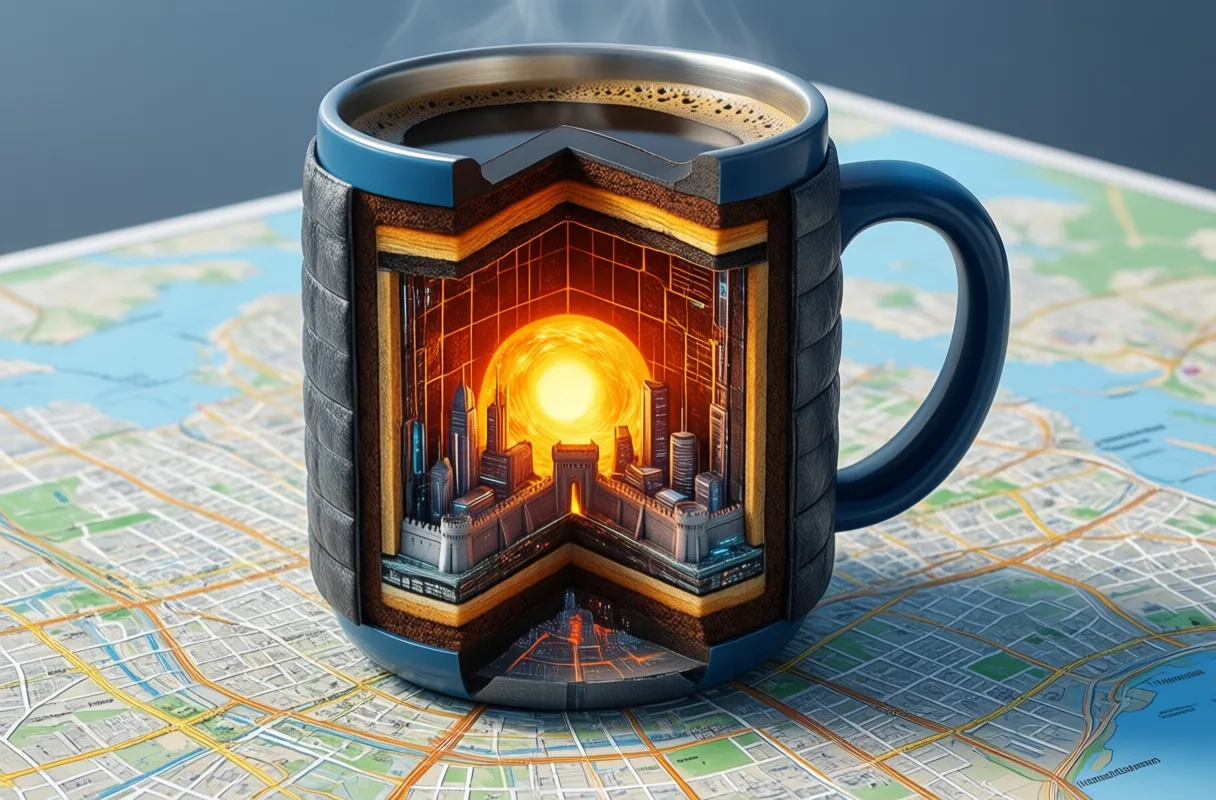
At the heart of every high-performance travel mug lies a principle as old as thermos technology itself: double-wall vacuum insulation. This design traps heat not by adding layers of material, but by removing the medium through which heat travels-air. When the space between two walls is evacuated, conduction and convection are dramatically reduced, leaving radiation as the only path for thermal energy to escape.
The vacuum seal is the single most critical component In maintaining beverage temperature over time. Without it, even the thickest Walls offer Little resistance to heat loss. The absence of molecules in the gap between walls means there is nothing to carry thermal energy outward-a condition as close to thermal stasis as portable design allows.
This principle scales with precision. A poorly sealed vacuum degrades over time, allowing air to seep back in and diminish performance. The most reliable mugs maintain this vacuum for years, not months, through rigorous manufacturing standards and durable materials. For the daily commuter, this isn’t a luxury-it’s the foundation.
2. Stainless Steel vs. Ceramic Interiors: Which Holds Heat Longer?
The inner wall of a travel mug does more than contain liquid-it influences how heat behaves at the molecular level. Stainless steel interiors are the most common choice in high-performance models, prized for their durability and resistance to flavor retention. But beyond practicality, stainless steel conducts heat efficiently, helping distribute warmth evenly across the surface of the liquid.
Ceramic-coated interiors, while less common, offer a different kind of advantage. The smooth, non-reactive surface resists staining and doesn’t interact with acidic beverages, preserving taste over time. However, ceramic is a poorer conductor than metal, which can lead to slightly faster surface cooling, even if the core of the liquid remains warm.
The choice between the two often comes down to trade-offs: longevity and thermal efficiency on one side, flavor purity and ease of cleaning on the other. Neither is universally superior, but for those prioritizing heat retention above all, stainless steel remains the more consistent performer. It integrates seamlessly with vacuum insulation, forming a system where minimal heat is lost to the environment.
Still, the presence of a ceramic lining does not automatically mean inferior performance. When properly engineered, it can function within a vacuum-sealed system without compromising thermal stability-though the total duration of heat retention may vary subtly over extended periods.

3. Lid Design Matters More Than You Think
A travel mug is only as good as its weakest seal-and for most, that weakness is the lid. No matter how perfect the vacuum insulation, heat will escape rapidly if the closure system is flawed. The lid is not an accessory; it is a critical interface between the internal environment and the outside world.
Most modern lids feature a sliding closure mechanism intended to balance accessibility with security. Yet even a small gap can allow steam to vent, accelerating cooling. The most Effective designs Minimize exposed surface area when open and form an airtight seal when closed, often using silicone gaskets to prevent leakage and thermal loss.
Some models incorporate a secondary cap or twist-lock system, adding complexity but also enhancing insulation. These can be cumbersome, but for commuters who carry their mugs in bags or backpacks, the added security may justify the extra steps. The ideal lid allows for one-handed operation without sacrificing the integrity of the seal-a balance that few achieve perfectly.
Ultimately, a lid must do more than prevent spills. It must preserve the internal climate. A well-designed closure doesn’t just keep coffee in-it keeps cold air out.
4. Size and Shape: Why Volume and Proportions Affect Temperature
Not all volumes are created equal. A 12-ounce mug and a 16-ounce mug may seem similar, but their proportions influence how quickly heat dissipates. In general, larger volumes retain heat longer due to a lower surface-area-to-volume ratio-more liquid mass means slower cooling relative to exposure.
But shape plays an equally important role. Tall, narrow mugs expose less surface area to the air than short, wide ones, reducing evaporative cooling. This subtle difference can extend warmth by 20 to 30 minutes under identical conditions, a meaningful margin for someone racing between meetings.
The fill level also matters. A completely full mug minimizes air space inside, reducing convection currents that carry heat upward and out through the lid. For maximum retention, topping off the cup and minimizing headspace is a simple but effective strategy.
Yet practicality must be balanced with physics. A larger mug may hold heat better, but it may not fit in car cup holders or be comfortable to carry. The optimal size is one that meets both thermal needs and spatial constraints-a personal equation each commuter must solve.
5. Thermal Performance in Cold Environments
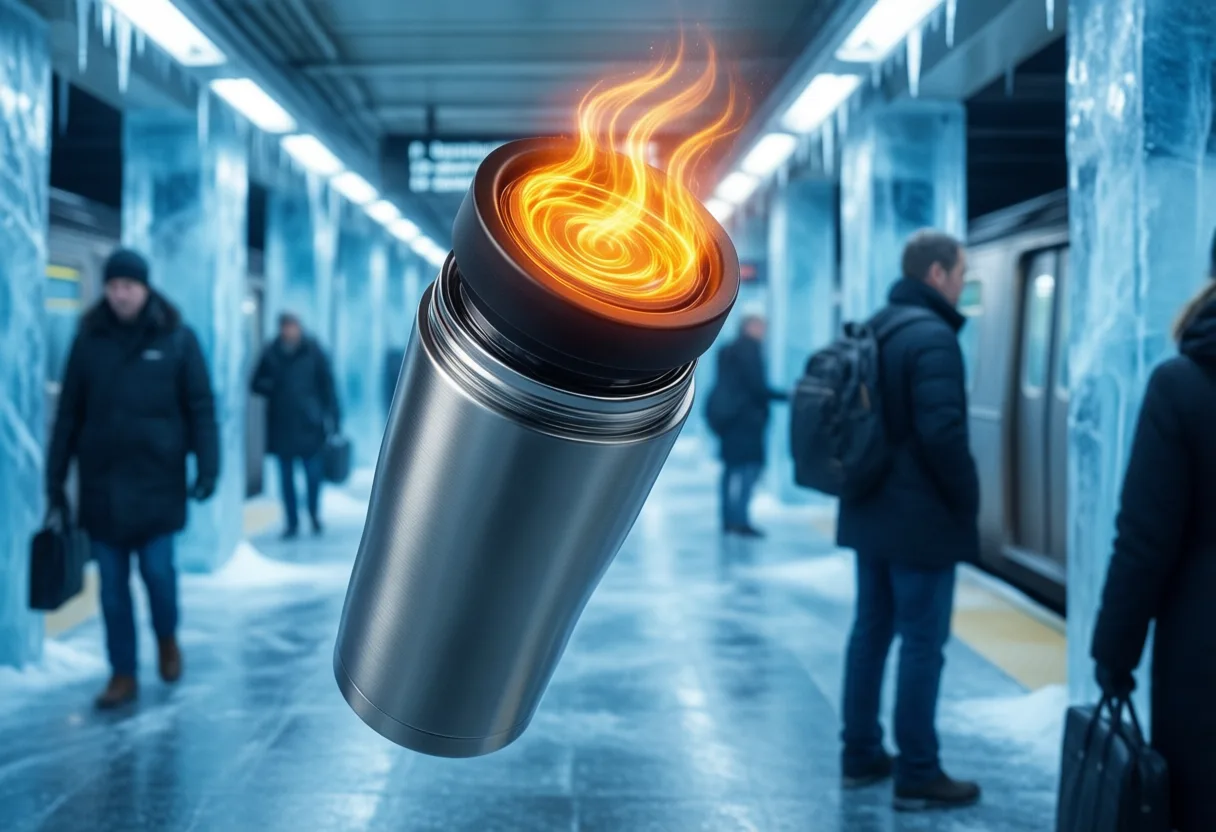
Cold weather doesn’t just make mornings unpleasant-it accelerates heat loss from beverages. When the ambient temperature drops, the gradient between the liquid inside and the air outside increases, driving faster thermal transfer. This is especially true during outdoor commutes or in unheated transit stations.
Travel mugs with robust vacuum insulation perform better in these conditions, but even they are not immune to physics. The rate of cooling is proportional to the difference in temperature, meaning a coffee that stays hot for 12 hours indoors may lose warmth twice as fast in freezing weather.
Condensation on the exterior is a telltale sign of heat escaping, even in double-walled designs. While modern mugs are engineered to resist this, no system is perfect. Some models include additional insulation layers or external sleeves to buffer against extreme cold, though these can add bulk.
For those in colder climates, preheating the mug with hot water before filling can help maintain initial temperature longer. It’s a small act, but one that aligns with the broader philosophy of the best commuter coffee cup: every variable matters.
6. Top Models That Deliver 12+ Hours of Heat Protection
While specific brands and models evolve with the market, certain design principles consistently correlate with long-term heat retention. Mugs that maintain beverage temperature for 12 hours or more typically combine all the elements discussed: a flawless vacuum seal, a stainless steel interior, a secure lid with minimal venting, and an optimized shape.
These models often feature additional refinements-precision-machined threads for a tighter seal, laser-welded seams to prevent vacuum degradation, and high-grade materials that resist wear over time. They are not always the most affordable, but their performance justifies the investment for serious commuters.
Durability and consistency go hand in hand. A mug that loses its vacuum after six months is no longer performing as intended. The best designs are built to last, with warranties and testing protocols that reflect confidence in long-term function.
While no single model can be universally declared superior-preferences vary by grip, weight, and use case-the top performers share a commitment to engineering integrity over marketing flair.
7. The Leak-Proof Myth: Balancing Security and Sip Quality
“Leak-proof” is a bold claim-and one that often fails under real-world stress. A truly sealed system would also be impossible to drink from. Instead, the best travel mugs achieve a balance: secure enough to survive a fall in a crowded train, but accessible enough for a quick sip at a red light.
Most closures rely on silicone gaskets and sliding mechanisms that can degrade over time. Dirt, coffee residue, and repeated use wear down these components, eventually compromising the seal. Regular maintenance is essential, but often overlooked.
The reality is that no lid is perfectly leak-proof under all conditions. Inversion tests in controlled environments don’t replicate the jostling of a packed bag or the pressure of a long flight. Some mugs perform better when upright, others when sealed tightly-but none are immune to the limits of physics.
The goal isn’t perfection, but predictability. A mug that leaks only when dropped is acceptable. One that seeps during normal use is not.
8. Weight and Portability Trade-Offs for Active Commuters
A travel mug must be carried, often for hours, sometimes across multiple modes of transit. Weight becomes a factor not just for comfort, but for sustainability-no design is useful if it’s abandoned due to fatigue.
High-performance mugs tend to be heavier, thanks to thick walls and multiple layers of insulation. This mass contributes to thermal stability, but can make the cup unwieldy for cyclists or pedestrians covering long distances. Some models use aerospace-grade alloys to reduce weight without sacrificing strength.
Balance is key. A mug that fits comfortably in the hand, with a secure grip and a lid operable with one hand, enhances usability without compromising function. For those who bike, hike, or walk with a backpack, a strap or carabiner attachment can make a meaningful difference.
The best commuter coffee cup doesn’t demand adaptation-it adapts to you.
9. Cleaning Challenges That Undermine Long-Term Use
Even the most advanced travel mug is only as good as its cleanliness. Residue builds up in crevices, especially around the lid and gasket, leading to odors, staining, and bacterial growth. Over time, this degrades both taste and performance.
Many mugs claim to be dishwasher-safe, but repeated cycles can warp plastic components and degrade seals. Hand washing is often more effective, though it requires diligence. The complexity of modern lids-with multiple parts and hidden grooves-can discourage thorough cleaning.
Neglect compounds over time. A poorly maintained gasket loses its seal, allowing heat to escape and liquids to leak. Stainless steel may resist corrosion, but it cannot resist neglect.
The most sustainable design is one that invites care-simple to disassemble, easy to dry, and resilient to daily wear.
10. Color and Finish: Do Exterior Coatings Influence Heat Gain or Loss?
At first glance, the color of a travel mug seems purely aesthetic. But surface finish can subtly affect thermal behavior. Darker coatings absorb more radiant heat, while lighter ones reflect it. In direct sunlight, a black mug may warm slightly from external sources-but in a cold environment, it may also radiate heat more readily.
Matte finishes tend to emit thermal radiation more efficiently than glossy ones, though the difference is minimal in insulated designs. The vacuum layer remains the dominant factor, shielding the interior from external temperature fluctuations.
Exterior color does not significantly alter heat retention In well-insulated mugs. The real consideration is durability-powder-coated finishes resist scratching, while painted surfaces may chip, exposing metal to corrosion.
Aesthetic choices matter, but they should not override function. The best designs integrate form and physics without pretending one can replace the other.
Beyond the Hype: What Truly Separates a Reliable Travel Mug?
In an age of rapid iteration and relentless marketing, it’s easy to mistake novelty for progress. But the fundamentals of heat retention have not changed. What separates a reliable travel mug from the rest is not a flashy feature or a celebrity endorsement-it is fidelity to physics.
The best designs respect the science of insulation, the ergonomics of daily use, and the quiet expectation of consistency. They do not promise miracles, but they deliver reliability. They are built not for a single morning, but for thousands.
For the daily traveler, this is not a minor distinction. It is the difference between a moment of warmth and a lifetime of small, well-kept promises. In a world that moves too fast, sometimes the most radical thing you can do is keep your coffee hot-exactly as long as it should be.
Keeping Your Commute Hot (and Interesting)
The Science of Staying Steamy
Ever wonder why some cups keep coffee hot for hours while others don’t? It often comes down to vacuum insulation-a tech borrowed from thermos designs over a century old. Trapped air is a poor heat conductor, so creating a vacuum layer between two walls drastically slows heat loss. That’s why double-walled stainless steel models dominate the scene; they’re not just durable, they’re physics in action.
Sip History, Not Just Coffee
The modern commuter cup has roots in the late 1800s, when glass-lined vacuum flasks were first patented. Early versions were bulky and fragile, but they proved the concept: isolate the liquid from outside temperatures. Fast-forward to today, and materials like BPA-free plastics and advanced sealants make these bottles lighter, safer, and more travel-friendly than ever-without sacrificing performance.
Accidental Innovations
Believe it or not, one popular lid design was inspired by a leaky prototype during a bumpy train ride. Engineers noticed that a slight dome shape reduced spills by managing pressure changes as the drink cooled. Now, many top-performing lids include this subtle curve, turning a flaw into a functional feature. It’s a small detail, but one that keeps your bag dry and your coffee where it belongs.
Frequently Asked Questions
What is the most important feature for heat retention in a travel mug?
Double-wall vacuum insulation is the most critical feature. It minimizes heat loss by removing air between two walls, reducing conduction and convection.
Does the interior material affect how long coffee stays hot?
Yes, stainless steel interiors conduct heat more efficiently and help maintain temperature better than ceramic-coated ones, which can cool slightly faster at the surface.
How does lid design impact a mug's ability to keep coffee hot?
A well-designed lid forms an airtight seal, often with silicone gaskets, to prevent steam from escaping. Even small gaps can accelerate cooling.
Can the color or finish of a coffee cup affect its heat retention?
Exterior color and finish have minimal impact on heat retention in insulated mugs. The vacuum layer shields the interior, making physics more important than appearance.
This article was produced with AI assistance. How Neuron Magazine uses AI.
Zahra explores the frontiers of human enhancement, from neural implants to gene editing, with a focus on ethical implications and lived experience. She blends scientific rigor with intimate storytelling to illuminate how technology reshapes identity and lifespan.