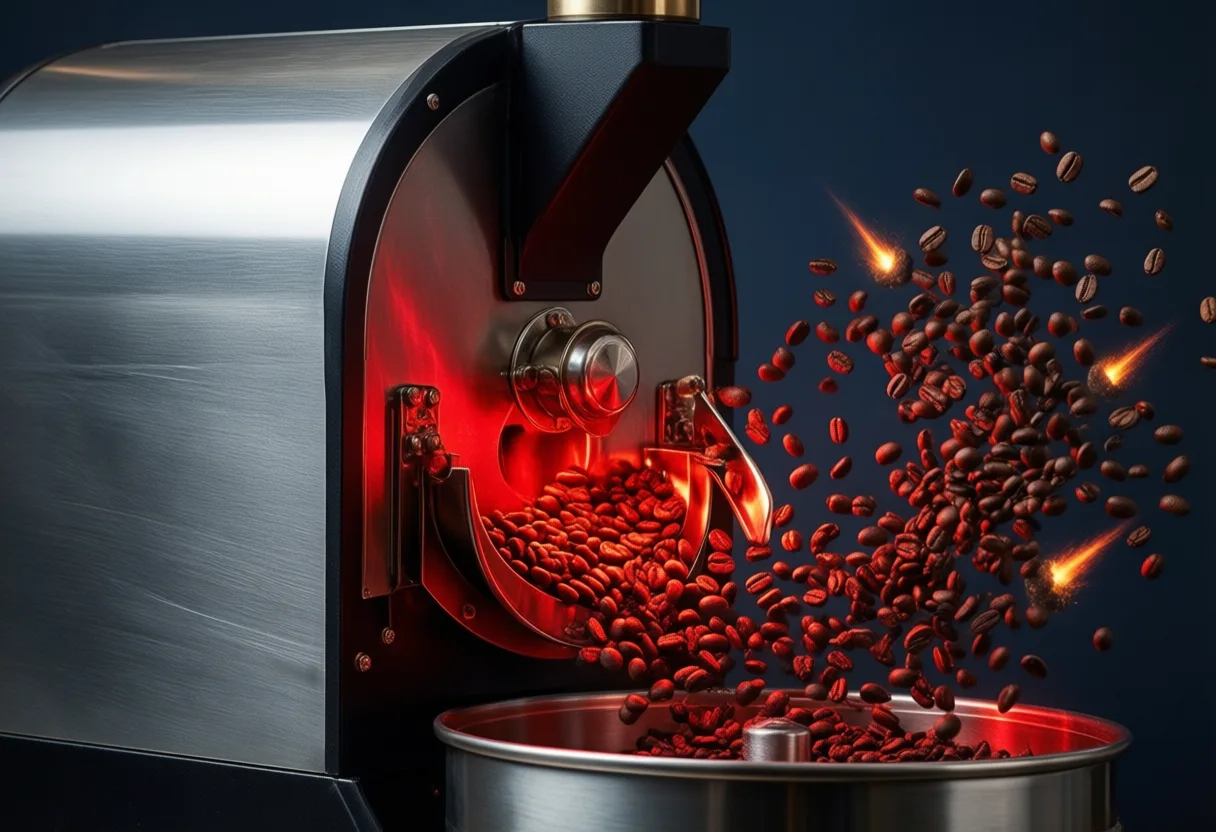
What if the secret to the perfect cup wasn’t in the grind, the water, or the brew time-but in the fire? What if the real magic happened minutes before the first drop hit your mug, in the dark, aromatic alchemy of freshly cracked green beans meeting heat? That moment-when raw potential becomes rich, complex flavor-is where Home coffee Roasting begins.
This isn’t just about caffeine. It’s about control. It’s about chasing the peak of freshness, where volatile compounds haven’t had time to escape, and flavor hasn’t oxidized into flatness. The tools to do this are no longer locked in industrial warehouses. They’re on countertops. And they’re Smarter, faster, and more precise than ever.
Let’s break down the real options. Not hype. Not influencer fluff. Just the facts, the trade-offs, and the technology that separates a decent roast from a revelation.
Why Roast at Home? The Science of Freshness
Coffee Begins losing flavor the moment it’s roasted. Within 48 hours, volatile aromatic compounds start to degrade. By day five, much of what made that Ethiopian Yirgacheffe sing has faded. Pre-roasted beans? They’re often weeks or months old by the time they reach your grinder.
But roast at home, and you collapse that timeline. You go from raw green bean to brewed cup in under 30 minutes. That means peak aromatic intensity. Maximum sweetness. Zero staleness.
This isn’t speculation. It’s chemistry. Roasting triggers the Maillard reaction, caramelization, and pyrolysis-complex transformations that create over 800 aroma compounds. The fresher the roast, the more of those compounds survive to your nose and palate.
And let’s be Clear: freshness isn’t a luxury. It’s the difference between coffee that whispers and coffee that roars.

Types of Home Roasting Machines: Air, Drum, and Hybrid
Not all roasters are built the same. The method defines the result. Heat transfer, airflow, time-each variable shapes the final cup. There are three dominant types: air roasters, drum roasters, and hybrids. Each has strengths. Each has limits.
Air Roasters: Fast, Bright, and Fickle
Air roasters use a stream of hot air to fluidize and roast the beans. Think of it like a popcorn popper on steroids. They’re fast-roasts often finish in 8 to 12 minutes. That speed locks in brightness and acidity, ideal for light roasts and fruity single-origins.
They’re also among the most affordable. Entry-level models start around $100. Some go up to $300, offering better temperature control and batch consistency. But speed comes at a cost: less control over the roast curve. The heat can be uneven. And chaff-the papery skin of the bean-flies everywhere.
Still, for beginners, air roasters are forgiving. They’re simple. They’re clean. And they deliver a clean, vibrant cup.
Drum Roasters: Slow, Deep, and Controlled
Drum roasters rotate beans in a heated metal drum. The contact conduction mimics commercial machines. Roast times are longer-typically 14 to 20 minutes. That slow ramp-up allows for deeper development, richer body, and more complex sugar browning.
This is the method for control freaks. You can shape the roast profile like a sculptor. Want a chocolatey Sumatra with low acidity? A drum roaster gives you the time and thermal stability to get there.
They’re not cheap. Reliable drum roasters start in the mid-hundreds and climb fast. But for serious home roasters, the investment pays off in consistency and depth.
Hybrid Roasters: The Best of Both Worlds?
Hybrids blend drum mechanics with advanced heating-like the Gene Cafe, which uses a carbon fibre infrared heater inside a drum-like chamber. Electric-powered, programmable, and precise.
These machines promise the even heat of a drum with the responsiveness of radiant energy. The Gene Cafe, for example, lets you adjust heat in real time, giving you near-total control over the roast curve.
But they’re not cheap. The Gene Cafe runs around £599. And while they’re powerful, they’re also complex. More parts. More variables. More room for error.
Still, for the tech-savvy roaster, hybrids represent the frontier-where precision meets passion.
What to Look for in a Home Roasting Machine
Buying a roaster isn’t like buying a toaster. This is a commitment. A ritual. So what matters? Price? Sure. But also roast control, capacity, durability, and ease of use.
Start with your goal. Are you roasting for one? Two? A weekly supply? Batch size matters. Most home roasters handle 50 to 250 grams per run. Bigger batches need bigger machines-and bigger budgets.
Next: control. Do you want to set it and forget it? Or do you want to ride the curve, adjusting heat like a pitmaster tending a smoker? Smart roasters offer app-controlled automation, with price tags from $1500 to $3000. They log data, repeat profiles, and even alert you when first crack hits.
But automation isn’t free. It adds cost. Complexity. And sometimes, frustration. Because coffee isn’t code. Humidity, bean density, ambient temperature-all affect the roast. No app can replace intuition built over fire.
Then there’s build quality. Commercial-grade machines exceed $2000. They’re built for daily use, with stainless steel, robust motors, and industrial heaters. For the long haul, they’re worth the price.
Finally, support. Can you get replacement parts? Is there a community? Does the manufacturer offer guidance? Roasting is a learning curve. You want backup when things go sideways.
Where to Buy and What Comes Next
You can find roasting equipment from specialty suppliers like Artizan Coffee, which offers reliable machines and expert guidance for home and small-scale production. Others, like Roastmasters.com, curate top-tier roasters for both beginners and veterans.
But the machine is just the start. You’ll need green beans-single-origin, blends, decaf. You’ll need a grinder that can handle freshly roasted, oily beans. And you’ll need time. Roasting isn’t instant. It’s iterative. You’ll burn batches. You’ll underdevelop others. You’ll chase the sweet spot.
And when you find it? When you pull a roast that’s balanced, aromatic, alive-that’s when the real reward hits. Not just the taste. But the knowledge: you made this. From raw bean to liquid gold. No middlemen. No stale bags. Just fire, science, and your own two hands.
This isn’t just coffee. It’s creation.
| Type | Roast Time | Heat Method | Price Range |
|---|---|---|---|
| Air roaster | 8–12 minutes | Hot air fluidization | $100–$300 |
| Drum roaster | 14–20 minutes | Contact conduction | Mid-hundreds and up |
| Hybrid roaster | Varies | Infrared heater in drum | £599 (Gene Cafe) |
| Smart roaster | Varies | App-controlled automation | $1,500–$3,000 |
Roasting Your Own Beans at Home
Why the Wait Matters: It’s Not Just Heat-It’s Time
Ever wonder why your home-roasted coffee tastes so much brighter? Part of the magic lies in the roast time. Drum roasters, which mimic the big machines used in cafes, take their time-usually between 14 to 20 minutes-to bring out the full flavor of the beans. That slower roast helps develop deeper, more balanced notes compared to quicker methods. It’s not about rushing to the finish line; it’s about letting the beans tell their story at the right pace.
Meet the Hybrid: Where Tech Meets Tradition
One standout in the home roasting world is the Gene Cafe roaster. It’s a hybrid beast-part drum, part air roaster-powered by a carbon fibre infrared heater. This setup gives you serious control over the roast, letting you tweak things on the fly. It’s a favorite among folks who want to experiment without needing a PhD in coffee science. And while it comes with a price tag close to £600, many say the flexibility and consistent results make it worth every penny.
From $100 to $3,000: There’s a Roaster for Every Level
You don’t need to sell a kidney to start roasting at home. Basic models start around $100 and are perfect for dipping your toes in, with simple controls and small batch sizes. On the other end, smart roasters in the $1,500 to $3,000 range let you control the entire process from your phone-schedule roasts, save profiles, even get alerts when it’s time to cool the beans. And if you're eyeing something commercial-grade, those can climb past $2,000, built for bigger batches and maximum precision. Whether you're just curious or fully committed, there's a machine that fits your vibe-and your budget. Explore more stories, videos, and creators on Loaded.
Frequently Asked Questions
What are the main types of home coffee roasters?
The three main types are air roasters, drum roasters, and hybrid roasters. Each uses a different method to apply heat and affects flavor differently.
How long does it take to roast coffee in a drum roaster?
Drum roasters typically take between 14 to 20 minutes to complete a roast. This slower process allows for deeper flavor development.
What is the price range for home coffee roasters?
Home roasters range from around $100 for basic models to $3,000 for smart or commercial-grade machines. The Gene Cafe hybrid roaster costs about £599.
Why is home coffee roasting considered fresher?
Home roasting allows you to go from green bean to brewed cup in under 30 minutes. This preserves volatile aroma compounds that degrade within days in pre-roasted beans.
This article was produced with AI assistance. How Neuron Magazine uses AI.
Malik dissects how artificial intelligence transforms decision-making in governments and corporations, tracking algorithmic power shifts and policy gaps. He writes with clarity and urgency, making high-stakes tech strategy accessible without oversimplifying its risks.