In the quiet hum of a world that never stops moving, the search for stillness has become a biological imperative. Our brains, evolved for rhythm and resonance, now drown in a sea of digital interruptions, urban clamor, and cognitive overload-each Noise A tiny fracture in the architecture of attention and rest. Yet within this chaos, a subtle technology has emerged not to silence the world, but to reshape it: sound machines that don’t just mask noise, but reframe consciousness.
These devices are no longer the monotonous white-noise boxes of the past. They are precision instruments, calibrated to the neuroscience of Sleep And focus, capable of guiding brainwaves like a conductor leading an orchestra of neurons. From the deep brown noise that mimics a distant storm to binaural beats that nudge the mind into meditative states, the modern sound machine is both a tool and a companion-one that speaks the language of frequency, not words.
Why Noise Matters: The Science of Sound and Mental State
Sound Is not merely something we hear; it is something we Feel, down to the cellular level. The human auditory system operates continuously, even during sleep, scanning the environment for threats, patterns, and rhythms-evolutionary mechanisms that once kept us safe from predators now misfire in response to traffic, notifications, and HVAC systems. This constant low-grade alertness disrupts the delicate balance of cortisol and melatonin, hormones that govern wakefulness and rest.
When the brain detects unpredictable noise-what scientists call Acoustic surprise-it triggers micro-arousals, brief awakenings that fragment sleep without full consciousness. These disruptions degrade sleep efficiency, reduce REM duration, and impair memory consolidation. In waking hours, uncontrolled Sound environments Scatter attention, increasing cognitive load and diminishing executive function. The result is a population chronically fatigued, unfocused, and emotionally frayed.
But not all sound is destructive. Certain frequencies and patterns can have the opposite effect: they stabilize, soothe, and synchronize. The brain responds to rhythmic auditory stimuli by aligning its electrical activity-a phenomenon known as Entrainment. This is why a steady rainfall or a low-frequency drone can feel so grounding: they provide a predictable sonic envelope, a buffer between the mind and the unpredictable world.

How Ambient Audio Reshapes Your Sleep Architecture
Sleep is not a uniform state but a dynamic cycle of stages-light sleep, deep slow-wave sleep, and REM-each essential for physical restoration, emotional regulation, and cognitive performance. Ambient audio, when properly designed, can influence the transition between these stages, encouraging longer periods of deep sleep and smoother entry into rest.
Studies have shown that consistent, low-frequency sounds-particularly pink and brown noise-can enhance slow-wave activity in the brain, the neural signature of deep sleep. Unlike white noise, which distributes energy evenly across frequencies, pink noise emphasizes lower tones and diminishes higher ones, creating a warmer, more natural sound profile. This spectral balance appears to resonate more closely with the brain’s intrinsic rhythms, especially during non-REM sleep.
Brown noise, even deeper and more rumbling, mimics the sound of a waterfall or distant thunder. Its power lies in its ability to mask sudden environmental noises-door slams, barking dogs-without introducing harshness. Because it emphasizes the lowest frequencies, it can feel almost tactile, Like A sonic blanket. For individuals with hyperarousal or anxiety-related insomnia, this depth can provide a sense of containment, reducing the brain’s vigilance response.
In contrast, during waking hours, certain soundscapes can sharpen focus by reducing distractibility. Nature recordings-forest birdsong, gentle waves-activate the brain’s default mode network in a way that promotes relaxed alertness. This is not mere placebo; functional MRI scans reveal decreased activity in regions associated with rumination and increased coherence in attention networks when subjects listen to naturalistic sounds.
The key lies not in silence, but in Controlled sound. The brain does not thrive in emptiness-it craves structure. A well-chosen audio environment offers that structure, transforming ambient noise from a liability into a scaffold for mental clarity.
Top 9 Sound Machines for Rest and Concentration
1. A White Noise Machine with Adjustable Pitch and Volume Controls
Precision matters when tailoring sound to individual needs. Machines offering manual control over pitch and volume allow users to fine-tune output to their auditory sensitivity, room acoustics, and personal preference. Some find high-pitched white noise irritating, while others need a stronger signal to mask city noise-adjustability bridges that gap.
These devices often lack flashy features but excel in reliability. With no Wi-Fi, no apps, and no updates, they operate with mechanical simplicity, reducing points of failure. For those who value consistency over connectivity, this minimalism is a virtue.
The ability to shape the sound profile also supports long-term use. As hearing changes with age or environment shifts-say, from apartment to house-having control ensures the device remains effective for years.
2. A Compact Device Featuring Nature Recordings and Loop Settings
Nature-based audio has a unique psychological resonance. The brain evolved in natural environments, and sounds like rustling leaves or distant crickets trigger an innate sense of safety. Devices that store high-quality nature recordings tap into this evolutionary memory, reducing stress hormones more effectively than artificial noise.
Loop settings ensure seamless playback without jarring interruptions. A poorly timed gap between cycles can trigger micro-arousals, defeating the purpose. Advanced units use crossfading or intelligent splicing to maintain continuity, preserving the illusion of real-time ambience.
Their compact size makes them ideal for bedside tables or small living spaces. Despite their size, many deliver surprisingly rich audio, with directional speakers that project sound upward or outward, avoiding harsh directivity.
3. A Multi-Mode Speaker with Ocean, Rain, and Forest Sound Options
Versatility defines this category. With multiple built-in environments-ocean waves, summer rain, mountain streams, crackling fire-these machines adapt to mood and season. A user might choose storm sounds in winter for their grounding depth and switch to forest birdsong in spring for its uplifting quality.
The psychological benefit of choice should not be underestimated. Having options empowers users to align sound with emotional state, enhancing perceived control-a known buffer against stress. This is especially valuable for those with anxiety or depression, where environmental predictability fosters stability.
These units often include fade-in and fade-out functions, mimicking natural transitions. A sunrise simulation paired with gradual audio increase can ease waking, reducing sleep inertia-the groggy disorientation that follows abrupt awakening.
4. A Portable Unit Designed for Travel and Hotel Environments
Frequent travelers face a paradox: they need rest most when their environment is least conducive to it. Hotel rooms, with thin walls and unfamiliar acoustics, disrupt sleep patterns. A portable sound machine becomes a mobile sanctuary, carrying a piece of home’s sonic signature across time zones.
These devices prioritize battery life, durability, and compact design. Some clip onto luggage or fit in a pocket, while others double as USB chargers or Bluetooth speakers. Their independence from outlets makes them ideal for camping, trains, or international trips where plug types vary.
More importantly, they maintain auditory continuity. The brain recognizes familiar sound patterns quickly, reducing the time needed to relax in a new space. For shift workers or flight crews, this consistency can be the difference between restorative sleep and chronic fatigue.
5. A Timer-Enabled Machine with Auto-Off Functionality
Sleep is not static, and neither should sound be. Many people only need audio during the onset phase-typically 30 to 90 minutes. Continuous playback can interfere with later sleep stages, especially if the sound contains rhythmic elements that compete with natural brainwave patterns.
Timer functions allow users to set duration, ensuring sound supports sleep initiation without lingering into deep cycles. This feature is particularly useful for children, whose sleep routines benefit from predictable structure, and for light sleepers who awaken if the audio stops abruptly.
Some models offer gradual fade-out, which mimics the natural dissipation of environmental sound as one drifts off. This subtlety prevents the brain from registering the silence as a change requiring attention.
6. A Dual-Function Device Combining Night Light and Audio Features
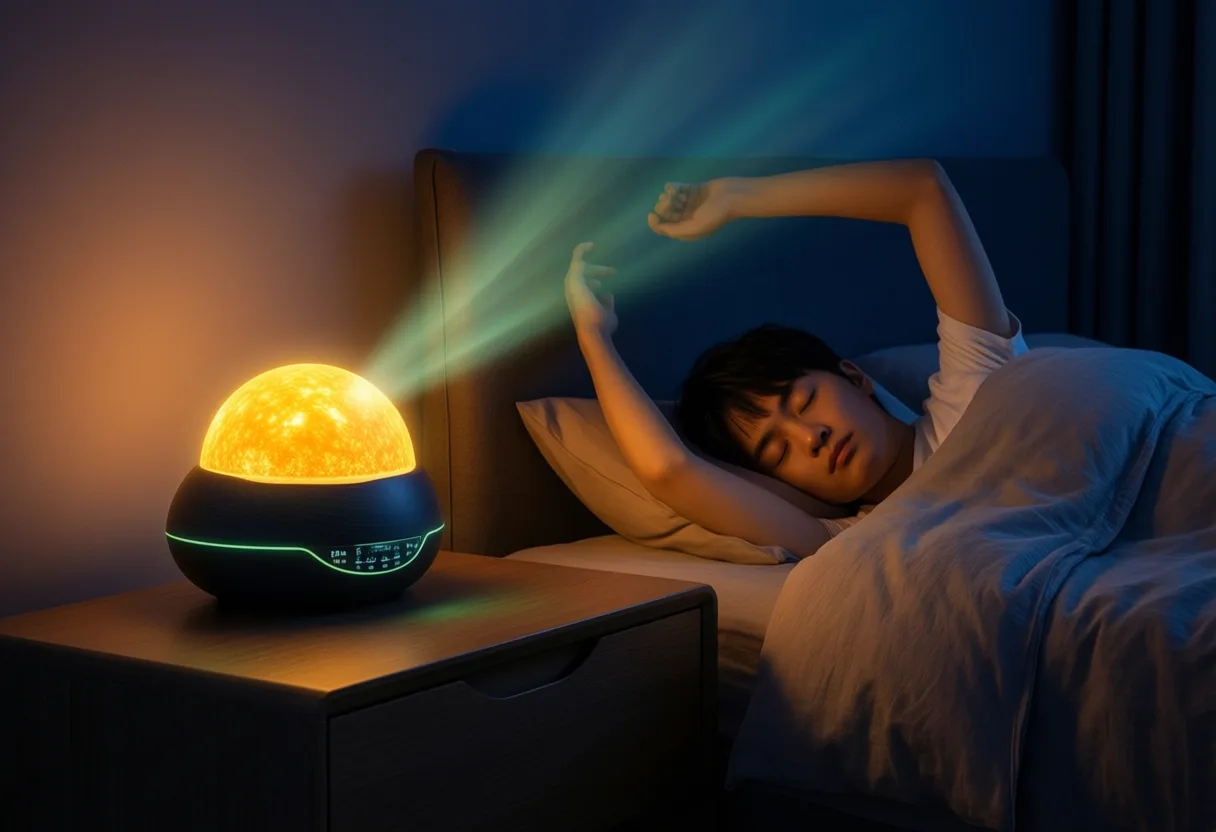
Light and sound are intertwined regulators of circadian rhythm. Devices that integrate warm-toned lighting with audio create a multisensory environment that signals safety and readiness for rest. The combination is more effective than either stimulus alone.
Red or amber night lights suppress melatonin less than blue or white light, making them ideal for nighttime use. When paired with calming audio, they reinforce the body’s transition into sleep mode, especially in children or individuals with circadian disorders.
For caregivers, these units serve a practical purpose-providing just enough illumination for nighttime tasks without full disruption. The synergy of soft light and steady sound reduces the stress of waking, supporting both parent and child.
7. A High-Fidelity Player with Lossless Sound File Support
Audio quality affects perception. Compressed sound files often contain artifacts-tiny distortions or loops-that the subconscious detects even if the conscious mind does not. Over time, these imperfections can increase cognitive strain, counteracting the intended calming effect.
High-fidelity machines play lossless formats, preserving the full spectrum of recorded sound. This is especially important for nature recordings, where subtle details-dripping water, wind through pine-contribute to realism and immersion.
While these devices tend to be more expensive and complex, they appeal to audiophiles and those with heightened auditory sensitivity. For individuals with tinnitus or sensory processing differences, the clarity can make the difference between comfort and irritation.
8. A Wall-Plug Model with Minimal Footprint and Steady Output
Space is a luxury in modern living. Wall-plug sound machines eliminate the need for outlets or cords, freeing up nightstand real estate. Their fixed position also ensures consistent sound projection, avoiding the variability of placement on uneven surfaces.
These units often run continuously, making them ideal for users who prefer uninterrupted audio throughout the night. With no batteries to charge or replace, they offer a “set and forget” experience, appealing to those who value simplicity.
Their design prioritizes function over form-compact, unobtrusive, and efficient. While they may lack advanced features, their reliability and low maintenance make them a quiet workhorse in the pursuit of better sleep.
9. A Smartphone-Connected Speaker with Customizable Playlists
For the tech-integrated lifestyle, Bluetooth-enabled sound machines offer deep personalization. Users can create playlists, schedule playback, and adjust settings remotely via apps. Some even sync with smart home systems, dimming lights as audio begins.
Customization allows for dynamic routines-different sounds for focus, meditation, and sleep. A writer might use rain for deep work, binaural beats for brainstorming, and white noise for rest, all managed from a single interface.
However, connectivity introduces complexity. Wi-Fi dependence, software updates, and potential interference from other devices can create friction. The benefit lies in adaptability, but only if the user is willing to manage the ecosystem.
Beyond White Noise: Exploring Pink, Brown, and Binaural Variants
White noise, once the gold standard, is increasingly being reconsidered. While effective at masking sudden sounds, its flat frequency profile can feel harsh or artificial to some listeners. The brain may perceive it as a constant, low-level stressor-like fluorescent lighting for the ears.
Pink noise, with its balanced energy distribution that decreases at higher frequencies, offers a smoother alternative. It resembles the sound of steady rain or wind, and research suggests it can enhance deep sleep by synchronizing brainwaves. Its warmth makes it more tolerable for extended use, especially in shared spaces.
Brown noise goes even deeper, emphasizing the lowest frequencies-like a distant waterfall or the rumble of a subway. It’s particularly effective for masking low-frequency disturbances such as traffic or snoring. For individuals with ADHD or sensory overload, its enveloping quality can create a sense of auditory insulation.
Then there are binaural beats: an auditory illusion created when two slightly different frequencies are played in each ear. The brain perceives a third tone-the difference between them-which can influence mental states. A 10 Hz difference, for example, may encourage alpha wave activity, associated with relaxed focus.
While the science is still evolving, many users report subjective benefits-increased calm, improved concentration, easier meditation. The mechanism may involve entrainment, where the brain’s electrical activity aligns with the perceived beat. For those seeking cognitive enhancement, binaural audio offers a non-invasive, drug-free tool.
What Most Buyers Overlook About Sound Machine Placement
Positioning is as critical as the device itself. A sound machine placed too close to the head can create auditory pressure, making the sound feel invasive rather than soothing. Too far, and it loses effectiveness, failing to establish a consistent sonic field.
The ideal location is elevated and slightly offset-on a shelf or nightstand, angled toward the bed but not directly at the pillow. This allows sound to diffuse naturally, creating an ambient bubble rather than a targeted beam. Avoid placing it inside cabinets or behind objects that block or reflect sound unpredictably.
Room acoustics also play a role. Hard surfaces-tile, glass, bare walls-cause reflections and echoes, distorting the audio. Carpets, curtains, and furniture absorb and soften sound, improving clarity. In echo-prone rooms, lower volumes with deeper frequencies often work better than loud, high-pitched output.
For shared beds, consider bilateral placement or omnidirectional speakers. If one partner prefers sound and the other silence, directional models or sleep headphones may be a compromise. The goal is harmony-not just in sound, but in relationship.
Smart Features or Simple Design? Matching Tech to Your Routine
Technology should serve the user, not the other way around. A machine loaded with apps, voice control, and firmware updates may impress on paper, but if it requires daily troubleshooting, it fails in practice.
For some, smart features are transformative. Integration with wearables can trigger audio based on heart rate or sleep stage. Geofencing can start playback as you approach home, easing the transition from work to rest. These capabilities suit the data-driven, automation-loving user.
For others, simplicity is paramount. A single knob, a power button, and a reliable sound-nothing more. These users prioritize consistency and ease. They don’t want to update software or reconnect Bluetooth; they want to press play and forget.
The choice depends on lifestyle, not superiority. A minimalist device may be perfect for an elderly person seeking calm, while a connected system might empower a biohacker tracking sleep efficiency. There is no universal best-only what aligns with your rhythm.

Real-World Tips for Maximizing Consistency and Effectiveness
Consistency is the hidden variable in any sleep or focus routine. A sound machine used sporadically will never build the neural associations that make it effective. The brain learns through repetition; it begins to link the sound with relaxation, like a Pavlovian cue for calm.
Use the same sound at the same time each night. Pair it with other pre-sleep rituals-dimming lights, reading, breathing exercises-to strengthen the signal. Over time, the audio alone can trigger drowsiness, even in suboptimal environments.
Volume matters more than most realize. Too loud, and it becomes stressful; too soft, and it fails to mask disturbances. The ideal level is just above the ambient noise floor-barely noticeable, yet present. Think of it as a sonic background, not a foreground event.
Experiment, but with intention. Try a new sound for at least three nights before judging it. Acclimatization takes time. The brain may resist novelty at first, especially if it’s been conditioned to silence or chaos.
And remember: no device replaces the fundamentals. Sound machines enhance good habits-they don’t replace sleep hygiene, stress management, or mental health care. They are tools, not miracles.
Finding Your Frequency: A Personalized Approach to Audio for Focus and Rest
There is no universal soundtrack for the mind. What lulls one person to sleep may keep another awake. What sharpens one person’s focus may distract another. The journey is deeply personal, shaped by biology, history, and environment.
Begin with intention. Are you seeking deeper sleep? Protection from noise pollution? Enhanced concentration? Each goal may require a different sound profile. Match the tool to the task.
Then, listen-truly listen. Not passively, but with curiosity. Notice how your body responds. Does your breathing slow? Do your shoulders drop? Do thoughts settle? These are the quiet signals of alignment.
Finally, remain open. Your needs will change with age, season, stress, and health. A sound that worked last year may not work now. Re-evaluation is not failure-it’s wisdom.
In a world of noise, the right sound is not an escape, but a return-to rhythm, to balance, to the quiet hum of being alive.
More Than Just White Noise: The Quirky Science of Sound Machines
How Nature’s Playlist Became a Sleep Superpower
Ever wonder why the sound of rain or ocean waves instantly chills you out? It’s not just in your head-well, actually, it kind of is. Your brain treats sudden or unpredictable noises as potential threats, which can jolt you awake or break your focus. But steady, soothing sounds like rustling leaves or gentle thunder create a sonic blanket that masks those jarring interruptions. That’s why many people find it easier to fall asleep in a light rainstorm than in a quiet house where a creaking floorboard sounds like a shout.
From Analog Hiss to Digital Calm
Before apps and high-tech gadgets, some folks relied on an old-school trick: turning on a radio between stations. The soft static, a form of white noise, helped drown out distractions. Today’s sound machines have evolved far beyond that fuzzy hum, offering everything from pink and brown noise (which emphasize deeper tones) to exact recordings of forest canopies or mountain streams. Some even mimic the rhythmic whoosh of a mother’s heartbeat-the same comforting sound we heard in the womb. No wonder it’s such a sleep trigger.
Built to Blend In-And Last
Modern sound machines aren’t just smart; they’re designed to stay out of your way. Many run all night on low power, with some models boasting battery life that stretches for dozens of hours. Others skip speakers altogether, using bone-conduction tech or wearable designs for people who share a bed but don’t want to disturb their partner. And while some units look like mini spaceships with glowing lights, plenty keep it simple with no lights at all-because even a tiny LED can be enough to mess with your melatonin. Explore more stories, videos, and creators on Loaded.
Frequently Asked Questions
What types of noise are best for sleep?
Pink and brown noise are particularly effective for sleep. Pink noise emphasizes lower frequencies and resembles steady rain, enhancing deep sleep. Brown noise is even deeper, mimicking a waterfall or distant thunder, and helps mask low-frequency disturbances.
How do sound machines improve focus?
Sound machines improve focus by reducing distractibility with consistent, calming soundscapes. Nature recordings like birdsong or waves promote relaxed alertness by decreasing activity in brain regions linked to rumination and increasing coherence in attention networks.
Where should I place my sound machine for best results?
Place the sound machine elevated and slightly offset, such as on a shelf or nightstand, angled toward the bed but not directly at the pillow. This allows sound to diffuse naturally and create an ambient bubble without feeling invasive.
Do I need a smart sound machine with apps and connectivity?
Not necessarily. Smart features like app control and scheduling suit tech-integrated users, but many prefer simple designs with manual controls for reliability. The best choice depends on your lifestyle and preference for consistency or customization.
This article was produced with AI assistance. How Neuron Magazine uses AI.
Zahra explores the frontiers of human enhancement, from neural implants to gene editing, with a focus on ethical implications and lived experience. She blends scientific rigor with intimate storytelling to illuminate how technology reshapes identity and lifespan.