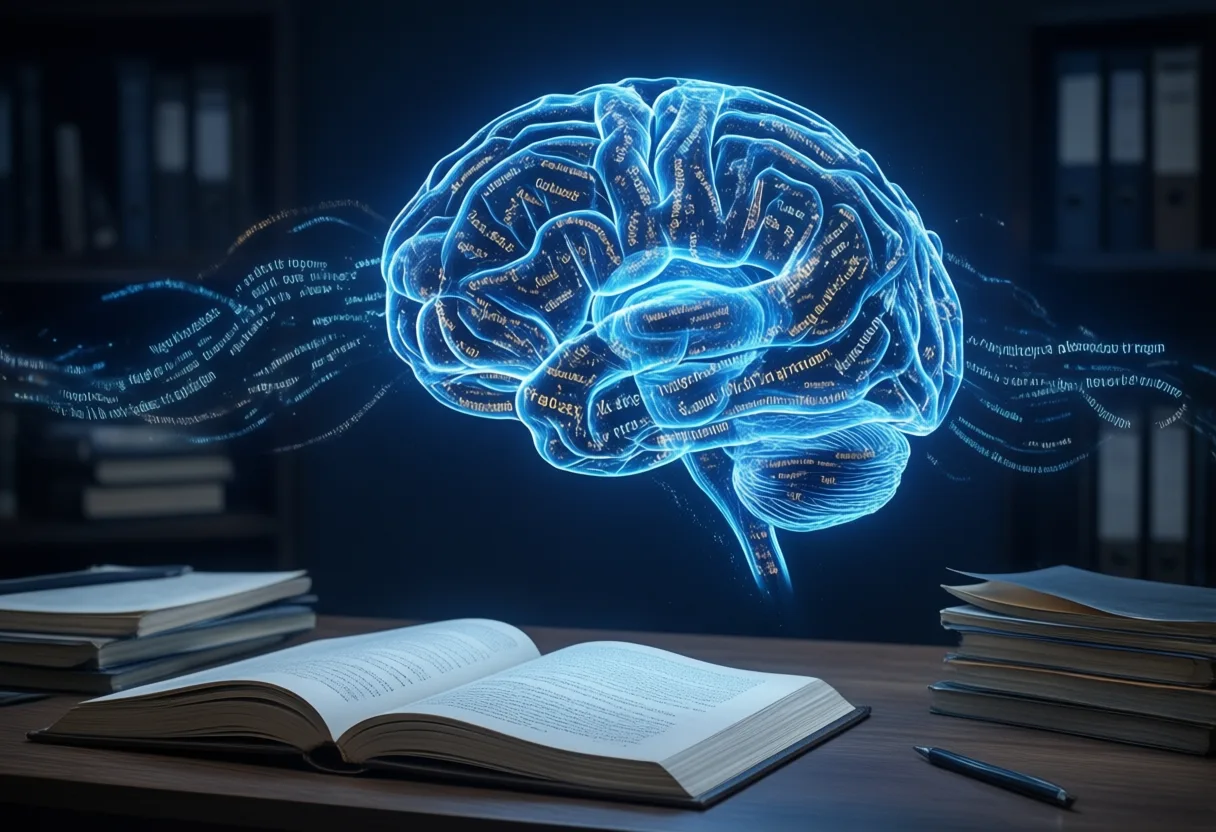

The room hums with quiet urgency. Engineers lean over laptops, their faces lit by lines of code that will one day shape how we Work, heal, and decide. Behind the sleek promise of artificial intelligence lies a tangle of choices-some deliberate, most not-that ripple outward long after the first model trains.
We’ve seen this story before: a tool built to help becomes a source of harm. A filter meant to protect becomes a gatekeeper of exclusion. And yet, we keep building. Not because we’re reckless, but because we’re hopeful. Hopeful that this time, we’ll get it right.
Why Ethical AI Demands More Than Good Intentions
Good intentions don’t scale. They flicker in boardrooms and brainstorming sessions, but when algorithms hit real lives, intent matters less than impact. We’ve watched companies launch AI tools with bold promises-Faster Hiring, fairer lending, smarter diagnostics-only to see them falter under the weight of unseen assumptions.
It’s not malice that derails these systems. It’s silence. The silence where context should be. The silence where lived experience was never invited. A team can believe deeply in fairness and still build something profoundly unfair if they’ve never questioned who taught the machine what fairness looks like.
Ethical AI isn’t a feature you add at the end. It’s the ground you build on.
It starts with knowing that Values are embedded in code long before the first demo.
And it grows by treating ethics not as a checklist, but as a continuous practice-like tuning an instrument that never stops shifting.
The Hidden Biases Lurking in Training Data
Data is never neutral. It carries the weight of history-the patterns of who got hired, who got approved, who got seen. When we feed that data to machines without scrutiny, we aren’t teaching them intelligence. We’re teaching them to repeat the past.
A resume screener trained on a decade of hiring data doesn’t learn merit. It learns patterns-patterns shaped by who was already in the room. And so, it favors the familiar: the same schools, the same job titles, the same names. Not because they’re better, but because they’re louder in the data.
Bias doesn’t always shout. Sometimes it whispers in the gaps.
- In the zip codes left out of training sets
- In the dialects misclassified as errors
- In the Faces The camera can’t quite focus on
These aren’t glitches. They’re echoes. And every echo tells us who was centered-and who was erased.

Can Transparency Alone Prevent AI Harm?
Transparency feels like safety. Show the code, explain the logic, publish the metrics-surely that’s enough? But sunlight doesn’t always disinfect. Sometimes, it only illuminates how deep the rot goes.
We’ve seen dashboards full of precision scores and fairness ratios, all glowing green, while communities report harm. Accuracy on paper doesn’t capture dignity in practice. A system can be technically transparent and still obscure the human cost.
Knowing how a model works isn’t the same as knowing whether it should exist.
And transparency without power is performance.
If users can’t challenge, change, or opt out, then openness becomes a kind of theater-one where the audience watches the machinery but never touches the levers.
When Innovation Outpaces Regulation
The gap between what we can build and what we should allow is widening. AI moves fast-faster than laws, faster than understanding. By the time a policy catches up, the tool has evolved, migrated, mutated.
Regulators aren’t slow because they’re indifferent. They’re slow because democracy is deliberate. But in the silence between laws, companies experiment at scale. A pilot here, a rollout there-each a quiet test on real people, with real stakes.
We’ve seen this before with social media, with gig platforms, with data brokers.
The pattern is familiar:
- Launch first
- Apologize later
- Monetize everything in between
And now, with AI, the stakes are higher. A misclassified ad is one thing. A misclassified medical risk is another.
The Role of Public Scrutiny in Shaping AI Tools
Public scrutiny isn’t a threat to innovation. It’s a compass. When users push back, when journalists dig, when communities organize-they aren’t slowing progress. They’re redirecting it.
Think of the last time a voice online changed the course of a product. A hashtag. A petition. A single viral thread. These aren’t noise. They’re signals-proof that someone noticed the gap between intent and impact.
The most resilient systems aren’t the ones that resist criticism-they’re the ones that invite it.
Ethical development doesn’t happen in isolation. It happens in public view, under pressure, in dialogue.
And yes, sometimes it’s messy. But so is democracy. And so is progress.

Balancing Efficiency with Human Oversight
Efficiency is seductive. Faster decisions. Lower costs. Fewer errors-on paper. But when we automate judgment, we risk automating indifference. A machine can process thousands of loan applications in seconds. But can it hear the story behind the numbers?
Human oversight isn’t a bottleneck. It’s a bridge.
It’s the loan officer who sees the gap in employment and asks, “What happened?” Instead of rejecting.
It’s the doctor who questions the AI’s diagnosis because the patient’s eyes tell a different story.
We don’t need AI to replace these moments. We need it to protect them.
Because A system that removes friction also removes mercy-and sometimes, mercy is the point.
Designing Systems That Respect User Autonomy
Autonomy isn’t just about consent. It’s about control. About knowing when a machine is making a choice, and being able to say no. Too often, AI operates in the background-silent, seamless, and inescapable.
True autonomy means more than a checkbox. It means clarity.
It means users can understand not just what the system does, but how it might fail them.
It means they can correct it, challenge it, or walk away without penalty.
We’ve normalized invisibility in tech. But A system you can’t see is a system you can’t trust.
And trust, once broken, is harder to rebuild than any algorithm.
Learning from Past Deployments Gone Wrong
We don’t lack for cautionary tales. Systems meant to streamline have excluded. Filters meant to protect have silenced. Predictive tools meant to guide have trapped.
Each failure shares a common thread: someone assumed the data spoke for everyone.
They didn’t ask who was missing.
They didn’t test in the margins.
They launched anyway.
But here’s the gift of hindsight: we don’t have to repeat these mistakes.
We can study them.
We can listen to the people who lived them.
And we can design, this time, with humility.

How Interdisciplinary Collaboration Changes Outcomes
AI isn’t just a technical problem. It’s a human one. And solving it requires more than engineers. We need ethicists. Historians. Sociologists. Artists. People who’ve felt the edge of systems that weren’t built for them.
When a designer sits with a social worker, or a data scientist talks to a teacher, something shifts. The questions get deeper. The risks come into focus. The blind spots shrink.
Diversity isn’t a metric-it’s a method.
The best teams aren’t the ones that agree. They’re the ones that argue-respectfully, relentlessly-about what’s at stake.
Because AI built in echo chambers serves only the echo.
Building Accountability Into the Development Cycle
Accountability can’t be an afterthought. It can’t be a press release after harm. It has to be woven into the daily work-the sprints, the reviews, the design docs.
That means setting clear lines:
- Who decides what the system measures?
- Who bears responsibility when it fails?
- Who gets to redefine success?
It also means Baking in ways to measure what matters-not just clicks, but dignity, fairness, agency.
And when things go wrong-and they will-there must be a path back. Not just for fixes, but for repair.
Toward a Future Where AI Serves Everyone Equitably
Equity isn’t a destination. It’s a direction. It’s choosing, again and again, to center the people who’ve been pushed to the edges. To ask not just who benefits, but who bears the cost.
We’re building the future now-in classrooms, in startups, in quiet corners of code.
And every line we write carries a choice: to replicate or to reimagine.
The tools we create don’t have to mirror the world as it is.
They can help shape the world as it could be.
And that, more than any algorithm, is the real intelligence we need.
Tuning In to AI Conversations
The Rise of the Robot Radio
Podcasts about artificial intelligence aren’t just for tech insiders anymore-they’ve become a go-to resource for anyone curious about how machines are learning to think. While AI itself has roots stretching back to the 1950s, the number of shows diving into its real-world impact has surged in the last decade, thanks to wider internet access and growing public interest in automation, chatbots, and machine learning. These audio discussions break down big ideas into digestible episodes, often blending expert interviews with casual chats that feel more like eavesdropping on a brainstorm than sitting through a lecture.
Why Your Ears Might Know More Than You Think
Believe it or not, some AI podcasts actually use artificial intelligence in their production. A few shows experiment with AI-generated summaries, automated transcription, or even voice-cloning tools to translate episodes into multiple languages. While hosts still do the heavy lifting of analysis and conversation, these behind-the-scenes helpers make content more accessible-sometimes without listeners even noticing. And here’s a quirky twist: a few creators have trained custom voice models on their own speech, letting them generate narration for short clips or previews, though no one’s handing over full episode hosting duties to a bot just yet. It’s a small, clever loop-using AI to talk about AI, one episode at a time. Explore more stories, videos, and creators on Loaded.
Frequently Asked Questions
Why is ethical AI development important?
Ethical AI ensures systems do not repeat historical biases or cause unintended harm. Values are embedded in code from the start, and ethics must be a continuous practice, not a final checklist.
How can training data introduce bias into AI systems?
Training data carries historical patterns that reflect past inequalities. When unchecked, AI learns and repeats these patterns, favoring familiar traits and excluding underrepresented groups.
Can transparency prevent AI from causing harm?
Transparency alone is not enough. A system can be technically open while still causing harm if users cannot challenge, change, or opt out of its decisions.
How do AI podcasts use artificial intelligence in production?
Some AI podcasts use AI for summaries, transcriptions, or voice cloning to increase accessibility. Hosts still lead content creation, but AI assists behind the scenes.
This article was produced with AI assistance. How Neuron Magazine uses AI.
Saoirse investigates how automation, remote systems, and AI reshape labor, careers, and human purpose. She centers worker voices and cultural change, blending data with narrative depth to reveal what the future feels like on the ground.