
The ocean breathes. It pulses. It shifts in Ways Too vast, too deep, and too slow for most of us to notice-except now, machines are beginning to listen. Where human eyes once saw only waves, algorithms detect rhythms: the ebb of heat across basins, the flicker of migration beneath satellite glint, the silent surge of currents no ship could follow in real time.
And they’re not just watching. They’re learning. Adapting. Predicting. This isn’t just faster data processing-it’s a new kind of oceanography, one where Artificial intelligence Doesn’t replace scientists but walks beside them, peering into corners of the sea that have never been seen before.
How Machines Are Decoding the Ocean’s Hidden Rhythms
For decades, oceanographers mapped the sea like cartographers of old-piece by piece, voyage by voyage. Each expedition added a dot on the map. But the ocean is not a static atlas. It’s a living, churning system, responding to wind, ice, life, and time in cascading feedback loops too complex for Traditional models To capture.
Now, machines trained on years of sensor data, satellite feeds, and buoy readings are spotting patterns invisible to conventional analysis. They don’t get tired. They don’t overlook subtle correlations between salinity shifts and plankton blooms. They simply compute-relentlessly, quietly-until the signal emerges from the noise.
These systems learn the way a seasoned sailor learns the coast: not from a single glance, but from thousands of dawns, tides, and swells. Over time, they begin to anticipate. A warm eddy forms off the continental shelf? The model recalls 37 similar formations over the past two decades-and predicts its path with eerie precision.
It’s not magic. It’s mathematics meeting memory at scale. And it’s changing how we understand movement in the marine world, from the surface swirl to the abyssal creep.
The Deep Learning Revolution Beneath the Waves
Deep learning-the branch of artificial intelligence that mimics the layered decision-making of the human brain-is no longer confined to facial recognition or language apps. It’s diving. Far below the surface, where Light fades And pressure climbs, neural networks are reconstructing the unseen.
Imagine a network trained on millions of temperature-depth profiles, each labeled with location, season, and current strength. After training, it can infer entire water column structures from sparse inputs-like guessing a full symphony from three notes. That’s what’s happening today in research labs and climate centers worldwide.
These models don’t need complete data to make informed guesses. They thrive on incompleteness, using probability and pattern to fill gaps where sensors fail or drifters go silent. One algorithm might predict oxygen levels in dead zones based on historical turnover cycles. Another correlates underwater soundscapes with fish density, turning hydrophone static into population estimates.
And because they improve with every new byte, they evolve. A storm distorts a current? The model logs the anomaly, adjusts its weights, and next time, responds faster. This adaptability is why deep learning is becoming the backbone of modern marine forecasting.
In fact, some of the same architectures powering voice assistants are now parsing sonar returns, identifying species from acoustic signatures, or flagging illegal fishing activity through vessel movement patterns. The applications of artificial intelligence: top 5 uses today stretch far beyond smartphones and chatbots-they’re surfacing in the saltwater, too.
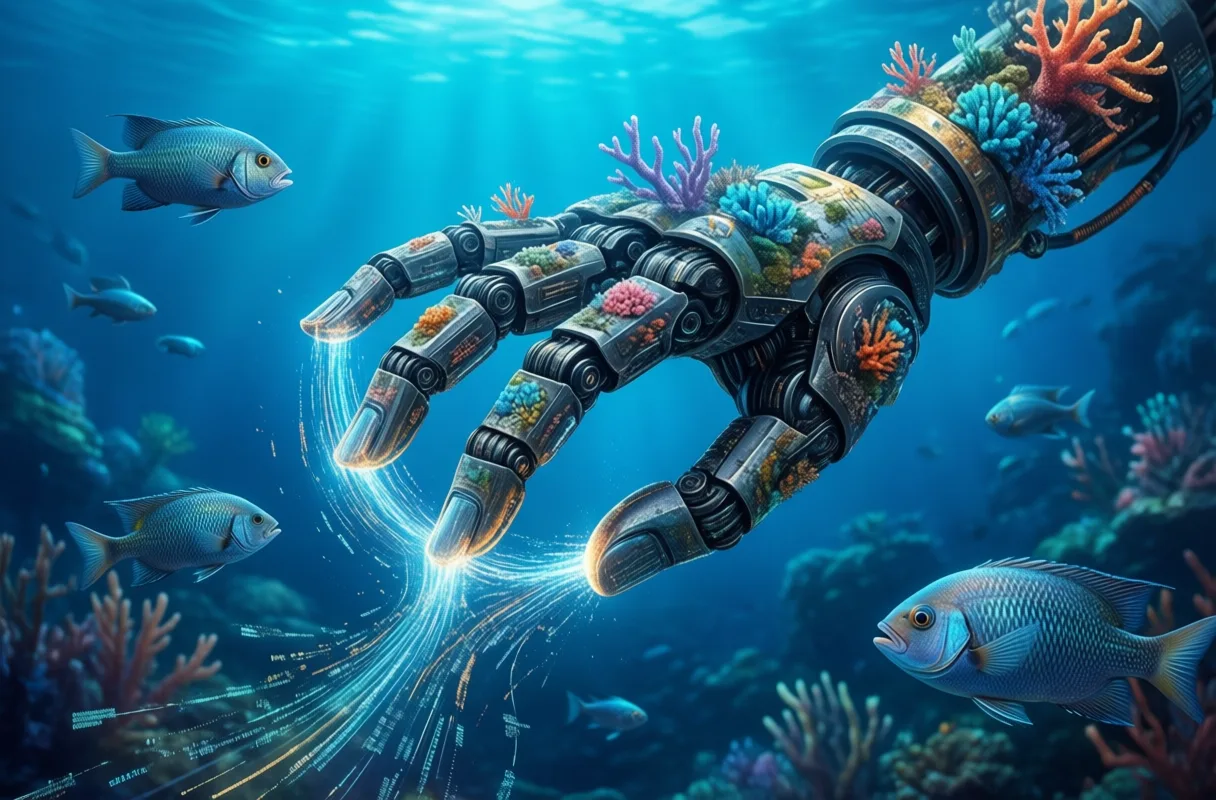
Can Algorithms Predict the Pulse of the Sea?
Prediction has always been the holy grail of ocean science. Not just What Is happening-but What comes next. Will the upwelling strengthen? Will the coral bleach? Will the fisheries collapse?
Old models relied on physics-first equations: plug in wind speed, temperature, and salinity, and solve for flow. They worked-up to a point. But nature doesn’t follow clean equations. It’s messy. Chaotic. Full of surprises.
Enter machine learning models that don’t start with rules-they start with data. Instead of assuming how water should behave, they observe how it Does Behave, over years, across oceans. From this, they build probabilistic forecasts that often outperform classical simulations.
Think of it like weather prediction a generation ago. Early meteorologists used barometers and cloud charts. Then came satellites. Then came supercomputers running fluid dynamics. Now, AI-enhanced models blend all three, learning from every missed storm and every accurate forecast.
The same shift is underway in the sea. Algorithms now forecast algal blooms weeks in advance by detecting microscopic changes in chlorophyll and nutrient gradients. Others anticipate jellyfish swarms by linking offshore warming to coastal influxes.
None of this replaces oceanographers. If anything, it gives them sharper questions to ask. “Why did the model flag this region?” Becomes the starting point for field campaigns. Curiosity, guided by code.
Mapping Currents with Neural Networks
Ocean currents are the bloodstream of the planet. They regulate climate, distribute nutrients, and steer everything from hurricanes to humpbacks. Yet mapping them in real time has always been a patchwork effort-buoys here, satellites there, gaps everywhere.
Neural networks are stitching those patches into a living map. By ingesting data from altimeters, drifters, and Argo floats, these systems generate high-resolution current fields updated daily, even hourly.
They don’t just interpolate. They infer. A sudden dip in sea surface height? The network cross-references it with wind stress, Coriolis effects, and past eddy behavior to reconstruct subsurface flows-down to hundreds of meters.
One project, operating quietly across multiple institutions, now produces global current maps at 1-kilometer resolution, updated four times a day. Scientists use them to track oil spills, guide underwater drones, and plan marine reserves.
And because the models run efficiently on cloud infrastructure, access isn’t limited to elite labs. Coastal agencies in vulnerable regions can pull the same forecasts, helping communities prepare for surges or pollution events.
This democratization of ocean insight is one of the quiet revolutions no one’s shouting about-yet.
Unseen Patterns in Temperature Gradients
Temperature is more than a number in the water. It’s a signal. A driver. A fingerprint of deeper processes. Tiny differences-a tenth of a degree over 50 kilometers-can trigger plankton blooms, alter predator paths, or destabilize methane hydrates.
Traditional methods averaged these gradients, smoothing out the nuances. But AI doesn’t average. It amplifies. It highlights microfronts-thin boundaries where warm and cold waters collide, often teeming with life.
By analyzing decades of infrared and microwave satellite data, algorithms now detect these features automatically, cataloging their frequency, duration, and biological impact.
Some models have found that microfronts act as invisible highways for larval fish, guiding them from spawning grounds to nursery habitats. Others show how these thermal seams concentrate krill, drawing in whales and seabirds.
Even more striking: the algorithms detect seasonal shifts in gradient behavior-patterns that may signal broader climate transitions. In one case, a network flagged an unusual weakening of thermal stratification months before it appeared in official reports.
That lead time matters. For fisheries managers, conservationists, and climate planners, early warnings mean options. Choices. Agency.
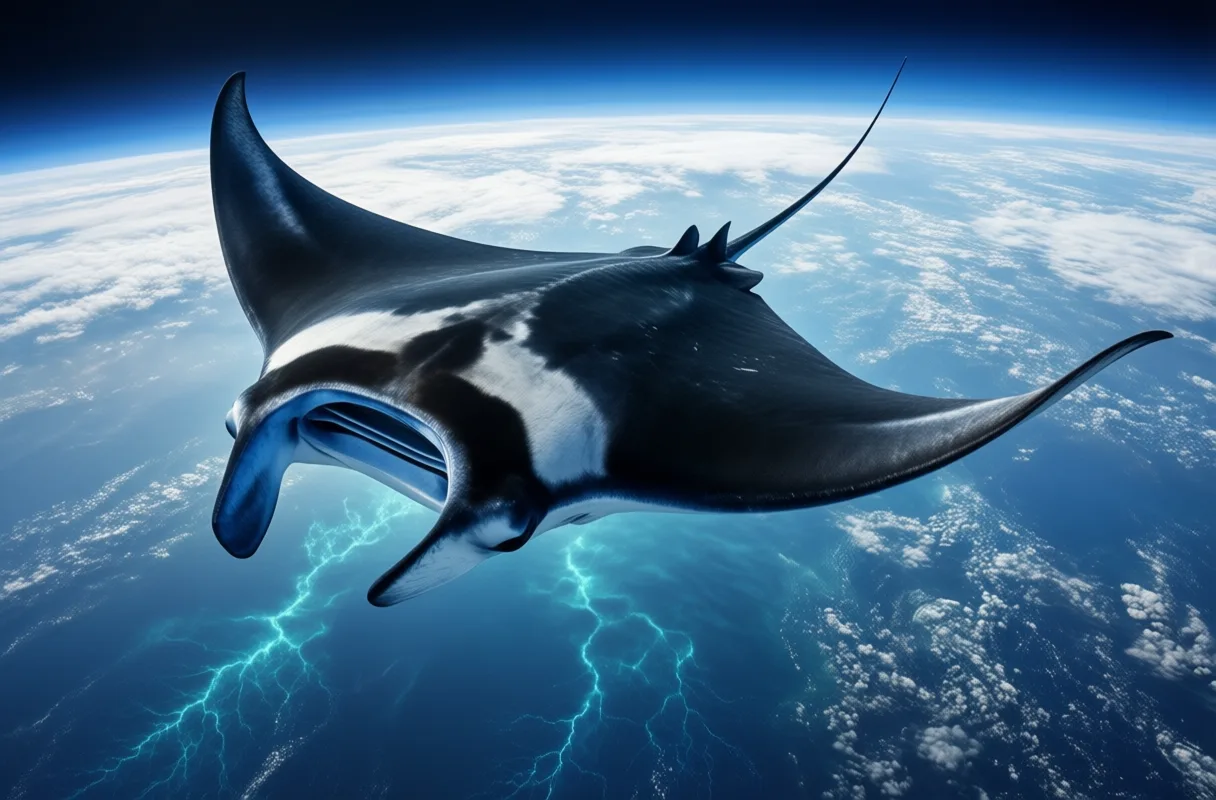
Tracking Marine Life Through Data Shadows
We rarely see marine animals directly. We see traces. Acoustic pings. GPS tags. Gut contents. Camera traps. Even shipping noise leaves echoes in behavior.
AI excels at connecting such fragments. It doesn’t need a photo to know a whale passed through-it can infer presence from song patterns, dive profiles, or sudden silence in a noisy channel.
One approach treats animal movement like handwriting: unique, rhythmic, identifiable. Machine learning models classify species by swim style-how a shark banks versus a tuna slices-using motion data from tagged individuals.
Another method analyzes environmental DNA (eDNA) samples, scanning genetic snippets against vast databases to reconstruct ecosystem snapshots. The algorithm doesn’t just say “dolphin DNA here”-it estimates abundance, timing, and even health indicators.
And when combined with habitat models, these tools predict where species will be, not just where they’ve been. That’s critical for dynamic ocean management-like shifting shipping lanes to avoid whale collisions during migration peaks.
No single tag tells the whole story. But together, they form a chorus-one that AI is learning to hear.
The Role of Satellite Fusion in Modern Observation
Satellites orbit. They scan. They beam down terabytes of raw radiance, reflectance, and elevation. Alone, each dataset is powerful. Together, fused through AI, they become transformative.
Modern systems merge sea surface temperature, ocean color, wave height, and wind speed into unified environmental portraits. No longer do scientists need to toggle between screens. The algorithm aligns the layers, corrects the biases, and surfaces the insights.
Cloud cover obscures a region? The model uses prior observations and atmospheric models to estimate what lies beneath. Sensor calibration drifts? The network detects the anomaly and adjusts.
This fusion enables near-real-time monitoring of phenomena like coastal hypoxia, river plumes, or illegal trawling-all visible in the right combination of signals.
And because satellites revisit the same spot every few days, the temporal resolution keeps improving. When paired with AI, we’re no longer taking snapshots. We’re watching a movie.
When Models Meet the Abyss
The deep ocean is the least explored frontier on Earth. Sunlight doesn’t reach. Pressure Crushes. Human access is rare, expensive, fleeting.
Yet AI is thriving there-not because it dives, but because it listens. Autonomous gliders, seafloor observatories, and long-range AUVs (autonomous underwater vehicles) stream back sparse but precious data.
Machine learning models take that trickle and turn it into narrative. They identify hydrothermal vent signatures from chemical anomalies. They detect turbidity currents from sudden sediment spikes. They even classify deep-sea sounds-some of which may belong to unknown species.
In one instance, an algorithm analyzing passive acoustics flagged a repeating low-frequency pulse in the Pacific-unlike any known biological or geological source. Was it a new creature? A seismic process? The model couldn’t say. But it knew the pattern was different.
That’s the power of anomaly detection: not answering questions, but asking better ones.
Scientists now deploy AI as a first filter, sifting petabytes of deep-ocean data before humans ever lay eyes on it. Only the most intriguing signals rise to the surface.
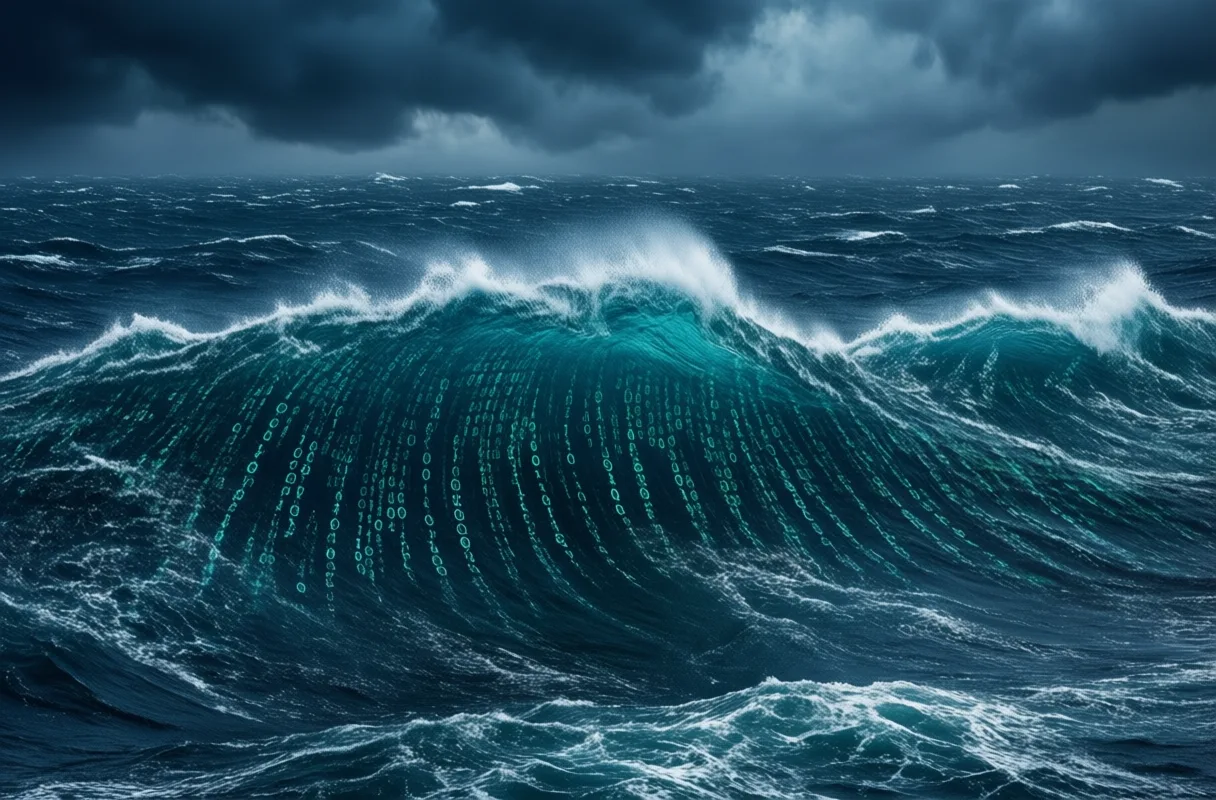
Beyond Human Sight: Anomaly Detection in Real Time
The ocean hides more than it reveals. Most events-underwater landslides, methane seeps, mass die-offs-go unnoticed until they surface, literally or figuratively.
AI changes that. Always-on, always-alert systems monitor data streams continuously, trained to flag deviations from the norm. Not just big changes-but subtle, sustained shifts that might precede catastrophe.
One model watches pH trends across coral reefs, sounding alarms when acidification accelerates beyond seasonal expectations. Another tracks iceberg calving rates, correlating them with meltwater pulses and glacier velocity.
These aren’t predictions in the traditional sense. They’re alerts-whispers in the data that something is different.
And because they operate in real time, response windows widen. Conservation teams can mobilize. Sensors can reorient. Experiments can pivot.
It’s like giving the ocean a nervous system-one that flinches before the injury spreads.
Why Old Ocean Models Can’t Keep Up
Classical ocean models are brilliant. Built on centuries of physics, refined by generations of mathematicians, they simulate fluid motion with astonishing fidelity.
But they’re rigid. Computationally heavy. Slow to update. Each simulation requires massive supercomputing runs, often taking days to produce a week of forecast.
And they struggle with uncertainty. Plug in imperfect data, and the output wobbles. Add a new variable-say, plastic concentration or microplankton diversity-and the model may need to be rebuilt from scratch.
AI models, by contrast, are adaptive. They ingest new data seamlessly. They handle missing values. They scale efficiently across cloud platforms.
More importantly, they learn from failure. When a forecast misses, the model adjusts-automatically. No rewrite. No recoding. Just recalibration.
That doesn’t mean discarding physics. The best modern approaches hybridize both: AI handles pattern recognition and short-term forecasting; physics models anchor long-term projections and extreme scenarios.
Together, they’re faster, smarter, and more resilient than either could be alone.
Navigating the Future of Sea Science
We’re not done exploring the ocean. We’re just beginning to see it clearly.
Artificial intelligence isn’t replacing boots on the deck or nets in the water. It’s extending our senses, letting us feel the pulse of the planet in ways we never could before.
From microfronts to megafauna, from surface swirls to abyssal rumbles, we’re uncovering a richer, more responsive ocean than we imagined.
And every anomaly detected, every current mapped, every creature tracked brings us closer to understanding not just the sea-but our place within it.
Because the ocean doesn’t care about algorithms. It cares about balance. Flow. Survival. And if AI helps us listen better, perhaps we’ll finally learn to respond in kind.
| Application | Method | Outcome |
|---|---|---|
| Current Mapping | Neural networks using satellite and float data | Daily high-resolution global current maps |
| Marine Life Tracking | Analysis of acoustic signals and eDNA | Species identification and population estimates |
| Anomaly Detection | Real-time monitoring of pH, ice, and sound | Early warnings for ecological changes |
| Satellite Data Fusion | Combining temperature, color, and wave data | Unified environmental monitoring |
| Autonomous Vehicle Navigation | Onboard AI adapting to sensor input | Dynamic route changes for efficient exploration |
Hidden Currents and Clever Machines
Teaching Computers to Speak Whale
Artificial intelligence is now helping scientists eavesdrop on the ocean’s most elusive singers. By training algorithms to recognize whale calls in hours of underwater audio, researchers can track migration patterns without lifting a sonar device. Some AI models have learned to distinguish between individual whale voices, almost like recognizing a friend in a crowd by their laugh. This means marine biologists can monitor populations in real time, even in remote parts of the ocean where human observation is impossible.
Surfing the Data Wave
Satellites beam down mountains of ocean data every day-temperature, color, wave height-but sorting through it used to take months. Now, AI digests it in minutes. Machine learning systems spot swirling eddies and shifting currents that might’ve gone unnoticed before, revealing how heat moves across the globe. These hidden patterns help predict fish movements and even improve hurricane forecasts, since warm ocean patches can fuel storm growth. One system recently flagged a massive phytoplankton bloom simply by noticing a subtle shift in water color, something easy for a computer to catch but easy for humans to miss.
The Robot That Learned to Swim Smart
Autonomous underwater vehicles used to follow fixed paths, like drones on rails. But with AI on board, they’ve learned to adapt. Some now change course mid-dive when they detect something unusual-like a sudden drop in oxygen or a cloud of sediment. It’s like sending a dog off-leash to find something interesting and trusting it to bark when it does. These smart swimmers have discovered underwater lakes of brine and mapped coral reefs in stunning detail, all while using less battery by choosing efficient routes. The ocean’s no longer just being explored-it’s being understood, one algorithm at a time.
Frequently Asked Questions
How is artificial intelligence used to predict ocean patterns?
AI models analyze years of sensor data, satellite feeds, and buoy readings to detect subtle marine patterns. They learn from historical behavior to forecast events like algal blooms, jellyfish swarms, and current shifts with high precision.
Can AI track marine life without direct observation?
Yes, AI connects fragments like acoustic pings, GPS tags, and environmental DNA to infer species presence and movement. It can identify animals by swim style or vocal patterns and estimate population abundance.
How do neural networks improve ocean current mapping?
Neural networks ingest data from satellites, drifters, and floats to generate high-resolution, frequently updated current maps. They infer subsurface flows from surface changes and provide global coverage at fine scales.
What role does AI play in deep ocean exploration?
AI analyzes sparse data from gliders and seafloor observatories to detect hydrothermal vents, turbidity currents, and unknown sounds. It acts as a first filter, identifying anomalies for further scientific study.
This article was produced with AI assistance. How Neuron Magazine uses AI.
Saoirse investigates how automation, remote systems, and AI reshape labor, careers, and human purpose. She centers worker voices and cultural change, blending data with narrative depth to reveal what the future feels like on the ground.