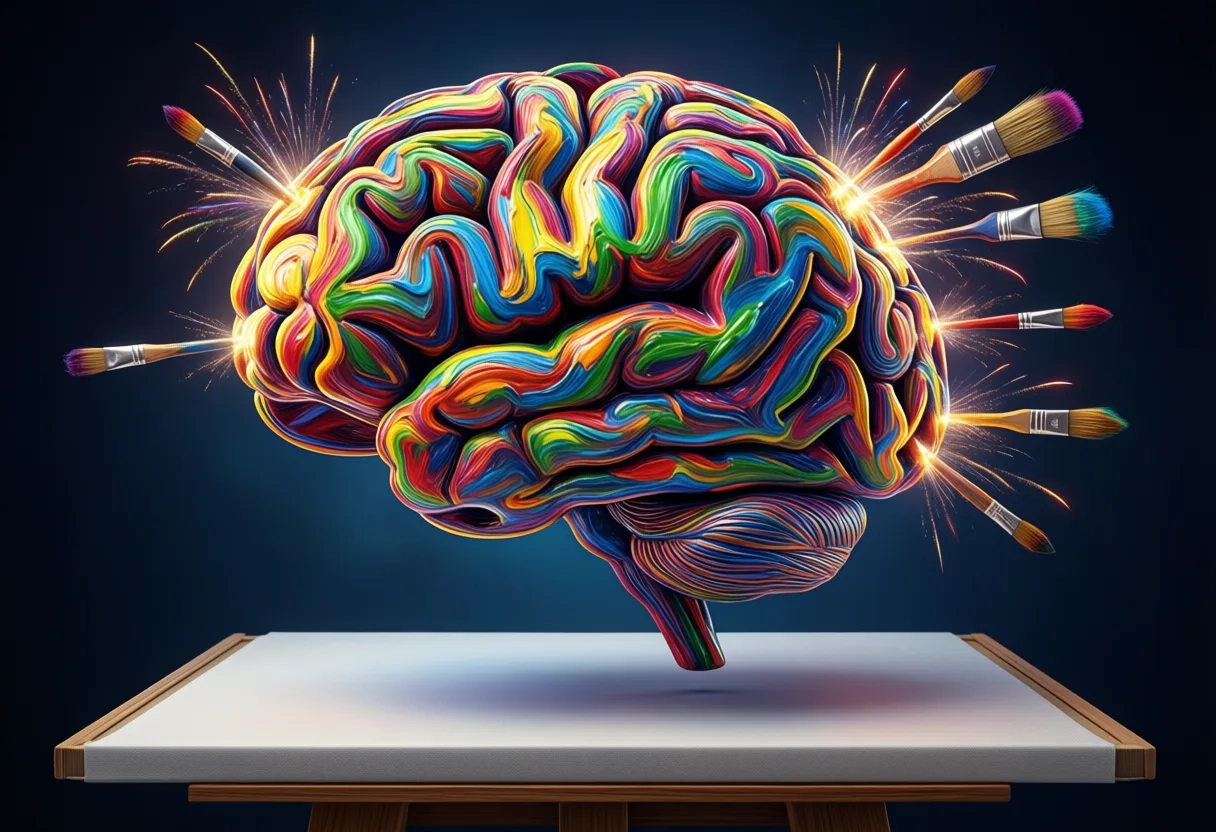

A quiet revolution hums behind server racks and neural networks, reshaping economies not with explosions but with equations. The Latest signals From the global artificial intelligence landscape suggest a world accelerating into a new cognitive era-one where machines learn faster, governments recalibrate policies, and industries reconfigure around data like stars around gravity.
This transformation isn’t confined to Silicon Valley think tanks or Beijing labs; it pulses through research centers in Nairobi, startups in São Paulo, and university clusters in Stockholm. What was once theoretical is now operational-AI models that interpret medical scans, optimize crop yields, and draft legal documents are no longer novelties but necessities. And while we marvel at their speed, we must also measure their impact with equal rigor.

The Pulse of Progress: Where AI Is Advancing Fastest
In recent years, investment in artificial intelligence has surged across multiple continents, signaling a broad consensus on its strategic importance. Nations are pouring resources into foundational research, infrastructure, and talent development, recognizing that leadership in AI may determine economic influence for decades to come. This shift is evident not only in private-sector spending but also in national science agendas, where machine learning now occupies a central role alongside biotechnology and quantum computing.
Several regions have emerged as hotspots of innovation due to concentrated efforts in education, regulatory support, and Public-private collaboration. In these ecosystems, researchers train ever-larger models using diverse datasets, pushing the boundaries of what systems can understand and generate. The pace of advancement is no longer linear-it’s compounding, as each breakthrough enables faster iteration and deeper insight.
- New benchmarks in natural language processing show models achieving near-human performance on complex reasoning tasks.
- Computer vision systems now detect anomalies in industrial equipment before failure, reducing downtime.
- Autonomous scientific discovery platforms propose novel materials and drug candidates at unprecedented speeds.
These developments reflect more than technical prowess-they reveal a growing confidence in AI’s ability to augment human decision-making. Yet this confidence must be tempered with caution, for every leap forward raises fresh questions about transparency, accountability, and long-term societal effects. As capabilities expand, so too does the responsibility to govern them wisely.
Beyond Algorithms: Societal Shifts Driven by Intelligent Systems
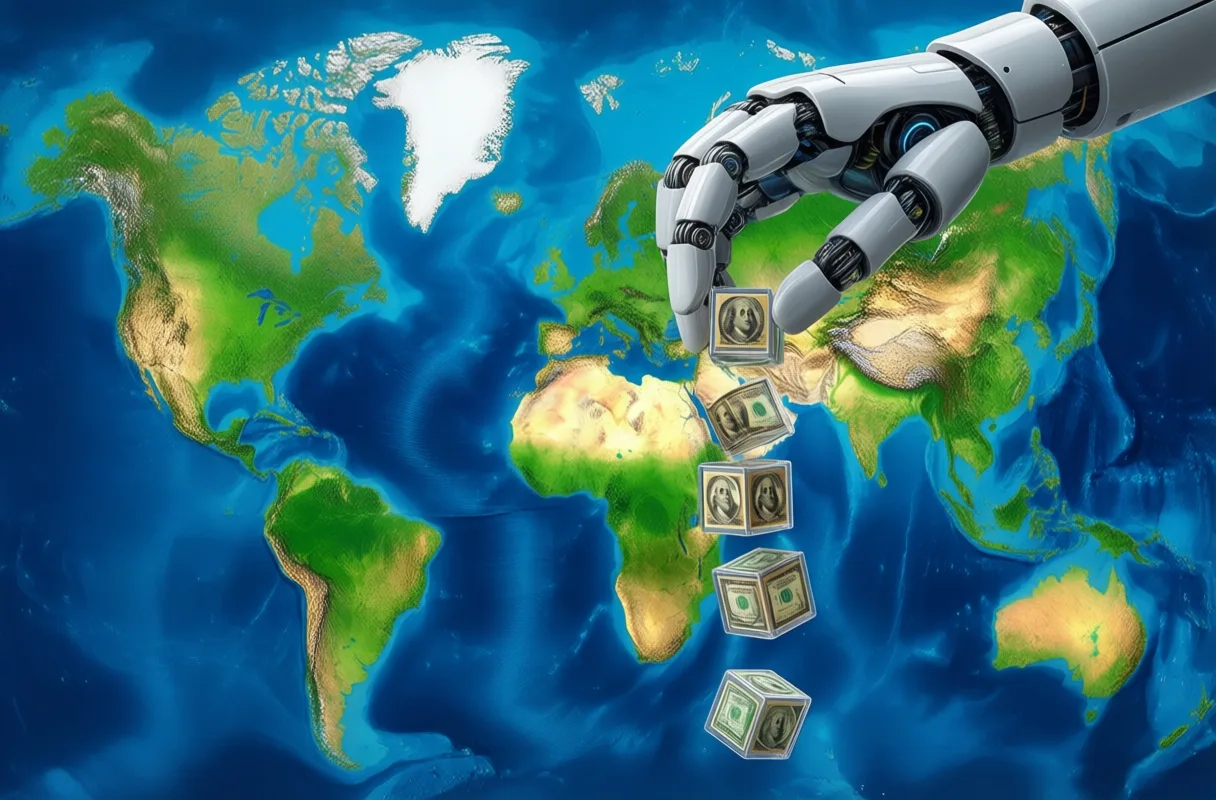
Artificial intelligence is no longer just a tool-it’s becoming an architect of social structures, influencing how people work, learn, and interact. Workplaces are integrating intelligent assistants that manage schedules, summarize meetings, and even suggest responses to emails, altering the rhythm of professional life. These changes promise efficiency, but they also challenge traditional notions of labor, expertise, and creativity.
Education systems are adapting to a world where students grow up alongside AI tutors capable of personalizing lessons in real time. Some classrooms now use adaptive learning platforms that adjust difficulty based on individual progress, helping close gaps in comprehension. However, access remains uneven, and the risk of deepening digital divides looms large without deliberate policy intervention.
Healthcare, too, stands transformed by pattern recognition at scale. Diagnostic tools powered by AI assist physicians in identifying diseases earlier and with greater accuracy, particularly in areas with limited specialist availability. Still, concerns persist over data privacy, algorithmic bias, and the potential erosion of patient-doctor trust when decisions feel outsourced to opaque systems.
What emerges is a paradox: The most powerful technologies are often the least visible. They operate beneath interfaces, embedded in workflows, shaping outcomes without fanfare. Their influence grows quietly-until one day, we realize how much we rely on them. That moment demands reflection: Are we designing these systems, or are they reshaping us?

Measuring What Matters: Toward Ethical and Sustainable Innovation
As the field matures, there is increasing emphasis on evaluating AI not just by its performance metrics, but by its broader consequences. Researchers and policymakers alike are calling for frameworks that assess fairness, environmental cost, and long-term resilience-not merely speed or Accuracy. Energy consumption of large models has drawn scrutiny, prompting innovations in efficient training methods and hardware design.
Transparency remains a cornerstone of responsible deployment. Without clear documentation of how models are trained and validated, even well-intentioned applications risk unintended harm. Efforts to standardize reporting practices are gaining traction, encouraging developers to disclose data sources, limitations, and known biases upfront.
- Auditing tools now help identify discriminatory patterns in hiring algorithms.
- Open-source initiatives promote collaborative improvement and peer review.
- Multidisciplinary teams-including ethicists, sociologists, and domain experts-are being integrated into development cycles.
These steps signal a maturing discipline, one that acknowledges both its potential and its perils. The goal is not to slow progress, but to align it with human values-ensuring that intelligence, whether natural or artificial, serves the many rather than the few. True innovation lies not in building smarter machines, but in cultivating wiser societies.
And so, as we chart the arc of this technological wave, we must remember: the future is not written in code. It is shaped by choices-about inclusion, sustainability, and purpose. The data may point toward growth, but it is up to us to decide what kind of world that growth builds.
What the Artificial Intelligence Index Really Tells Us
A Snapshot of Global AI Momentum
Think of the Artificial Intelligence Index as a yearly report card for the entire planet’s progress in AI. It doesn’t just count how many research papers are published-it tracks real-world momentum, from breakthroughs in labs to how quickly businesses adopt new tools. One surprising highlight? The cost to train a typical large AI model has been dropping fast, making advanced tech more accessible than ever before.
How Fast Is AI Really Moving?
The pace can be staggering. In one year, the number of new AI models released openly jumped by over 50%, showing a surge in collaboration and innovation. Another fun detail: language models are getting better at reasoning Tasks, with top performers solving complex logic puzzles at rates that would’ve been unthinkable just five years ago. This isn’t just about speed-it’s about depth of understanding.
AI’s Global Footprint
While some countries lead in AI investment, others are making big leaps in research output and policy development. The Index reveals that AI-related legislation introduced worldwide has more than tripled in the last few years, proving governments are finally catching up to the technology’s impact. Behind the numbers, it’s clear-AI isn’t just growing, it’s weaving itself into the fabric of economies, education, and everyday life. Explore more stories, videos, and creators on Loaded.
Frequently Asked Questions
What does the Artificial Intelligence Index measure?
The Artificial Intelligence Index tracks global progress in AI, including research breakthroughs, business adoption, and policy development. It serves as a yearly assessment of momentum across the field.
How has the cost of training large AI models changed recently?
The cost to train a typical large AI model has been dropping rapidly. This decline is making advanced AI technology more accessible.
What recent trend is seen in the release of new AI models?
The number of new AI models released openly jumped by over 50% in one year. This reflects growing collaboration and innovation in the field.
How are governments responding to AI advancements?
Governments are introducing more AI-related legislation, with worldwide policy proposals more than tripling in recent years. This shows increasing recognition of AI's societal impact.
This article was produced with AI assistance. How Neuron Magazine uses AI.
Zahra explores the frontiers of human enhancement, from neural implants to gene editing, with a focus on ethical implications and lived experience. She blends scientific rigor with intimate storytelling to illuminate how technology reshapes identity and lifespan.