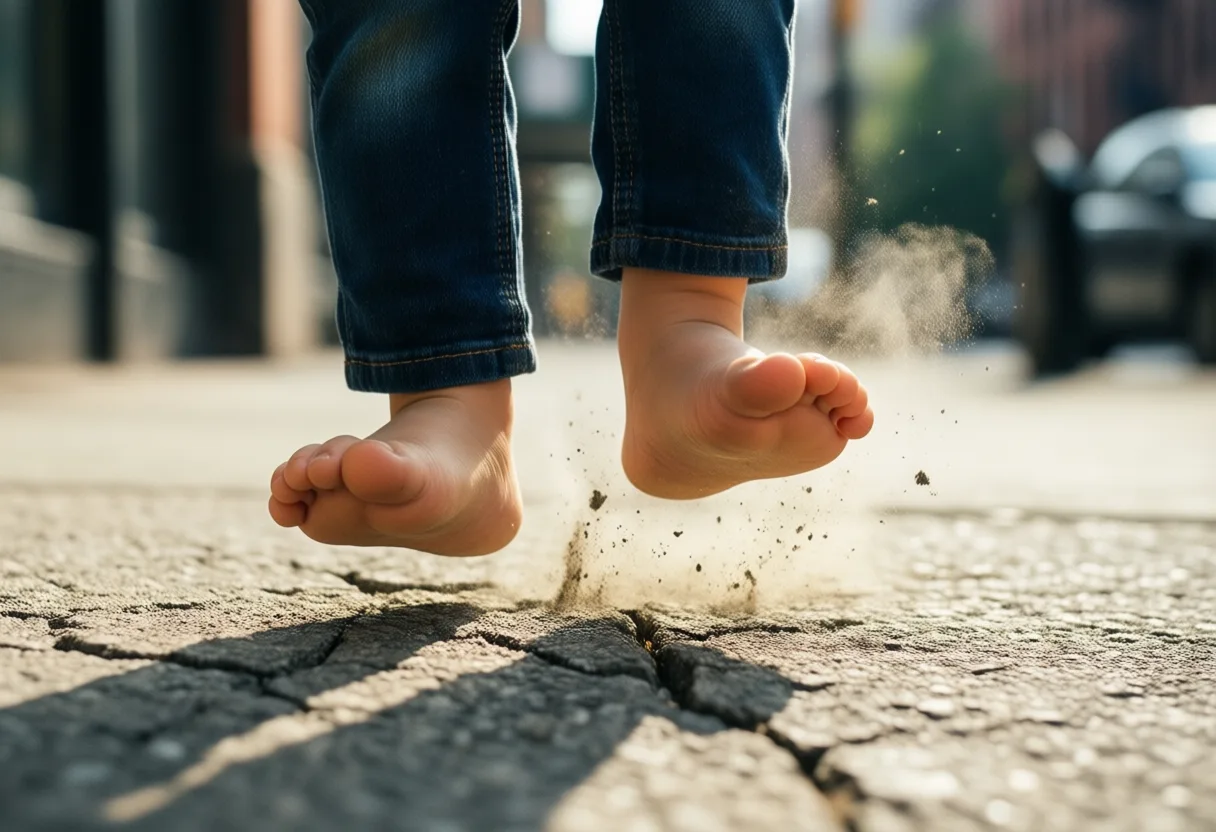
I once watched a barefoot kid sprint across a soccer field, arms flailing, knees high, landing lightly on the balls of his feet like he’d never heard of asphalt. No orthotics. No heel counters. Just speed, instinct, and a grin. Years later, watching elite runners float through marathons with quiet strides, I started wondering: what if our Shoes Have been lying to us this whole time?
Modern running footwear has evolved into something between a throne and a tank-stacked soles, plush cushioning, arch support that cradles like a lullaby. But beneath all that Comfort lies A quiet trade-off: We’ve outsourced strength to engineering. Now, a growing movement in footwear design is asking a simple question: what if we stopped elevating the heel and just let the foot do what it evolved to do?
This isn’t about going barefoot on city streets or pretending we live in the savanna. It’s about rethinking elevation, alignment, and the slow erosion of natural function. And at the heart of this shift? Shoes built on a level plane-where heel and forefoot sit at the same height, encouraging a more grounded, balanced stride.
What Exactly Are Zero Drop Shoes?
Most running shoes tilt your body forward by elevating the heel several millimeters-sometimes over a centimeter-above the forefoot. It’s a design so Common We rarely question it, like stairs that only go up. But not all shoes follow this slope.
Shoes with a level sole mean the heel and the ball of the foot rest at the same distance from the ground. This flat profile changes how the body aligns from the ground up. There’s no artificial lift under the heel, no subtle lean that pulls the spine forward and shifts weight unnaturally.
These designs aim to mimic the posture of standing barefoot on a hard surface. Your ankle, knee, and hip joints stack more naturally. The foot isn’t tilted. The calf isn’t stretched. The posture adjusts-subtly but significantly-toward neutrality.
- The sole is flat from end to end
- The foot sits level, not pitched
- The body’s weight distributes more evenly across the arch and toes
It’s not a radical idea-just a forgotten one. Before foam midsoles and carbon plates, most human movement happened without a heel wedge. Now, some modern designs are returning to that baseline, not as nostalgia, but as biomechanical recalibration.
Why Heel Elevation Alters Natural Biomechanics
Raise the heel, and the body adapts-automatically, invisibly. The calf tightens. The Achilles tendon shortens over time. The ankle joint loses its full range of motion. It’s a small change with long-term consequences.
When the heel sits higher than the forefoot, the entire lower limb angles forward. This shifts the center of gravity, encouraging a heel-first strike during running. That impact travels straight up the skeleton-through the knee, into the hip, sometimes all the way to the Lower back.
Think of it like walking downstairs in high heels. The body compensates in silence until something speaks up-usually pain.
Over years, this altered alignment can lead to:
- Reduced ankle dorsiflexion
- Increased braking forces on heel strike
- Greater strain on the knee joint
Our joints didn’t evolve for constant heel elevation. They evolved for walking and running on flat, variable surfaces-where feedback from the ground shaped every step. When we prop up the heel, we mute that conversation.
One physical therapist put it plainly: “You’re not just wearing a shoe. You’re wearing a posture modifier.” And like any modifier, it reshapes not just movement, but structure.
How Ground-Level Soles Encourage Forefoot Strike Patterns
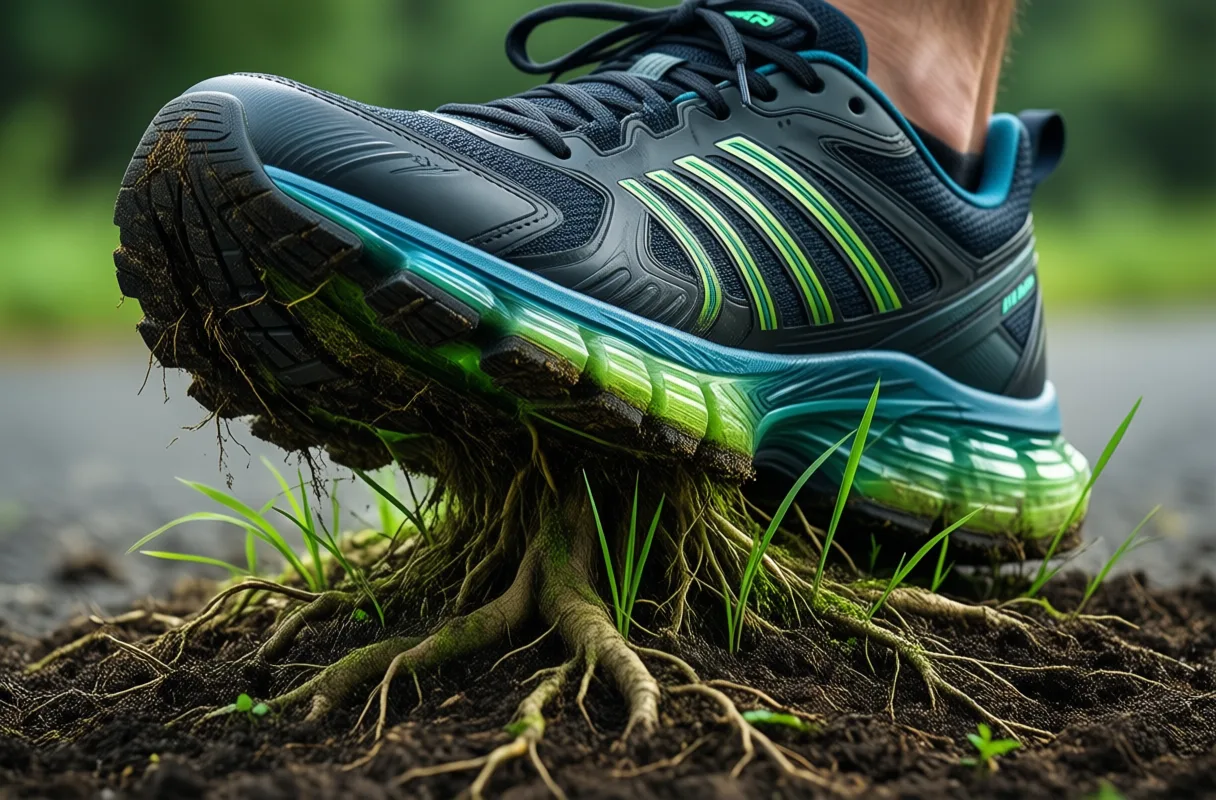
Drop your heel to match the height of your toes, and something shifts in the way you land. Without a raised platform, the body instinctively seeks softer, quieter contact. Many runners naturally transition toward a midfoot or forefoot strike.
This isn’t about forcing a new technique. It’s about removing the conditions that promote heel-first impact. When the sole is level, landing heavily on the heel feels less stable-so the nervous system adapts, often without conscious effort.
The foot begins to function more like a dynamic spring. The arch loads. The toes spread. The ankle engages. Impact forces distribute across a wider area, rather than concentrating in one spot.
Runners often report:
- A lighter, bouncier feel
- Reduced jarring on hard surfaces
- Greater awareness of foot placement
It’s not that forefoot striking is inherently superior-it depends on speed, terrain, and individual anatomy. But what’s clear is that a level sole removes the mechanical incentive to overstride and heel-strike, allowing more natural patterns to emerge.
The Role of Minimalist Design in Strengthening Intrinsic Foot Muscles
Most shoes do too much. They support, cushion, guide, and control-sometimes so thoroughly that the foot forgets it has its own muscles. The arch is held up. The heel is stabilized. The toes are squeezed together.
But feet aren’t meant to be passive. They’re packed with small, intricate muscles-inside the foot, not just around it-that evolved to stabilize, grip, and adapt. These intrinsic muscles weaken when underused, just like any other tissue.
Shoes with a flat, flexible profile ask more of the foot. They don’t lock the arch in place. They allow the sole to bend. They let the toes splay. Over time, this increases demand on the muscles that hold the foot together.
You don’t build strength by resting. You build it by engaging.
With consistent use, many people notice:
- Improved balance on uneven ground
- Stronger push-off during walking or running
- Reduced reliance on external support
It’s like switching from an electric bike to a standard one. At first, it feels harder. Then, your legs wake up.
Can Zero Drop Footwear Reduce Overstriding Habits?
Overstriding-reaching the foot too far ahead of the body-is one of the most common inefficiencies in running. It creates a braking effect with every step, increasing impact and reducing efficiency.
A raised heel encourages this pattern. When the foot lands well ahead of the body’s center of mass, the heel hits first, creating a spike in ground reaction force. The body has to absorb that shock, often at the knee or hip.
Level-soled shoes don’t eliminate overstriding-but they make it feel less comfortable. Landing heavily on a flat surface with a stretched-out leg sends immediate feedback: this isn’t efficient.
Instead, the body tends to shorten the stride and increase cadence. The foot lands closer to the body’s center, reducing braking forces and smoothing the transition from impact to propulsion.
Runners often describe the change as “feeling quicker on their feet.” Not faster necessarily-but more in rhythm, more fluid. It’s not a gadget. It’s geometry.
Adapting to a Flatter Profile: Transition Timelines and Injury Prevention
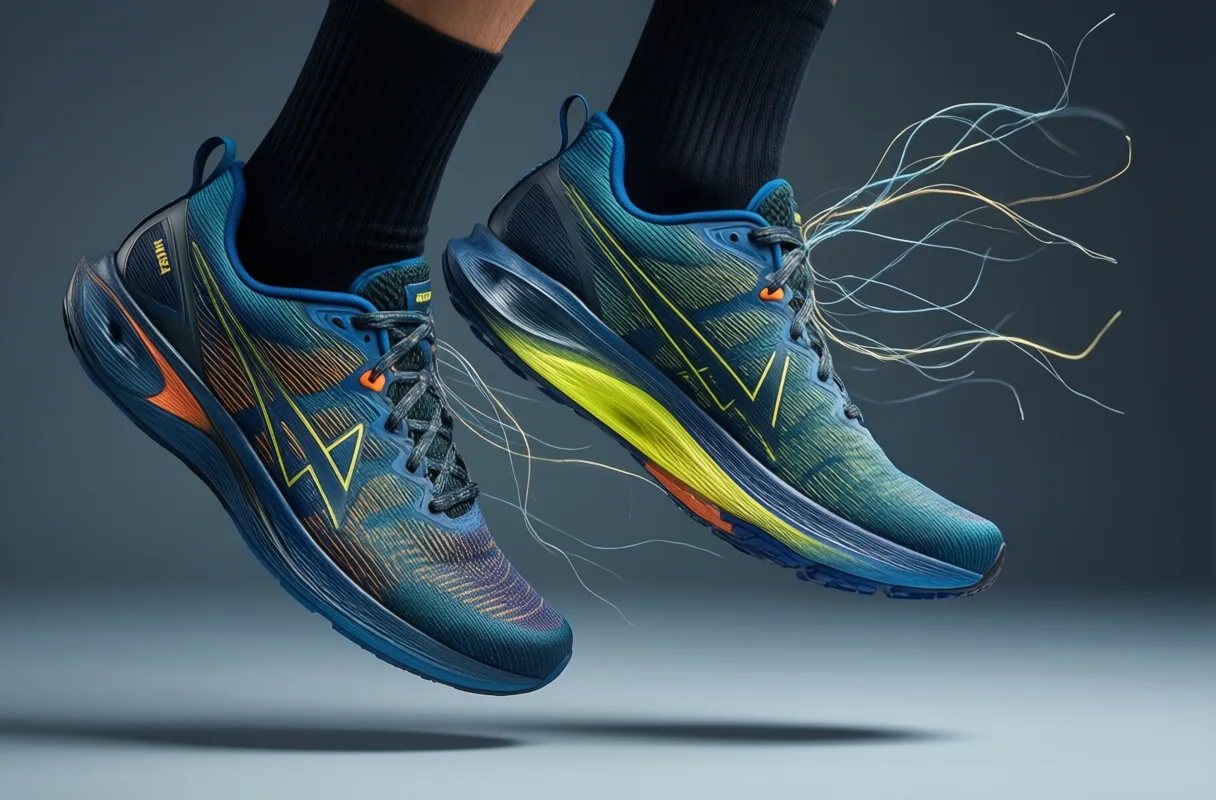
Switching to level-soled Footwear Isn’t a swap. It’s a process. The body has spent years adapting to elevated heels. Muscles have shortened. Joints have stiffened. Connective tissues have settled into new patterns.
Jumping straight into long runs can lead to strain-especially in the calves, Achilles, and plantar fascia. These tissues need time to relearn their original range of motion.
Most people benefit from a gradual shift:
- Start with short walks or standing tasks
- Mix in brief runs every few days
- Monitor for tightness or soreness
Listen to the feedback. Discomfort is normal. Sharp pain is not.
One coach compared it to learning a new language: “You can’t start by giving a speech. You start with words. Then phrases. Then sentences.” The foot needs to rebuild its vocabulary of movement.
Patience isn’t optional. It’s part of the design.
Common Misconceptions About Flat-Soled Running Shoes
Some assume flat-soled shoes are just “barefoot in disguise”-harsh, minimalist, unforgiving. But many modern versions include cushioning, flexibility, and durability while maintaining a level profile.
Others believe they’re only for runners. In reality, anyone who stands or walks for hours can benefit from more natural alignment. Nurses, teachers, retail workers-many report less fatigue when their feet aren’t tilted.
Another myth: flat shoes weaken the arch. Evidence suggests the opposite-when given the chance, the foot strengthens itself. Support isn’t something you wear. It’s something you build.
And no, you don’t have to give up cushioning to get a level sole. Technology now allows for soft landings without sacrificing posture.
Practical Tips for Integrating Low-To-The-Ground Footwear
Start small. Wear the new shoes for short periods-lunch breaks, errands, a 10-minute walk. Let the body adapt gradually.
Pair the switch with foot-focused exercises:
- Toe spreads and lifts
- Ankle circles and mobility drills
- Standing on uneven surfaces
These reinforce what the shoe enables: active, responsive feet.
Rotate between your old and new shoes during the transition. This reduces strain and gives your body time to adjust without shock.
And above all-pay attention. Notice how your foot lands. How your leg feels. Where tension shows up. Your body has been speaking all along. You just need to lower the noise to hear it.
Long-Term Benefits for Joint Alignment and Proprioception
Over months and years, consistent use of level-soled footwear can reshape movement patterns. The ankle moves through a fuller range. The knee tracks more smoothly. The spine stacks with less compensation.
But beyond mechanics, there’s something subtler: improved Proprioception-the body’s sense of where it is in space. When the foot feels more of the ground, the brain gets richer feedback.
This isn’t just about running. It’s about aging, balance, and injury resilience. The better the foot communicates with the brain, the faster the body reacts to a wobble, a slip, a shift in terrain.
People often report feeling “more connected” to the ground-not in a mystical way, but in the way a pianist feels the keys. Precision. Control. Presence.
Finding the Right Balance: Terrain, Cadence, and Shoe Flexibility
No shoe fixes everything. The best choice depends on how, where, and how much you move.
On hard pavement, some cushioning helps. On trails, flexibility and grip matter more. A shoe that bends with the foot allows natural motion. One that’s too stiff overrides even the flattest sole.
Cadence-the number of steps per minute-also interacts with shoe design. A quicker stride reduces impact and pairs well with level soles. But it’s not mandatory. Many find their rhythm naturally once the heel drop disappears.
The goal isn’t dogma. It’s awareness. It’s asking: does this shoe help me move like a human-or like a machine bolted to a platform?
Where Natural Foot Function Meets Modern Running Demands
We don’t have to choose between protection and function. Between cushion and connection. The future of footwear isn’t about more tech-it’s about smarter alignment.
The foot is not broken. It doesn’t need to be fixed. But after decades of elevation, padding, and control, it may need to be reawakened.
A level sole isn’t a trend. It’s a return-to balance, to strength, to the quiet intelligence of the body when it’s allowed to work as a system.
And maybe, just maybe, we’ve been standing on the wrong end of the shoe all along.
How Ground Level Running Rewires Your Stride
The Barefoot Blueprint
Think of zero drop shoes as your foot’s co-pilot for a more natural stride. Unlike traditional running shoes that lift your heel higher than your toes-sometimes by over 10 millimeters-zero drop designs keep the sole completely flat from front to back. This setup mirrors barefoot running, encouraging your body to move the way it likely did before modern footwear added layers and angles. Many runners find this shift helps them land more on the midfoot or forefoot instead of slamming down on their heels, which can reduce impact forces traveling up the leg.
Built-In Feedback System
Here’s a fun twist: zero drop shoes don’t just change how you run-they teach you how you Were Running. When you first switch, you might feel more calf soreness or even a bit of awkwardness in your step. That’s not a flaw; it’s feedback. Your muscles, tendons, and joints are waking up after years of relying on elevated heels and cushioned platforms. Over time, many users report stronger feet and calves, better balance, and improved awareness of their movement patterns-all because the shoe isn’t masking inefficiencies.
From Trail to Track, It’s About Alignment
Flat-soled footwear isn’t just for trail chasers or minimalist enthusiasts. Some track spikes and racing flats used by elite sprinters and distance runners also feature little to no drop, prioritizing ground contact and efficient energy transfer. While not all zero drop shoes are built for speed, the principle remains: when your foot sits level, your posture, stride, and joint alignment often follow suit. It’s like standing on a perfectly flat rock instead of a sloped one-your whole body adjusts to stay balanced. Explore more stories, videos, and creators on Loaded.
Frequently Asked Questions
What are zero drop shoes?
Zero drop shoes have a flat sole where the heel and forefoot sit at the same height, mimicking barefoot posture. They eliminate heel elevation to promote natural alignment and even weight distribution.
How do zero drop shoes affect running form?
They encourage a midfoot or forefoot strike instead of heel-first impact. This reduces braking forces and overstriding, leading to a lighter, more efficient stride.
Can zero drop shoes strengthen foot muscles?
Yes, by allowing the foot to move naturally, these shoes engage intrinsic foot muscles. Over time, this can improve balance, push-off strength, and reduce reliance on external support.
Are zero drop shoes only for runners?
No, anyone who stands or walks for long periods can benefit. People in professions like nursing or teaching report less fatigue due to improved alignment and reduced foot tilt.
This article was produced with AI assistance. How Neuron Magazine uses AI.
Saoirse investigates how automation, remote systems, and AI reshape labor, careers, and human purpose. She centers worker voices and cultural change, blending data with narrative depth to reveal what the future feels like on the ground.