You’ve seen the Headlines: “Scientists Discover Cure for Aging!” Or “This One Study Changes Everything About Diet.” They flash across your feed, bold and breathless, promising revolutions before breakfast. But then-silence. No follow-up. No change in practice. Just another forgotten flare in the endless scroll.
That whiplash isn’t just annoying. It’s eroding something deeper: our quiet trust in Science As a steady light in a chaotic world. And the truth? Not all science stories are built the same. Some are fortresses of evidence. Others are sandcastles, impressive at first glance-until the tide rolls in.
Why Some Science Stories Feel Untrustworthy
We’ve all clicked on a headline that promised a miracle, only to feel duped by the details. Maybe it was a “groundbreaking” brain study that turned out to involve three people and a questionable algorithm. Or a nutrition claim based on a single survey with no control group.
These stories don’t lie outright. They just leave things out. The context. The caveats. The quiet Maybe That lives at the heart of real science. And without those, even accurate words can create a false impression.
When science feels slippery, it’s often not because the Research Is bad-but because the reporting skips the guardrails.
It’s like showing a blueprint and calling it a skyscraper.
The foundation might be solid, but you can’t live in a drawing.
We expect certainty from science, but real progress moves in increments-tested, repeated, revised.
Sensational headlines skip the climb and drop us at the summit, flag in hand.
No wonder we feel dizzy when the next story pulls the ladder away.
How Peer Review Separates Speculation from Substance
Imagine a lab where every finding gets announced the moment it’s observed-no checks, no questions, just press releases and podcasts. That world sounds fast. It also sounds fragile.
That’s why peer review exists. It’s science’s quiet checkpoint, where anonymous experts dissect a study before it’s published. They ask: Are the methods sound? Are the conclusions supported? Could bias have crept in?
This process isn’t perfect. It can be slow. It can miss flaws. But it’s still the best filter we have for separating signal from noise.
- Does the study have a control group?
- Was the sample size large enough to mean anything?
- Were the measurements objective, or based on self-report?
These aren’t nitpicks. They’re the difference between a fluke and a finding.
Peer review forces researchers to answer those questions before going public.
It doesn’t guarantee truth-but it raises the floor.
And when a study survives that gauntlet, it doesn’t mean it’s final.
It means it’s ready for the next phase: scrutiny, replication, debate.
Science isn’t a proclamation. It’s a conversation. Peer review just makes sure you’ve done your homework before speaking up.
What Happens When a Study Bypasses Scientific Scrutiny
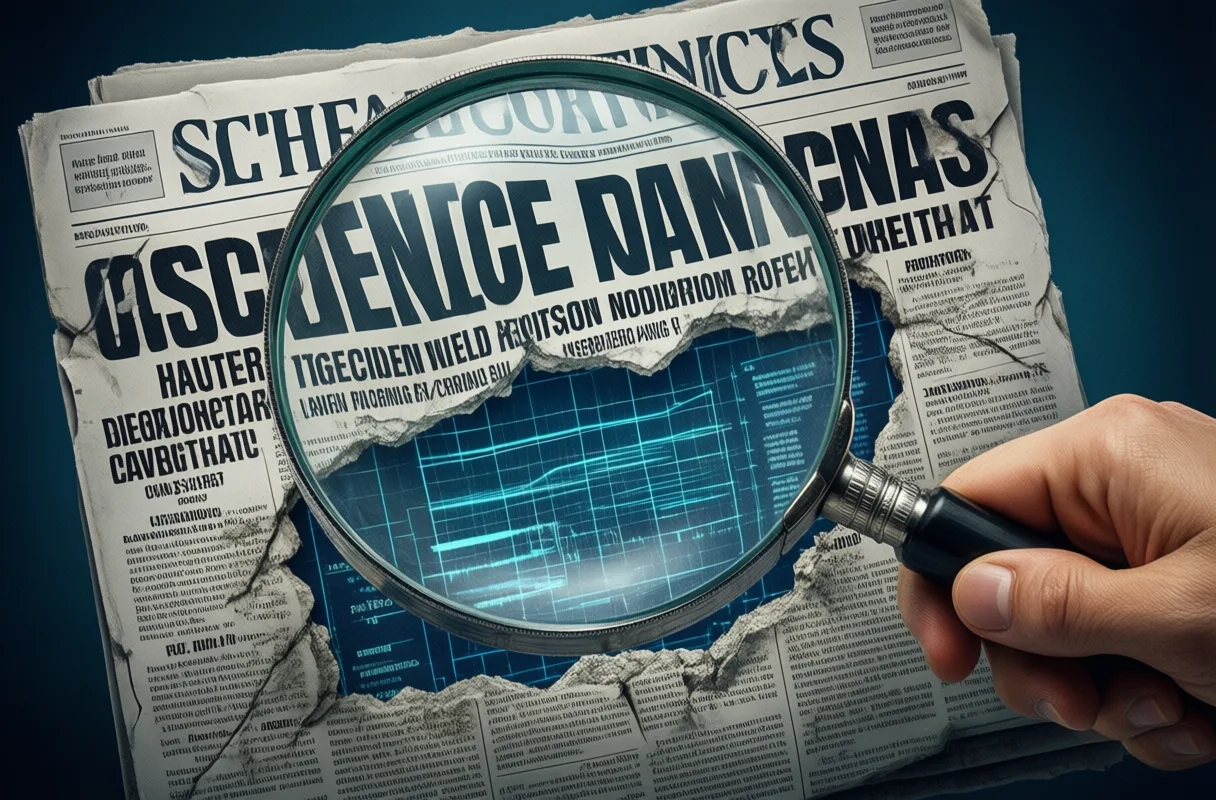
Not every study goes through peer review. Some land directly in press releases. Others debut at conferences with bold claims but no published data. And a few slip into preprint servers-valuable tools for speed, but not vetting.
When research skips the review process, it’s not automatically wrong. But it Is Untested. Like a prototype car shown at a trade show-sleek, maybe revolutionary, but not yet roadworthy.
We saw this with early pandemic claims about treatments that sounded miraculous-until proper trials revealed the risks.
The headlines moved fast. The science moved slower. People got hurt.
Without peer review, there’s no independent check on methodology or interpretation.
A small anomaly can become a headline. A correlation gets called a cause.
And the public, hungry for answers, treats a maybes as mandates.
That’s not science failing. That’s science being bypassed.
And once trust erodes, it’s hard to rebuild.
The speed of information now outpaces the speed of verification.
But skipping the checks doesn’t get us answers faster-it just gets us wrong answers sooner.
The Role of Source Disclosure in Building Reader Trust
You’re more likely to believe a weather forecast if you know it came from a meteorologist, not a poet. The same goes for science. Who’s behind the data matters.
When a news story tells you the researchers’ institution, their funding sources, and their potential conflicts of interest, it’s not just paperwork. It’s transparency. It’s an invitation to look under the hood.
Did a beverage company fund a study on hydration and cognition?
Was a tech firm involved in research about screen time and focus?
That doesn’t disqualify the findings-but it should shape how we read them.
Transparency isn’t about suspicion. It’s about context.
It lets us ask better questions instead of accepting easy answers.
And when outlets clearly state where a study was published, who reviewed it, and who paid for it, they’re not just reporting news-they’re modeling critical thinking.
They’re saying: Here’s what we know. Here’s who told us. Now, think about it.
Trust isn’t given. It’s earned-one disclosed detail at a time.
When Press Releases Oversell the Findings
Press offices exist to share science. But sometimes, in the rush to stand out, they stretch the truth. A modest improvement becomes a “major breakthrough.” A mouse study is framed as a human cure.
These releases aren’t lies. They’re amplifications. And when news outlets pick them up without skepticism, the echo grows louder-and less accurate.
A study showing a protein’s behavior in a petri dish becomes “Scientists Uncover Root Cause of Alzheimer’s.”
The gap between those statements is vast. But in the headline race, nuance loses.
Press releases often emphasize hope, not limits.
They highlight the “what” and skip the “how little we still know.”
And because they come from universities or journals, they carry an aura of authority.
But authority without context can mislead.
A finding’s importance isn’t measured by excitement-it’s measured by evidence.
The best science journalism doesn’t just repeat the release. It interrogates it.
It asks: How strong is this? How new is this really? What would it take for this to matter in real life?
Because hope is good. But false hope? That’s a debt we all pay later.
Red Flags in Science Reporting You Can’t Afford to Ignore
Not every red flag waves wildly. Some just flicker-easy to miss if you’re scrolling fast. But learning to spot them changes how you read science news.
One big warning sign? Absolute language. Words like “proves,” “cures,” or “100% effective” are rare in real science. Biology is messy. Results are conditional. If a headline sounds final, it’s probably oversimplified.
Another red flag: No mention of sample size or study design. A trial with 12 people is not the same as one with 12,000. A survey can’t prove cause and effect. These details aren’t footnotes-they’re the story.
Watch for Single-source stories. If only one outlet is reporting a “huge discovery,” be skeptical. Real breakthroughs ripple across multiple sources, often with cautious commentary.
And beware of Animal or lab studies presented as human solutions. Mice aren’t people. Petri dishes aren’t patients. These studies are starting points-not endpoints.
Finally, check for Missing uncertainty. Good science includes phrases like “may suggest,” “in this context,” or “further research is needed.”
When those are absent, the reporting is likely skipping the caveats that matter.
You don’t need a PhD to read science wisely.
You just need to notice what’s not being said.
Who’s Behind the Research-and Why It Matters
Science isn’t done in a vacuum. It’s shaped by people-teams with histories, institutions with reputations, funders with interests.
Knowing who conducted a study doesn’t tell you if it’s right. But it helps you assess its angle.
A lab with decades of peer-reviewed work in neuroscience carries different weight than a startup with one press release and a slick website.
Follow the team. Have they published before? In respected journals? Do they collaborate widely, or work in isolation?
Consistency over time builds credibility.
And consider the funding. Public grants often come with strict ethical oversight. Private funding can accelerate research-but may come with expectations.
None of this invalidates the science. But it helps you read it with eyes open.
Was this study designed to explore-or to support a product?
Science is human. It’s influenced by ambition, resources, and timing.
The best researchers acknowledge that. The best reporters do too.
When you know who’s behind the data, you’re not being cynical.
You’re being curious. And curiosity is the first tool of critical thinking.
How Replication Shapes What We Accept as True
A single study is a snapshot. Replication is the movie. One experiment can find a link between sleep and memory. But until others repeat it-same methods, similar results-we can’t be sure it’s real.
Replication is science’s reality check. It’s slow. It’s unglamorous. No headlines shout, “Same Results Again!” But without it, nothing sticks.
Too often, the first flashy finding gets all the attention. The follow-ups-especially if they fail to confirm-fade into silence.
That imbalance distorts our perception of what’s solid.
When multiple teams, in different labs, get similar results, confidence grows.
That’s how we move from “maybe” to “probably” to “yes, this seems real.”
And sometimes, replication fails. That’s not a failure of science-it’s science working.
It means the system is catching errors, correcting course.
The most robust findings aren’t the loudest. They’re the ones that survive repeated testing.
They’re repeated, refined, and re-verified until they become part of the foundation.
Truth in science isn’t declared. It’s earned-over time, through repetition.
Navigating Conflicting Studies Without Losing Confidence
You read one study saying coffee extends life. Another links it to heart issues. Now what?
Conflicting findings aren’t a flaw in science-they’re a feature. Science isn’t a single voice. It’s a chorus, with different tones, harmonizing over time.
Variation happens because studies use different methods, populations, and definitions. One looks at heavy coffee drinkers. Another studies moderate intake. Both can be valid-and both can seem to contradict.
Instead of picking a side, ask: Which studies are larger? Better controlled? Replicated?
Look for patterns across multiple papers, not just the latest headline.
Meta-analyses-studies of studies-can help. They pool data and reveal broader trends.
One paper might point north. Ten together might show a clear path.
And remember: science evolves. New data changes understanding. That’s not weakness. It’s integrity.
You don’t need to believe everything. You just need to stay in the conversation.
Let the weight of evidence, not the volume of claims, guide you.
Transparency as a Filter in the Digital Information Age
We’re drowning in content but starved for context. Anyone can publish a “science” article. Few take the time to show their work.
Transparency is the filter we need. It’s the difference between a black box and an open lab.
When writers share sources, methods, and limitations, they’re not just informing-they’re inviting participation.
We don’t need every article to read like a journal paper. But we do need the bones of evidence visible.
Who did the study? Where was it published? What do other experts say?
Outlets that prioritize transparency build trust slowly, steadily.
They don’t chase clicks. They cultivate credibility.
And in a world of AI-generated summaries and algorithm-driven feeds, that trust is priceless.
It’s the anchor in the storm of information.
Transparency won’t make science faster. But it makes it stronger.
And in the long run, that’s what we really need.
What to Do Before Sharing That Breakthrough Headline
You see it: “New Study Proves AI Can Predict Depression!” It’s exciting. You want to share it-right away.
Pause.
Ask: Was this peer-reviewed? Who conducted it? Is it replicated?
Even two extra questions can stop misinformation in its tracks.
Scroll past the headline. Find the original study if you can. Look for limits, not just claims.
If the article doesn’t mention sample size or funding, that’s a clue.
And when in doubt, wait. Real science doesn’t expire in 24 hours.
The important findings will still be there tomorrow-along with the critiques, the context, the conversation.
Sharing is powerful. With one tap, you amplify.
Make sure you’re amplifying truth, not just noise.
Because the future of science literacy isn’t just in labs or journals.
It’s in our feeds. In our choices. In the stories we choose to pass on.
Why Trust That Science Story?
The Peer Review Filter
Think of peer review as science’s quality control step before a study hits the headlines. When researchers publish, their work gets sent to other experts in the same field-people who weren’t involved in the study but know the subject inside out. These peers check for sound methods, logical conclusions, and whether the data actually supports the claims. It’s not perfect, but it’s a critical checkpoint that helps stop shaky science from spreading. Stories based on peer-reviewed research are more likely to hold up over time than those citing press releases or unpublished findings.
Behind the Byline Matters
Ever notice who wrote your science news? A surprising number of viral “breakthrough” stories come from outlets with no science training or editorial oversight. In contrast, articles written by journalists with science backgrounds-or those that clearly name and link to the original study-tend to be more accurate. Transparency isn’t just about trust; it lets you dig deeper. If an article doesn’t say where the data came from or hides the source behind vague phrases like “scientists say,” it’s a red flag. Real credibility means showing your work.
The Preprint Puzzle
Some of the fastest-breaking science you see online hasn’t been peer reviewed at all-it’s posted as a “preprint.” Researchers share these early drafts to speed up collaboration, especially during emergencies like pandemics. While this openness helps science move faster, it also means the findings could change or even be wrong. News stories treating preprints like final proof can mislead readers. Spotting the difference matters: if a story sounds too sensational, check whether it’s based on a peer-reviewed paper or a preliminary draft still under scrutiny. Explore more stories, videos, and creators on Loaded.
Frequently Asked Questions
Why do some science headlines seem untrustworthy?
Some science stories leave out context, caveats, or methodological details, creating a false impression. They may highlight dramatic findings without revealing limitations like small sample sizes or lack of control groups.
What is the role of peer review in science reporting?
Peer review acts as a checkpoint where independent experts evaluate a study’s methods and conclusions before publication. It helps separate reliable findings from speculation, though it doesn’t guarantee final truth.
How can readers identify misleading science news?
Red flags include absolute language like 'proves' or 'cures,' missing details about sample size or study design, single-source reports, and animal studies presented as human breakthroughs. Missing uncertainty phrases is another warning sign.
Why does source transparency matter in science journalism?
Knowing the researchers, their institution, funding sources, and potential conflicts of interest provides context. Transparency allows readers to assess credibility and ask critical questions about the study’s motivations and reliability.
This article was produced with AI assistance. How Neuron Magazine uses AI.
Saoirse investigates how automation, remote systems, and AI reshape labor, careers, and human purpose. She centers worker voices and cultural change, blending data with narrative depth to reveal what the future feels like on the ground.