
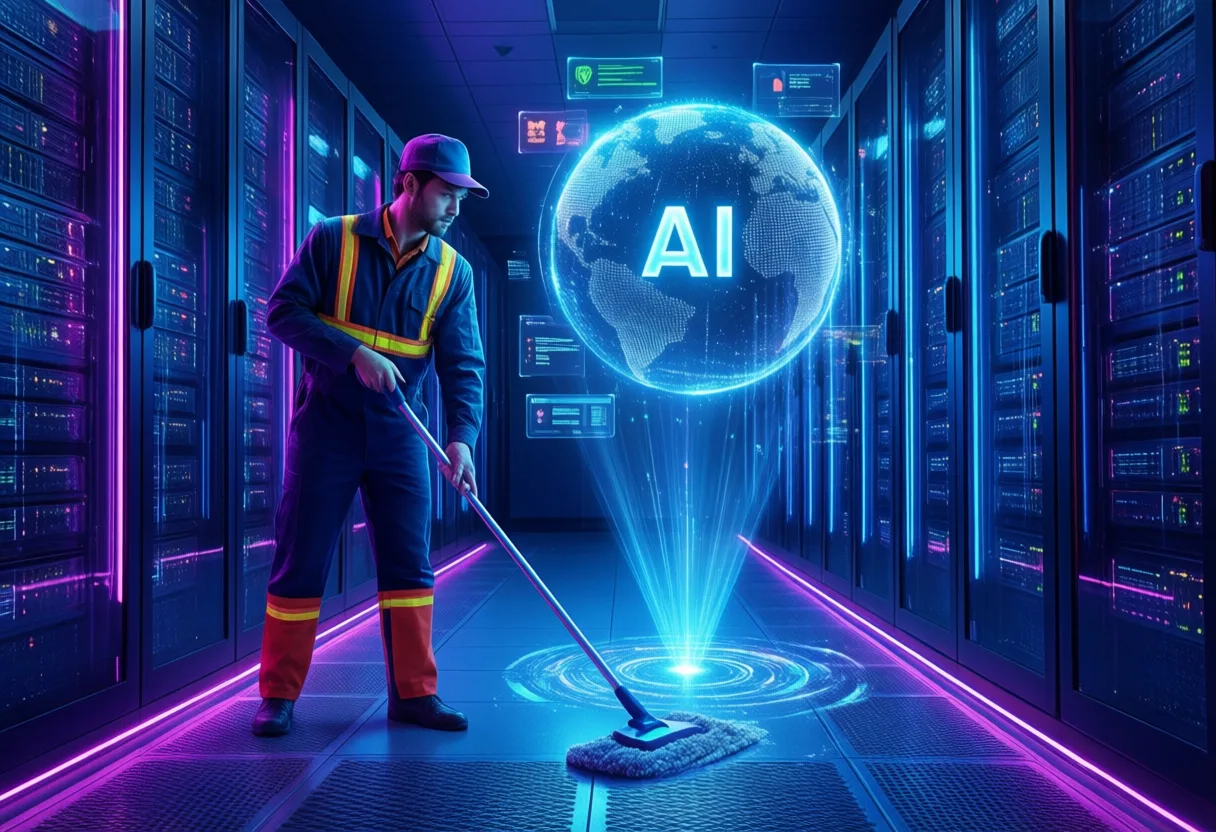
The machines aren’t coming. They’re already here-quietly analyzing spreadsheets, routing customer queries, even drafting emails while we sip coffee. This isn’t science fiction. It’s the new rhythm of work, humming beneath conference calls and Slack pings.
So what happens when Intelligence Isn’t just human anymore?
How Work Is Changing in the Age of Intelligent Machines
Tasks Once reserved for humans now unfold in milliseconds, processed by systems trained on mountains of data. Filing, scheduling, monitoring-these aren’t just automated. They’re anticipated.
A report generates itself. A server glitch gets patched before anyone notices. The workday no longer waits for instructions. It moves ahead, guided by patterns invisible to the naked eye.
We’re shifting from doing to directing.
From repetition to refinement.
From control to collaboration-with machines that learn.
Employees aren’t just users of Tools anymore. They’re conductors of intelligent ecosystems. The office isn’t just desks and screens. It’s a network of decisions, some made by us, others by algorithms watching, learning, adjusting.
This isn’t about replacing effort. It’s about redefining it.
When Automation Meets Decision-Making
Automation used to mean predictable tasks-assembly lines, data entry, inventory counts. But now, machines don’t just act. They decide.
Should this loan be approved?
Which candidate fits the role best?
When should maintenance happen on that machine?
These aren’t binary choices. They’re complex judgments-once the exclusive domain of experience and intuition. Now, algorithms weigh variables at speeds no human can match.
But decisions aren’t just about speed. They’re about context.
Bias hides in data. Assumptions embed in code.
A system trained on the past may misread the Future.
So the real question isn’t whether machines can decide. It’s whether we can trust them-and how we stay in the loop.
- Humans must validate outcomes, not just initiate processes.
- Oversight isn’t optional. It’s structural.
- The best systems don’t replace judgment. They amplify it.
We’re not handing over the wheel. We’re redesigning the cockpit.
Could Your Next Coworker Be an Algorithm?
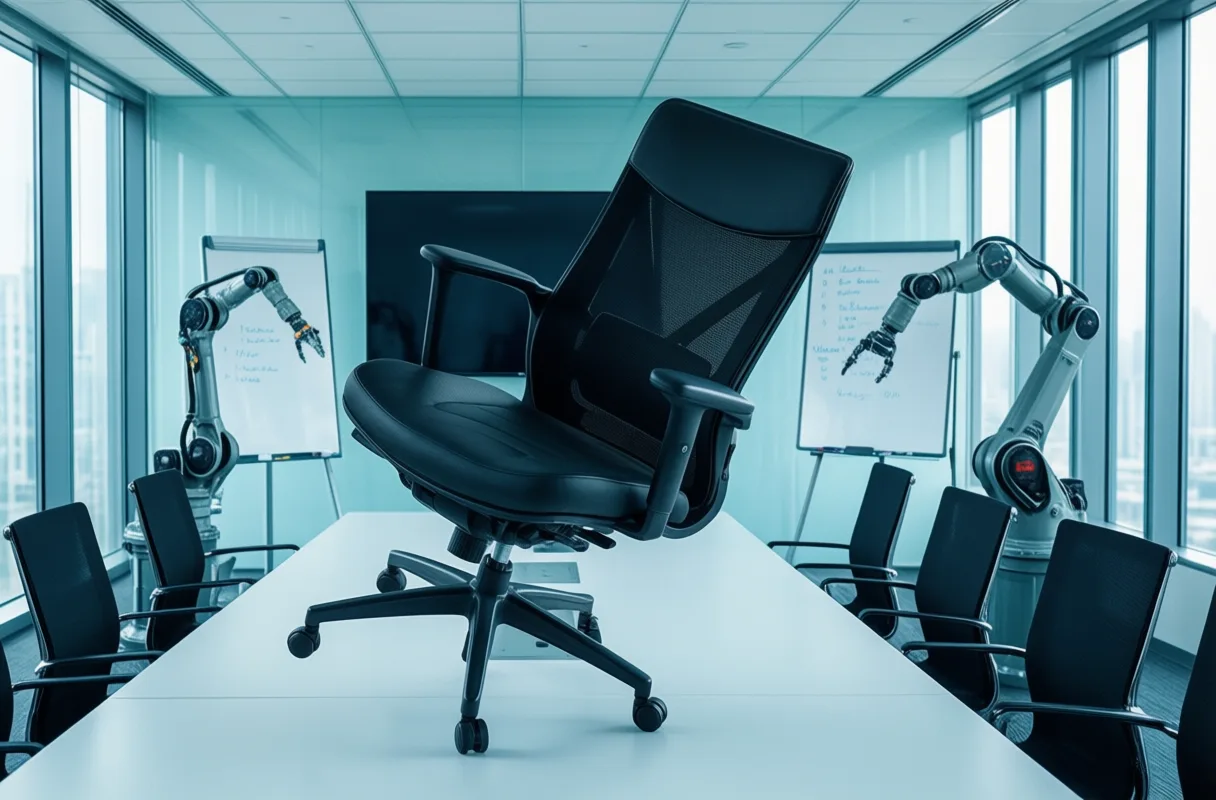
Imagine a teammate who never sleeps, never forgets, and processes thousands of documents in the time it takes to brew tea. That’s not a fantasy. It’s already on the payroll-in code.
This coworker doesn’t take breaks. It doesn’t get frustrated. But it also doesn’t understand sarcasm, grief, or why a client suddenly changed their mind after a family emergency.
Intelligence isn’t empathy.
And insight isn’t just data-it’s meaning.
So the office of tomorrow won’t be humans Or Machines. It’ll be humans And Machines-each playing to their strengths.
- Algorithms spot trends. Humans interpret them.
- Bots handle volume. People handle nuance.
- Systems scale tasks. Teams scale trust.
The most productive teams won’t be the ones with the smartest AI. They’ll be the ones who know how to work With It.
Will your next brainstorming session include a chatbot?
Maybe. But the breakthrough idea will still come from a human who asked, “What if?”
The Productivity Paradox: More Output, Fewer Hours
Output is rising. Hours are flattening. In some sectors, work is getting Done faster Than ever-yet burnout isn’t disappearing. It’s evolving.
Why? Because when machines accelerate everything, the pressure doesn’t vanish. It shifts.
Deadlines shrink. Expectations stretch.
“What took a week now takes an hour-so why not do ten?”
Efficiency can become its own trap.
We’re measuring productivity in old ways-hours logged, tasks completed-while the nature of work transforms beneath us. A report generated in seconds still needs human sense-making. A customer query answered by AI still needs emotional calibration.
So what does real productivity look like now?
- Speed with scrutiny – Fast isn’t valuable if it’s flawed.
- Volume with vision – More output means nothing without purpose.
- Automation with accountability – Someone still owns the result.
The goal isn’t to do everything faster. It’s to free up space for what machines can’t do-think, create, connect.
And that requires not just smarter tools.
It requires smarter boundaries.
Rethinking Training in an Era of Constant Adaptation
Skills have shelf lives now. What you learned last year might already be outdated. The tools? Replaced. The workflows? Rewritten.
So training can’t be a one-time event. It can’t be a manual or a three-hour seminar. It has to be continuous-woven into the workday like code into software.
Imagine learning While Working.
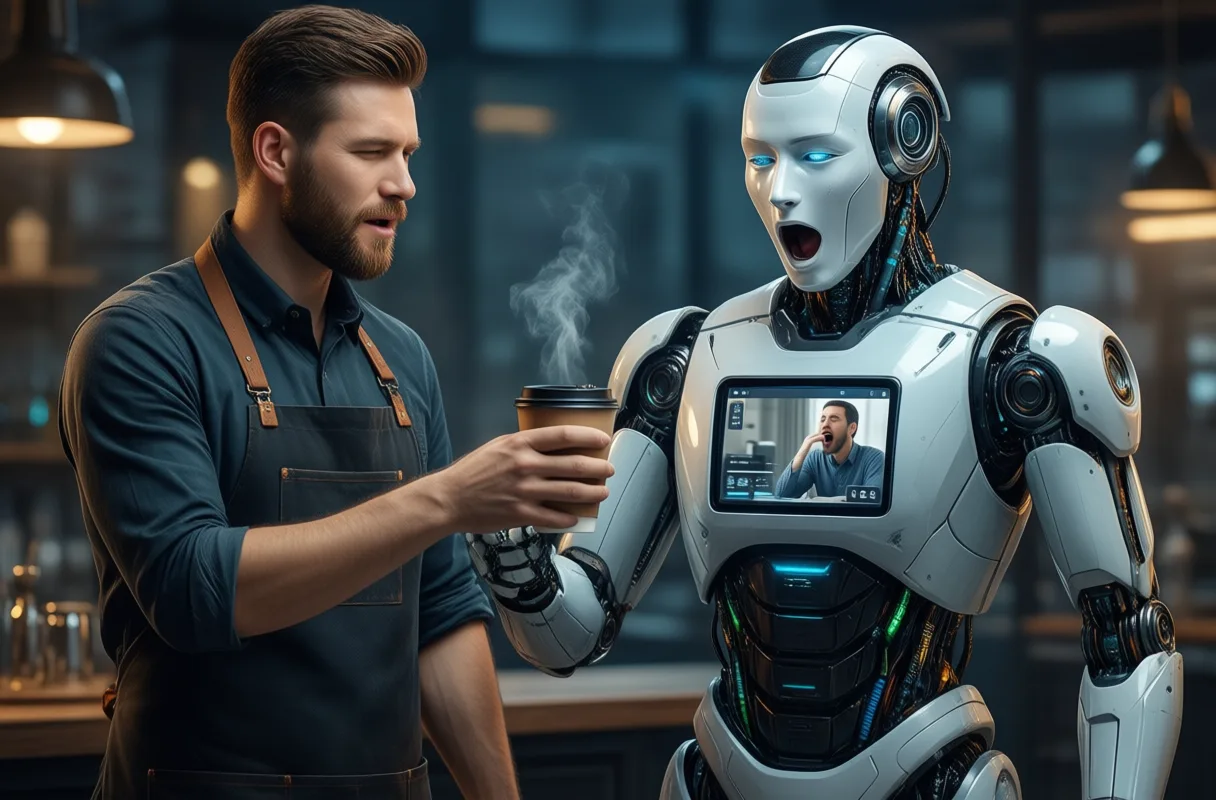
Real-time suggestions. Adaptive tutorials. AI coaches that notice when you’re stuck and offer a micro-lesson.
This isn’t sci-fi. It’s emerging in real systems where upskilling happens in the flow of action.
But the biggest shift isn’t technological. It’s cultural.
- Workers must embrace being beginners-again and again.
- Managers must reward learning, not just output.
- Companies must invest in adaptability, not just efficiency.
The most future-proof skill isn’t coding or analytics.
It’s the ability to learn.
And that’s something no algorithm can fully teach-only humans can cultivate it in each other.
Balancing Efficiency with Ethical Oversight
Speed. Scale. Precision. AI delivers all three. But should it?
Every automated decision carries risk. A resume rejected by software. A promotion flagged as low-potential. A shift schedule adjusted without warning.
When systems operate in the background, accountability fades.
Who do you appeal to when the algorithm says no?
Efficiency without ethics is fragility.
It works-until it fails in a way that erodes trust.
So oversight can’t be an afterthought. It must be built in.
- Audit trails for automated decisions.
- Clear escalation paths when something feels wrong.
- Human review for high-stakes outcomes.
And transparency isn’t weakness. It’s resilience.
Workers need to understand how decisions are made.
Not to challenge every result-but to trust the system when it matters.
Because the most efficient workplace isn’t the fastest.
It’s the fairest.
What Happens When Roles Evolve Faster Than Policies?
Job descriptions were once stable. Now, they’re temporary. A role today might blend data analysis, client relations, and AI management-none of which were in the original posting.
But policies lag.
HR systems are built for fixed titles, not fluid responsibilities. Pay scales? Based on old hierarchies. Performance reviews? Still measuring yesterday’s metrics.
So what happens when the work outpaces the rules?
- Talent gets misclassified.
- Incentives misalign.
- Innovation hits bureaucratic walls.
The gap between what people Do And what their job Says Is widening.
And that’s dangerous.
Because when systems don’t reflect reality, people disengage.
They game the metrics. They leave.
The fix? Agile policies.
- Regular role recalibration.
- Dynamic compensation models.
- Evaluation based on impact, not checklists.
The future of work isn’t just technological.
It’s organizational.
And the companies that win won’t be the ones with the best AI.
They’ll be the ones that can evolve their structures as fast as their tools.

Beyond Replacement: Collaboration as the New Standard
Let’s kill the myth: this isn’t about humans versus machines.
That narrative is tired. And wrong.
The real story isn’t replacement. It’s Augmentation.
A designer using AI to generate mockups, then refining the emotion.
A doctor reviewing AI-flagged anomalies, then talking to the patient.
The magic happens in the middle.
In the handshake between logic and intuition.
This isn’t coexistence. It’s co-creation.
And the best outcomes emerge when each side does what it does best:
- Machines handle scale, speed, pattern recognition.
- Humans handle meaning, ethics, context.
The future workplace isn’t a robot factory.
It’s a hybrid studio-where intelligence, in all its forms, is put to work together.
The question isn’t “Will AI take your job?”
It’s “How will you work with AI to do something no machine could do alone?”
Preparing for the Unscripted Future of Work
No one has a map for what’s coming.
The rules are being written in real time.
The tools are evolving faster than we can name them.
But one thing is clear: adaptability is the new stability.
The jobs of the future won’t be defined by titles or tasks.
They’ll be defined by how well humans and machines solve problems no one anticipated.
So preparation isn’t about mastering a single skill.
It’s about staying fluid. Asking better questions.
And understanding that intelligence-whether silicon or synapse-works best when it’s shared.
We’re not entering the age of Artificial Intelligence.
We’re entering the age of Collaborative intelligence.
And the workplace will never be the same.
| Function | AI Capability | Human Role |
|---|---|---|
| Email communication | Suggests quick replies, corrects tone | Reviews and sends final message |
| Scheduling | Books meetings, finds optimal times | Approves or adjusts proposed times |
| Learning and development | Recommends real-time micro-lessons | Applies knowledge to current tasks |
| Decision-making | Analyzes data for loan or hire decisions | Validates outcomes, ensures fairness |
| Task automation | Generates reports, patches servers | Oversees results, adds context |
How AI Is Quietly Reshaping the 9-to-5
More Than Just Robots and Chatbots
AI in offices isn’t about replacing people with sci-fi machines-it’s already embedded in tools many use daily without realizing it. Ever had your email platform suggest a quick reply? That’s AI learning from common phrases. Or used software that automatically fixes grammar and tone in real time? That’s Artificial Intelligence smoothing out communication behind the scenes. These subtle helpers save minutes every hour, which adds up to real productivity gains over weeks and months.
Smarter Scheduling, Fewer Headaches
Scheduling meetings across time zones used to mean endless back-and-forth emails. Now, AI-powered calendar assistants can scan availability, propose optimal times, and even book the meeting-all without human input. Some tools go further by analyzing how teams work and recommending when to schedule deep-focus blocks versus collaborative sessions. It’s not magic, just algorithms learning patterns to reduce friction in daily routines.
AI That Helps You Learn on the Job
Instead of waiting for formal training, employees now access AI-driven learning platforms that recommend courses based on current projects or skill gaps. These systems adapt in real time, offering bite-sized lessons during downtime. For example, someone brushing up on data analysis might get a two-minute tip on interpreting charts right before a presentation. This just-in-time learning helps teams stay sharp without stepping away from core responsibilities. Explore more stories, videos, and creators on Loaded.
Frequently Asked Questions
How is AI changing job roles in the workplace?
AI is shifting work from repetitive tasks to roles focused on directing, refining, and collaborating with intelligent systems. Employees are becoming conductors of AI-driven ecosystems rather than just tool users. Job roles now blend data analysis, client relations, and AI management.
Can AI make decisions in the workplace?
Yes, AI now makes complex decisions such as loan approvals, candidate selection, and maintenance scheduling. These systems analyze variables at high speed, but human oversight is essential to validate outcomes and ensure ethical accountability.
How does AI impact workplace productivity?
AI increases output and speeds up tasks, but this can shift pressure rather than reduce it. True productivity now requires balancing speed with scrutiny, volume with purpose, and automation with human accountability.
What role does training play in an AI-driven workplace?
Training must be continuous and embedded in daily work, not a one-time event. AI coaches offer real-time, adaptive micro-lessons, but the most future-proof skill is the human ability to learn and adapt constantly.
This article was produced with AI assistance. How Neuron Magazine uses AI.
Malik dissects how artificial intelligence transforms decision-making in governments and corporations, tracking algorithmic power shifts and policy gaps. He writes with clarity and urgency, making high-stakes tech strategy accessible without oversimplifying its risks.