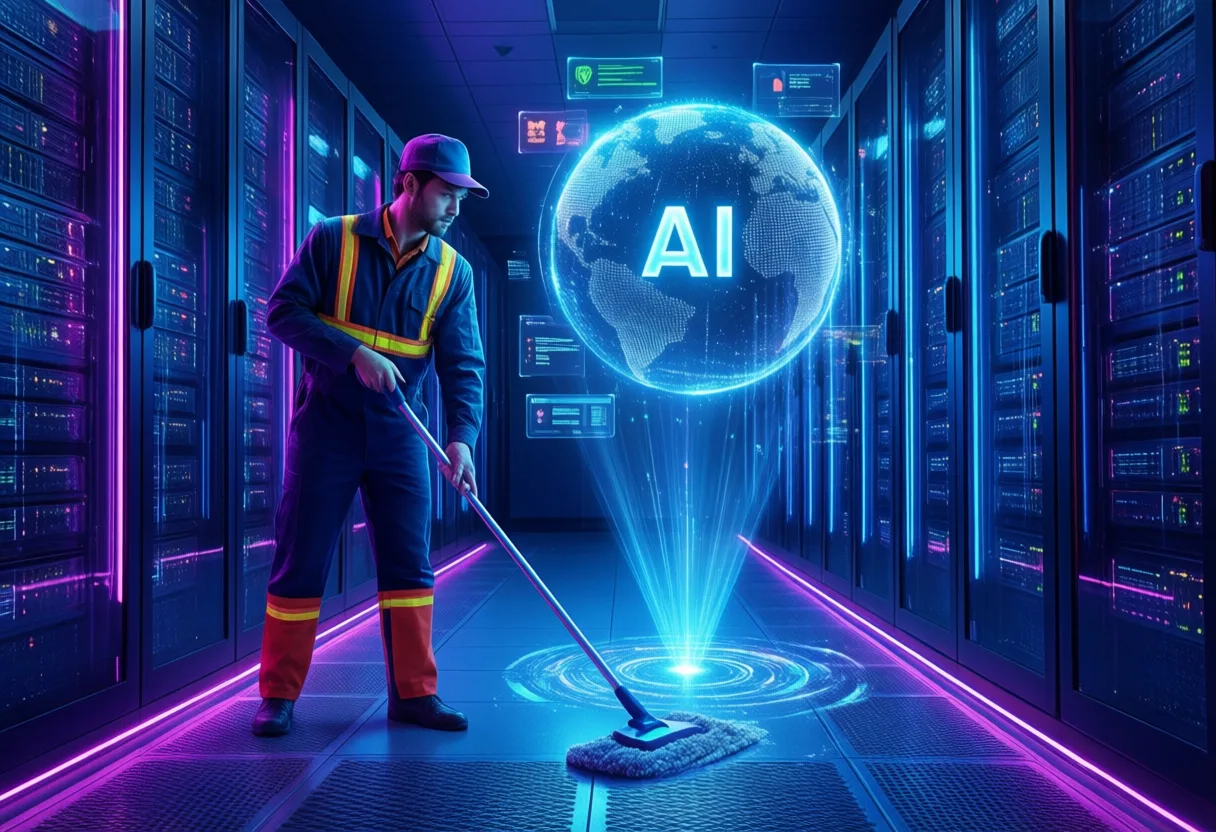

In the quiet hum of server farms beneath the mist-wrapped hills of Guiyang and along the neon-lit research corridors of Shenzhen, a transformation is unfolding-one not of sudden rupture, but of meticulous, state-guided evolution. The Artificial Intelligence Industry in China is no longer chasing the Future; it is actively constructing it, layer by algorithmic layer, with a fusion of top-down ambition and bottom-up ingenuity that defies easy categorization. This is not merely technology scaling-it is a reordering of possibility, shaped by policy, powered by data, and poised to redefine global benchmarks.

A Nation’s Blueprint for Technological Sovereignty
China’s ascent in artificial intelligence cannot be understood without recognizing the deliberate architecture behind it. Unlike models driven solely by market forces, the nation’s approach integrates Long-term strategic planning With targeted investment, creating an ecosystem where Innovation Is not left to chance but cultivated with precision. Government initiatives have prioritized AI as a pillar of national development, embedding it within broader goals of economic modernization, urban efficiency, and technological self-reliance.
From smart city infrastructure to predictive public services, AI applications are being woven into the fabric of daily life. Municipalities deploy facial recognition systems to manage traffic flows and optimize emergency response times, while provincial governments partner with Tech firms To monitor agricultural yields using satellite imaging and machine learning. These systems do not operate in isolation-they are nodes in a larger network of digital governance, where data flows not just to improve services, but to refine the state’s understanding of its own complexity.
Yet this integration raises profound questions about autonomy, privacy, and the balance between collective benefit and individual rights. The same algorithms that can predict disease outbreaks or allocate energy resources with uncanny accuracy can also enable surveillance at a scale previously unimaginable. As these tools become more embedded, the ethical scaffolding must evolve in tandem-not as an afterthought, but as a core component of design.
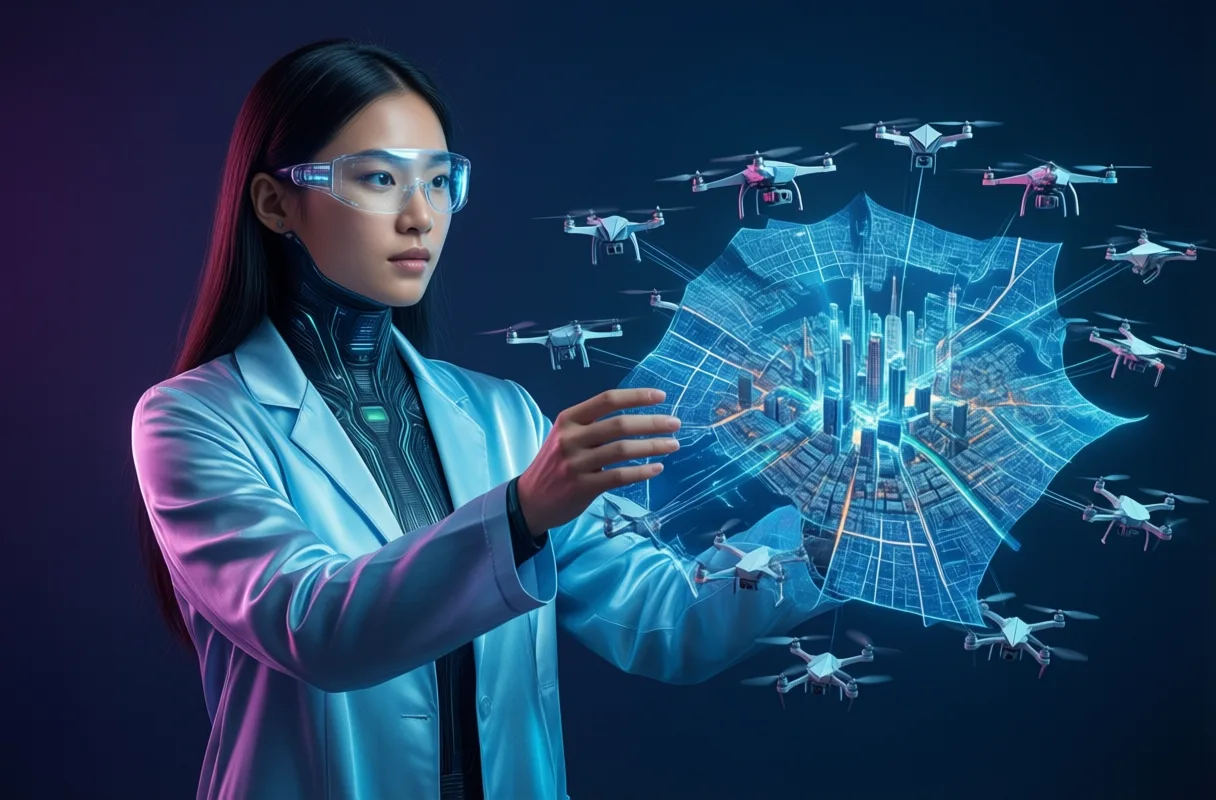
The Engine of Innovation: Talent, Infrastructure, and Scale
At the heart of China’s AI momentum lies a vast reservoir of technical talent and an education system increasingly tuned to the demands of the digital age. Universities across Beijing, Shanghai, and Hangzhou produce thousands of AI-specialized graduates each year, many of whom feed directly into research labs or launch startups with access to incubators backed by both public and private capital. This pipeline ensures a constant influx of fresh ideas, even as global competition for skilled engineers intensifies.
The country’s digital infrastructure further amplifies this advantage. With one of the world’s most extensive 5G networks and a near-ubiquitous adoption of mobile payments, China generates Massive, real-time datasets-the lifeblood of modern machine learning. These datasets, drawn from e-commerce, social platforms, and transportation networks, allow models to train on behaviors at a societal scale, producing insights that are both granular and sweeping in scope.
Consider the logistics networks that now operate with AI-driven routing, reducing delivery times across vast rural and urban landscapes. Or the hospitals experimenting with diagnostic algorithms trained on millions of medical images, offering preliminary assessments in minutes rather than days. These are not futuristic prototypes-they are functioning systems, tested, refined, and scaled across regions with a speed that reflects both technological maturity and institutional coordination.
Still, challenges persist. The reliance on large-scale data collection invites scrutiny, particularly as other nations debate the limits of algorithmic authority. And while domestic chip development is advancing, dependence on foreign semiconductor technology remains a vulnerability, one the state is working aggressively to address through subsidies and research mandates.

Global Implications and the Path Ahead
China’s progress in Artificial intelligence Is reshaping the global technological landscape, not through confrontation, but through demonstration. By deploying AI in governance, healthcare, and industry at scale, it offers an alternative model-one where the state plays a central role in guiding innovation toward national objectives. This model may not be replicable everywhere, but it is undeniably influential.
Other nations watch closely, some adopting elements of China’s approach-such as public-private AI partnerships or national AI strategies-while resisting others, particularly around data governance and surveillance. The divergence is not merely technical; it reflects deeper philosophical differences about the role of technology in society, about who controls it, and to what end.
Looking forward, the trajectory of AI in China will depend not just on engineering prowess, but on its ability to navigate these tensions with wisdom. Can a system designed for efficiency also foster creativity? Can centralized control coexist with ethical accountability? The answers will not come from algorithms alone, but from the choices made by policymakers, engineers, and citizens alike.
What is certain is that the algorithms now learning in China’s labs and cities are not just solving problems-they are learning what kinds of futures are possible. And in that quiet, relentless computation, a new chapter of human capability is being written.
Powering the Future: China’s AI Momentum
Homegrown Giants, Global Ambitions
China isn’t just participating in the AI race-it’s building its own track. With strong government backing, the country has fast-tracked AI development through national strategies and funding, turning cities like Beijing, Shanghai, and Shenzhen into innovation hubs. Unlike models that rely on overseas frameworks, Chinese tech firms have developed their own large language models, showing off homegrown capabilities that power everything from smart assistants to industrial automation. This push isn’t just about technology-it’s about shaping the next generation of digital infrastructure on China’s own terms.
AI in Daily Life-From Phones to Panda Tracking
You don’t need to visit a lab to see AI in action across China. Facial recognition streamlines subway rides and even dispenses toilet paper in public restrooms. On farms, AI monitors livestock health and optimizes feeding, while in nature reserves, it helps track endangered species like giant pandas by analyzing camera trap images. One particularly clever use? AI-powered systems that predict air pollution levels days in advance, giving cities time to act. These aren’t futuristic ideas-they’re already part of everyday life, showing how deeply AI is woven into society.
Speed, Scale, and Smart Regulation
What sets China apart is the speed at which AI moves from idea to implementation. Massive datasets, widespread 5G coverage, and supportive policies allow rapid testing and deployment. At the same time, the government has rolled out clear rules for AI ethics and data use, aiming to balance innovation with public trust. This mix of fast iteration and structured oversight helps maintain momentum without losing control. As AI evolves, China’s blend of tech muscle and strategic planning keeps it firmly in the global conversation-not just as a participant, but as a key architect. Explore more stories, videos, and creators on Loaded.
Frequently Asked Questions
How is the Chinese government supporting the AI industry?
The government supports AI through national strategies, funding, and policies that prioritize technological self-reliance and economic modernization. It fosters public-private partnerships and has established AI as a pillar of broader development goals.
What are some real-world applications of AI in China?
AI is used in facial recognition for subway access and public services, logistics optimization, agricultural monitoring, and tracking endangered species like giant pandas. It also predicts air pollution levels and assists in medical diagnostics.
How does China’s education system contribute to its AI advancement?
Universities in cities like Beijing, Shanghai, and Hangzhou produce thousands of AI-specialized graduates annually. These graduates feed into research labs and startups, supported by incubators with public and private funding.
What challenges does China’s AI industry face despite its progress?
Challenges include scrutiny over large-scale data collection, ethical concerns around surveillance, and ongoing dependence on foreign semiconductor technology. The state is working to reduce this reliance through subsidies and research mandates.
This article was produced with AI assistance. How Neuron Magazine uses AI.
Zahra explores the frontiers of human enhancement, from neural implants to gene editing, with a focus on ethical implications and lived experience. She blends scientific rigor with intimate storytelling to illuminate how technology reshapes identity and lifespan.