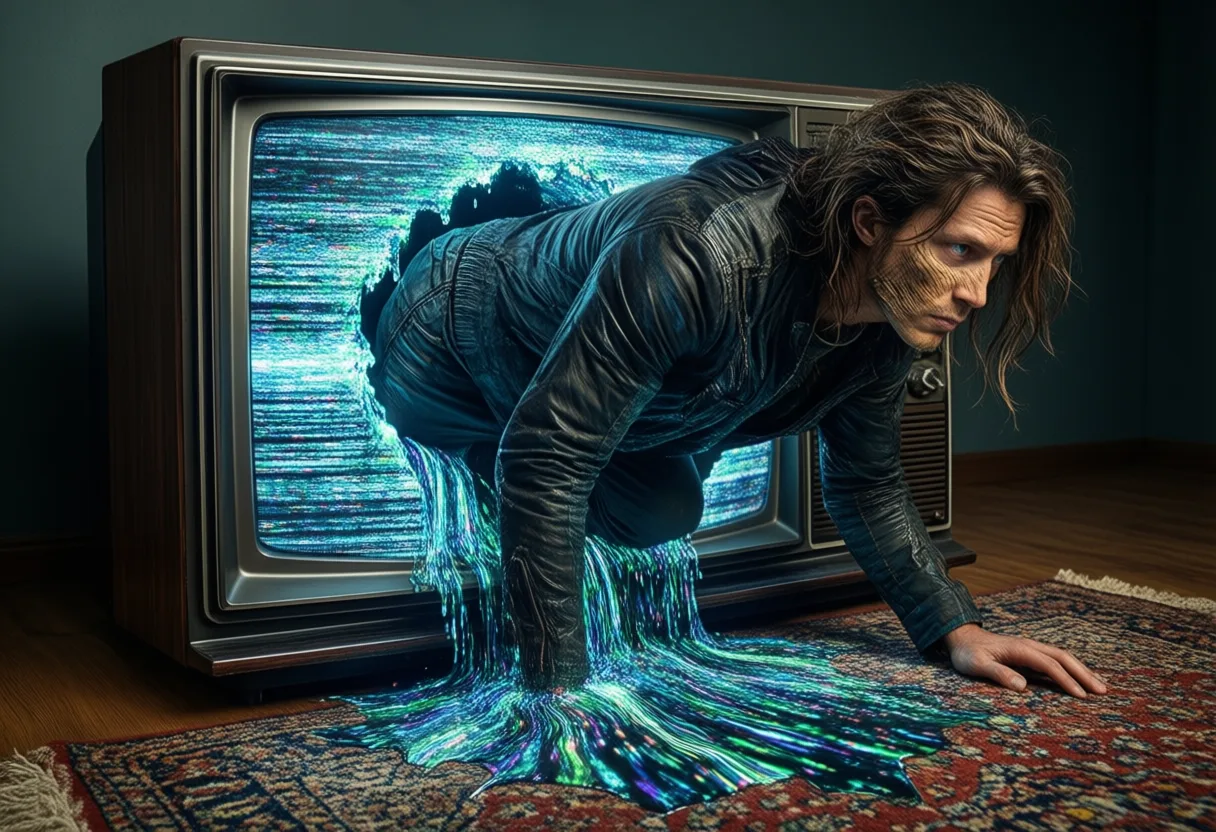
Fear is not merely a reflex-it is a biological cascade, a symphony of adrenaline and cortisol that primes the body for survival, and cinema has long been a laboratory for its controlled release. In the dim glow of a screen, we invite terror into our living rooms, not to be overwhelmed, but to test the edges of our nervous systems, to feel the electric hum of survival without consequence. Streaming platforms Have become archives of dread, curating films that exploit not just our startle reflex, but our deeper, more insidious anxieties about identity, time, and the fragility of the mind.
For those seeking the best Scary movies To stream now, Netflix and Hulu offer a spectrum of horror that transcends the genre’s pulp origins, elevating fear into art. Whether it's the slow erosion of self in a haunted house or the existential chill of a world unraveling beyond comprehension, these platforms host films that linger long after the credits roll. You can explore more top-tier selections across streaming services at Best Movies To Stream Right Now: Top Picks On Netflix, Hulu, And More, where the pulse of contemporary cinema beats strongest.
These films do not rely on gore or gimmicks, but on the architecture of unease-sound design that mimics a heartbeat, lighting that suggests movement in stillness, narratives that fray the line between reality and delusion. They are experiments in perception, calibrated to exploit the brain’s pattern-seeking nature, leaving viewers haunted by what they almost saw, almost heard, almost understood.
7 Chilling Films You Can Watch Tonight on Netflix and Hulu
On Netflix, The Babadook Unfolds as a clinical study in grief disguised as a ghost story, where a mother’s unraveling psyche is mirrored in the pages of a children’s book that should not exist. The film’s monster is never fully shown, yet its presence is felt in every creak of the floorboard, every whispered line from a pop-up book that seems to rewrite itself in real time. It is a masterclass in restraint, proving that the most enduring Horrors Are those we conjure ourselves.
Hereditary, available on Hulu, operates like a long-exposure photograph of familial collapse, each frame accumulating trauma until the image becomes unrecognizable. The film’s pacing mimics the incubation of a psychological virus, spreading silently until the host can no longer deny its presence. Toni Collette’s performance is a neurological event in itself-her face a map of microexpressions that chart the descent from rationality to revelation.
Netflix’s The Witch Immerses viewers in a 17th-century Puritan colony where faith and paranoia are indistinguishable, and the forest beyond the cornfield hums with unseen intent. The dialogue, rendered in period-accurate English, forces the audience to lean in, to decipher meaning from rhythm and tone, making the experience feel like eavesdropping on a prayer that has gone wrong. Goats, black and unblinking, watch from the margins, their silence more unnerving than any scream.
Hulu’s Midsommar Weaponizes daylight, turning golden fields and floral crowns into vessels of dread, where communal rituals escalate with the logic of a fever dream. What begins as a grief retreat becomes a psychological transplant, as the protagonist is slowly absorbed into a culture that worships collective emotion over individual will. The film’s horror lies not in sudden violence, but in the seduction of belonging-how easily one can surrender the self when pain is shared.
Possession, newly restored and streaming on Hulu, is a Cold War-era allegory wrapped in body horror, where a woman’s mental breakdown manifests in ways that defy biology and physics. The film’s subway tunnel scene remains one of the most viscerally disturbing sequences ever committed to film, not for its gore, but for its emotional authenticity-anguish made flesh. It is less a ghost story than a diagnostic of a marriage in terminal decline.
Netflix’s I’m Thinking of Ending Things Adapts a novel of the same name into a cinematic Rorschach test, where every conversation, every setting, seems to shift under the weight of unspoken regret. The film plays with time and memory like a neuroscientist probing the gaps in recall, showing how the mind edits its own history to survive. By the final act, it’s unclear whether we’ve witnessed a breakup, a breakdown, or a burial.
For those who crave mythic scale over intimate horror, Hulu offers The Ritual, a film that blends Nordic folklore with the psychology of guilt. Four friends hike into a forest that obeys different rules, where the trees seem to watch, and the paths loop back on themselves like a cognitive trap. The creature at the film’s center is not merely a monster, but a deity shaped by centuries of fear, demanding worship not through faith, but through fear. Fans of cinematic universes might also explore the full arc of the X-Men saga, now streamable in its entirety at X Men Movies Stream All 13 Available On Disney Plus, though its tone leans more toward genetic destiny than existential dread.
Beyond Jump Scares: How These Films Use Atmosphere to Terrify
Modern horror has evolved beyond the mechanics of the jump scare, favoring a slower, more insidious infiltration of the senses. These films understand that fear is not triggered by a cat leaping from a closet, but by the slow realization that the closet should not have been there at all. They manipulate environmental cues-flickering lights, distorted audio, spatial inconsistencies-to create a low-grade disorientation that primes the brain for dread.
Sound design in these films often mimics neurological phenomena: sub-bass frequencies that vibrate the chest, whispers just below the threshold of comprehension, silence so complete it feels like pressure. In The Babadook, the titular creature’s voice is layered with animal growls and reversed speech, triggering the amygdala without engaging higher cognition. The mind reacts before it understands, a reflex older than language.
Lighting, too, is weaponized. The Witch Uses natural candlelight to create pockets of visibility, forcing the eye to strain against shadow, a technique that exploits the brain’s tendency to project threat into uncertainty. Peripheral vision, which evolved to detect motion in dim conditions, becomes a liability-every flicker suggesting movement where there is none. The result is a constant, low-level anxiety that never fully releases.
Architecture plays a crucial role, with homes and forests designed as psychological traps. In Midsommar, the village layout is circular, with no clear exit, mirroring the inescapability of grief. In The Ritual, the forest defies cartography, its paths rearranging themselves like synapses misfiring. These spaces do not merely contain horror-they generate it, becoming active participants in the narrative.
Even color is calibrated for emotional effect. I’m Thinking of Ending Things Bathes its interiors in sickly yellow and blue, hues associated with memory distortion and emotional coldness. The janitor’s mural, painted in crude strokes, echoes the protagonist’s fragmented psyche, each image a memory half-remembered, half-invented. The film suggests that horror is not in the event, but in the mind’s inability to reconcile it.
These films do not demand belief in ghosts or monsters. Instead, they exploit the brain’s own vulnerabilities-its need for pattern, its fear of isolation, its inability to trust its own perceptions. They are less about what is seen, and more about what the mind insists must be there, lurking just beyond the frame.
The Last Frame: Finding the Right Kind of Fear for Your Screen
Choosing a horror film is not merely about preference-it is an act of self-diagnosis, a way of measuring what kind of unease one is willing to host for two hours. Some seek the clean terror of survival, where the threat is external and the resolution clear. Others are drawn to the recursive horror of the self, where the monster is not under the bed, but in the mirror.
For those grappling with loss, Hereditary And The Babadook Offer a kind of emotional resonance, their horrors rooted in the aftermath of death, the ways grief can hollow out a person and invite something else in. These films do not provide catharsis, but recognition-the comfort of seeing one’s pain reflected, even if distorted. They are not escapes, but encounters.
Those intrigued by the fragility of perception may find I’m Thinking of Ending Things Or Possession More suited to their curiosity, films that treat the mind as a porous boundary, easily breached by memory, regret, or ideology. They are less about fear of the unknown, and more about fear of what we already know-how easily the self can dissolve under pressure.
And for viewers who prefer mythic allegory, The Ritual And Midsommar Present horror as cultural ritual, where fear is communal, even sacred. These films suggest that terror is not a malfunction, but a function-a way of binding groups together through shared suffering, of marking the boundaries of the human.
Ultimately, the best scary movies to stream now are not those that make you flinch, but those that make you think-about your mind, your relationships, the invisible structures that shape your reality. They are not distractions from life, but distortions of it, held up like a warped lens to reveal what lies beneath.
In the end, we return to horror not because we enjoy fear, but because we need to understand it. It is the oldest signal in the nervous system, the first language of the body. And in the quiet dark, with the screen flickering like a campfire, we listen.
Spine-Tingling Stories Behind Your Favorite Frights
How Streaming Brought Horror Back from the Dead
Remember when horror was stuck in straight-to-video purgatory? Streaming changed all that. Without the pressure of opening weekend box office numbers, studios started taking bigger risks on weird, atmospheric films that might’ve never made it to theaters. That’s why you’re seeing more international horror-like Korean or Japanese chillers-pop up on your home screen. These films often rely less on jump scares and more on dread, something that works perfectly in a late-night streaming session with headphones.
Ever notice how some horror movies feel Way Scarier at home than in theaters? It’s not just you. Films like The Babadook Or Hereditary Thrive in intimate settings where every whisper and creak in the soundtrack pulls you deeper. Directors now design soundscapes knowing most people will watch on laptops or TVs, making subtle audio cues more effective. And get this-some recent horrors were actually shot entirely on smartphones or consumer-grade cameras, proving you don’t need a blockbuster budget to make skin crawl.
One underrated gem quietly gained a cult following after landing on a major platform: a slow-burn haunted house story where the scariest thing isn’t a ghost-it’s the silence between scenes. Fans loved how it trusted them to sit in discomfort, a trend more streamers are embracing. With no ads to break tension, these films can build fear steadily, scene after scene, turning your living room into a personal panic zone.
Frequently Asked Questions
What is The Babadook about?
The Babadook is a story about a mother's unraveling psyche mirrored in a children's book that should not exist. The monster is never fully shown, but its presence is felt in every creak and whisper.
Where can I watch Hereditary?
Hereditary is available to stream on Hulu. It portrays a slow breakdown of a family, with Toni Collette’s performance capturing the descent from rationality to revelation.
How does Midsommar create horror?
Midsommar uses daylight, golden fields, and floral crowns to build dread. The horror lies in the seduction of belonging and the loss of self through communal rituals.
What makes modern horror films scary without jump scares?
These films use atmosphere, sound design, lighting, and spatial inconsistencies to create disorientation. They exploit the brain’s need for pattern and fear of isolation, making unease linger.
This article was produced with AI assistance. How Neuron Magazine uses AI.
Zahra explores the frontiers of human enhancement, from neural implants to gene editing, with a focus on ethical implications and lived experience. She blends scientific rigor with intimate storytelling to illuminate how technology reshapes identity and lifespan.