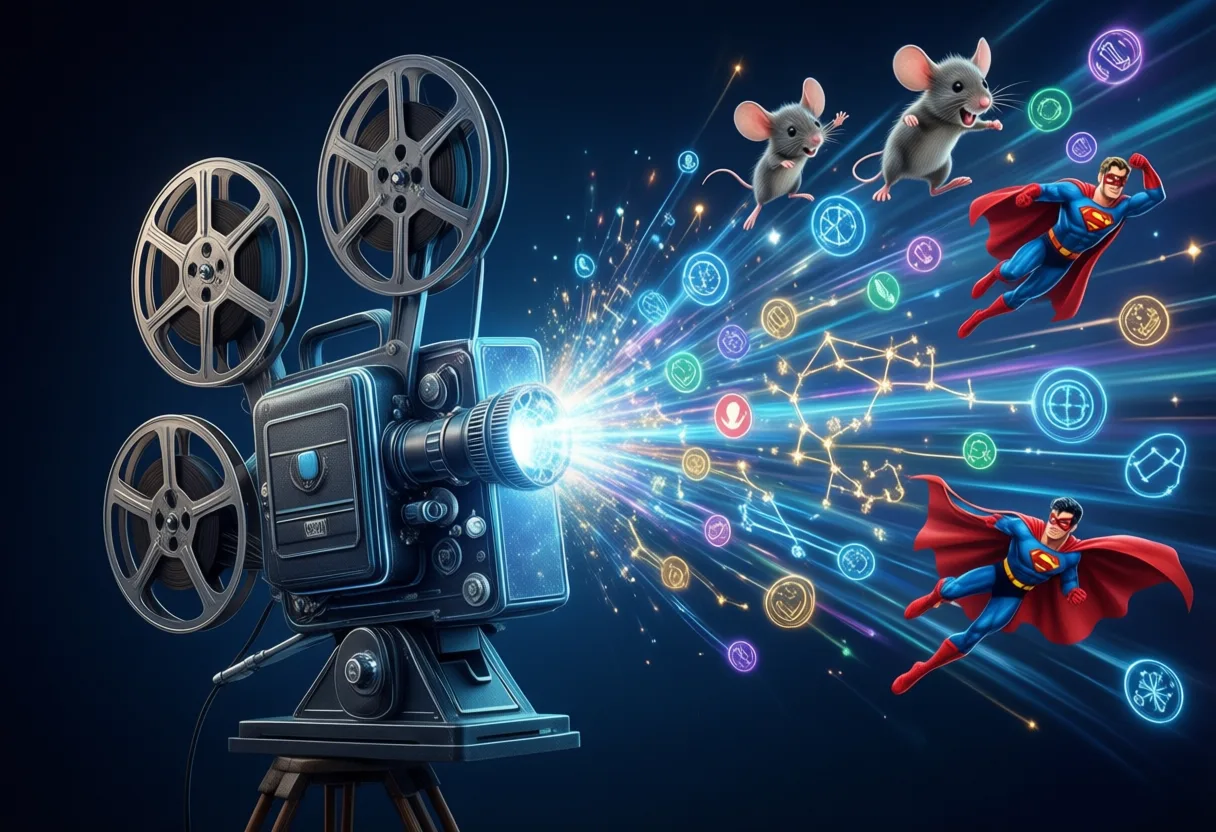
Streaming Has become the quiet architect of modern storytelling, reshaping how we access, experience, and remember cinema. No longer bound by the flicker of a projector or the constraints of broadcast schedules, audiences now navigate vast digital archives with the tap of a finger-libraries that blend decades of narrative evolution into a single, seamless interface.
At the heart of this transformation stands a platform that carries the weight of cultural memory while sprinting toward the future, where animated mice share bandwidth with intergalactic mutants and legacy sequels breathe new life into childhood myths.
Why Streaming Giants Like Disney Plus Are Reshaping Movie Access
The shift from physical media to On-demand streaming Is more than a convenience-it’s a recalibration of cultural rhythm. What once required trips to video stores, careful rewinding, and shelf space now unfolds in the ambient glow of smart devices, available anytime, anywhere, dissolving the boundaries between eras and genres. This immediacy has turned movie watching from an event into a fluid part of daily life, where a 1950s animated feature can precede a Marvel epic with no more friction than a scroll.
Accessibility has also democratized discovery, allowing younger viewers to encounter films their parents cherished without generational gatekeeping. The algorithms that suggest what to watch next aren’t merely commercial tools-they act as curators, threading connections between old and new, familiar and unknown. And while some mourn the loss of the VHS cover or the ritual of setting a Timer On the DVR, the reality is that streaming has preserved more films in clearer quality than any previous format ever could.
For families, educators, and casual viewers alike, the ability to access decades of storytelling at once creates a living archive-one that evolves not just with technology, but with audience expectations.
A Closer Look at the Platform’s Evolving Film Library
What began as a repository for Disney’s animated heritage has expanded into a sprawling ecosystem of franchises, originals, and acquisitions. The library now functions less like a museum and more like a laboratory, testing how legacy content performs alongside bold new experiments in narrative and form. Animated classics are no longer isolated relics; they’re entry points into deeper cinematic universes that span decades and mediums.
This evolution reflects a broader industry trend: the recognition that brand continuity can coexist with creative reinvention. Reboots and remakes aren’t just nostalgia plays-they’re attempts to translate timeless themes into contemporary contexts, whether through updated visuals, inclusive casting, or Modernized dialogue. And while not every adaptation succeeds, the effort itself signals a commitment to keeping stories alive, not frozen.
Consider how a film once seen only during rare network airings can now be revisited Weekly, studied, shared, or reinterpreted through fan culture. The platform doesn’t just host movies-it enables their ongoing cultural metabolism.
From Animated Beginnings to Blockbuster Originals
Disney’s cinematic journey began with hand-drawn frames and orchestral swells, each film a labor of patience and artistry. Those early works-rooted in fairy tales and moral clarity-established a visual and emotional language that still resonates today. They weren’t just entertainment; they were cultural milestones, shaping how generations understood heroism, loss, and transformation.
Now, that legacy coexists with high-budget originals designed for global audiences and digital-first release strategies. These new films leverage advanced rendering, motion capture, and AI-assisted workflows, pushing the boundaries of what animated and live-action storytelling can achieve. Yet even with photorealistic fur on talking animals or city-leveling superhero battles, the core remains: character, emotion, and myth.
The bridge between then and now isn’t just technological-it’s philosophical. The same studio that once relied on cel animation now deploys machine learning to restore archival footage and enhance soundscapes, ensuring that the past isn’t lost in the transition to the future.
The Range of Genres Now Available to Subscribers
Gone is the assumption that Disney’s domain is limited to children’s animation or musical fantasies. Today’s catalog spans sci-fi epics, war dramas, nature documentaries, and coming-of-age stories grounded in real-world complexity. This breadth reflects a deliberate expansion beyond the studio’s traditional identity, embracing the full spectrum of human experience.
Subscribers can move from a Pixar exploration of grief and memory to a X Men Movies Stream All 13 Available On Disney Plus saga that grapples with identity, persecution, and power-all within a single evening. The inclusion of these narratives doesn’t dilute the brand; it deepens it, suggesting that wonder isn’t confined to fairy godmothers or talking mice.
Even genres once considered incompatible with the Disney name-like gritty superhero realism or speculative futures-are now seamlessly integrated. This genre fluidity allows the platform to serve not just families, but individuals seeking stories that challenge as much as they comfort.
How Classic Titles Keep Finding New Audiences
A film released before the internet can now go viral on social media, its scenes remixed, quoted, and recontextualized by a generation that wasn’t alive when it premiered. This second life is made possible by the platform’s ability to surface older works alongside trending content, giving classics a chance to resonate anew. A child watching Bambi Today may not know the film was once controversial for its emotional intensity-but they’ll feel its impact just the same.
Restoration efforts have played a quiet but critical role in this revival. Digital remastering removes scratches, stabilizes color, and enhances audio, allowing films to be seen closer to how they were originally intended. These technical refinements aren’t just cosmetic-they preserve cultural artifacts with scientific care, ensuring that time doesn’t erode their power.
And in classrooms, therapy sessions, and intergenerational conversations, these films are being used not just for entertainment, but as tools for discussion about emotion, ethics, and history.
Rediscovering Beloved Stories Through Modern Viewing
The act of rewatching a childhood favorite has taken on new dimensions in the streaming era. No longer constrained by broadcast cycles or rental windows, viewers can return to a film during moments of nostalgia, comfort, or curiosity. This repetition fosters deeper engagement-audiences begin to notice details missed before, from background animation to subtle voice inflections.
Streaming also enables comparative viewing: watching different versions of the same story, or tracing how a character evolves across decades. A fan might follow Simba’s journey from the 1994 original to the 2019 reimagining, analyzing not just the visuals but the shifts in narrative emphasis and cultural values.
These experiences transform passive viewing into active interpretation, turning audiences into participants in the ongoing life of a story.
What Sets Recent Releases Apart from Older Favorites
Modern films benefit from technological leaps that were unimaginable in earlier decades-motion-captured performances, real-time rendering, and global collaboration across studios. These tools allow for richer worlds and more immersive experiences, but they also raise questions about authenticity and emotional resonance. Can a photorealistic lion convey grief as powerfully as a hand-drawn one?
Recent releases also reflect evolving social norms, integrating diverse voices and perspectives that were historically underrepresented. Characters now navigate identities, relationships, and challenges that mirror the complexity of contemporary life, moving beyond archetypes toward more nuanced portrayals.
Yet the best of these films don’t abandon the emotional core that defined earlier works-they build on it, using new tools to deepen, rather than replace, the storytelling traditions that came before.
Balancing Nostalgia with Contemporary Storytelling
Nostalgia is a powerful force, but it’s not a sustainable strategy on its own. The platform’s most successful new releases don’t merely replicate the past-they reinterpret it, finding ways to honor legacy while speaking to current realities. A sequel to a 1990s classic might retain its heart but update its setting, themes, or character dynamics to reflect today’s world.
This balance is delicate. Too much reverence can result in sterile replication; too much reinvention risks alienating the audience that cherished the original. The most effective films walk the line, using nostalgia as a foundation rather than a crutch.
And for younger viewers encountering these stories for the first time, the experience isn’t about memory-it’s about discovery. The past becomes not a monument, but a starting point.
Behind the Strategy: Why Certain Films Anchor the Catalog
Certain titles serve as gravitational centers within the library-films so culturally embedded that their presence defines the platform’s identity. These aren’t just popular; they’re foundational, acting as entry points for new subscribers and touchstones for long-time fans. Their retention is less a business decision than a cultural imperative.
Other films are curated for thematic cohesion, grouped to support seasonal viewing, educational initiatives, or franchise arcs. A collection centered on courage, for example, might include a war film, a coming-of-age story, and a superhero origin-each reinforcing a shared value through different lenses.
The selection process, while influenced by data, ultimately serves a human purpose: to create a library that feels both comprehensive and meaningful, where every addition contributes to a larger narrative about who we are and what we value.
Curating a Mix That Appeals Across Generations
The true challenge of curation isn’t just breadth-it’s harmony. A single household may include grandparents, parents, and children, each with different tastes and memories. The platform’s strength lies in its ability to offer something that can be shared, discussed, and enjoyed together, even if for different reasons.
Holiday seasons amplify this role, turning the service into a digital hearth where families gather around shared stories. A viewing of a classic animated film might spark memories for parents while introducing wonder to children, creating a moment of connection across age gaps.
This intergenerational appeal isn’t accidental-it’s engineered through careful selection, thoughtful organization, and an understanding that entertainment can also be relational.
Practical Ways Families Are Using the Service for Movie Nights
Movie nights have evolved from a trip to the rental store to a collaborative ritual shaped by shared screens and voice-controlled remotes. Families now use playlists, themed marathons, and watchlists to structure their viewing, turning casual evenings into curated experiences. A “Princess Week” or “Space Adventure Marathon” becomes both entertainment and education.
Parents report using films to introduce values, historical contexts, or emotional discussions-pausing to talk about conflict resolution, empathy, or loss. The pause button, once a simple function, has become a tool for engagement, allowing stories to be dissected and internalized.
And with multiple profiles and parental controls, the platform accommodates different ages and sensitivities, ensuring that what’s shown is appropriate without sacrificing choice.
Blending Tradition and Technology in Home Entertainment
The modern living room is a hybrid space-part theater, part command center-where tradition meets innovation. A child might watch a film on a tablet while curled up on the same couch where their parent once held a VHS tape. The medium has changed, but the ritual persists: dimmed lights, snacks within reach, and the collective focus on a shared story.
Smart TVs, voice assistants, and high-fidelity audio have elevated the experience, making home viewing rival the theater in quality. Yet the intimacy of the home setting adds something theaters cannot replicate: comfort, safety, and the freedom to react without inhibition.
Technology hasn’t replaced tradition-it’s become its vessel, carrying forward the human need for story in a new form.
Where Hidden Gems Fit Alongside Household Names
Amid the blockbusters and classics, quieter films linger-lesser-known documentaries, international co-productions, or experimental shorts that never reached wide release. These hidden gems often emerge through algorithmic suggestion or word-of-mouth, finding audiences years after their debut. Their value isn’t measured in box office, but in impact.
Some explore niche subjects: the migration of monarch butterflies, the history of animation techniques, or the life of an unsung inventor. Others offer alternative perspectives within familiar franchises, focusing on side characters or off-screen moments that expand the universe in subtle ways.
For viewers willing to wander beyond the top ten list, these films offer some of the most rewarding experiences-reminders that discovery is still possible in an age of infinite content.
Exploring Underrated Picks That Deserve Attention
A film about a young girl learning to code in a futuristic city might not trend on social media, but for the child who sees herself in that story, it’s transformative. These underseen titles often tackle themes with quiet courage-identity, resilience, innovation-without relying on spectacle or star power.
They also reflect a growing commitment to global storytelling, featuring voices from regions and cultures historically underrepresented in mainstream cinema. A short from Southeast Asia or a documentary from Scandinavia can offer insights as valuable as any blockbuster.
And with features like subtitles, audio descriptions, and language options, the platform ensures these stories are accessible to wider audiences, breaking down barriers that once limited their reach.
How Viewing Habits Influence What Stays or Gets Rotated
Data shapes the library in ways both visible and invisible. Films that are frequently watched, rewatched, or added to playlists are more likely to remain in the catalog, while those that gather digital dust may be rotated out to make room for new content. This isn’t just about popularity-it’s about engagement.
But metrics don’t tell the whole story. Some films are retained for cultural significance, even if their viewership is low. Others are reintroduced during anniversaries, holidays, or social movements, demonstrating that timing and context matter as much as numbers.
The lifecycle of a film on the platform is no longer linear-it can fade, then resurge, shaped by trends, trauma, or triumphs in the wider world.
The Lifecycle of a Film on a Streaming Platform
A movie’s journey begins with upload and metadata tagging, then moves through phases of visibility, engagement, and archival status. Early promotion boosts initial views, but long-term survival depends on sustained interest and cultural relevance. A film might lie dormant for years before a TikTok trend or school project propels it back into circulation.
This fluid lifecycle contrasts sharply with the permanence once associated with physical media. On streaming platforms, nothing is truly permanent-but nothing is truly lost, either. Even removed titles often leave traces, inspiring discussions, fan campaigns, or future re-releases.
In this way, films become part of an ongoing conversation, their meanings reshaped by each new audience that encounters them.
What the Future Holds for Digital Film Libraries
As artificial intelligence and machine learning advance, future libraries may adapt in real time to viewer preferences, mood, or even biometric feedback. Imagine a platform that suggests a film not just based on what you’ve watched, but on your heart rate, time of day, or recent life events. The line between curator and companion could blur.
Preservation will remain a critical mission. As formats evolve, the risk of digital decay increases-files corrupt, codecs become obsolete, servers fail. Ensuring long-term access will require not just storage, but active maintenance, like preserving a living organism.
And as new forms of storytelling emerge-interactive films, virtual reality experiences, AI-generated narratives-the definition of “movie” itself may expand beyond recognition.
Planning Ahead in an Era of Constant Content Shifts
The only constant in digital entertainment is change. Libraries will grow, contract, and reconfigure in response to licensing, technology, and culture. Subscribers must adapt, learning to navigate not just what’s available, but what might disappear-and what could return.
For creators, this means building stories that can endure beyond their initial release, designed to be rediscovered, reinterpreted, and revalued. For audiences, it means embracing both impermanence and abundance, knowing that while nothing stays forever, there’s always something new to find.
And for platforms, the challenge is clear: to balance innovation with stewardship, ensuring that the stories we tell today continue to resonate tomorrow. In that mission lies the future of cinema-not in the theater, not on disc, but in the endless, evolving stream.
More Than Just Cartoons: The Magic Behind Disney Plus Movies
Think Disney Plus is just Mickey and princesses? Think again. The streaming service packs a surprisingly wild mix of films, from vintage animated gems to bold modern experiments. You can binge classic 2D hand-drawn films like The Sword in the Stone One night and switch to mind-bending sci-fi like A Wrinkle in Time The next. It’s this blend of old-school charm and fresh storytelling that keeps the catalog feeling alive and unpredictable.
Hidden Gems and Surprising Twists
Did you know Song of the South Has never been released on any home media format in the U.S. Due to its controversial portrayal of race and history? It’s absent from Disney Plus too, reflecting the company’s effort to handle its complex legacy with care. On the flip side, lesser-known live-action flicks like The Apple Dumpling Gang Or Tron (yes, the original 1982 version) have developed cult followings thanks to their easy availability on the platform. For those craving something offbeat, Movies on Disney Plus: Top 10 Insane Picks for a Crazy Fun Time! Highlights some truly left-field choices that most viewers don’t expect to find under the Disney banner.
Another fun tidbit: many of the original Disney animated features were so expensive to produce that the studio nearly went bankrupt multiple times-Snow White, the first full-length animated film, was dubbed “Disney’s Folly” by skeptics who thought no one would sit through a cartoon that long. Spoiler: they were wrong. Today, those same films anchor the service’s nostalgic appeal, often appearing in special “Decades” collections that let you trace animation’s evolution from pencil sketches to Pixar’s digital revolution-all just a click away.
Frequently Asked Questions
What types of movies are available on Disney Plus?
Disney Plus offers a wide range of movies, including classic animated films, modern blockbusters, sci-fi epics, war dramas, nature documentaries, and coming-of-age stories. The library spans both legacy content and new originals.
Are classic Disney films accessible in high quality on the platform?
Yes, classic titles are digitally remastered to remove scratches, stabilize color, and enhance audio. These restoration efforts help preserve the films closer to their original intent.
Why is Song of the South not available on Disney Plus?
Song of the South is absent from Disney Plus due to its controversial portrayal of race and history. It has never been released on any home media format in the U.S.
How does Disney Plus balance nostalgia with modern storytelling?
The platform honors legacy through classics while introducing reboots and originals that reflect contemporary values, diverse voices, and updated themes. Nostalgia serves as a foundation, not a replacement for innovation.
This article was produced with AI assistance. How Neuron Magazine uses AI.
Zahra explores the frontiers of human enhancement, from neural implants to gene editing, with a focus on ethical implications and lived experience. She blends scientific rigor with intimate storytelling to illuminate how technology reshapes identity and lifespan.