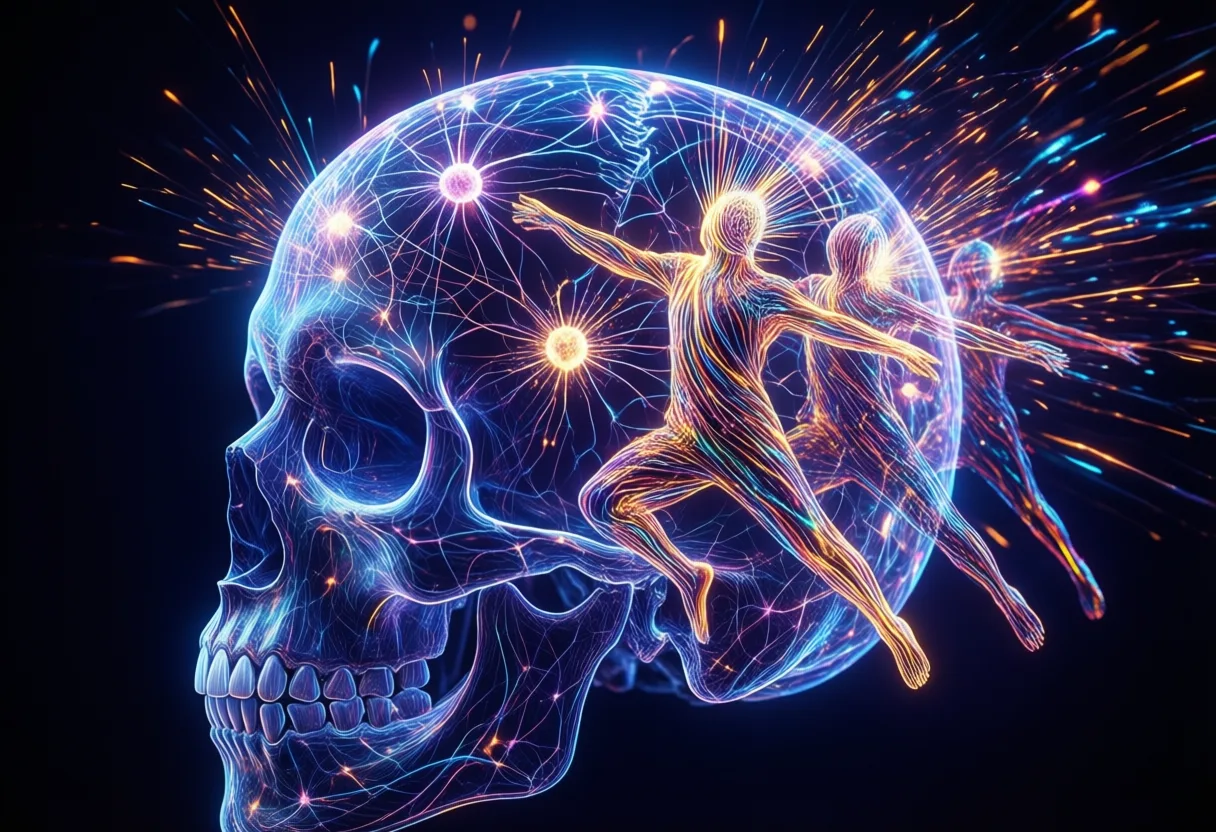
The human brain has always Danced To patterns-neural oscillations humming beneath thought, synapses firing in cadence like unseen metronomes. In the quiet spaces between sound and motion, rhythm emerges not as mere entertainment but as a scaffold for learning, a bridge between perception and action.
Nowhere is this more evident than in the way we play.
How Rhythm in Games Trains the Brain Beyond the Beat
When a player presses a button in time with a pulsing visual cue, they are not simply reacting-they are predicting, calibrating, and refining. The brain, in those split seconds, engages a network of regions responsible for motor planning, auditory processing, and attentional control. Each beat becomes a node in a dynamic circuit, linking sensory input to physical output with increasing precision.
Over time, this repeated synchronization strengthens neural pathways associated with timing and coordination. The cerebellum, long known for its role in fine motor control, works in tandem with the basal ganglia to smooth out delays between intention and action. This is not just muscle memory forming-it is the brain rewiring itself through structured repetition.
What sets rhythm-based Games apart From other genres is their demand for temporal accuracy. Unlike open-ended exploration or narrative-driven choices, these experiences require players to align their movements within narrow time windows. That constraint, paradoxically, opens up a space for profound cognitive growth.
- The brain learns to anticipate rhythmic patterns before they occur
- Reaction times improve through consistent exposure to predictable stimuli
- Cognitive load decreases as tasks shift from conscious effort to automatic execution
These shifts do not happen overnight. They unfold across sessions, shaped by trial, error, and incremental mastery. And yet, beneath the surface of what appears to be simple gameplay lies a complex orchestration of neuroplasticity at work.
What Makes a Game Feel Instantly Responsive?
A game that feels “tight” or “snappy” does more than satisfy-it reassures. Players trust the system when input and feedback align without perceptible delay. This sense of immediacy is not accidental; it is engineered through meticulous calibration of audiovisual cues and input latency.
Low-latency feedback is essential. Even a delay of 50 milliseconds can disrupt the illusion of direct control, breaking immersion and eroding confidence. Developers achieve responsiveness by synchronizing animations, sounds, and haptic responses so precisely that the player begins to feel as if the game is an extension of their own body.
This seamless integration hinges on three core elements:
1. Visual indicators that move in perfect phase with the music
2. Audio cues that trigger at the exact moment of action
3. Haptic feedback that reinforces successful inputs
When these components align, the player enters a state akin to flow-where thought and action merge, and hesitation dissolves. It is in this state that learning accelerates, not because the task has become easier, but because the brain no longer wastes energy second-guessing the interface.
There is also an emotional dimension to responsiveness. A well-timed vibration or chime can evoke satisfaction, even joy. These micro-rewards signal progress, reinforcing the connection between effort and outcome. Over time, they shape behavior, encouraging players to push further, reach faster, and stay locked into the rhythm.
The Hidden Skill Behind Hitting Perfect Notes
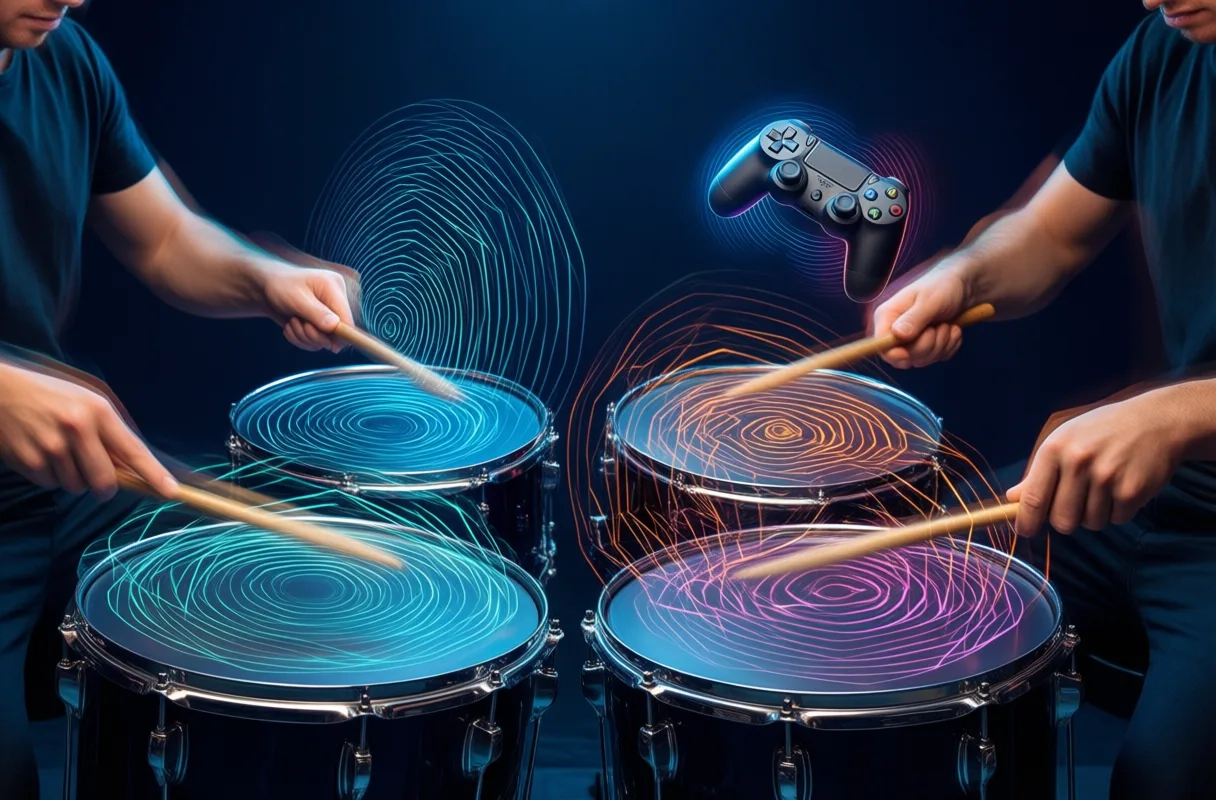
Hitting a note on time may seem like a simple act of coordination, but it conceals layers of cognitive labor. The player must decode visual symbols, translate them into motor commands, and execute them within a fraction of a second-all while maintaining awareness of the evolving musical structure.
This skill is not purely mechanical. It involves Temporal prediction, the brain’s ability to project forward in time based on past patterns. When a sequence repeats, the nervous system begins to expect the next beat before it arrives, preparing muscles in advance. This predictive timing is what separates novice players from experts.
Consider how a beginner stumbles through a fast passage, reacting to each cue as it appears. An experienced player, however, moves ahead of the display, guided by internalized rhythm. Their fingers land not because they see the prompt, but because they Know When it will come.
Such expertise arises from thousands of micro-decisions, each fine-tuning the relationship between perception and movement. The hands learn to wait-neither rushing nor lagging-but landing in the sweet spot where precision meets grace.
And within that narrow window of accuracy lies a deeper truth: mastery is not about speed, but about timing. It is the quiet discipline of restraint, the courage to hold back until the exact right moment.
When Timing Becomes a Test of Focus and Precision
Rhythm games do not merely test reflexes-they test attention. As patterns grow more complex, players must divide their focus between multiple streams of information: the beat, the visual queue, the sequence ahead, and the memory of what just passed.
In these moments, cognitive load spikes. The prefrontal cortex, responsible for executive function, works overtime to manage competing demands. Distractions become costly; a single lapse in concentration can unravel an otherwise flawless run.
Yet this pressure is precisely what makes the genre so effective as a training tool. By demanding sustained attention under conditions of increasing difficulty, rhythm games simulate real-world scenarios where focus and precision are non-negotiable.
- Surgeons rely on steady hands guided by internal timing
- Musicians perform intricate passages without looking at their instruments
- Athletes react to dynamic environments with split-second decisions
All of these skills share a foundation in rhythmic cognition. The ability to maintain internal tempo, adapt to changes, and execute under pressure is cultivated not in isolation, but through repeated exposure to structured challenges.
And unlike passive forms of entertainment, rhythm games provide immediate consequences for lapses in attention. There is no hiding from a missed beat-the feedback is instant, unambiguous, and corrective.
Why Repetition in Musical Patterns Builds Muscle Memory
Repetition is often dismissed as rote, a mindless cycle of doing the same thing over and over. But in the context of rhythm-based gameplay, repetition is transformational-a process by which conscious effort gives way to automatic fluency.
Each time a sequence is played, the brain refines its model of the task. Neural signals grow more efficient, synaptic connections strengthen, and unnecessary movements are pruned away. What once required intense focus can eventually be performed with minimal cognitive effort.
This phenomenon, known as Procedural memory consolidation, allows players to internalize complex patterns until they feel almost involuntary. The fingers begin to move ahead of thought, guided by an embodied sense of timing that transcends conscious calculation.
Over time, the player develops a kind of kinesthetic vocabulary-an archive of movements linked to specific rhythms and cues. This library expands with every new challenge, enabling faster adaptation to unfamiliar sequences.
And because musical patterns are inherently structured-built on repetition, variation, and resolution-they provide an ideal framework for this kind of learning. The brain thrives on predictability, using recurring motifs as anchors for prediction and recall.
Eventually, the player no longer sees individual notes-they see phrases, arcs, and rhythms as whole units. This shift from piecewise processing to holistic perception marks a key milestone in skill acquisition.
How Feedback Loops Reinforce Learning Through Sound
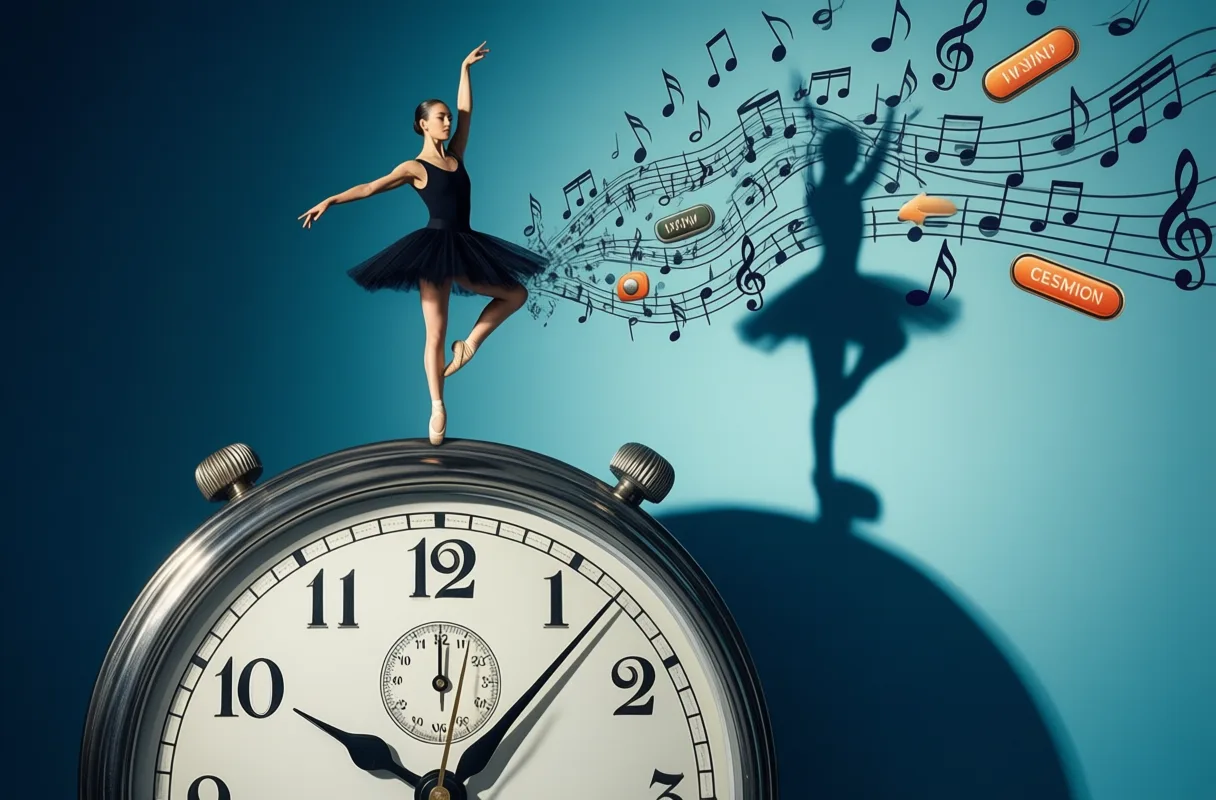
Sound is not just a backdrop in rhythm games-it is a teacher. Every successful input triggers an auditory reward: a crisp note, a harmonic chord, a burst of layered instrumentation that swells with each correct action.
These sounds form a Positive feedback loop, reinforcing correct behavior and guiding Future performance. When the player hits a note perfectly, the resulting tone confirms their timing, aligning their internal clock with the game’s tempo.
Conversely, missed or mistimed inputs produce silence, dissonance, or abrupt cuts in the music. These negative cues are equally instructive, highlighting discrepancies between intention and execution. The brain registers these deviations instantly, adjusting its predictions for the next attempt.
Over time, players begin to anticipate the sound before they act, using auditory expectations to guide motor output. This auditory-motor coupling is so powerful that some report hearing the music internally even when the game is off-echoes of neural pathways firing in rehearsal.
The emotional weight of sound further amplifies its instructional role. A full, rich melody evokes satisfaction; a broken rhythm feels jarring, almost painful. These affective responses deepen engagement, making the pursuit of accuracy not just a goal, but a desire.
The Role of Predictability in Mastering Rhythmic Challenges
Predictability is often seen as the enemy of excitement, yet in rhythm games, it is the foundation of mastery. Without recurring patterns, there can be no anticipation, no internalization, no sense of progression.
Structured repetition allows the brain to build mental models of upcoming sequences. Once a phrase repeats enough times, the player no longer needs to react-they can prepare. This shift from reaction to preparation is where true skill emerges.
Even in games with randomized or adaptive elements, core rhythms remain consistent. A syncopated beat may shift, but its underlying pulse persists. Players latch onto these stable elements, using them as reference points to navigate complexity.
This reliance on predictability mirrors how we learn in the real world. Language, movement, social interaction-all depend on pattern recognition. We thrive on regularity because it reduces uncertainty, freeing cognitive resources for higher-order tasks.
In rhythm games, predictability is not a limitation-it is a scaffold. It supports the player as they climb toward greater difficulty, offering footholds in an otherwise overwhelming stream of information.
And when that predictability is finally disrupted-when a new variation appears-the player is ready. They have not just memorized a sequence; they have learned how to think in rhythm.
Where Mistakes Teach More Than Success
A perfect run may feel euphoric, but it is the failed attempt that holds the deepest lessons. In rhythm games, mistakes are not punishments-they are data points, precise indicators of where timing diverged from expectation.
Each missed note reveals a gap in perception, motor control, or attention. Some players rush ahead, anticipating too aggressively. Others lag behind, hesitating at critical moments. These tendencies become visible only through repeated error.
The beauty of rhythm-based feedback is its specificity. Unlike vague penalties in other games, a mistimed input produces a clear auditory and visual consequence. The player knows exactly when and how they failed.
This clarity transforms failure into a tool for refinement. Rather than discouraging effort, it invites analysis. Players begin to ask: Was I too early? Did I lose the beat? Was my focus divided?
Over time, this reflective process fosters metacognition-the ability to think about one’s own thinking. Players learn not just how to play, but how they play, identifying personal patterns of error and developing strategies to correct them.
In this way, Mistakes become the curriculum. They are not obstacles to mastery, but its essential ingredients.

Translating In-Game Timing to Real-World Coordination
The skills honed in rhythm games do not vanish when the controller is set down. Studies have shown that regular engagement with timed motor tasks can enhance fine motor control, hand-eye coordination, and even reaction speed in everyday activities.
Consider the pianist who practices scales, or the drummer who drills rudiments-both rely on repetitive, rhythmically precise movements to build dexterity. Rhythm games operate on a similar principle, offering a digital arena for the same kind of neuromuscular training.
Tasks that require precise timing-typing, driving, using tools-benefit from improved temporal processing. The brain’s enhanced ability to predict and synchronize translates across domains, often without conscious awareness.
Even in social contexts, rhythm plays a subtle role. Conversational turn-taking, dance, and group sports all depend on shared timing. The sensitivity to tempo developed in games may subtly improve one’s ability to coordinate with others.
While the transfer is not always direct, the underlying cognitive mechanisms are shared. A sharper internal clock benefits more than gameplay-it sharpens life.
What Players Gain When They Play in Sync
To play in sync is to experience a rare alignment-between mind and body, self and system, individual and rhythm. In those moments, the usual friction of thought and action dissolves, replaced by a fluid, almost effortless flow.
Players report feelings of presence, clarity, and even transcendence during peak performance. The outside world fades; attention narrows to the beat and the next move. This state resembles meditation as much as it does competition.
But beyond the ephemeral high, there is lasting value. Regular synchronization strengthens the brain’s ability to maintain focus, regulate movement, and adapt to change. These are not niche skills-they are foundational to human performance.
And in a world increasingly defined by distraction, the ability to lock into a rhythm-any rhythm-becomes a form of resistance. It is an assertion of control, a reclaiming of attention.
What players gain, then, is not just better scores, but better minds.
Beyond the High Score: Long-Term Benefits of Rhythm Play
The scoreboard may reset, but the changes within the brain endure. Long after the final note fades, the neural adaptations remain-subtle, silent, but significant.
Rhythm-based gameplay fosters resilience, patience, and self-awareness. It teaches players to embrace repetition, tolerate failure, and pursue incremental improvement. These are not just traits of skilled gamers-they are markers of lifelong learners.
Moreover, the cognitive benefits extend into domains far removed from music or gaming. Improved timing perception supports reading fluency, language acquisition, and even mathematical reasoning-all of which rely on the brain’s ability to parse sequences and predict patterns.
For aging populations, rhythm training shows promise in preserving motor function and cognitive agility. For children, it may support developmental milestones in coordination and attention.
But perhaps the most profound benefit is this: rhythm games remind us that skill is not fixed. It is built, note by note, beat by beat, through the quiet accumulation of effort.
And in that truth lies not just progress, but hope.
How Music and Timing Shape the Way We Play
The Brain’s Natural Beat Matcher
Our brains are wired to sync with rhythm, even without us realizing it. When we tap our foot to a song or clap along with others, we’re tapping into a natural ability called entrainment-the brain’s knack for aligning movement with sound. Rhythm games take advantage of this by training players to match actions to beats, which strengthens neural pathways tied to timing and coordination. It’s not just about keeping up-it’s about rewiring reflexes through repetition and music.
From Dance Pads to Precision
Early rhythm games like Dance Dance Revolution Didn’t just get players moving-they introduced a new way to interact with music. Stepping on directional pads in time with on-screen cues required physical stamina and mental focus, blending aerobic exercise with split-second decision-making. Later titles such as Guitar Hero And Rock Band Brought similar challenges into living rooms, using instrument-shaped controllers that mimicked real playing. These games showed that mastering virtual performance could mirror the learning curve of actual instruments.
More Than Just Fun and Games
Studies have found that regular play in rhythm-based games can improve hand-eye coordination, reaction time, and even cognitive flexibility. Because these games demand attention to both auditory and visual signals, they engage multiple areas of the brain at once. Some rehabilitation programs now use rhythm tasks to help patients recover motor skills after injury, proving that the benefits go beyond entertainment. Whether you're drumming on a plastic kit or sliding fingers across a touchscreen, you’re also giving your brain a workout-one beat at a time. Explore more stories, videos, and creators on Loaded.
Frequently Asked Questions
How do rhythm games improve brain function?
Rhythm games strengthen neural pathways related to timing and coordination by requiring players to synchronize actions with beats. This repeated synchronization enhances motor planning, attentional control, and procedural memory.
What makes a game feel responsive to players?
A game feels responsive when visual, audio, and haptic feedback align precisely with player input. Low-latency responses and perfectly timed cues create the sense that the game is an extension of the body.
Why is repetition important in rhythm-based gameplay?
Repetition transforms conscious effort into automatic fluency by refining neural models of tasks. It builds procedural memory, allowing players to internalize complex patterns until they feel involuntary.
How do mistakes help players improve in rhythm games?
Mistakes provide precise feedback on timing errors, revealing gaps in perception or motor control. This clarity helps players analyze and correct personal patterns of error, fostering metacognition and skill growth.
This article was produced with AI assistance. How Neuron Magazine uses AI.
Zahra explores the frontiers of human enhancement, from neural implants to gene editing, with a focus on ethical implications and lived experience. She blends scientific rigor with intimate storytelling to illuminate how technology reshapes identity and lifespan.