It began with a question whispered in labs and lecture halls: Can machines think? Not scream, not dream-think. That quiet provocation, more curiosity than manifesto, set in motion a cascade of experiments, failures, and breakthroughs that would quietly reshape everything-from how we Work To how we wonder.
Today, Artificial intelligence Isn’t just code in servers. It’s the voice that wakes your home, the unseen editor of your feed, the co-pilot in your car, and sometimes, the ghost in your job interview. We don’t always see it, but we feel its presence-in recommendations, reroutes, and even regrets.
This is not science fiction. This is what happens when decades of research meet mountains of data and oceans of computing power. Let’s trace how we got here-not through jargon, but through moments.
The Quiet Birth of a Big Idea
The story doesn’t start with silicon. It starts with paper, chalk, and a hunger for pattern.
In the mid-20th century, scientists began asking if logic could be automated. Could deduction-long the domain of philosophers and mathematicians-be handed to machines? Early computers were glorified calculators, solving Equations faster Than humans ever could. But some wondered: What if they could learn?
That spark led to programs that played checkers, not perfectly, but persistently. They lost games, yes-but they also improved. Each loss was data. Each move, a lesson. This wasn’t magic. It was math dressed as memory.
These early systems didn’t “know” anything. They followed rules-many rules-crafted by people who spent weeks writing what a child learns in Seconds. A machine could beat you at chess not because it understood strategy, but because it saw millions of positions before you blinked.
Still, the dream held:
- Machines that adapt
- Systems that generalize
- Intelligence That emerges
No one called it “AI” every day. But in meetings, memos, and margins, the phrase stuck. Not as a product. Not as a profit center. As a possibility.
And like all good ideas, it flickered. Funding dried. Promises outpaced progress. The world shrugged. Winter came.
Through the Winters, Toward the Light
Not every revolution roars. Some trudge.
There were years-decades, really-when mentioning AI invited eye rolls. Too much hype. Too little result. Researchers pivoted, rebranded, or left. Neural networks were mocked as black boxes with too many knobs. Expert systems crashed under their own complexity.
But beneath the surface, work continued. Slowly. Silently.
Computer power doubled. Then doubled again. Data, once scarce, became abundant. Every click, swipe, and search fed a growing archive of human behavior. Suddenly, those old algorithms had fuel.
And something changed.
Patterns emerged not from hand-coded rules, but from exposure-thousands of images, millions of sentences. Machines began recognizing cats in photos, not because someone wrote “look for pointy ears,” but because they’d seen enough cats to Know One when they saw it.
This was Machine learning, not as theory, but as practice.
It wasn’t perfect. It mislabeled faces. It amplified biases. It confused huskies with snowscapes.
But it worked-often well enough to ship.
Startups bloomed. Labs expanded. Corporations took notice. What was once academic became operational. AI moved from the journal to the job site.
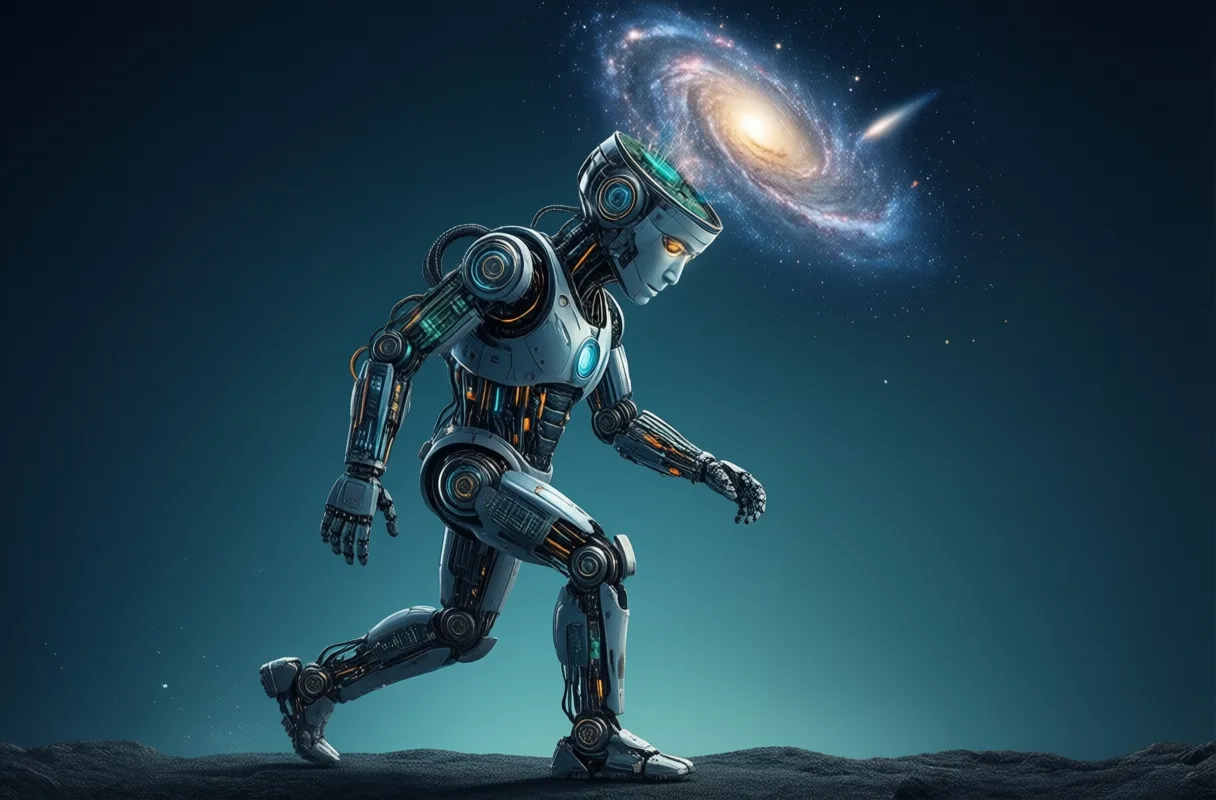
AI in the Wild: Where It Lives Today
You don’t need to visit a lab to find artificial intelligence. You’re using it right now.
When your phone unlocks with your face, that’s AI mapping geometry in real time. When an email sorts itself into “Primary,” “Social,” or “Promotions,” that’s a model trained on billions of messages, deciding what matters.
In hospitals, algorithms scan X-rays, flagging shadows doctors might miss. In farms, drones assess crop health, pixel by pixel. In warehouses, robots navigate aisles not with pre-programmed turns, but by reading the room-live.
Even creativity has company.
Musicians use AI to explore harmonies.
Writers test phrasings.
Designers generate mockups in seconds.
None of this replaces artistry. But it reshapes workflow. Like the calculator didn’t end math, AI won’t end thinking-it may just free us to do more of it.
Of course, it’s not all seamless.
Missteps happen.
Systems fail silently.
Decisions lack transparency.
And the big questions linger: Who owns the output? Who fixes the error? Who answers when it goes wrong?
We’re still writing those rules.
The Human Hand Behind the Machine
Let’s be clear: AI does not wake up eager to innovate.
It doesn’t care about deadlines, promotions, or profits. It responds to inputs, rewards, and corrections-all shaped by people.
Every AI system alive today carries the fingerprints of its creators. Their assumptions. Their blind spots. Their goals.
A hiring tool trained on past resumes will reflect past biases-unless someone builds guardrails. A translation model fluent in English and Mandarin may stumble on Swahili, not from malice, but from neglect.
So the real evolution isn’t just technical. It’s cultural.
We’re learning to ask better questions:
- Is this fair?
- Is it explainable?
- Can it be corrected?
And we’re building teams that aren’t just coders, but ethicists, linguists, sociologists. Because Intelligence, even artificial, can’t thrive in a vacuum.
The best systems aren’t the smartest-they’re the most thoughtful.
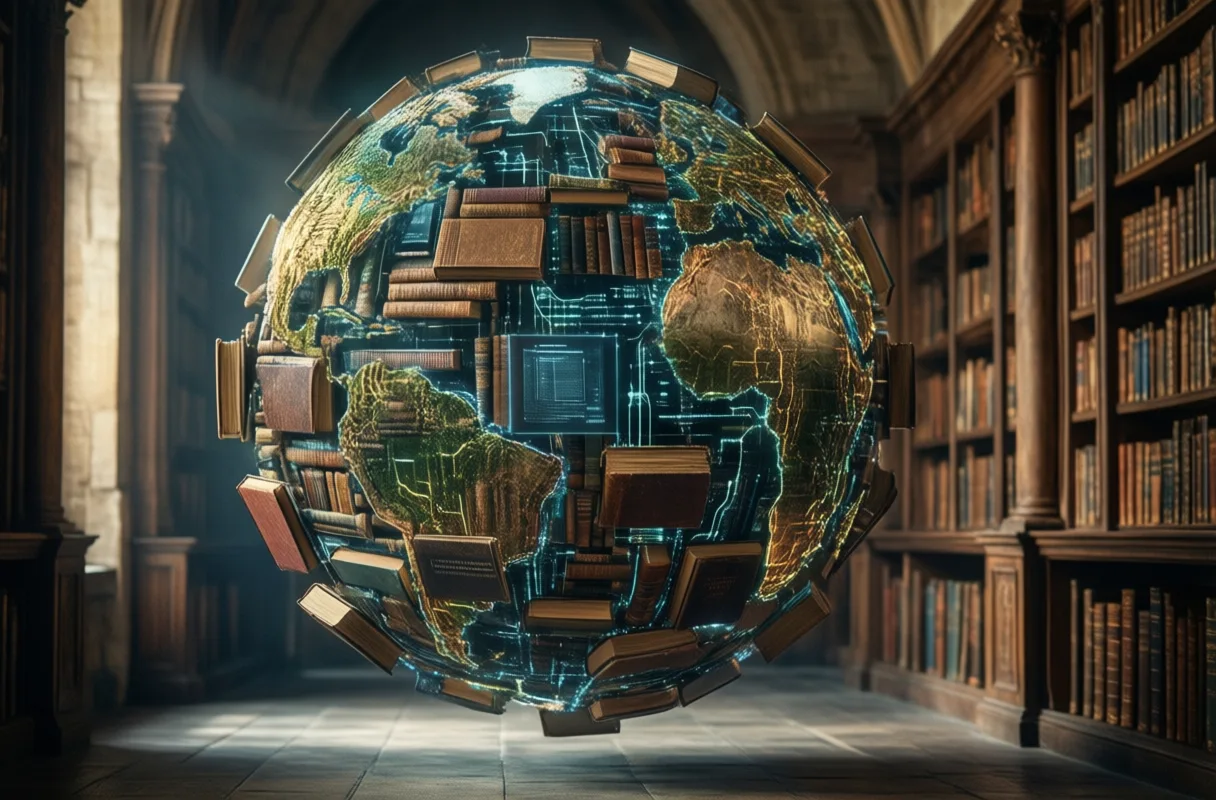
What Comes Next-And Who Decides
The future of AI won’t unfold in a single lab or launch.
It will grow in classrooms where students train models on local problems. In cities where traffic flows smarter. In clinics where diagnosis comes faster.
But it will also challenge. Jobs will shift. Skills will evolve. Trust will be tested.
There’s no decree from above, no single roadmap. Just choices-made daily-about what we automate, what we augment, and what we protect.
We can let AI replace.
Or we can let it reveal-what we value, how we adapt, who we include.
The origin of artificial intelligence may be rooted in logic.
But its evolution?
That’s human.
Sparks in the Machine
The Birth of a Big Idea
Back in the 1950s, long before smartphones or even personal computers, a small group of thinkers started wondering if machines could ever truly think. The term "artificial intelligence" wasn't pulled from thin air-it was officially coined in 1956 at a workshop held at Dartmouth College. That gathering, though modest in size, packed a huge ambition: to explore how machines might use language, form concepts, solve problems, and even improve themselves. It was less about robots taking over and more about cracking open the mystery of human thought through code.
One of the early stars of this new field was a program called the Logic Theorist, created by Allen Newell, J.C. Shaw, and Herbert A. Simon. This wasn’t some flashy interface-it ran on a massive computer the size of a room. But it did something remarkable: it proved mathematical theorems, even finding a more elegant proof for one in Principia Mathematica, a foundational work in logic. This wasn’t just number crunching; it was early evidence that machines could mimic human reasoning, sparking excitement that AI might advance much faster than anyone expected.
Hype, Hibernation, and Hope
The early years were full of bold predictions. Some researchers confidently claimed that machines would soon be able to do any work a human could-maybe within a generation. But reality hit hard. Computers of the time lacked the memory and speed needed to handle complex tasks, and progress stalled. By the 1970s, funding dried up, and the field slipped into what’s now called an "AI winter." It wasn’t the end, though-just a pause. Researchers kept tinkering, laying groundwork in areas like neural networks and expert systems, waiting for technology to catch up with their vision. That patience eventually paid off when computing power soared and data became abundant, setting the stage for the AI boom we see today. Explore more stories, videos, and creators on Loaded.
Frequently Asked Questions
When was the term 'artificial intelligence' first coined?
The term 'artificial intelligence' was officially coined in 1956 at a workshop held at Dartmouth College.
What was the Logic Theorist and what did it do?
The Logic Theorist was a program created by Allen Newell, J.C. Shaw, and Herbert A. Simon that proved mathematical theorems and found an elegant proof in Principia Mathematica.
What caused the AI winter in the 1970s?
The AI winter was caused by stalled progress due to computers lacking sufficient memory and speed, leading to reduced funding and waning interest in the field.
How is AI used in everyday technology today?
AI is used in face recognition on phones, email sorting, medical image analysis, crop monitoring on farms, and warehouse robots that navigate dynamically.
This article was produced with AI assistance. How Neuron Magazine uses AI.
Saoirse investigates how automation, remote systems, and AI reshape labor, careers, and human purpose. She centers worker voices and cultural change, blending data with narrative depth to reveal what the future feels like on the ground.