In the quiet hum of modern offices and the crinkle of grocery receipts, a silent revolution has already taken place-one not heralded by fanfare but embedded in the chemistry of paper and the precision of heat. Are there inkless printers That operate without cartridges, ribbons, or toner? The answer unfolds not in speculative labs but in devices already woven into daily life, where thermal energy replaces ink through elegant physical reactions.
These machines do not spray, splash, or smear; they write with warmth alone, activating hidden layers within specially treated media. What emerges is an image born not from pigment but from temperature, a transformation as subtle as it is profound-proof that sometimes, the most advanced technology speaks in silence, leaving its mark not with color but with contrast.
How Heat-Based Printing Works Without Ink
The Science Behind Thermal Imaging and Paper Reactions
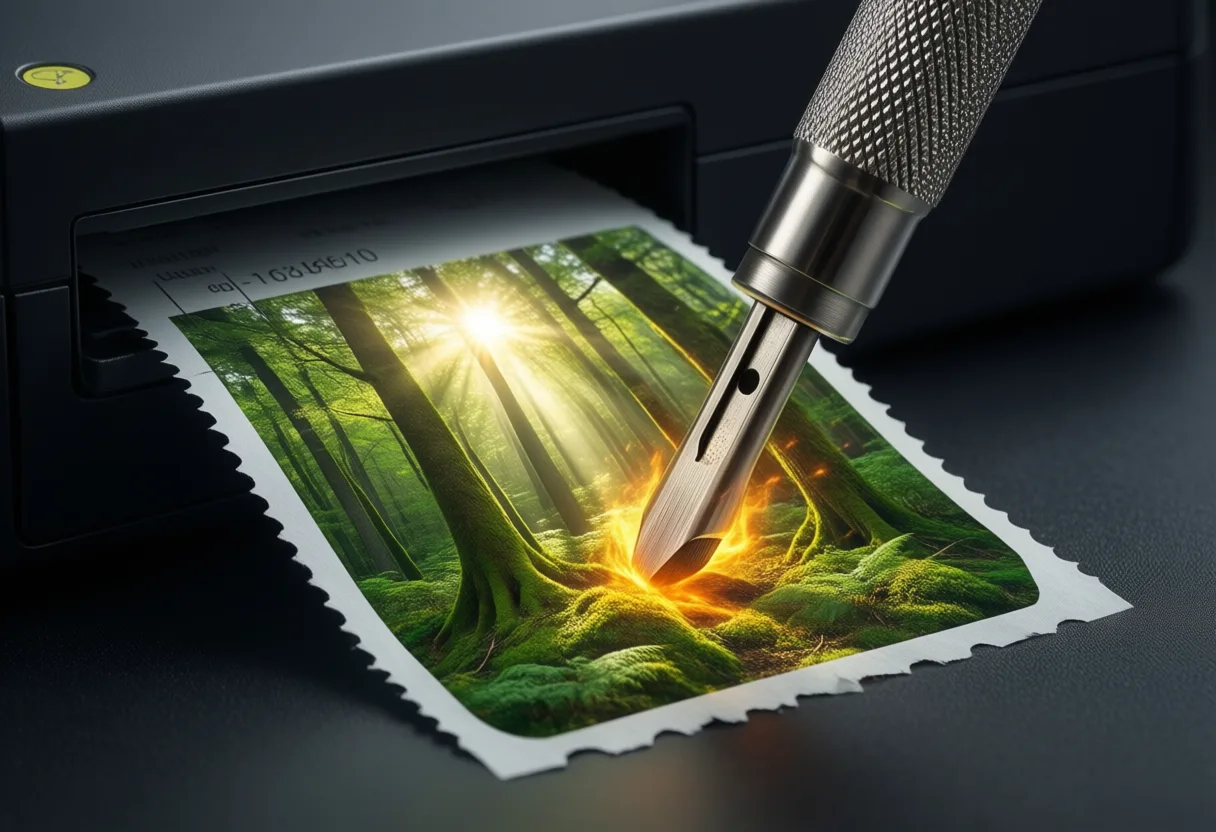
Thermal printing operates on a deceptively simple principle: controlled heat applied to specific zones of specially formulated paper induces a chemical change that produces visible marks. Unlike traditional methods that rely on transferring material onto a surface, this process alters the paper itself, triggering a reaction deep within its coating. The result is a grayscale image formed pixel by pixel, line by line, as microscopic heating elements rise to precise temperatures.
The core of the reaction lies in a layer infused with leuco dyes and developers-compounds that remain invisible until exposed to thermal energy. When heated above a critical threshold, typically between 80°C and 130°C, these components interact to form a stable, dark-colored complex. Once cooled, the mark remains fixed-at least temporarily-anchored in the molecular memory of the sheet.
This transformation is both immediate and irreversible under normal conditions, requiring no drying time or additional processing. Because no liquid or powder needs to be stored, transported, or replenished, the system eliminates entire categories of mechanical complexity. What remains is a minimalist architecture: a print head, a motor, and a roll of reactive media-all orchestrated by digital instructions translated directly into thermal pulses.
Can You Really Print Without Cartridges?
Understanding the Core Mechanism of Inkless Systems
Yes, you can print without cartridges, and thousands do so every day-though few realize it when accepting a credit card slip at a café or peeling off a shipping label at a warehouse dock. These moments are quiet testaments to a mature technology that sidesteps the logistical burden of ink reservoirs entirely. Instead of replacing cartridges, users replace rolls of paper-sometimes the only consumable involved.
At the heart of these systems is a thermal print head composed of tiny resistive elements arranged in a linear array. Each element corresponds to a single dot in the final output, capable of being energized independently and with millisecond precision. As the paper passes beneath, selective Activation creates Patterns ranging from alphanumeric text to barcodes and even low-resolution graphics.
Because there’s no ink to clog, smudge, or run out mid-print, maintenance demands plummet. There are no printheads to unclog, no alignment procedures, no air bubbles disrupting flow. The absence of moving parts beyond the paper feed mechanism makes these units exceptionally durable, especially in environments where dust, vibration, or frequent use would cripple conventional printers.
Still, the trade-off lies not in reliability but in permanence. The very chemistry that enables ink-free operation also renders the output vulnerable to external factors-heat, light, and friction can all degrade the image over time. This fragility shapes where and how the technology is deployed, limiting its role in archival contexts while amplifying its utility in transient documentation.

Why Some Devices Don’t Need Toner or Inkjets
Comparing Traditional Printers to Heat-Driven Alternatives
Traditional laser printers rely on electrostatic charges to attract toner particles to a drum, which then transfers them to paper before fusing with heat. Inkjet models propel microscopic droplets of liquid ink through nozzles onto the page, requiring intricate fluid dynamics and periodic cleaning cycles. Both approaches demand multiple consumables-toner cartridges, ink tanks, maintenance kits-and introduce points of failure related to material delivery.
Heat-driven alternatives bypass these layers of complexity by eliminating the need to move any substance from container to page. No pumps, no nozzles, no powders suspended in motion. Instead, energy becomes the sole agent of change, delivered through solid-state circuits calibrated to exact thermal thresholds. This reductionist design yields machines that are smaller, quieter, and often more power-efficient than their counterparts.
Moreover, the lack of ink or toner means fewer environmental concerns around disposal and manufacturing waste. While the coated paper used in thermal printing isn't universally recyclable due to chemical additives, the overall lifecycle footprint shifts significantly when you remove plastic cartridges and solvent-based inks from the equation. For high-volume, short-term applications, this balance tilts favorably toward thermal solutions.
Yet, despite these advantages, thermal printers haven’t replaced desktop models in homes or corporate suites-not because they’re inferior, but because their strengths align with different use cases. They excel where speed, simplicity, and portability matter more than longevity or full-color fidelity. In this way, they don’t compete with traditional printers so much as occupy a parallel niche, one defined by ephemerality and efficiency.
Do All Thermal Printers Count as Inkless?
Breaking Down Direct Thermal vs. Thermal Transfer Methods
Not all thermal printers are truly inkless, though the distinction is subtle and often misunderstood. The category splits into two primary modes: direct thermal and thermal transfer-each leveraging heat differently and yielding divergent outcomes in durability and application.
Direct thermal printers rely solely on heat-sensitive paper, producing images through the chemical reaction described earlier. These systems require no ribbon or dye source; everything needed for imaging is pre-embedded in the paper. This makes them the purest form of inkless printing-minimalist, cost-effective for certain tasks, and widely adopted in point-of-sale environments.
Thermal transfer printers, however, use a plastic film or wax-based ribbon that melts onto the paper when heated. Though still driven by thermal energy, these devices do employ a consumable medium akin to ink-one that physically adheres to the surface rather than altering it chemically. As such, they are not fully inkless, even if they share components and control systems with direct thermal models.
| Feature | Direct Thermal | Thermal Transfer | |--------|----------------|------------------| | Consumables | Only paper | Ribbon + paper | | Image Longevity | Months to a few years (fades over time) | Years, resistant to fading | | Output Medium | Chemically coated paper | Standard or synthetic labels | | Common Use Cases | Receipts, tickets, temporary logs | Asset tags, industrial labels, medical records |
Understanding this difference matters when evaluating whether a device qualifies as genuinely inkless. True ink-free operation occurs only in direct thermal systems, where the interplay of heat and reactive coating generates imagery without introducing foreign substances.
The Role of Special Paper in Heat-Powered Printing
How Coated Media Enables Image Formation Through Temperature
The magic of inkless printing does not reside solely in the machine-it is equally encoded in the paper itself. Standard office paper will not respond to thermal pulses; only substrates engineered with heat-reactive coatings can produce legible output. This specialized media contains multiple layers, including a topcoat that protects the surface and an underlying matrix where the leuco dye and developer compounds reside.
When the print head applies heat, it penetrates this outer layer and initiates a localized reaction below. The intensity and duration of the pulse determine the darkness of the resulting mark, allowing for variable shading and improved readability. Overheating causes oversaturation or even browning, while insufficient energy leaves faint or incomplete characters-hence the importance of precise thermal regulation.
Manufacturers tailor these papers for specific environments. Some formulations enhance resistance to ambient light, slowing down UV-induced degradation. Others improve scuff resistance, making them suitable for handling during transit or storage. Still others incorporate synthetic bases for use in extreme temperatures, such as freezer labeling or outdoor tagging.
But this specialization comes at a cost. The paper is typically more expensive than uncoated stock, less environmentally benign due to chemical content, and incompatible with standard recycling streams in many municipalities. Additionally, because the image is part of the paper’s structure, it cannot be erased or modified once formed-adding a layer of finality to every print job.
For users accustomed to reusing sheets or printing drafts, this permanence may feel restrictive. Yet for those who value certainty-where each receipt must be tamper-evident, each label traceable-the immutability becomes a feature, not a flaw.
Where These Printers Are Already in Use Today
Common Applications in Receipts, Labels, and Medical Devices
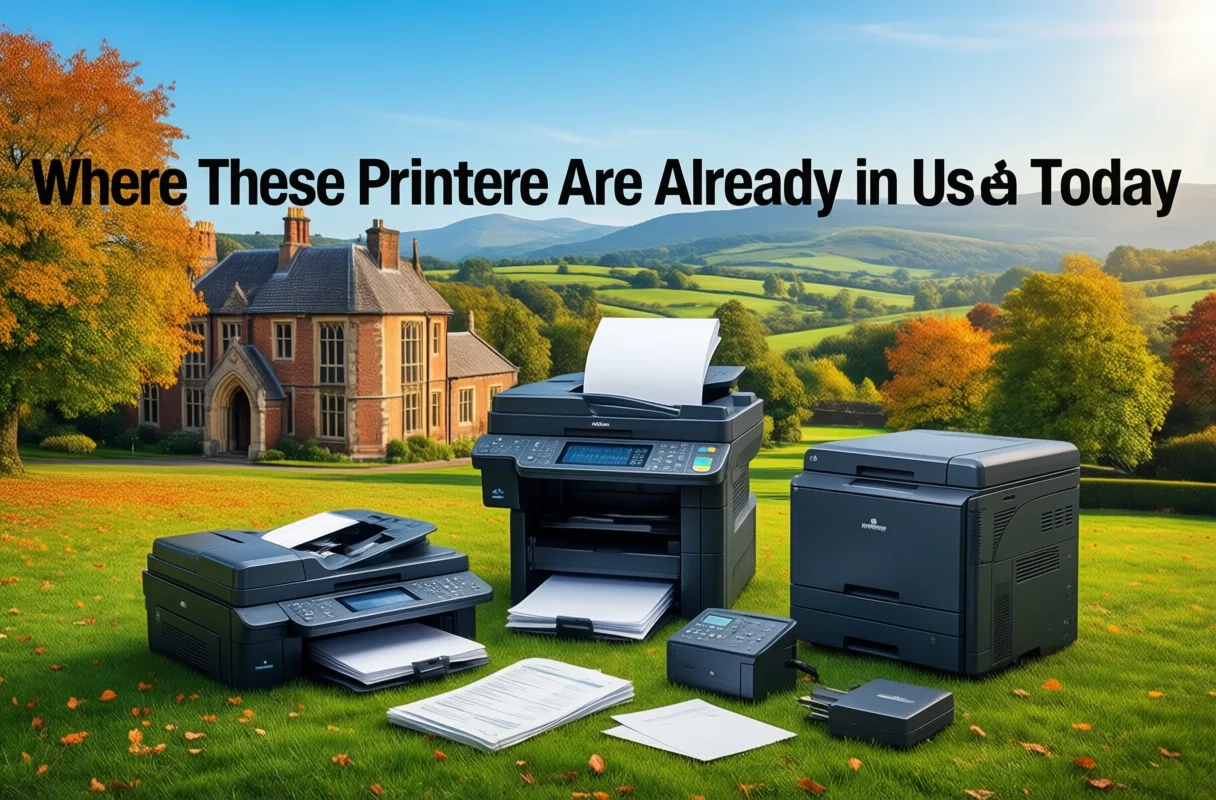
Walk through any retail space, hospital corridor, or logistics hub, and you’ll encounter thermal printing in action-often without noticing. At checkout counters, cash registers spit out transaction records using direct thermal technology, chosen for its reliability and near-silent operation. Supermarkets, pharmacies, and gas stations depend on these printers because they start instantly, rarely jam, and demand little upkeep.
Shipping companies apply thermal printers to generate address labels that survive cross-country journeys. While some use thermal transfer for maximum durability, many domestic shipments rely on direct thermal labels treated with protective coatings to resist smudging and moderate exposure. The ability to print on-demand, without waiting for preprinted forms, streamlines operations and reduces inventory overhead.
In healthcare, compact thermal units appear in patient monitoring systems, where continuous data streams-heart rate, blood pressure, temperature-are recorded on narrow paper strips. These analog outputs serve as real-time backups, readable at a glance and immune to software crashes. Even as digital interfaces dominate, the tactile clarity of a printed waveform retains clinical value.
Portable versions have also found roles in fieldwork, emergency response, and mobile services. Food inspectors, delivery drivers, and service technicians carry handheld thermal printers that sync with tablets or smartphones, issuing invoices, compliance reports, or work orders on-site. Their battery efficiency and lack of ink dependency make them ideal companions in remote or rugged settings.
Even airline boarding passes and event tickets frequently emerge from thermal mechanisms, their barcodes scanned effortlessly despite minimal contrast. In each case, the decision to adopt this technology reflects a calculation: that convenience, uptime, and operational simplicity outweigh concerns about long-term preservation.
Limitations of Relying Solely on Heat for Printing
Examining Fading Images, Paper Sensitivity, and Longevity Concerns
Despite their elegance, heat-based printers face inherent constraints tied to the instability of their chemical reactions. The same leuco dyes that darken under heat can gradually revert when exposed to sunlight, elevated temperatures, or prolonged contact with plastics. A receipt tucked into a wallet left on a car dashboard may become illegible within hours, its data lost to unintended thermal stress.
Fading is not merely cosmetic-it compromises functionality. Barcodes grow unreadable, timestamps vanish, legal disclaimers disappear. Archives built on thermal paper risk erosion of evidentiary value, making them unsuitable for contracts, certificates, or regulatory documents requiring decades-long retention. Libraries, courts, and government agencies avoid this medium for precisely this reason.
Additionally, the reliance on proprietary paper limits user flexibility. Consumers cannot substitute generic stock without risking poor print quality or damage to the print head. The coating varies between manufacturers, meaning performance isn’t guaranteed across brands. And because the paper is often sold in narrow rolls tailored to specific devices, bulk purchasing options remain limited compared to standard cut-sheet formats.
Scratch sensitivity further undermines durability. The surface of thermally sensitive paper is softer than regular paper, prone to marking when rubbed against keys, coins, or rough textures. Laminating helps but adds cost and complexity, defeating the purpose of a quick, disposable print solution.
These vulnerabilities don’t invalidate the technology-they define its boundaries. Like a scalpel versus a hammer, thermal printing excels in precision tasks but fails as a universal tool. Recognizing these limits allows organizations to deploy it strategically, reserving it for ephemeral needs rather than permanent records.

What This Means for Home and Office Users
Practical Considerations Before Switching to Ink-Free Options
For the average home user, switching to a heat-driven printer offers mixed benefits. On one hand, eliminating ink cartridges removes a recurring expense and the frustration of dried-out nozzles. On the other, the inability to print photos, colorful documents, or double-sided pages restricts versatility. Most consumer-grade thermal printers support only monochrome output on narrow media, ill-suited for school projects, résumés, or creative work.
Office environments face similar trade-offs. Departments managing high-volume transaction logging-such as accounting, warehousing, or customer service-might benefit from dedicated thermal units for receipts, pick lists, or internal tracking. However, general-purpose printing still demands multifunction devices capable of copying, scanning, and handling diverse paper types-capabilities largely absent in standalone thermal models.
Cost analysis reveals another nuance: while thermal printers often have lower upfront prices and minimal maintenance, the specialty paper carries a higher per-page cost over time. For infrequent users, this may not matter. But for businesses printing hundreds of pages daily, the long-term economics could tilt back toward inkjet or laser solutions, especially as cartridge recycling programs and high-yield tanks reduce operational burdens.
Ultimately, adoption should follow function. If your workflow revolves around generating time-sensitive, short-lived documents, a thermal printer brings undeniable efficiency. But if you need archival stability, color accuracy, or broad compatibility, existing technologies remain superior. The future may blur these lines-but for now, coexistence, not replacement, defines the landscape.
Beyond Receipts: Future Possibilities for Heat-Based Technology
Emerging Innovations That Expand the Scope of Inkless Output
Researchers are exploring ways to push thermal printing beyond its current limits, investigating new coating chemistries that resist fading and withstand environmental exposure. Early experiments suggest that encapsulating reactive compounds in microcapsules could stabilize the image, slowing degradation and improving shelf life. Other efforts focus on rewritable thermal paper-sheets that can be erased with uniform heating and reused dozens of times, reducing waste and resource consumption.
In bio-integrated electronics, scientists are adapting thermal printhead arrays for wearable health monitors that print diagnostic data directly onto skin-adhered patches. These transient displays wouldn’t use ink at all but instead trigger color changes in biocompatible films, offering real-time feedback without batteries or screens. Such innovations merge material science with human-centered design, turning the body itself into an interface.
Meanwhile, architects and educators are testing large-format thermal systems for temporary signage, classroom aids, and interactive installations-applications where disposability is intentional and sustainability matters. By designing for obsolescence with minimal ecological impact, these uses reimagine printing not as preservation but as communication in motion.
Even 3D printing communities are examining hybrid models, where thermal heads activate binding agents in powdered media, potentially enabling inkless additive manufacturing. While still experimental, these pathways suggest that the principles of heat-driven imaging may transcend paper altogether, finding expression in textiles, composites, and programmable surfaces.
The vision isn’t of a world without ink-but one where ink isn’t the only language of reproduction.
Final Thoughts on the Viability of Ink-Free, Heat-Driven Printing
Thermal printing stands as a testament to what can be achieved when engineers strip away assumptions and rebuild from first principles. It proves that imagery need not depend on pigments, solvents, or complex fluidics-that sometimes, heat alone suffices to leave a mark. Its quiet ubiquity in commerce, medicine, and logistics speaks to a quiet triumph of functional design over spectacle.
Yet its limitations remind us that progress is rarely absolute. Every technological leap solves one set of problems while revealing others. The fading receipt, the irreplaceable roll, the non-recyclable sheet-these are not failures, but signposts indicating where refinement is still needed.
As we look ahead, the question isn’t whether inkless printers will replace all others-they won’t-but whether we can expand their intelligence, resilience, and range. Can we create thermal systems that last longer, adapt faster, and integrate deeper into sustainable ecosystems? The answers lie not in louder claims, but in careful experimentation, ethical sourcing, and a willingness to let materials speak for themselves.
For now, the next time you hold a warm receipt in your hand, pause. Feel its texture. Notice how the letters emerged not from ink, but from temperature. In that moment, you’re holding not just a record of purchase-but a whisper of possibility.
| Feature | Direct Thermal | Thermal Transfer |
|---|---|---|
| Consumables | Only paper | Ribbon + paper |
| Image Longevity | Months to a few years (fades over time) | Years, resistant to fading |
| Output Medium | Chemically coated paper | Standard or synthetic labels |
| Common Use Cases | Receipts, tickets, temporary logs | Asset tags, industrial labels, medical records |
Printers That Skip the Ink
How Heat Transforms Printing
You might not realize it, but some printers have been working without ink for decades-thanks to heat. Thermal printers use heated elements to create images directly on special paper that darkens when warmed. You’ve probably seen them in action at grocery stores, where your receipt mysteriously appears without any visible ink cartridge. These machines don’t smear, run out of ink, or need toner-just a fresh roll of heat-sensitive paper.
From Cash Registers to Credit Cards
Thermal printing isn’t just for receipts. It’s also the tech behind those little label makers you stick on cables and jars. Because there are no ink parts to clog or replace, these printers tend to be smaller, quieter, and more reliable for simple printing jobs. Some portable medical devices even use thermal printing to record vital signs on the go, since reliability matters most in emergencies. And while the paper can fade over time if exposed to heat or sunlight, the simplicity of the system keeps it popular across industries.
A Cooler Kind of Innovation
There’s also a newer type of inkless printing that doesn’t rely on heat-sensitive paper at all. Some experimental models use tiny electric pulses to rearrange particles inside reusable paper, creating text that can be erased and rewritten hundreds of times. While not common yet, this approach could one day cut down on paper waste in offices. For now, though, thermal remains the go-to method for inkless printing-quiet, efficient, and already embedded in everyday life. Explore more stories, videos, and creators on Loaded.
Frequently Asked Questions
Are there printers that work without ink?
Yes, thermal printers use heat instead of ink to create images on specially coated paper. These printers are commonly used for receipts, labels, and medical records.
How do heat-based printers work?
Thermal printers apply controlled heat to chemically coated paper, triggering a reaction that darkens specific areas. This process forms text and images without using ink, toner, or ribbons.
What is the difference between direct thermal and thermal transfer printers?
Direct thermal printers use only heat-sensitive paper and no additional consumables. Thermal transfer printers use a ribbon that melts onto the paper when heated, so they are not fully inkless.
Can thermal printer output last a long time?
Direct thermal prints can fade over time when exposed to heat, light, or friction. They typically last months to a few years, making them best for temporary documents.
This article was produced with AI assistance. How Neuron Magazine uses AI.
Zahra explores the frontiers of human enhancement, from neural implants to gene editing, with a focus on ethical implications and lived experience. She blends scientific rigor with intimate storytelling to illuminate how technology reshapes identity and lifespan.