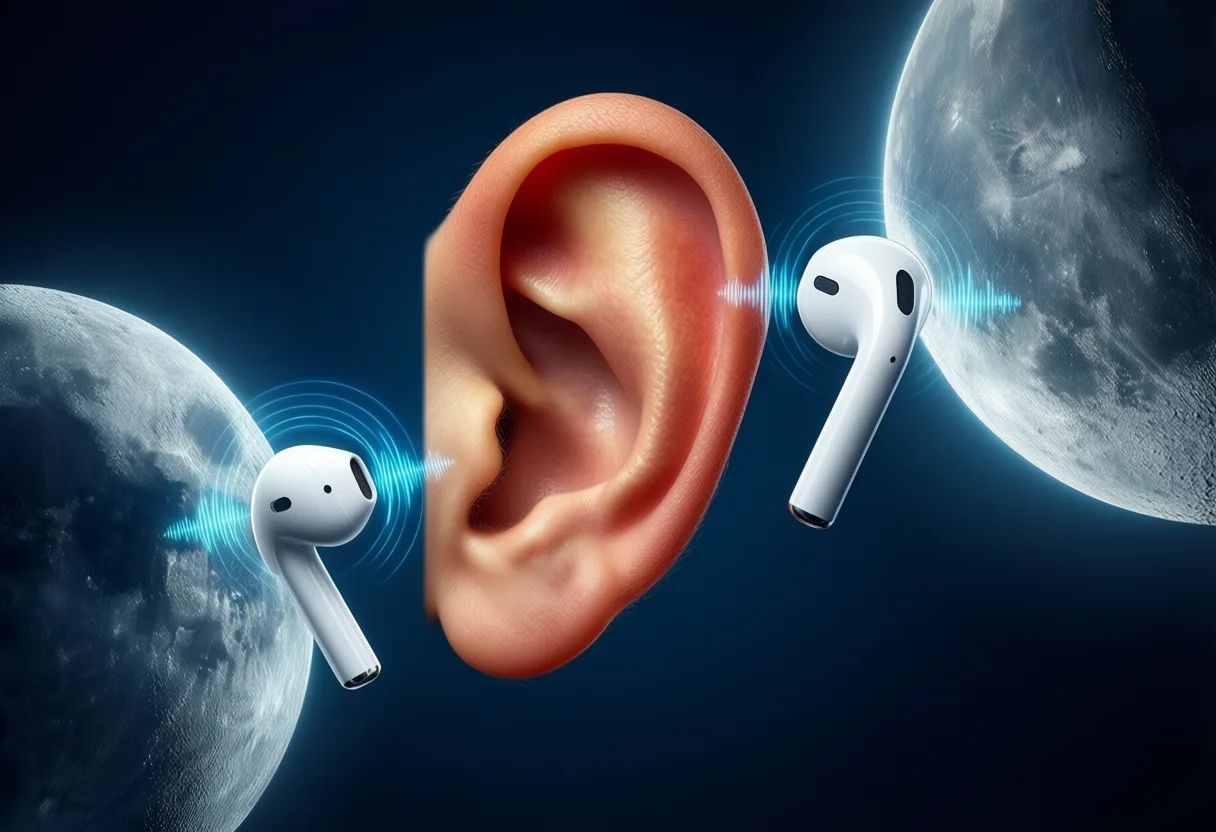
A silence hums beneath the surface of every technological choice-not the absence of Sound, but the presence of intention. When two devices emerge from the same lineage, one refined by subtlety, the other sharpened by precision, the question is no longer simply about features, but about philosophy: what kind of listener do you wish to be?
In the quiet theater of daily life-commutes wrapped in Noise, offices buzzing with half-heard conversations, moments when music becomes meditation-the decision between Apple’s latest standard AirPods and their elite Pro counterpart is less a comparison of specs than a reflection of self. One offers effortless integration, the other immersive control; both promise clarity, but through divergent paths of engineering and design.
Design and Fit: Comfort Meets Containment
The newest standard AirPods continue the minimalist silhouette that has become synonymous with Apple’s audio vision-smooth stems, open-backed earbuds that rest lightly in the outer ear. They are designed for presence without pressure, ideal for those who move between conversations and music without needing to seal themselves off from the world. The absence of ear tips means less physical intrusion, a breathability that suits all-day wear, though it also means Sound escapes More easily, both in and out.
In contrast, the AirPods Pro 2 adopt an in-ear architecture, complete with silicone tips that Create A gentle seal within the ear canal. This shift is not merely aesthetic-it redefines the relationship between body and device. The fit conforms, adapting to the unique topography of each ear, offering a sensation of containment, as if the sound were growing from within rather than arriving from outside. This design enables active noise cancellation, but it also asks more of the wearer: a willingness to be enclosed, to trade ambient awareness for sonic depth.
- Lightweight, open design for natural sound bleed
- In-ear fit with customizable tips for acoustic isolation
- Ergonomic differences reflect opposing philosophies of listening
For those with sensitive ears or who wear glasses, the pressure of an in-ear fit may become a quiet distraction over time, while others may find the open design of the standard AirPods too fleeting, too easily disrupted by wind or movement. Fit, then, is not just about anatomy-it’s about endurance, about how long you’re willing to carry the device before it begins to feel like a burden.

Sound Quality: Fidelity and Intention
Sound, at its core, is information shaped by intention. The standard AirPods deliver a bright, forward-leaning profile-Clear mids And highs that make voices intelligible and rhythms crisp. Bass is present but not dominant, as if the engineers tuned them to honor speech as much as song. This balance suits podcasts, calls, and casual listening, where audio is one thread in a larger sensory tapestry.
The AirPods Pro 2, however, recalibrate the experience. With their sealed fit and advanced drivers, they offer a wider dynamic range-a deeper plunge into silence between notes, a more resonant low end that doesn’t overwhelm but grounds the mix. The result is a soundscape where details emerge: the breath before a vocal, the faint reverb on a snare, the subtle layering of instruments in a complex track. It’s not louder; it’s fuller, as though the music had been Given room To breathe inside a studio rather than on a sidewalk.
- Standard AirPods emphasize clarity and openness
- AirPods Pro 2 deliver richer bass and spatial nuance
- Listening environment shapes which profile serves best
For those who listen primarily on the move-walking city streets, riding transit-the Pro’s ability to mute the chaos around you transforms audio into an act of reclaiming space. But for those who value situational awareness, who want to hear a child’s voice or a car horn without removing an earbud, the standard model’s transparency is not a flaw-it’s a feature.
Noise Cancellation and Transparency: Control Over Environment
Active noise cancellation in the AirPods Pro 2 is not merely a technical function-it is a philosophical intervention. It allows the listener to sculpt their auditory world, to reduce the rumble of an airplane engine to a whisper or mute the drone of an office HVAC system. This power comes with a trade-off: a slight pressure sensation, a feeling of being unmoored from physical space, as if floating in a sensory vacuum.
Yet the same technology enables a counterbalance-transparency mode, which amplifies ambient sound with startling fidelity. It’s as if the earbuds are not blocking the world but enhancing it, making nearby speech clearer, footsteps more distinct. This duality-canceling and clarifying-reveals a deeper design ethic: not to isolate, but to offer choice.
The standard AirPods, lacking active cancellation, default to a passive openness. They do not fight the environment; they coexist with it. This can be a virtue in unpredictable settings-walking a dog, supervising children, navigating traffic-where sudden sounds demand attention. There is no toggle, no mode switch; the world flows in unfiltered, making these buds companions for engagement rather than escape.
- Noise cancellation enables deep focus but may reduce situational awareness
- Transparency mode restores context with digital precision
- Open design of standard AirPods prioritizes real-time responsiveness
In high-noise environments, the Pro’s cancellation is transformative. In dynamic, interactive settings, the standard model’s openness proves more adaptive. The decision hinges not on superiority, but on the rhythm of your life.
Battery Life and Charging: Endurance in Motion
Both models offer all-day functionality, though the exact duration varies with usage patterns. The standard AirPods provide sustained playback that comfortably bridges commutes, workdays, and evening wind-downs. Their charging case supports rapid replenishment, ensuring that even a brief dock can extend listening by hours.
The AirPods Pro 2 match this endurance, despite the added power demands of noise cancellation and spatial audio processing. The efficiency of their internal architecture allows them to maintain parity, a testament to advancements in miniaturized power management. Both support wireless charging, integrating seamlessly into modern workflows where cords are relics.
- Similar battery performance across models
- Fast charging reduces downtime significantly
- Wireless compatibility enhances daily convenience
For frequent travelers or those with irregular schedules, the reliability of consistent battery life becomes its own form of freedom-one less variable to manage in a day already full of decisions.
Final Considerations: Purpose Over Preference
Choosing between these two models is not a contest of which is better, but which aligns with your daily choreography. The standard AirPods are for those who move fluidly between worlds-work and home, focus and interaction-needing audio support without sensory detachment. They are tools of continuity.
The AirPods Pro 2 serve those who seek mastery over sound-who value studio-grade clarity, who work in noisy environments, or who use audio as a portal to concentration. They demand a slight surrender to enclosure in exchange for depth.
Ultimately, the right choice echoes not from the earbud, but from the life it serves.
| Feature | AirPods 4 | AirPods Pro 2 |
|---|---|---|
| Design | Open-backed, stem design | In-ear with silicone tips |
| Noise Cancellation | No active cancellation | Active noise cancellation |
| Transparency Mode | N/A | Yes, with amplification |
| Sound Profile | Bright, clear, speech-friendly | Full range, rich bass, detailed |
| Sensors | Optical sensor only | Optical and skin-detect sensors |
| Ear Tip Options | One-size-fits-most | Interchangeable sizes |
| Charging | Fast and wireless | Fast and wireless |
Picking Your Perfect Wireless Companion
The Sound of Silence (or Not)
Active noise cancellation might seem like magic, but it’s really clever science. The AirPods Pro 2 use inward- and outward-facing microphones to constantly analyze and counteract external noise-think of it like playing a sound wave that’s the exact opposite of the noise around you. This feature is absent in the standard AirPods 4, which rely more on the earbud’s physical fit to block sound. If you’re often in loud environments-subways, busy offices, or flights-the Pro 2’s noise cancellation can make a real difference in how clearly you hear your music or calls.
Small Details, Big Differences
One easy-to-miss feature on the AirPods Pro 2 is the built-in skin-detect sensor. It uses an optical sensor and an additional skin-detection sensor to know when the earbuds are actually in your ears, improving the accuracy of automatic play/pause. The AirPods 4 use only an optical sensor, which works well but isn’t quite as precise. Also, the Pro 2 comes with interchangeable silicone ear tips for a custom seal, while the AirPods 4 have a one-size-fits-most design-great for comfort, but less adaptable for different ear shapes. Explore more stories, videos, and creators on Loaded.
Frequently Asked Questions
What is the main difference in design between AirPods 4 and AirPods Pro 2?
AirPods 4 have an open-backed, lightweight design that rests in the outer ear without ear tips. AirPods Pro 2 use an in-ear fit with silicone tips that create a seal for acoustic isolation.
Do AirPods 4 have active noise cancellation?
No, AirPods 4 lack active noise cancellation. They rely on their open design and physical fit to allow ambient sound, while AirPods Pro 2 feature active noise cancellation using inward- and outward-facing microphones.
How do the sound profiles differ between the two models?
AirPods 4 deliver a bright, clear sound with emphasis on mids and highs, ideal for speech and casual listening. AirPods Pro 2 offer a fuller range with richer bass and greater spatial detail due to their sealed fit and advanced drivers.
What are the battery life and charging features of both models?
Both models provide all-day battery life with fast charging and wireless charging support. AirPods Pro 2 maintain similar endurance despite the added power demands of noise cancellation and spatial audio.
This article was produced with AI assistance. How Neuron Magazine uses AI.
Zahra explores the frontiers of human enhancement, from neural implants to gene editing, with a focus on ethical implications and lived experience. She blends scientific rigor with intimate storytelling to illuminate how technology reshapes identity and lifespan.