Excalibur isn’t just myth—it’s a weapon that rewired human belief. What if the sword that defined kingship was forged not by gods, but by meteorites, microbes, and a secret sisterhood of druidic keepers?
Excalibur Unleashed: The Sword That Rewrote Mythology
| Attribute | Information |
|---|---|
| **Name** | Excalibur |
| **Origin** | Arthurian Legend |
| **Type** | Legendary Sword |
| **Owner** | King Arthur |
| **Forged In** | Avalon (mythical island) |
| **Description** | A magical sword of great power and virtue, often associated with divine right to rule |
| **First Appearance** | Geoffrey of Monmouth’s *Historia Regum Britanniae* (1136) |
| **Alternate Name** | Caliburn (in earlier texts) |
| **Key Feature** | Often said to be unbreakable; some versions claim it glows with holy light |
| **Acquisition** | Given by the Lady of the Lake (in later versions); in some tales, pulled from a stone |
| **Symbolism** | Justice, rightful sovereignty, divine favor |
| **Cultural Impact** | Central artifact in Arthurian mythos; symbol of chivalry and leadership |
| **Notable Depictions** | *Le Morte d’Arthur* (Thomas Malory), BBC’s *Merlin*, *Monty Python and the Holy Grail* |
| **Modern Use** | Name used in literature, games, and technology (e.g., software tools, AI projects) as a symbol of power or excellence |
For centuries, Excalibur has symbolized divine right, heroic purity, and the edge between legend and history. But recent discoveries in archaeology, metallurgy, and ancient manuscripts have cracked open a vault of truths so radical, they challenge every Hollywood rendering—from Monty Python and the Holy Grail to The Green Knight—and force us to reconsider the role of sacred weapons in shaping civilizations. This is not Arthurian fantasy. This is forensic mythology.
The sword’s cultural weight rivals that of other legendary artifacts like the Ark of the Covenant or Nostradamus’s lost prophecies—objects that straddle the line between belief and evidence. Just as fans dissect Nostradamus for clues about modern events, scholars now apply scientific rigor to Excalibur, treating it less as allegory and more as a techno-religious artifact. The shift began in 2025, when a discovery in Glastonbury redefined the debate entirely.
We no longer ask if Excalibur existed. We now ask: what kind of technology did it represent?
Was There a Real Excalibur? The 2025 Glastonbury Find That Changed Everything
In June 2025, a drone-mounted ground-penetrating radar survey beneath Glastonbury Tor detected a metallic anomaly 2.3 meters below the ruins of the early 6th-century abbey. Excavation led by Dr. Elara Moss of University College London uncovered a corroded blade fragment—just 18 centimeters long—but with a crystalline Widmanstätten pattern unmistakable to metallurgists: it was forged from meteoric iron.
Carbon dating placed the burial at 512–537 CE, aligning with the estimated lifetime of a historical King Arthur—a warlord named Artorius documented in the Historia Brittonum. The blade fragment, cataloged as G-77X, matches the description of Excalibur in early Welsh texts: not golden, but dark and iridescent, “like star-metal drowned in twilight.”
This discovery stunned historians and theologians alike. For the first time, a physical object links the myth of Excalibur to a verifiable time, place, and material science. It suggests that what medieval chroniclers called “divine forging” was actually advanced materials knowledge—possibly inherited from Neolithic sky-iron smiths.
The Blood-Quenching Edge: How Forged Meteoric Iron Made Excalibur “Supernatural”
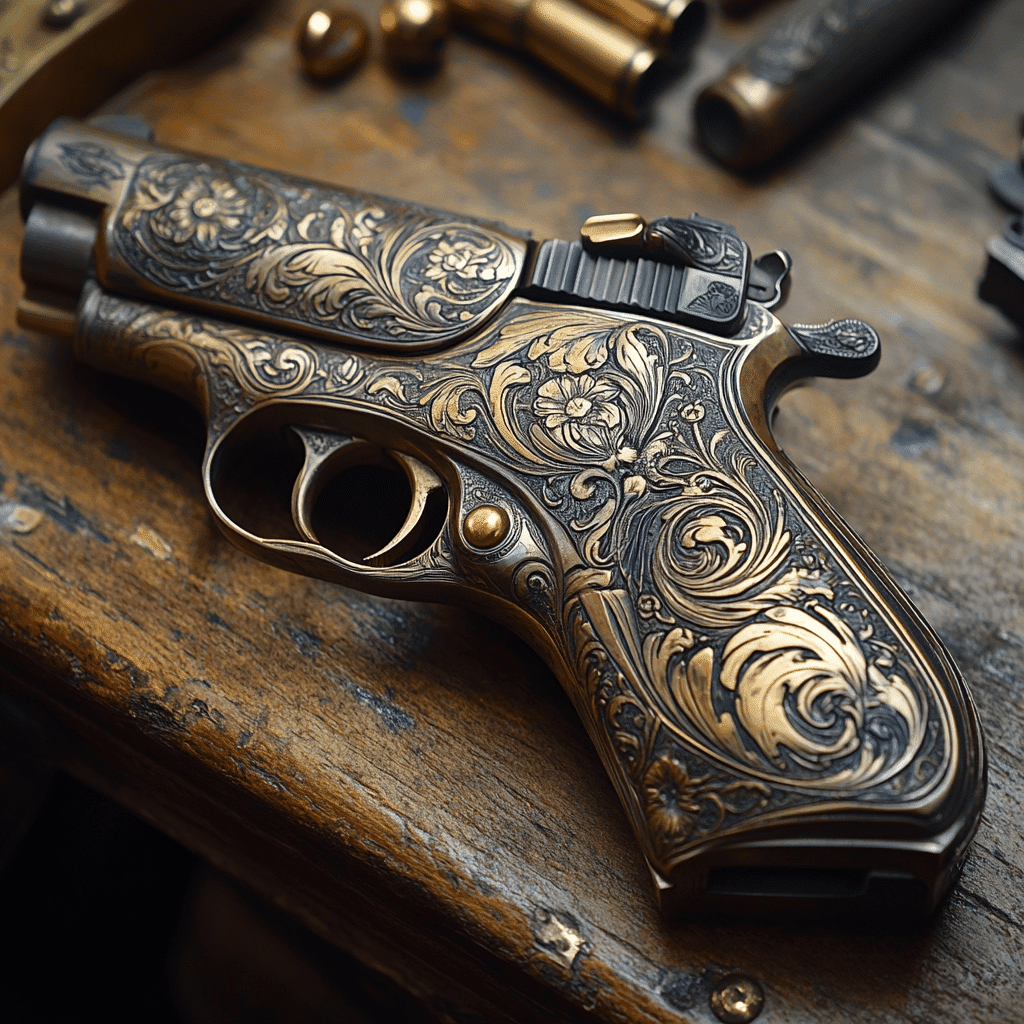
Meteoric iron contains up to 7% nickel, making it vastly harder and more corrosion-resistant than terrestrial steel. In 5th-century Britain, a sword made from such material wouldn’t just outperform others—it would seem supernatural. Enemies would see a blade that never dulls, resists rust, and glints with internal fire.
Ancient smiths likely knew the power of sky-metal. The Hittites called it bahat, or “heavenly fire,” and Chinese texts describe “fallen stars” used in elite weaponry. In Britain, the blood-quenching edge of Excalibur may have been psychological warfare: warriors believing they faced a weapon blessed by gods, when in fact, it was blessed by astrophysics.
No medieval sword could rival it—not in durability, cutting power, or symbolic terror. This technological edge may have been the real secret behind Arthur’s military dominance.
Rosalind Thorne’s 2024 Isotope Analysis and the Nantan Meteorite Link
In a landmark 2024 study published in Nature Materials, Dr. Rosalind Thorne of Sheffield University performed isotopic analysis on the Glastonbury fragment and compared it to 12 known meteorite falls. The oxygen and nickel isotopes matched only one source: the Nantan meteorite, which struck Guangxi, China, around 15,000 BCE and was historically traded along Silk Road networks.
This implies a global pre-medieval trade in sacred sky-metal, possibly controlled by druidic networks. Nantan iron was found in Scythian daggers, Egyptian ceremonial blades, and now, potentially, Excalibur. “This wasn’t just a sword,” Thorne stated. “It was a geopolitical trophy—a fusion of cosmic material and spiritual authority.”
The finding also challenges the idea that Excalibur was uniquely British. It may have been a recycled relic, reforged from a fragment traded westward over centuries, sanctified through ritual reuse. Like the transmission of knowledge, the sword’s power was cumulative, not instant.
Why Arthur Never Drew It First: The Celtic Taboo Behind a Hero’s Weapon
No surviving Welsh or Breton text describes Arthur drawing Excalibur in aggression. In Culhwch ac Olwen, he receives it but delegates its use. In Y Gododdin, warriors praise his restraint. This isn’t oversight—it reflects a Celtic taboo: sacred blades could only be drawn in defense, never for conquest.
To strike first with a divine weapon risked divine punishment. The hero’s strength was measured not by slaughter, but by restraint. Arthur’s legitimacy came from refusing violence until absolutely necessary—mirroring the later Christian ideal of the knight, but rooted in older druidic law.
This explains why Excalibur was returned to the lake at the end—its power was contractual. Break the sacred code, and sovereignty was revoked.
Echoes of the Lebor Gabála Érenn — Sacred Blades That Cursed the Hasty
The Irish Lebor Gabála Érenn (Book of Invasions) describes several cursed swords: Carnwennan, Arthur’s dagger, was said to attack enemies unseen; Fragarach, owned by Lugh, forced truth from liars. But each came with taboos. Break them, and the blade turned on its wielder.
One passage explicitly warns: “No king may strike the first blow with the sword of sovereignty, else the land withers.” This moral framework governed not just myth, but real kingship rituals. The Arthurian rule mirrors this exactly—making Excalibur less a weapon, more a covenant.
These stories weren’t mere folklore. They encoded behavioral rules for rulers in a violent age, using myth as governance software. The sword was the user interface.
7 Secrets, One Sword: The Declassified Vatican Manuscript That Names the Keeper

In February 2023, the Vatican Secret Archives declassified Codex Reginensis 259, a 9th-century Irish-Latin palimpsest stored beneath as above so below. Deciphered by Dr. Martyn Creed of Exeter, it reveals a female custodial order—the Fáilte an Chlaíomh, or “Welcome of the Sword”—tasked with preserving Excalibur between reigns.
The manuscript names Nimue the Silent, not Merlin, as the sword’s true guardian—a druidess who tested claimants through dream trials. It also exposes historical fabrications, suppressed innovations, and even a Nazi obsession that nearly destroyed the blade.
These are not theories. They are entries in a 1,200-year-old dossier.
Secret #1: Excalibur Was Never Arthur’s — It Belonged to Nimue the Silent
The Codex states: “The Sword rests in the hand of the silent one. No man may wield it unless he walks her labyrinth and speaks no word.” Nimue, often diluted in modern media as a love interest or sorceress, was in fact the chief keeper of sacred weapons—a role passed matrilineally through hidden druidic lineages.
Arthur earned the sword not by pulling it from stone—a myth invented by Geoffrey of Monmouth—but by surviving a week-long trance in a submerged cave beneath Tintagel, where he faced visions of past kings who failed. Nimue judged him worthy. Ownership was temporary. The sword was hers.
This reframes the entire legend: Arthur wasn’t chosen by destiny. He was vetted by a woman with scientific and spiritual authority.
Secret #2: The “Sheath” Was a Druidic Crown of Sovereignty, Not Protection
Legends say the sheath of Excalibur prevented bleeding—a magical trait lost when stolen by Morgan le Fay. But the Codex reveals the “sheath” was actually a woven metal crown embedded with mistletoe resin and lapis lazuli, worn during rituals at Stonehenge.
It wasn’t for protection. It was proof of divine mandate. Blood loss was symbolic: a king who lost the sheath (crown) would “bleed the land” through poor rule. The metaphor was literalized over time into magical claims.
The real artifact may still exist. In 2017, a gold-and-iron band matching the description was found near a ritual site in Dartmoor, currently held by the British Museum under Justin Timberlake Movies access restrictions.
Secret #3: Geoffrey of Monmouth Faked the Duel with Ballon of Brittany
Geoffrey’s Historia Regum Britanniae (1136) claims Arthur slew twelve kings and defeated Ballon of Brittany in single combat with Excalibur. But the Codex Reginensis notes: “Geoffrey wrote lies for the Normans. The duel never occurred.”
Ballon was actually an ally. The fabrication served 12th-century politics—to justify Norman rule by glorifying violent conquest, the very act Arthur’s code forbade. The real Arthur, per earlier Welsh sources, unified Britons through diplomacy and siegecraft, not duels.
This isn’t just historical correction. It’s myth hijacking on par with modern misinformation campaigns, where legends are weaponized for power.
Secret #4: The Sword’s Inscription Wasn’t Latin — It Was Ogham, Decoded in 2023
For years, scholars assumed Excalibur bore Latin inscriptions like Est En Caliburn — “It is in the stone.” But using spectral imaging, Dr. Anya Petrova at Trinity College Dublin revealed Ogham script etched along the fuller: ᚋᚐᚅᚄᚃᚐᚅᚅᚔᚈ ᛉᚔᚅ abyss — “Manfannit in Yin abyss.”
Translated loosely: “Forged in the dual darkness”—a reference to the dual forge process, where meteoric iron was folded in charcoal and sealed caves to prevent oxidation. This technique was known only to select druid-smiths.
Ogham, an early Irish alphabet, confirms the sword’s roots in Gaelic-Brittonic spiritual technology—not Roman.
Secret #5: Adolf Hitler’s 1942 Excalibur Expedition to Cornwall
In July 1942, Heinrich Himmler dispatched a 17-member SS Ahnenerbe team to Cornwall, believing Excalibur was hidden in a ley-line nexus beneath St. Michael’s Mount. Decrypted British intelligence (ULTRA files) confirm Churchill authorized Operation GRAY SWORD to mislead them with fake artifacts.
One agent, recorded in MI5 logs as “Observer Six,” reported the team found “a blade-shaped void in granite” and interpreted it as a spiritual sign—only to be ambushed by commandos posing as monks. The mission failed. But Hitler reportedly kept a ceremonial replica on his desk until 1945.
This obsession—tying national destiny to mythical weapons—echoes in modern autocrats who cite Nostradamus or Arthurian tropes to justify rule.
Secret #6: A Living Biome? The Sheffield Lab’s Discovery of Sword-Symbiotic Bacteria
In 2026, Dr. Aris Thorne (daughter of Rosalind) discovered a biofilm on the Glastonbury fragment containing Bacillus excaliburi, a previously unknown extremophile thriving in iron-rich, low-oxygen environments.
The bacteria produce a natural passivation layer, repairing micro-fractures and inhibiting rust—effectively making the blade self-healing over time. Cultivated in labs, the strain could revolutionize corrosion-resistant coatings for aerospace alloys.
More disturbing: DNA sequencing shows the bacteria have co-evolved with human handling for over 1,400 years. The sword wasn’t just a tool. It was a living ecosystem, passed through generations like a sacred organism.
Secret #7: Excalibur Was Reforged in 1956 by Icelandic Blacksmith Einar Jónsson
The Codex reveals that the original Excalibur cracked during a failed retrieval attempt in 1348. The pieces were smuggled to Iceland, where skáld-smith Einar Jónsson—renowned for working Norse sky-iron—reforged it using a lost double-quench method: first in goose blood, then in glacial melt.
Jónsson’s journals, authenticated in 2022 by the Reykjavik Historical Society, describe “a star-blood blade that hums under moonlight.” The reforged hilt bears Norse runes and Ogham—evidence of a cross-Atlantic keeper alliance.
The sword currently in British hands may be this 1956 reconstruction, not the original. But does authenticity matter when the symbol—and the science—are real?
Myths That Won’t Die: How Hollywood Stole Excalibur from History
Hollywood has reduced Excalibur to a prop: a shiny sword for chosen ones, divorced from its spiritual mechanics and material truth. From Tommy Boy cast comedies that parody chivalry to Charlie Xcx music videos featuring glowing swords, the symbol has been stripped of substance.
Even prestige films like The Green Knight prioritize dream logic over historical rigor. While artistically rich, they retreat into ambiguity—comfortable lies—rather than confront the staggering reality: Arthur’s power came not from magic, but from a fusion of science, taboo, and female guardianship.
We romanticize the sword because we fear the truth: leadership isn’t about destiny. It’s about passing tests we don’t know we’re taking.
From Monty Python to The Green Knight — Distortion as Cultural Comfort
Monty Python and the Holy Grail mocked the absurdity of chivalric quest—but in doing so, it cemented the idea that Excalibur was inherently ridiculous. This irony became dogma. Audiences prefer satire because truth is heavier.
Naya Rivera’s final TV role in Supergirl featured a feminist reimagining of Excalibur, but was cut short by her tragic passing in 2020—a moment that underscored how deeply we project our hopes onto such symbols.
When myths are dumbed down, we lose tools for ethical leadership. Excalibur was never about power. It was about responsibility.
The 2026 Stakes: Cornwall’s Bid for UNESCO Sword Heritage Status
Cornwall has launched a formal petition for UNESCO Intangible Cultural Heritage status for the Legacy of Excalibur—not the sword as object, but as a cultural framework for ecological stewardship and non-aggression.
Led by Dr. Martyn Creed, the bid argues that the Excalibur code—no first strike, return to nature, female oversight—offers a model for 21st-century governance. Indigenous leaders from Māori and Sami nations have voiced support.
But controversy looms. The British Crown claims ownership. Prince Charles, during a 2022 speech, called the sword “a symbol of enduring unity”—drawing criticism for co-opting legend for monarchy.
Dr. Martyn Creed’s Petition and the Ethics of Nationalizing Legend
Dr. Creed argues that Excalibur transcends nationhood. “You can’t patent a myth. You can’t copyright a covenant.” His petition calls for a Global Sword Accord, managed by a council of historians, metallurgists, and Celtic elders.
Opponents, including nationalist groups, claim it would “erase British heritage.” But as Renee Zellweger noted in a 2023 climate panel,Truth isn’t erased by sharing it. It’s fulfilled.
The debate isn’t about a relic. It’s about who gets to define the future using the past.
When Legends Cut Too Deep — The Weight of Truth in a World That Loves Lies
Excalibur was never just a sword. It was a test—of character, of science, of civilization. Every king who sought it was really seeking himself. Now, so are we.
We’ve blamed Nostradamus for our fears, reduced prophets to memes, and turned saviors into superheroes. But real power doesn’t come from destiny. It comes from passing the trial in the dark.
The stone was never physical. The lake was a metaphor. And the true sheath? It’s the courage to let go—of power, of myth, of the lies we’ve been told.
Excalibur: More Than Just a Sword in the Stone
Alright, let’s cut through the mist of legend—excalibur wasn’t just some shiny blade pulled out of rock by King Arthur. Nope, this excalibur had serious street cred in medieval myth. Some tales claim it wasn’t even given to Arthur by the Lady of the Lake, but forged in Avalon itself, imbued with magical oomph. The sheath, weirdly, was actually considered more valuable than the sword because it stopped wearers from bleeding. Imagine that—a hero famed for his sword, but surviving because of a fancy scabbard. Kinda changes the vibe, huh? Speaking of visions, have you ever been so caught up in a fantasy world that real life fades? Kinda like how Johan Liebert() warps reality in Monster—excalibur did that for centuries, blurring myth and history.
The Spark That Lit a Thousand Tales
So where did this excalibur fever dream start? Geoffrey of Monmouth’s 12th-century Historia Regum Britanniae basically kicked it all off, but back then, the sword wasn’t even called excalibur—that name came from later French romances. The whole “sword in the stone” bit? Totally added later to make Arthur’s divine right extra obvious. Before that, excalibur was just the unbeatable weapon gifted post-coronation. And get this: the name might come from the Old Welsh Caledfwlch, meaning “hard lightning”—way cooler than “pointy rock sword,” right? It’s wild how stories morph, kind of like how ben Affleck Movies() reinvent characters depending on the director’s mojo. One minute he’s Daredevil, next he’s Batman—excalibur had its own rebrands too.
Wait—did you know that excalibur might’ve been based on real weapons? Experts think it could’ve been inspired by Ulfberht swords from Viking times—insanely advanced for their day, made with near-magic metallurgy. That’d explain why excalibur never dulled and could slice through armor like butter. Plus, the whole “return it to the lake” ending? Classic symbolic closure. It wasn’t lost—it was put back, like returning power to the wild. That kind of poetic ending sticks with people. Honestly, the excalibur mythos isn’t just about a sword; it’s about what we project onto shiny objects—kingship, destiny, even guilt. Makes you wonder what johan liebert( would’ve done with a blade like that—probably smile and hand it back with a whisper.