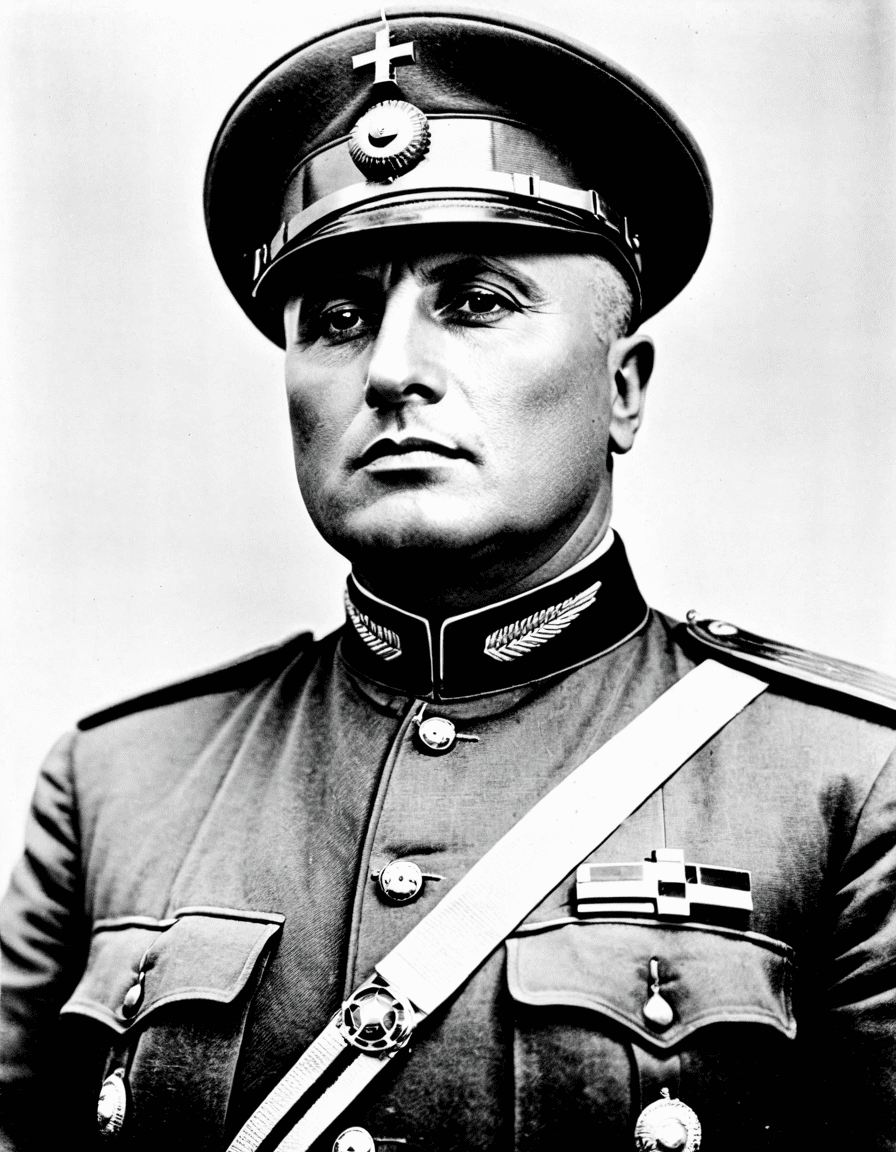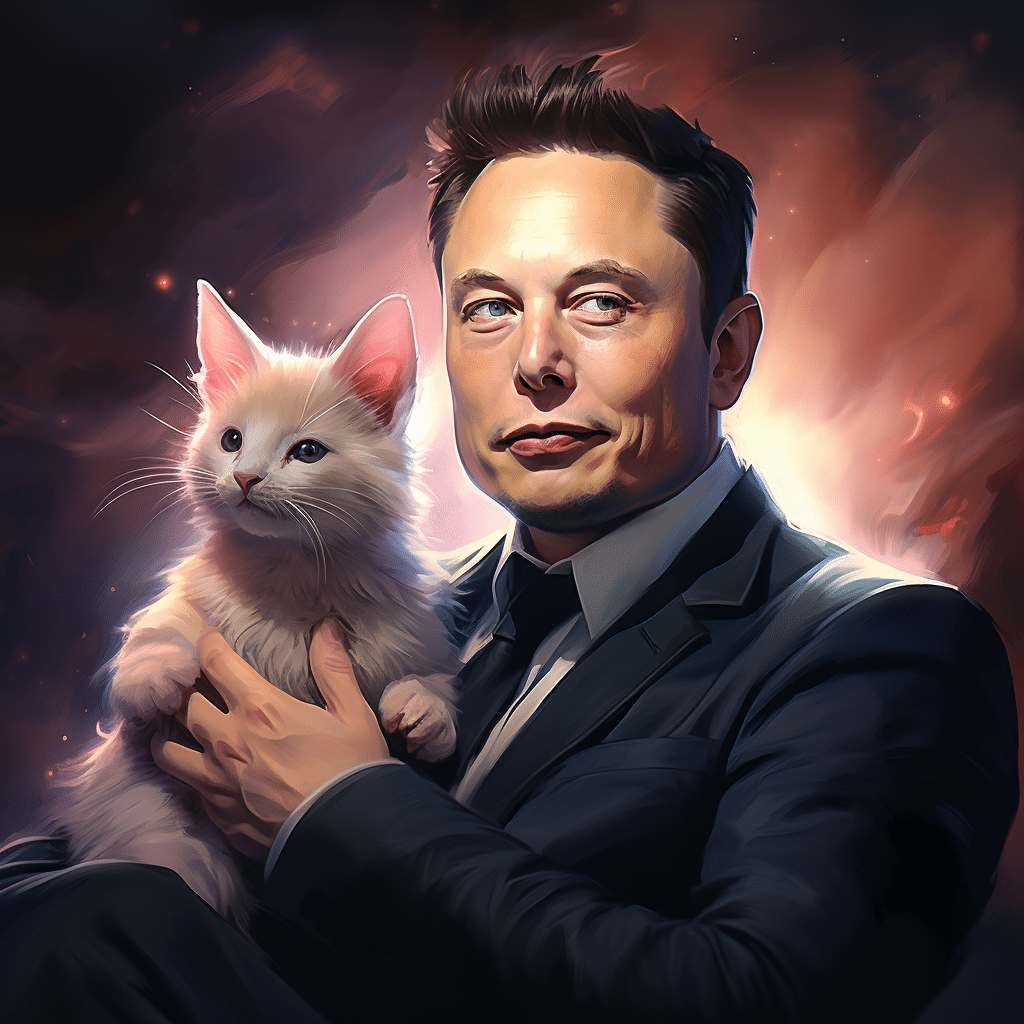
Benito Mussolini, a name that often echoes through the corridors of history, represents a period of radical change and tumult in Italy and beyond. This controversial figure, marked by his tenacity and ambition, rose to power during a time of national despair. Born in 1883, Mussolini’s early life was drenched in conflict and fervent nationalism, which would ultimately shape his lifelong pursuit of authoritarian control. He wasn’t just another politician; he was a leader who aimed to redefine Italy’s identity through fascism, a movement riddled with complexities and contradictions.
1. The Early Years of Benito Mussolini: A Foundation Built on Controversy
Mussolini’s upbringing played a pivotal role in sculpting his political ideology. Growing up in Predappio, Italy, his father was a blacksmith and a staunch socialist, sowing seeds of radical thought within young Benito. His tumultuous relationship with his father further ignited his rebellious spirit. By the time he reached adulthood, Mussolini had dabbled in various professions, including teaching and journalism, which honed his persuasive rhetoric. It was clear from the start; he was driven by a yearning for power and influence.
As a schoolteacher, Mussolini encountered socialism firsthand, adopting and adapting these radical ideals to align with his vision of a fascist Italy. He found solace in the ideas of nationalism, believing that the Italian people deserved a renaissance after the perceived humiliation of World War I. This early foundation of fervent nationalism and radical socialism energized Mussolini’s ambition, setting the stage for his meteoric rise to power.
Mussolini’s transition from the classroom to the political arena was marked by heated speeches and a magnetic public presence. His relentless drive for recognition led him to create a political movement that would resonate with the frustrations of many Italians. Little did they know, the seeds of fascism had been firmly planted, with the future of Italy hanging precariously in the balance.
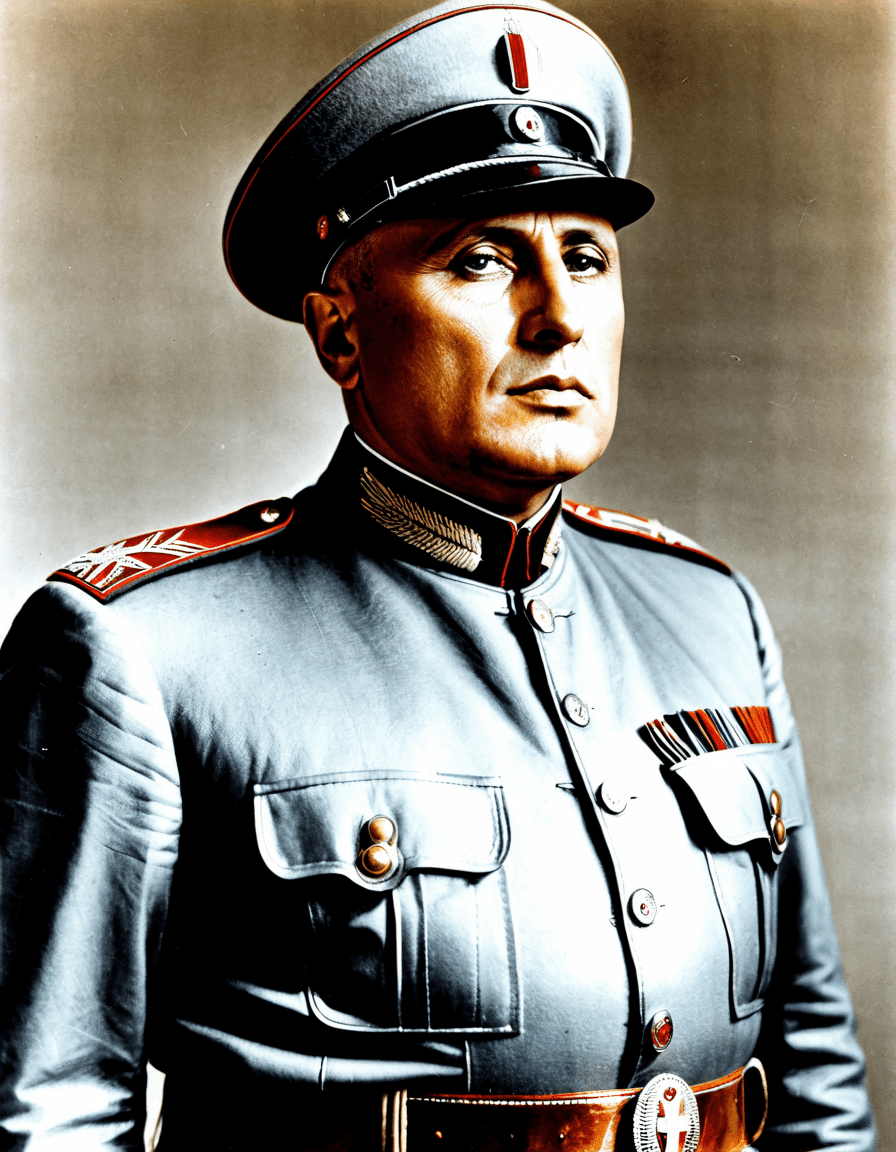
2. Top 7 Events Leading to Benito Mussolini’s Rise to Power
3. Benito Mussolini Compared to Other Totalitarian Leaders: Stalin and Hitler
When you think of totalitarianism, figures like Joseph Stalin and Adolf Hitler often come to mind. Mussolini’s regime shared several similarities with theirs, yet his approach diverged significantly. While all sought to establish control, their methods varied widely.
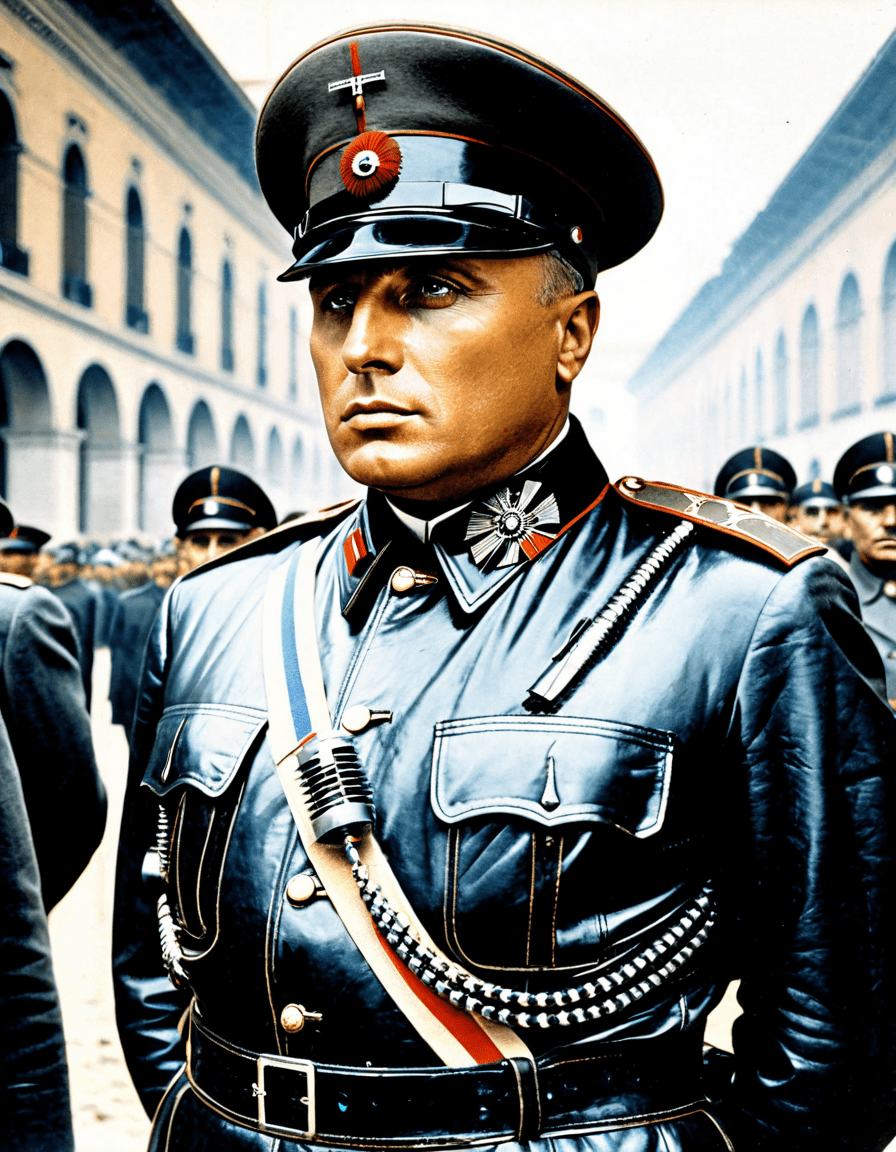
4. The Turning Tide: Mussolini’s Decline and Downfall
As the excitement of the early years faded, Mussolini faced mounting challenges. His initial military victories quickly gave way to defeats, with the failures in North Africa serving as a harsh wake-up call. The Allied invasion of Sicily in 1943 compounded these struggles, leading to rising dissent within Italy itself.
Public sentiment soured against Mussolini for several reasons. His alliance with Nazi Germany became a point of contention amid growing opposition to Hitler’s regime. In 1943, the King of Italy, fed up with perceived incompetence, dismissed Mussolini from power and locked him away.
His brief escape from captivity would culminate in his dramatic downfall. In April 1945, Mussolini was captured and executed by Italian partisans, their disdain for his regime palpable. His death marked a definitive end to a chapter steeped in both fervor and folly, leaving in its wake a fractured nation.
5. The Legacy of Benito Mussolini: A Controversial Figure in Historical Discourse
Mussolini’s legacy remains as polarizing as his life. Some view him as the pioneer of fascism, embodying the destructive allure of authoritarian control. Others see him as a cautionary tale, a leader whose ambitions led to desolation for many.
His portrayal in literature and film is equally varied, often reflecting the period’s tumult. Fascist symbols and propaganda might still make appearances, posing questions about nationalism in today’s political landscape. Historical references to Mussolini also resonate in contemporary discussions about far-right ideologies.
As we observe rising authoritarian sentiments worldwide, his story serves as a reminder of democracy’s fragility. The complex nature of his legacy invites ongoing reflection about power dynamics, propaganda, and nationalism, compelling the newer generations to remain vigilant.
Final Reflections: Lessons from Benito Mussolini’s Life
Mussolini’s journey from a schoolteacher to a dictator reveals underlying lessons regarding the fragility of democratic values. His life is a potent reminder of how far ambition can take an individual, but it also warns of the dangers of charismatic leaders wielding unchecked power.
As society grapples with polarization, the lessons learned from Mussolini’s regime remain critical. Vigilance against the erosion of democratic principles is paramount in today’s world. Amidst such complexities, the specter of his rule serves as an enduring caution against the pitfalls of authoritarianism.
History has much to teach us, and as we navigate ongoing challenges, reflecting on figures like Mussolini provides valuable insights into the nature of power, control, and the human condition. In discussing these topics, we unravel deeper truths and perhaps build a more informed future.
Benito Mussolini: Trivia and Intriguing Facts
Early Days and Fascinating Facts
Did you know that Benito Mussolini was quite the character in his youth? Born in 1883 in Italy, his early life was filled with unconventional experiences that shaped his charismatic persona. Interestingly, he was named after Benjamin Franklin, possibly hinting at aspirations for greatness. As a young man, Mussolini even worked as a schoolteacher and a socialist journalist—a far cry from the dictatorial leader he would later become. You might say, in a way, that he was paving the way for his below deck season 11 fame, transitioning from everyday roles to a controversial stage.
Political Influence and Pop Culture Connections
His rise to power in the 1920s wasn’t just about politics; it left a mark on cultural landscapes across Europe and beyond. Mussolini’s influence reached far and wide, inspiring various movements and even stirring pop culture—much like Lego Batman or the adventures of iconic heroes. It’s fascinating how dictators like Mussolini managed to weave their narratives into society, fostering a legacy filled with pain and intrigue. Notably, his chilling propaganda efforts showcased how he crafted a persona that captivated the masses, often more effectively than the charm of figures like Tinashe, who captures an entirely different audience.
Legacy and Lasting Impact
Reflecting on Mussolini’s complex legacy, he remains a contentious figure, sparking heated debates among historians and political enthusiasts alike. Interestingly enough, some might find parallels between Mussolini’s dramatic rise and modern figures, like Anthony Robles, whose determination and resilience in face of adversity inspire a different kind of narrative altogether. However, unlike Robles, Mussolini’s tale serves as a cautionary one amid the echoes of “Moose’s Tooth” in pop culture, teaching us what can happen when ambition is intertwined with ruthless leadership.