It arrived quietly. No flashing lights, no robot butler in a bowtie-just a search result that knew what you meant, a voice that answered from the kitchen, a playlist that felt Too Familiar. Artificial intelligence Isn’t a single invention. It’s a shift, a slow seep into the seams of daily life, so ordinary now we barely notice when we’ve crossed into its territory.
And yet, when we stop to ask-what Is It, really?-the answer feels just out of reach. Not because it’s secret, but because it’s alive, changing, and deeply human in Ways We don’t always admit.
What Is Intelligence-And Can Machines Really Have It?
We teach machines to recognize a cat in a Photo faster Than any human ever could. They translate languages, draft emails, even write poetry. But does that mean they Understand A cat, a language, or a metaphor?
Intelligence, in people, isn’t just about getting the right answer. It’s context. It’s knowing a kitten on a windowsill is different from a tiger in the wild, even if both are labeled “cat.” It’s the memory of warmth, the sound of purring, the instinct to reach out. Machines don’t have instincts. They have patterns.
They learn from mountains of data, yes, but not from lived experience. A child sees one cat and begins to generalize. A machine might need a hundred thousand images before it stops confusing a raccoon for a cat in a bad photo. That’s not stupidity. It’s a different path entirely.
So when we ask if machines are intelligent, maybe we’re asking the wrong question. Not Can they think? But How do they think-and for what purpose?
The Line Between Automation and True Thinking
There’s a quiet confusion in the way we talk about AI. We say “the algorithm decided,” as if it made a choice. But algorithms don’t decide. They respond. They follow rules-sometimes simple, sometimes so complex even their creators can’t trace every step.
Automation has been with us for decades. A thermostat turns on the heat. A Factory arm Screws in a bolt. These are predictable, rule-bound tasks. Artificial intelligence goes further. It doesn’t just follow instructions-it Adapts To new inputs, often in ways engineers didn’t anticipate.
Think of it like this: a spreadsheet is Automation. A tool that calculates when you type numbers. But a system that watches how you use spreadsheets-and starts suggesting formulas before you ask-that’s learning. That’s the edge of AI.
And that’s where the unease begins. Not because the machine is “smart,” but because its logic feels invisible. We don’t see the training data, the hidden assumptions, the silent trade-offs made in code.

Defining the Undefined: Why a Single Explanation Eludes Us
Try to define artificial intelligence in one sentence, and you’ll hit a wall. Is it a self-driving car? A chatbot? A medical diagnosis tool? All of these use AI, but they don’t use it the same way.
There’s no single Artificial Intelligence Definition because the field is too broad, too fast-moving. What counted as AI in the 1980s-a chess-playing program-now feels routine. Today’s AI is less about beating humans and more about blending in.
We’ve stopped expecting machines to Be Human. Now we want them to Help Human. To anticipate, to suggest, to filter. The goal isn’t consciousness. It’s usefulness.
And usefulness wears many faces.
Not Just Robots: The Many Faces of Modern Systems
When we hear “AI,” we picture robots. But most artificial intelligence today has no body at all. It lives in the cloud, in servers, in the split-second decisions behind a streaming recommendation or a spam filter.
- Language models Draft emails, summarize reports, and translate documents in real time.
- Computer vision systems Scan medical images, monitor crop health, or flag safety issues in construction zones.
- Predictive algorithms Help cities manage traffic, hospitals schedule staff, and schools identify students who might need extra support.
These aren’t sci-fi fantasies. They’re tools, quietly reshaping work, health, and communication. And most of them operate without fanfare, embedded in software we use every day.
The real story isn’t in the machines. It’s in how we’ve stopped noticing them.
How Learning Happens Without a Brain
Machines don’t learn like we do. No flash of insight, no “aha!” Moment. Instead, they rely on Repetition, feedback, and adjustment. It’s less like schooling and more like sculpting-chipping away at error until something useful emerges.
This process is called machine learning. At its core, it’s simple: show the system data, let it make a guess, tell it whether it was right or wrong, and let it tweak its internal settings. Do this millions of times, and eventually, it gets good.
But “good” doesn’t mean “understands.” A model that generates stunning images of dogs doesn’t know what a dog Is. It knows what dogs Look like In photos, based on patterns in the training data.
It’s a kind of mimicry. Impressive, but not awareness.
When Machines Adapt: The Role of Experience in Smarter Algorithms
Experience, for a machine, is just more data. The more it sees, the better it gets-up to a point. A voice assistant improves not because it reflects, but because it’s fed more voice samples, more accents, more background noise.
This is why AI systems can surprise us. They pick up on subtle patterns we’d never notice. A loan-approval model might correlate zip code with risk, not because it’s told to, but because the data shows a historical trend.
The danger isn’t in malice. It’s in Blind adaptation. Machines learn what’s in the data, not what Should Be there. They don’t question bias. They amplify it.
So when we say a system “learns,” we mean it adjusts. But adjustment isn’t wisdom. It’s math with momentum.
Seeing, Hearing, Deciding: AI in Daily Interaction
You’ve used AI today. Maybe you didn’t know it. Your phone unlocked with facial recognition. Your inbox filtered out spam. Your map app rerouted you around traffic-all decisions made in milliseconds by systems trained on vast datasets.
These tools feel seamless because they’re designed to. They don’t announce themselves. They just work-until they don’t.
And when they fail, the cracks show. A voice assistant mishears “call Mom” as “call porn.” A resume screener downgrades applicants from certain schools. A photo app mislabels a family photo. The errors aren’t random. They’re echoes of the data they were fed.
We accept these glitches because the convenience outweighs the cost. But the cost is real.
From Suggestions to Surveillance: Quiet Integration in Public Life
Walk into a store, and cameras might track your path. Ride a bus, and your route could be logged. Apply for a job, and an algorithm might score your tone in a video interview.
AI isn’t just in our pockets. It’s in our streets, our schools, our workplaces. Often, we don’t know it’s there. And we rarely get to opt out.
The technology isn’t inherently good or bad. But its quiet spread raises questions: Who decides how it’s used? Who checks if it’s fair? And when a machine makes a call-denying a loan, flagging a student, clearing a suspect-how do we appeal?
Transparency is thin. The systems are complex, the data often proprietary. We’re governed by logic we can’t see.
The Myth of the All-Knowing Machine
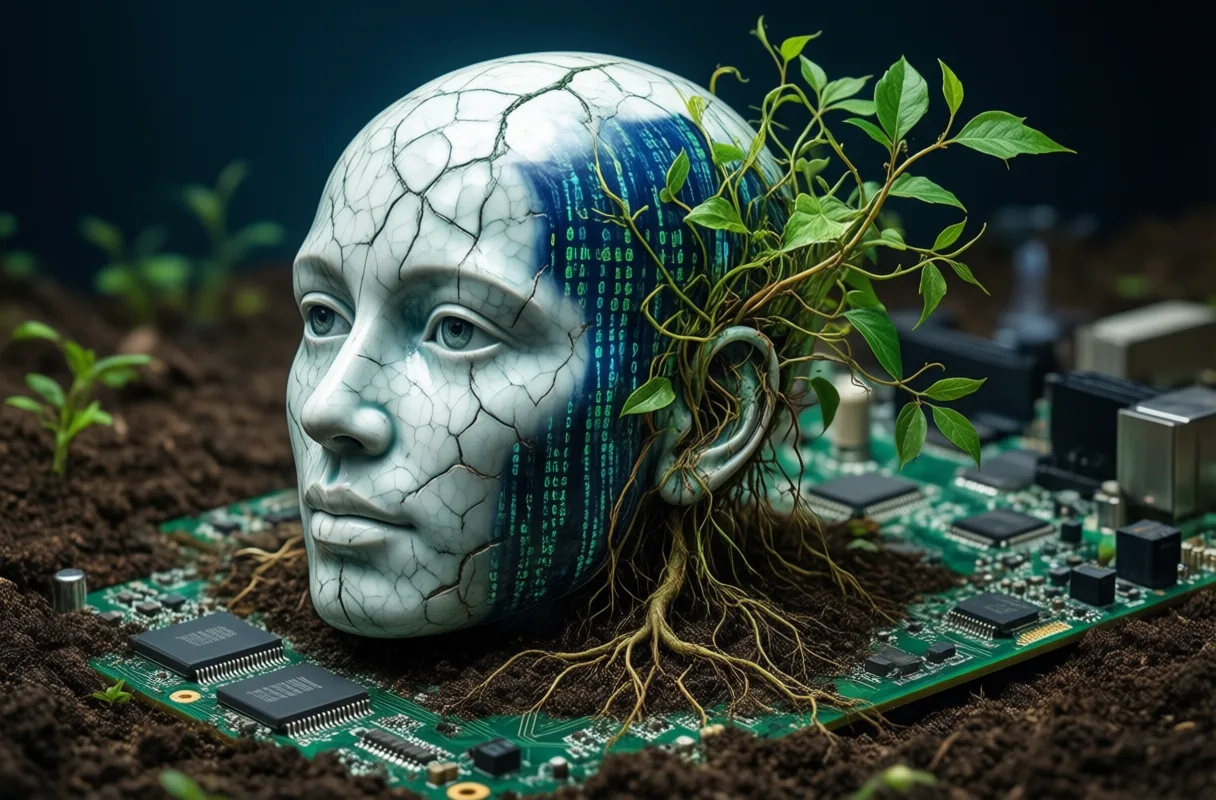
We give AI too much credit. We say it “knows” things, “understands” language, “thinks” creatively. But machines don’t know. They predict.
When a chatbot writes a poem, it’s not expressing emotion. It’s arranging words based on statistical likelihood. It doesn’t feel the rhythm. It doesn’t care about the rhyme.
This illusion of understanding is powerful. We project meaning onto responses that are, at heart, sophisticated guesses.
And that’s dangerous.
Why Common Sense Still Stumps Even the Best Models
Try this: “The glass fell off a three-story building. It broke into pieces. Why?”
A child could answer. But a machine might struggle. Not because it’s slow, but because Common sense isn’t taught-it’s lived. We know glass is fragile. We know gravity pulls. We’ve seen things fall.
AI lacks this embodied knowledge. It can read every physics textbook ever written and still not grasp that a dropped sandwich usually lands jelly-side down.
This gap matters. It’s why self-driving cars hesitate at construction zones. Why chatbots give absurd medical advice. Why automated systems sometimes make decisions that feel, well, Inhuman.
We expect brilliance. But we forget that humans are brilliant Because Of their flaws, their memories, their messy intuition.
Where Capability Ends and Hype Begins
The headlines scream “AI revolution!” But the truth is quieter. Yes, machines can do incredible things. But they’re narrow. A model that composes symphonies can’t book your flight. One that diagnoses tumors can’t comfort a patient.
The real breakthrough isn’t general intelligence. It’s Specialized efficiency. AI excels at specific, repetitive tasks-finding patterns, sorting data, predicting outcomes-when the rules are clear and the data is rich.
But it doesn’t dream. It doesn’t wonder. It doesn’t care.
And yet, the hype machine rolls on, selling AI as a near-miracle. Investors want returns. Companies want attention. We want magic.
But magic doesn’t scale. Reality does.
Beyond the Hype: What Today’s Technology Actually Delivers
So what can AI really do?
- Speed up routine work: Drafting emails, transcribing meetings, sorting documents.
- Spot patterns in data: Detecting fraud, predicting equipment failure, identifying disease markers.
- Personalize experiences: Recommending music, adjusting news feeds, customizing ads.
That’s it. No sentience. No self-awareness. Just Fast, focused, data-driven tools.
The future isn’t in machines becoming human. It’s in humans learning to work With Machines-knowing when to trust them, and when to step in.
The Human Shadow in the Machine
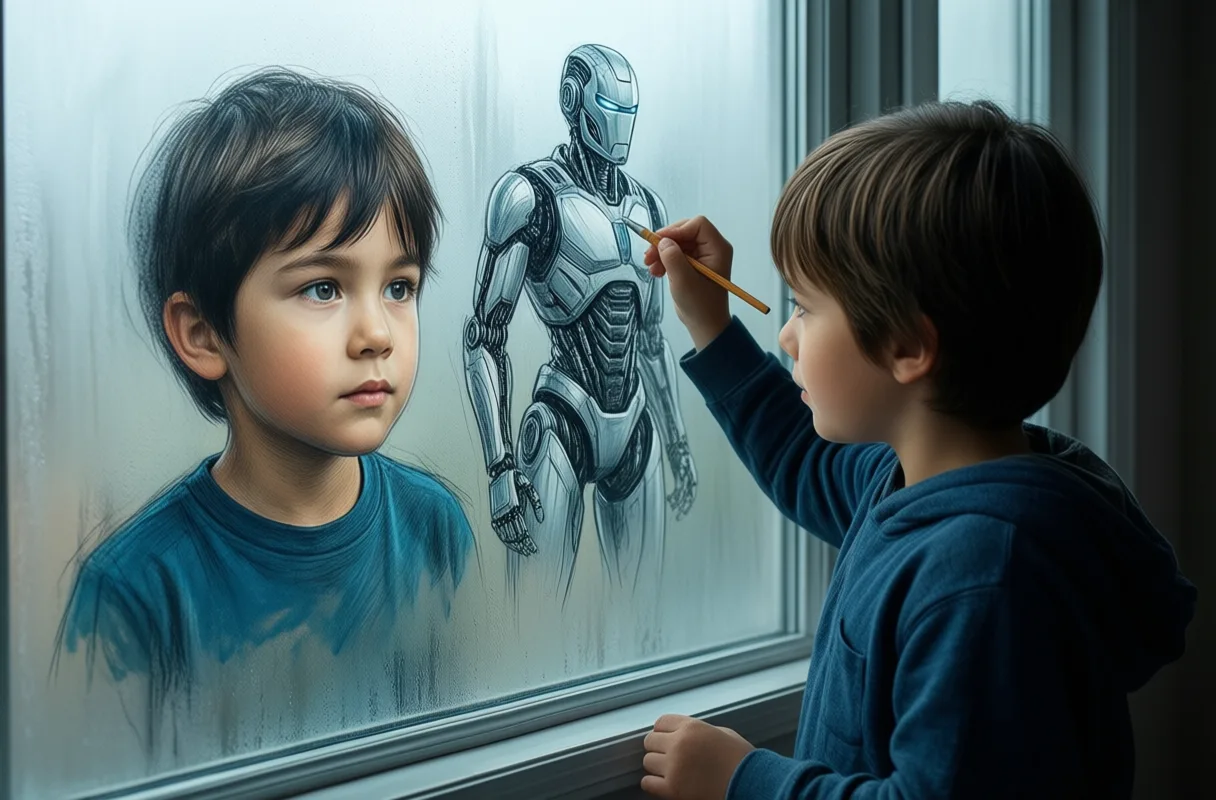
Every AI system carries a shadow. Not a ghost, but a human one. The engineers who built it. The data annotators who labeled the images. The managers who decided what problem to solve.
Bias doesn’t creep in by accident. It’s baked in-through choices about data, design, and goals. A hiring tool trained on past hires will reflect past biases. A facial recognition system built mostly on light-skinned faces will fail on darker ones.
We call it neutral code. But code is written by people. And people carry assumptions.
The machine doesn’t decide. It reflects.
Design, Bias, and the Hidden Influence Behind Neutral Code
When a voice assistant defaults to a female voice, whose voice are we hearing? When a health algorithm prioritizes certain patients over others, whose priorities are we following?
These aren’t technical questions. They’re Ethical ones. And they don’t have algorithmic fixes.
We can’t audit fairness with math alone. We need oversight. We need diversity in design teams. We need to ask not just Can we? But Should we?
The machine learns from us. So if it repeats our mistakes, maybe the problem isn’t the code. Maybe it’s the mirror.
Where Do We Draw the Line Now?
We’re no longer asking if machines can think. We’re asking how much we should let them Act.
In hospitals, AI helps diagnose. In courtrooms, it suggests sentences. In newsrooms, it drafts articles. The line between tool and agent is blurring.
And we still don’t have a clear answer to the simplest question: What counts as intelligence?
Maybe we’re asking too much of the machines. Or too little of ourselves.
Rethinking Intelligence in a World That Mimics It
Perhaps the most important thing artificial intelligence has given us isn’t faster computers or smarter apps. It’s a chance to Redefine what we value in thinking.
Creativity. Empathy. Judgment. These aren’t bugs in the human system. They’re features.
The machines can mimic, predict, and optimize. But they don’t care. They don’t wonder. They don’t grieve or laugh or fall in love.
And maybe that’s the point. Not to build machines that replace us, but to build ones that remind us what makes us human.
We don’t need to fear the machine. We need to remember ourselves.
What Even Is AI, Anyway?
We toss around the term "artificial intelligence" like it’s nothing, but pinning down exactly what counts as AI can get surprisingly slippery. It’s not just robots taking over-though that makes for great movies. At its core, artificial intelligence refers to systems or machines that perform tasks normally requiring human smarts, such as learning, problem-solving, recognizing patterns, or making decisions. The catch? There's no single moment when a program magically becomes “intelligent.” Instead, AI lives on a spectrum-from simple rule-based chatbots to systems that improve themselves by spotting trends in massive amounts of data.
Smarter Than You Think (But Also Kind of Dumb)
Here’s a fun twist: things we once called AI often stop being labeled as such once they become common. This is known as the AI effect. For example, optical character recognition-turning handwritten or scanned text into editable words-was cutting-edge AI decades ago. Today? It’s built into phone apps and barely gets a second thought. That means AI keeps moving the goalposts; once a machine masters a task, we shrug and say, “Well, that’s not Real Intelligence.” So ironically, the more successful AI becomes, the more invisible it gets.
Learning Without Being Told
One of the big shifts in how we define AI today centers on machine learning. Unlike traditional software coded with strict if-this-then-that rules, machine learning systems learn from data. Show a system thousands of cat photos, and it starts figuring out what makes a cat a cat-without being told about whiskers or ears directly. This ability to learn through exposure, rather than explicit programming, is a hallmark of modern AI and explains why your streaming service suddenly knows what show you’ll binge next. It’s not magic-it’s math, data, and a whole lot of trial and error. Explore more stories, videos, and creators on Loaded.
Frequently Asked Questions
What is artificial intelligence today?
Artificial intelligence refers to systems or machines that perform tasks normally requiring human intelligence, such as learning, problem-solving, recognizing patterns, or making decisions. It exists on a spectrum, from simple rule-based tools to systems that learn from data and adapt.
How do machines learn without understanding?
Machines learn through repetition, feedback, and adjustment using vast amounts of data. They improve by identifying patterns and reducing errors, but they do not understand context or meaning-they mimic outcomes based on statistical likelihoods.
Why do AI systems sometimes make biased decisions?
AI systems reflect the data they are trained on and the choices made by their human creators. If the data contains historical biases or lacks diversity, the system will amplify those biases without questioning them.
Can AI think like a human?
No, AI does not think like a human. It processes data and makes predictions based on patterns, but it lacks lived experience, instincts, emotions, and common sense. Its 'thinking' is mathematical, not conscious.
This article was produced with AI assistance. How Neuron Magazine uses AI.
Saoirse investigates how automation, remote systems, and AI reshape labor, careers, and human purpose. She centers worker voices and cultural change, blending data with narrative depth to reveal what the future feels like on the ground.