
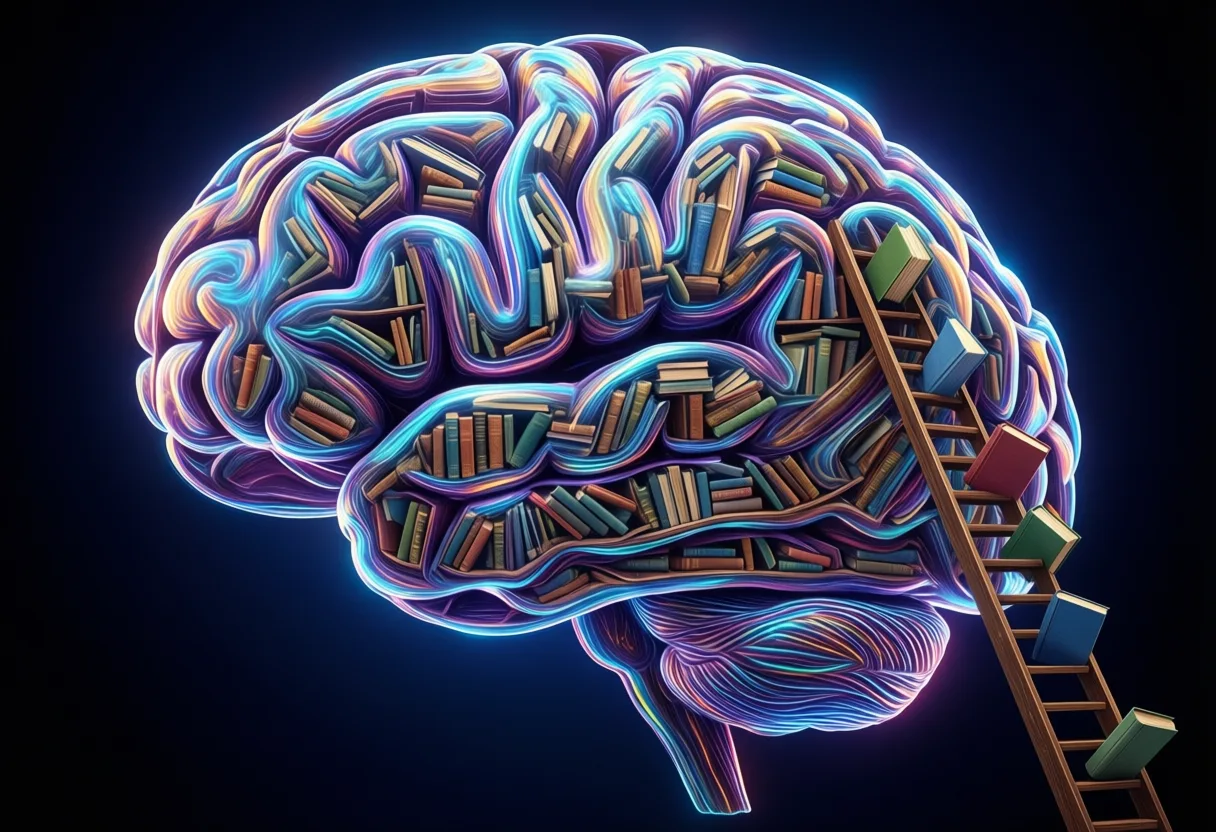
AI hallucinations aren’t glitches in a sci-fi movie—they’re real, costly errors where artificial intelligence confidently delivers false or fabricated information. As generative models become central to decision-making in healthcare, finance, and education, the need for accuracy has never been more urgent.
Retrieval-Augmented Generation (RAG) is emerging as one of the most effective strategies to combat this issue. By integrating external knowledge at runtime, RAG systems ground AI responses in verifiable data, reducing the risk of misinformation without requiring full model retraining.
What Even Is an AI Hallucination? — How Retrieval Augmented Generation Reduces Ai Hallucinations
An AI hallucination occurs when a large language model generates content that sounds plausible but is factually incorrect or entirely made up. These outputs are not random noise—they follow linguistic patterns and often mimic authoritative tone, making them especially deceptive.
For example, an AI might invent a scientific study that doesn’t exist, cite a non-existent law, or fabricate historical events with precise-sounding details. The danger lies in the confidence with which these falsehoods are presented, leading users to accept them as truth.
Hallucinations stem from how generative models are trained. They learn statistical relationships between words, not objective facts. When asked about something outside their training data—or when interpreting ambiguous prompts—they fill gaps using probability, not verification.
This means the AI isn't lying—it simply doesn't know it's wrong. Without access to real-time, external validation, it relies solely on internal patterns, which can produce coherent fiction instead of accurate information.

Why Traditional Generative Models Struggle With Accuracy
Standard large language models operate in isolation, drawing only from knowledge embedded during training. Once trained, their understanding of the world is fixed—like a textbook published years ago that can’t be updated.
When new events occur, such as breakthroughs in medicine or changes in policy, traditional models remain unaware unless retrained—a process that is computationally expensive and time-consuming. This creates a Knowledge boundary Beyond which the model must guess.
Even within known domains, ambiguity in prompts can lead to divergent interpretations. A question phrased slightly differently may trigger different internal associations, resulting in inconsistent or inaccurate answers. There’s no mechanism to cross-check facts before output.
As a result, these models often prioritize fluency over fidelity. They aim to generate responses that sound correct rather than ones that are correct. This tendency increases the likelihood of generating plausible-sounding misinformation, especially on niche or complex topics.

The Core Idea Behind Knowledge-Enhanced Generation
Retrieval-Augmented Generation flips the script by allowing AI systems to consult external sources before responding. Instead of relying solely on internal memory, RAG retrieves relevant documents or data entries in real time.
The process works in two stages: first, the system searches a curated knowledge base—such as research papers, databases, or enterprise records—for information related to the user’s query. Then, it uses that retrieved content to shape the response.
This approach mimics how humans seek answers—we don’t always rely on memory alone. When uncertain, we look things up. RAG gives AI the same ability, bridging the gap between what it knows and what it needs to know.
By anchoring generation in actual evidence, RAG reduces reliance on probabilistic guessing. It transforms the AI from a memorizer into a researcher, capable of citing sources and justifying conclusions based on real data.

How External Data Retrieval Anchors AI Responses
When a user asks a question, a RAG-powered system doesn’t jump straight to answering. First, it queries its knowledge repository using semantic search to find the most relevant passages.
These retrieved snippets become part of the input prompt fed to the language model. Now, instead of generating from scratch, the AI builds its answer around verified material, significantly narrowing the space for invention.
For instance, if asked about treatment guidelines for a medical condition, the system pulls current protocols from clinical databases before formulating a response. This ensures alignment with up-to-date standards.
Studies show that using RAG with reliable information sources significantly reduces the hallucination rate of generative AI chatbots. The model gains context it otherwise wouldn’t have, improving both factual accuracy and relevance.
When the Right Information Isn’t Enough—And Why Context Matters
Even with accurate data retrieval, context determines whether that information is used correctly. A document may contain true facts, but applying them out of scope leads to misleading conclusions.
Imagine retrieving a study about drug efficacy in adults and applying it to pediatric care. The data is real, but the inference is flawed. RAG systems must evaluate not just What Is retrieved, but How It applies.
Language models still interpret retrieved content through their own learned biases and limitations. If the connection between query and document is ambiguous, the AI might misrepresent findings—even with good input.
Therefore, successful RAG implementation requires more than retrieval—it demands contextual alignment. Techniques like reranking, relevance scoring, and query reformulation help ensure that only appropriately matched data informs the final output.
Why Grounding Outputs in Real Data Reduces Fabrication
Grounding responses in real data forces the AI to justify its claims with evidence. Rather than inventing statistics or attributing quotes to nonexistent experts, it references concrete sources pulled from trusted repositories.
This shift from pure generation to informed synthesis dramatically limits opportunities for fabrication. The AI becomes constrained by what the data says, not what it imagines.
Because the retrieved information acts as a scaffold, the model focuses on summarizing and explaining—not creating. Its role evolves from author to interpreter, reducing the temptation to fill gaps with speculation.
Multiple studies confirm this effect: retrieval-augmented systems exhibit lower rates of hallucinated content compared to standalone models. The presence of real-world grounding improves generalization and reliability across diverse domains.
Can Retrieval Completely Eliminate False Outputs?
No system is foolproof. While RAG greatly reduces hallucinations, it does not eliminate them entirely. Errors can still arise from poor retrieval, misinterpretation of documents, or low-quality source material.
If the knowledge base lacks the correct information, the AI cannot retrieve it—and may fall back on internal knowledge, reopening the door to hallucination. Similarly, if irrelevant documents are retrieved due to keyword confusion, the response may go off track.
Moreover, the language model may overstate certainty or blend multiple sources in ways that distort meaning. Just because a fact exists somewhere doesn’t mean it supports the conclusion being drawn.
So while RAG mitigates many risks, it introduces new failure points. Monitoring, filtering, and post-generation validation remain essential components of trustworthy AI deployment.
Bridging the Gap Between Internal Knowledge and Real-World Facts
RAG represents a fundamental shift in how AI interacts with knowledge. Instead of treating a model’s weights as the sole source of truth, it treats them as a reasoning engine powered by dynamic data.
This hybrid architecture combines the pattern recognition strength of LLMs with the precision of structured information systems. It allows organizations to leverage proprietary data—like customer records or technical manuals—without fine-tuning entire models.
The integration enables continuous learning without retraining. As new data enters the knowledge base, it becomes immediately accessible to the AI, keeping responses current and context-aware.
In effect, RAG closes the loop between static training and evolving reality, making AI less like a fossilized archive and more like a living reference system.
Practical Ways RAG Systems Improve Response Reliability
Organizations deploying RAG report measurable improvements in response quality. Key benefits include:
- Higher factual accuracy: Answers are tied to documented sources, reducing invented details.
- Improved traceability: Retrieved documents provide audit trails, enabling users to verify claims.
- Better domain adaptation: Systems can specialize in legal, medical, or technical fields by connecting to relevant databases.
- Reduced bias amplification: With controlled sources, there’s less chance of regurgitating harmful stereotypes from broad internet training data.
Additionally, RAG supports compliance-heavy environments where transparency matters. In healthcare or finance, knowing Why An AI gave a certain answer is as important as the answer itself.
Some implementations also use multi-hop retrieval, where the system performs sequential queries to build deeper understanding—similar to how a human researcher follows citations across papers.
What Users Should Watch For in AI-Generated Answers
Even with RAG, critical thinking remains essential. Users should examine whether responses include specific references or vague assertions. A trustworthy system will indicate where its information comes from.
Be cautious when answers lack nuance or express undue confidence on controversial or uncertain topics. Reliable AI should reflect uncertainty when data is limited or conflicting.
Also watch for consistency across similar queries. If slight rephrasing leads to contradictory answers, it could signal instability in retrieval or interpretation.
Finally, consider the source of the knowledge base. Public web indexes may introduce noise, while tightly governed internal datasets tend to yield higher precision. Not all RAG systems are equally rigorous.
Beyond Retrieval: The Ongoing Challenge of Trustworthy Outputs
Retrieval-Augmented Generation marks a major leap forward, but it’s not the final solution. Ensuring trustworthy AI requires layers of defense—including detection tools, human oversight, and robust evaluation frameworks.
Future advancements may combine RAG with fact-checking modules, adversarial testing, and feedback loops that allow systems to learn from their mistakes in real time.
The goal isn’t just to reduce hallucinations, but to create AI that understands the difference between belief and evidence. That level of discernment will define the next era of intelligent systems.
Until then, techniques like RAG offer our best path toward AI that informs, rather than misleads—anchored not in assumption, but in truth.
Smarter Answers, Fewer Mistakes: The RAG Effect
Retrieval-Augmented Generation, or RAG, isn’t just a fancy upgrade—it’s a practical fix for one of AI’s most annoying quirks: making things up. Instead of relying solely on what an AI model learned during training (which can be outdated or incomplete), RAG pulls in real-time, trusted information from external sources before crafting a response. This grounding step means the AI has actual data to back up its answers, which slashes the chances of spitting out false or misleading details—aka hallucinations.
Fact-Checking on the Fly
Think of RAG like a student who’s allowed to use a textbook during a test instead of relying only on memory. By referencing reliable documents, databases, or internal knowledge stores, the AI can base its output on verified facts. Studies show this approach significantly reduces hallucination rates in generative AI chatbots, especially when dealing with specific or niche topics where the model’s built-in knowledge might be thin or inaccurate.
Not a Perfect Shield, But a Big Step Forward
Even with RAG, hallucinations aren’t completely wiped out—poorly matched retrieved content or ambiguous queries can still lead the AI astray. But by design, RAG narrows the gap between what the AI Thinks It knows and what’s actually true. It shifts the burden from pure guesswork to informed reasoning, making outputs more consistent, traceable, and trustworthy. And since RAG can pull from proprietary or up-to-date sources, it helps AI stay relevant without retraining the entire model.
Frequently Asked Questions
What is an AI hallucination?
An AI hallucination occurs when a large language model generates content that sounds plausible but is factually incorrect or entirely made up. These outputs follow linguistic patterns and often mimic an authoritative tone, making them deceptive.
How does Retrieval-Augmented Generation reduce AI hallucinations?
RAG reduces hallucinations by retrieving relevant, real-time information from external sources before generating a response. The AI uses this verified data to ground its answers, reducing reliance on probabilistic guessing from internal knowledge.
Can RAG completely eliminate false AI outputs?
No, RAG does not eliminate hallucinations entirely. Errors can still occur due to poor retrieval, misinterpretation of documents, or low-quality source material. The AI may fall back on internal knowledge if correct information is not retrieved.
Why is context important in RAG systems?
Context ensures that retrieved information is applied correctly. Even if data is accurate, using it out of scope—like applying adult medical studies to pediatric care—can lead to flawed conclusions. RAG systems must align retrieved content with the query’s context.
Related reading
This article was produced with AI assistance. How Neuron Magazine uses AI.
Neuron Magazine writes for Neuron Magazine — technology news, science, ai, robots and the future.