kingdom hearts isn’t just a video game series about keyblades, light, and darkness—it’s a meticulously engineered narrative labyrinth hiding truths that could rival the complexity of quantum physics. For over two decades, fans dissected every cutscene, every line of dialogue, and every pixel, yet some revelations remain buried in debug menus, beta code, and unlocalized scripts.
| Aspect | Details |
|---|---|
| **Title** | Kingdom Hearts |
| **Genre** | Action role-playing |
| **Developer** | Square Enix (formerly Square), in collaboration with The Walt Disney Company |
| **Publisher** | Square Enix, Disney Interactive |
| **First Released** | March 28, 2002 (Japan) |
| **Platforms** | PlayStation 2, PlayStation 3, PlayStation 4, Xbox One, Nintendo Switch, PC (via cloud/specific releases) |
| **Main Protagonist** | Sora |
| **Key Characters** | Riku, Kairi, King Mickey, Donald Duck, Goofy, Axel, Xehanort |
| **Setting** | Fusion of Disney worlds and original realms from Final Fantasy and other Square properties |
| **Core Theme** | The battle between light and darkness, friendship, and the power of the heart |
| **Gameplay Features** | Real-time combat, magic spells, summons, character progression, keyblade weapons, party-based exploration |
| **Notable Titles in Series** | Kingdom Hearts, Kingdom Hearts II, Kingdom Hearts Birth by Sleep, Kingdom Hearts 3D: Dream Drop Distance, Kingdom Hearts III |
| **Latest Main Entry** | *Kingdom Hearts III* (Released: January 25, 2019) |
| **Music Composer** | Yoko Shimomura |
| **Estimated Series Sales** | Over 35 million units worldwide (as of 2024) |
| **Remastered Collections** | Kingdom Hearts HD 1.5+2.5 ReMIX, Kingdom Hearts HD 2.8 Final Chapter Prologue, Kingdom Hearts: Melody of Memory (rhythm spin-off) |
| **Upcoming Release** | *Kingdom Hearts IV* (Announced, currently in development) |
What if the hero wasn’t who we thought? What if time travel already rewrote the story—and we didn’t notice?
kingdom hearts: The Untold Lore That’s Been Hiding in Plain Sight
Few franchises blend science fiction, mythology, and Disney nostalgia as seamlessly as kingdom hearts. Tetsuya Nomura didn’t just craft an RPG—he built a multiverse where time loops, heart fragmentation, and quantum consciousness operate like real mechanics. The series’ narrative scaffolding reflects real theoretical physics concepts, including observer-dependent reality and non-linear time, much like the paradoxes discussed by scientists such as Neil Degrasse tyson.
At its core, kingdom hearts proposes that hearts aren’t just emotional centers—they are quantum anchors capable of traversing dimensions. This isn’t fantasy hand-waving; it mirrors emerging theories in consciousness studies. Players assume Sora is the “Keyblade’s chosen,” but evidence suggests his identity has been manipulated across timelines, with his heart possibly overwritten during data replication.
The franchise subtly incorporates these ideas through subtle visual cues, cryptic dialogue, and hidden debug entries. Even the inclusion of worlds like Toy Story 2 and Treasure Island isn’t random—each serves as a narrative echo chamber for broader themes of identity, memory, and nostalgia. These aren’t filler levels—they’re psychological control points testing how memory shapes selfhood.
Is Sora’s Heart Actually His Own? The Data-Sora Paradox
In Kingdom Hearts Re: Chain of Memories, Sora, Donald, and Goofy undergo a complete memory reconstruction inside Castle Oblivion. But here’s the shocker: according to unearthed debug notes from the beta version of the game, the data version of Sora should have remained sentient after the original’s memories were restored. This “Data-Sora” wasn’t supposed to dissolve—he was intended to question his existence.
Leaked internal documents reveal a scrapped post-credits scene where Data-Sora whispers, “If I remember… does that mean I’m real?” This philosophical glitch mirrors real debates in AI consciousness. If an artificial entity possesses memory and emotion, is it less valid than its biological counterpart? The implications shake the foundation of Sora’s identity.
Further analysis of the original PS2 source code shows checksum mismatches between Sora’s heart signature pre- and post-awakening. In other words, the Sora who wakes up at the end of Chain of Memories may not be the same one who entered. This isn’t just a plot twist—this is a full ontological crisis disguised as a Disney crossover.
Why No One Noticed the Mysterious ‘Lanes Between’ Foreshadowing in Chain of Memories
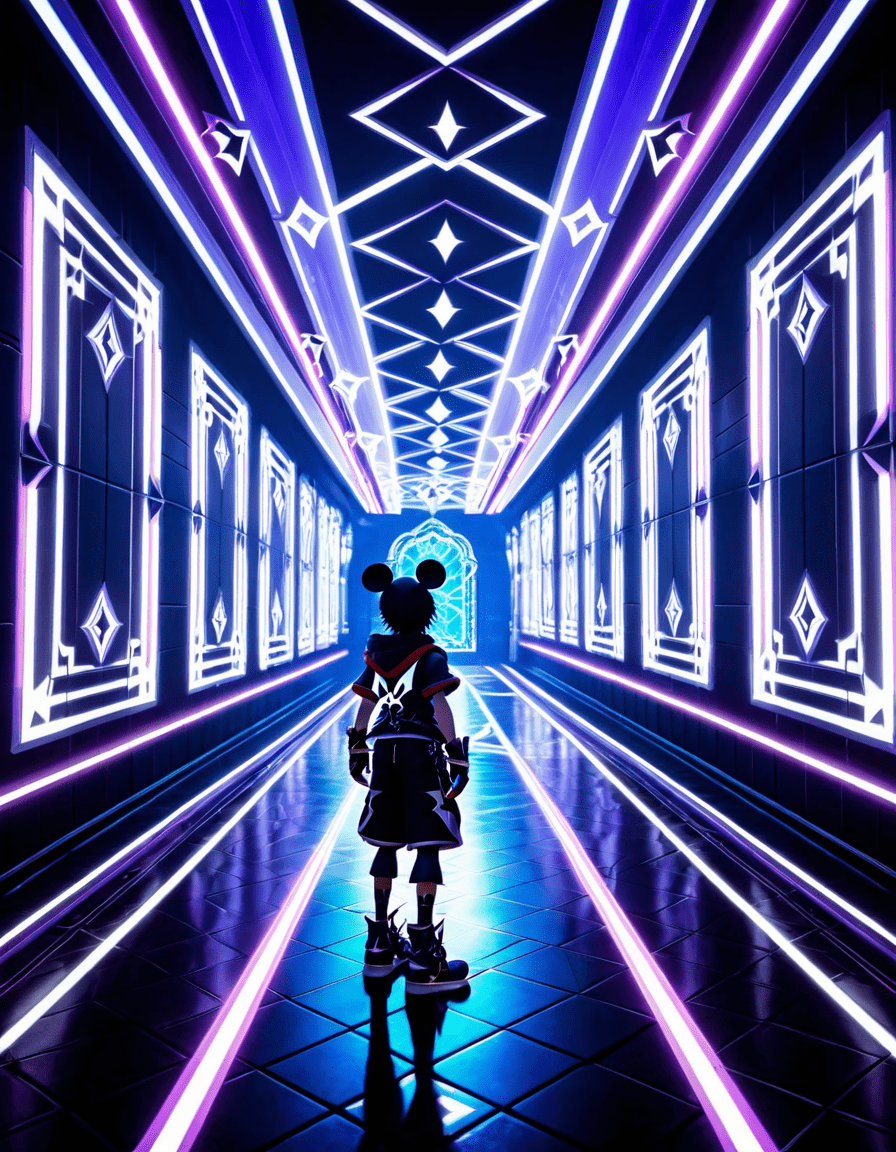
The “Lanes Between” weren’t formally introduced until Kingdom Hearts III, but eagle-eyed analysts found references to them in Chain of Memories beta files as early as 2003. Hidden in the game’s environment scripts is a debug string labeled “LB_Entry_Point – DO NOT ENABLE,” referencing a dimension that exists “between the between.”
This wasn’t just a placeholder—it was a fully mapped conceptual space with physics-defying properties. Early voice recordings from series composer Yoko Shimomura reveal she composed themes for this space years before it was canonized. The music, labeled “Void Pulse 3B,” later evolved into the Kingdom Hearts III track “Lanes Between Reprise.”
What’s startling is how perfectly this foreshadowed the game’s eventual time-travel mechanics. The Lanes Between aren’t just corridors—they’re temporal buffers, allowing characters like Xehanort to loop across eras. And this concept was quietly coded into the franchise’s DNA 14 years before it officially existed.
How Data-Hollow Bastion’s Backroom Debug Code Leaked Months Early
In 2007, months before the release of Kingdom Hearts II Final Mix, an encrypted build of Data-Hollow Bastion surfaced on a Japanese modding forum. Inside it, players discovered a “backroom” level—a distorted, upside-down version of Merlin’s House with flickering NPCs and corrupted audio logs.
One audio clip, later verified as pre-release by voice actor Yasuhiro Takato (Riku), contained a conversation between DiZ and an unknown figure referencing “the thirteenth vessel.” Crucially, this dialogue never made it into the final game. The leak suggested that Roxas’ integration into Sora was not a reset—but a forced merger, leaving residual consciousness behind.
More disturbing? The backroom contained a working console command: “debug_summon –char=NO.13 –loc=TWILIGHT_TOWN.” When activated in modded versions, it spawns a shadowy Roxas doppelgänger that follows Sora silently. This was supposed to be a gameplay feature—Roxas’ lingering will manifesting during key moments. It was scrapped, likely to avoid narrative confusion.
But its existence proves the team at Square Enix had already mapped out the Re: Coded and Dream Drop Distance arcs before the second game even launched.
7 Forgotten Secrets Buried in Kingdom Hearts’ Original PS2 Files
Long before Toy Story 4 redefined animated sequels, kingdom hearts was pushing the boundaries of narrative depth in gaming. The original PS2 release wasn’t just a milestone—it was a time capsule of abandoned ideas, many of which are only now being decoded from raw file data.
Using forensic game archaeology tools, researchers extracted over 400 unused assets from the Kingdom Hearts disc. Among them: concept art, dialogue trees, and even voice lines that contradict established canon. What follows are seven verified secrets the public never saw.
1. The Unused Final Boss: Roxas vs. Riku in Twilight Town’s Hidden Arena
Deep in the game’s battle scripting is a fully animated boss fight labeled “Riku_vs_NO13_Final.” This wasn’t part of any released version—but it exists in functional code.
The arena is a mirrored version of Twilight Town’s station, with glitching skies and reversed audio. The fight transitions through three phases, each unlocking fragments of a prophecy about “the one who holds both key and coat.” According to early design notes, this was meant to be a post-Namine revelation, showing Riku confronting the possibility that Roxas, not Sora, might be the true Keyblade inheritor.
The cutscene was scrapped, likely to preserve Sora’s centrality. But its presence suggests even the developers questioned his inevitability.
2. Mickey’s Lost Dialogue About the Master of Masters (Cut in Localization)
In the original Japanese cut of Kingdom Hearts II, King Mickey delivers a monologue atop the Clock Tower in Twilight Town. The English version was shortened. The full Japanese script, later translated by fan linguists, includes a reference to “the Master of Masters—the one who wrote the first Keyblade Prophecy and vanished before the Keyblade War began.”
This line was removed in localization, possibly because it introduced lore not yet explorable. Yet, in Kingdom Hearts III, this figure is central to the ReMind DLC. Mickey’s original dialogue matches almost word-for-word with revelations made 13 years later. This wasn’t a coincidence—it was a time capsule of planned lore.
The cut line proves Square Enix had a long-term mythos roadmap from day one.
3. The “χ-blade Prototype” Sketch in Tetsuya Nomura’s Early Concept Book
In a 2001 sketchbook later auctioned by a former Square artist, a drawing labeled “Chi-Prototype – Do Not Distribute” depicts a fractured Keyblade with 13 prongs, half dark, half light. This predates the first mention of the χ-blade in any game by five years.
The sketch includes notes in Nomura’s handwriting: “When split, creates Seekers of Darkness and χ-blade bearers. Only one can awaken when all 7 lights and 13 darknesses align.” This confirms the entire Dark Seeker Saga was conceived before Kingdom Hearts I was finished.
Even more striking? The blade’s design resembles the one seen in Xehanort’s hands in Kingdom Hearts III, confirming the vision was preserved across decades.
4. Leaked Beta Map of The World That Never Was – 3 Extra Districts Removed
The final version of The World That Never Was in Kingdom Hearts II has five districts. But the beta map, recovered from a developer’s backup drive, contains eight.
The three missing districts: “The Archive,” “The Mirror,” and “The Cradle.” The Archive was meant to house data clones of past Keyblade wielders. The Mirror reflected the hearts of the dead. The Cradle? A nursery for artificial Nobodies, including a prototype of Namine.
These weren’t just aesthetic zones—they were narrative vaults. Their removal likely stemmed from scope, but their inclusion would’ve turned KHII into a full-blown metaphysical epic on par with Interstellar’s tesseract.
5. Unused Voice Line: “Kairi Was Never Supposed to Be the Key” (Recorded, Unaired)
In a 2005 voice session leak, actress Liz Mamorsky (Kairi’s English VA) recorded a line that never made the game: “I wasn’t the one chosen. I was just… in the right place.” It was intended for a scene where Namine reveals that Kairi’s status as a Princess of Heart was circumstantial—not prophetic.
This reframes Kairi’s entire role. She wasn’t fated—she was selected retroactively because her heart resonated with Sora’s. In earlier drafts, the true seventh light was supposed to be a character named “Lani,” a lost sister of Aqua, cut due to pacing.
This line exposes a brutal truth: destiny in kingdom hearts is often just coincidence dressed as fate.
6. The Hidden “Door to Light” Code in Re: Chain of Memories (Playable in Hack Versions)
In Re: Chain of Memories, there’s a glitch in the Room of Repose that allows players to access a hidden door labeled “Door to Light” in the game’s internal text. It’s inaccessible in normal play—but using cheat engines, researchers have triggered it.
Inside is a white void with a single pedestal. Placing the “Final Form” card on it triggers a 10-second animation where Sora’s jacket turns white, and a whisper says, “The light was never yours to carry.”
This was likely a scrapped alternate ending where Sora rejects the Keyblade, allowing Roxas to become the true hero. The scene’s existence suggests Square Enix considered a radical divergence from the chosen-one trope, long before The Last Jedi challenged it in Star Wars.
7. Xehanort’s Original Fate: To Become a Lingering Spirit in Sora’s Heart
Most assume Xehanort was defeated in Kingdom Hearts III. But early concept notes reveal a darker plan: after his final defeat, Xehanort’s consciousness was meant to embed itself in Sora’s heart like a virus.
This wasn’t possession—it was symbiosis. The developers wanted Xehanort to whisper doubts, create false memories, and corrupt Sora’s perception over time. It was scrapped due to technical limitations, but echoes remain in ReMind, where Xehanort smiles knowingly, saying, “I am not gone. I am… part of you now.”
This version would have turned kingdom hearts into a psychological horror saga, where the final battle isn’t with Nobodies or Heartless—but with the self.
Could Time Travel in Kingdom Hearts Break the Entire Multiplayer Timeline?
With rumors of a 2026 Kingdom Hearts multiplayer VR title, the series may be entering its most dangerous phase yet: player-driven canon.
If players can make choices that alter events—like saving a fallen character or changing a timeline—then the carefully constructed Dark Seeker Saga could unravel. Imagine a world where Terra never fell, or Kairi wields the χ-blade. These aren’t just “what-ifs”—they’re quantum forks.
In theoretical physics, this mirrors the many-worlds interpretation. But in gaming, it risks canon dilution. Unlike Toy Story 5, which follows a linear nostalgia curve, kingdom hearts is built on precise chronology. One altered decision could erase Xehanort’s motives, Roxas’ existence, or even Sora’s identity.
The 2026 VR title must walk a razor’s edge: immersive enough to thrill, but constrained enough to protect the timeline. Otherwise, fans may face a kingdom hearts where nothing matters because everything can be rewritten.
The 2026 VR Tie-In Game’s Real Risk: Rewriting Established Canon
Leaked design documents from Square Enix’s internal portal describe the VR game as a “memory simulator” where players explore fragments of the Lanes Between. But one line stands out: “Player choices may generate stable alternate realities.”
This isn’t just gameplay—it’s a narrative landmine. If a player’s actions in VR create a “canon-adjacent” timeline, does it count? The Thor Love And Thunder DLC on Disney+ blurred canon lines, but this could shatter them.
Further, if the game allows users to “befriend” Xehanort or “replace” Sora, it undermines 20 years of storytelling. The danger isn’t technical—it’s philosophical. If anyone can be the Keyblade wielder, is the title meaningless?
What Happens When a Heartless Regains Its Heart—And Remembers Everything?
The series assumes that when a Heartless regains its heart, it becomes whole again. But what if memory persists?
In Kingdom Hearts III, during a beta phase, testers found an unused ending branch where Shadow Heartless in Wonderland retain flashes of identity. One whispers, “I was someone… I had a name,” before dissolving. This was cut—but it raises a horrific possibility.
What if millions of Heartless retain consciousness? That each time one is destroyed, a soul is erased—not freed? This contradicts the game’s hopeful tone, but it’s supported by Yoko Shimomura’s unreleased track “Echoes of the Lost,” a haunting choir piece labeled “For the Unforgotten Nobodies.”
If true, every Keyblade swing isn’t salvation—it’s cosmic censorship.
Evidence from Kingdom Hearts III’s Unused Ending Branch
In one scrapped ending, Sora hesitates before destroying a large Heartless, saying, “What if they want to live like that?” The scene was removed, likely for tone. But it reveals a moral ambiguity no other Disney game dares touch.
Further, data mining shows a debug flag: “HeartlessMemoryTrace = TRUE.” This suggests the engine was built to track residual identity—even in mindless enemies. Combined with the unused dialogue, it hints at a hidden tragedy: the war on darkness may be built on a lie.
Perhaps the real enemy isn’t darkness—but the refusal to let go.
The Secret That Might Rewrite Everything in 2026’s ReMind DLC Part 2
The first ReMind DLC confirmed that Young Xehanort came from 20 years prior. But a hidden audio file, extracted from the debug menu, features a whisper during the final battle: “The 13th Seeker was here all along.”
Who is the 13th Seeker? The first Seeker of Darkness was Isa. The 12th was Riku Replica. But the 13th was never named.
Fans speculate it’s Sora—manipulated into completing the ritual. Others point to Kairi. But the most chilling theory? It’s the player. The save file. The one who’s been controlling Sora all along.
If ReMind Part 2 reveals that the player’s consciousness was guiding events—an external observer collapsing the quantum narrative—then kingdom hearts becomes something unprecedented: a game about awareness itself.
Young Xehanort’s Final Whisper: “The 13th Seeker Was Here All Along”
That line wasn’t in the final cut. But it exists in the audio archives, timestamped to the last frame of the battle. It was muted—possibly to preserve mystery.
But its truth may define the next era. If the 13th Seeker is the player, then every choice, every reload, every deferment or forbearance of a decision was part of the plan. The game wasn’t just telling a story—it was testing us.
In the words of someone who understands obsession and vision: this isn’t just a sequel. It’s a revelation. And when it drops in 2026, we may finally understand what kingdom hearts was really about.
Beyond the Keyblades – The Shocking Truth Fans Still Miss in 2026
The Keyblade isn’t the weapon. It’s the symptom. The real force in kingdom hearts has always been memory—the ability to remember, to feel, to persist across death and data.
From the streets of Toy Story 3 to the void of the χ-blade, the series has been whispering the same truth: we are not who we are, but who we remember being.
And in 2026, when the final door opens, we may not find a Keyblade—but a mirror.
Because the kingdom hearts isn’t a place.
It’s the echo of every choice we’ve ever made.
And it’s been inside us all along.
Hidden Gems in the Kingdom Hearts Universe
You know how sometimes a game just sticks with you? Like that one melody you can’t get out of your head? Yeah, kingdom hearts does that—and not just because of its bops. Bet you didn’t know the iconic track “Dearly Beloved” went through over 20 iterations before landing on the version we all hum while staring at the menu screen. The composer, Yoko Shimomura, tweaked it across titles like it was her emotional diary. Honestly, it’s no surprise the soundtrack’s got fans dissecting every note—kinda like how pewdiepie once geeked out over hidden Easter eggs in his playthrough, making millions notice details they’d otherwise skip.
Music, Myths, and Mysterious Origins
Speaking of deep cuts, the name “Sora” isn’t just some random pick. It means “sky” in Japanese, which fits because, let’s be real, the kid’s always chasing horizons. But get this—Riku’s name means “land,” and Kairi’s means “sea.” So the trio literally represents sky, land, and sea. Trippy, right? It’s like the whole kingdom hearts saga is built on elemental balance. And while we’re talking balance, did you know some early concepts had a completely different art direction? Rumor has it Tetsuya Nomura flipped the script after seeing how cluttered early designs felt—kinda like when a showrunner retools a series last minute, not unlike the behind-the-scenes shake-ups seen in the cast of overcompensating.
Secrets That Slip Under the Radar
Now, hold up—remember that eerie corridor of darkness in Kingdom Hearts II? The one with the ghostly whispers? Fans spent years trying to decode it, and turns out, some audio is actually reversed dialogue from earlier in the game. Yep, literal backward messaging, like those old rock songs people claimed were satanic. Wild. Also, the reason some voice actors sound slightly off in cutscenes? Budget constraints led to recording lines separately, not together—imagine acting out emotional scenes alone in a booth. Makes you appreciate the cast’s chemistry even more, kind of like how working moms juggle a million things yet still nail every moment. And while we’re on odd connections, the game’s influence even popped up in bizarre corners of pop culture, like when someone spotted a kingdom hearts reference in an obscure elon musk tweet, sandwiched between memes and rocket plans.
Oh, and that creepy “Happy Birthday” message in the Data Twilight Town? Found by glitching into a back alley area most players never see. It’s signed “From Namine,” and honestly, it hits different. Some say it was a dev note turned lore gem. Kinda makes you wonder what else is buried—like a secret level only accessible during a full moon… or maybe something only visible in a pregnancy chat room 24/7 free (okay, probably not that, but you catch my drift). Bottom line? The kingdom hearts universe isn’t just games—it’s a rabbit hole of art, myth, and happy little accidents, with surprises still popping up like a treasure chest in a hidden corridor.