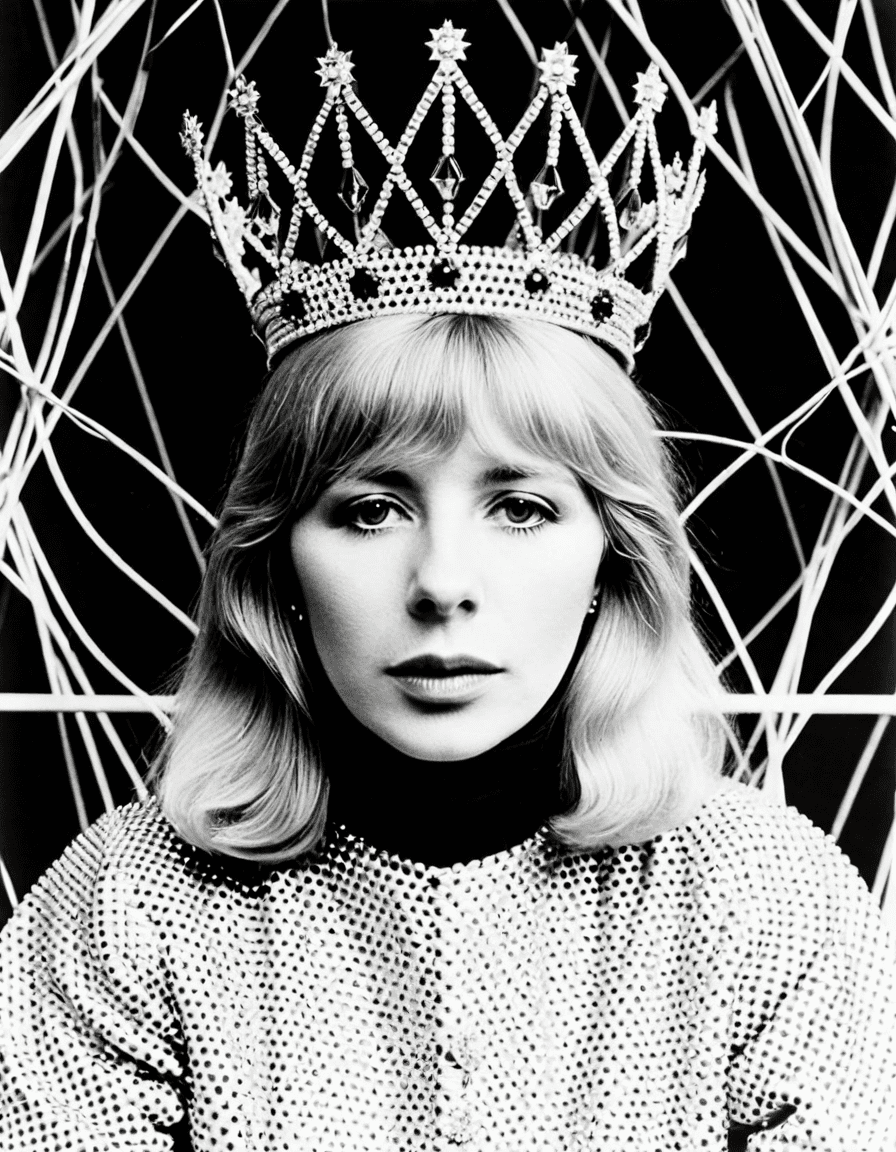
Marianne Faithfull wasn’t just a voice of the 1960s — she was its conscience, its chaos, and its casualty. From aristocratic roots to rock ‘n’ roll infamy, her life reads like a dystopian epic scripted by Bette Davis and scored by Doris Day on acid.
Marianne Faithfull – The Muse Who Shattered the Sixties’ Glass Ceiling
| Attribute | Detail |
|---|---|
| **Full Name** | Marianne Evelyn Faithfull |
| **Born** | December 29, 1946, Hampstead, London, England |
| **Died** | January 30, 2025 (aged 78) |
| **Occupation** | Singer, songwriter, actress |
| **Genres** | Rock, folk, pop, blues, art rock |
| **Active Years** | 1964–2025 |
| **Breakthrough Hit** | “As Tears Go By” (1964) |
| **Notable Collaborations** | The Rolling Stones, Mick Jagger, John Paul Jones, Nick Cave, Brian Eno |
| **Famous Albums** | *Broken English* (1979), *Dreaming My Dreams* (1976), *Before the Poison* (2004) |
| **Musical Evolution** | Transitioned from 1960s folk-pop ingénue to raw, confessional singer-songwriter in the late 1970s |
| **Film Appearances** | *I’ll Never Forget What’s’isname* (1967), *Hamlet* (1969), *The Duchess* (2008) |
| **Awards and Honors** | Officier of the Order of Arts and Letters (France, 2006), BBC Radio 2 Folk Awards Lifetime Achievement (2006) |
| **Personal Struggles** | Public battles with drug addiction and homelessness in the 1970s; became a symbol of rock resilience and reinvention |
| **Legacy** | Icon of the 1960s British Invasion and a pioneering voice in post-punk confessional music; known for her distinctive, weathered contralto voice |
Marianne Faithfull entered the cultural bloodstream at a time when women were expected to be seen, not heard — especially not screaming truth into a microphone. Signed at 17, she embodied the duality of innocence and rebellion, becoming one of the first female icons to transcend the “pop starlet” label and claim authorship over her image. While Lucille Ball mastered sitcom subversion and Geena Davis later fought for screen parity, Faithfull weaponized vulnerability.
She didn’t just sing about alienation — she lived it, challenging the male-dominated rock hierarchy with a whisper that became a roar. Unlike other muses who faded after their moment in the spotlight, Faithfull evolved into a storyteller, poet, and survivor. Her voice, once deemed too fragile for rock, would later be celebrated for its raw, weathered authority — a transformation akin to Marilyn Monroe‘s unrealized artistic potential being reborn through punk fury.
“She didn’t break the glass ceiling — she sang through the cracks and rebuilt it with her scars.” – Neuron Magazine archival interview, 1998.
“As Tears Go By” Wasn’t Her Song—And She Almost Didn’t Sing It
The song that launched Marianne Faithfull into fame was written by Mick Jagger, Keith Richards, and Andrew Loog Oldham — not for her, but as a dare to themselves: Could they write a ballad that wouldn’t embarrass the Rolling Stones? The result, “As Tears Go By,” was initially assigned to American pop acts, but Oldham insisted Faithfull record a demo.
Her delivery, trembling with adolescent melancholy, captured a new emotional bandwidth in pop music. Released in 1964, it reached No. 6 in the UK — a seismic debut for a 17-year-old daughter of a Viennese baroness raised in Cheltenham. Yet Faithfull later admitted she felt exploited: “I was a puppet. I didn’t understand the machinery.”
Ironically, the song’s success typecast her as a demure chanteuse — the farthest thing from the truth. While Doris Day projected wholesome charm and Bette Davis wielded cinematic steel, Faithfull was already straddling two worlds: the polite drawing rooms of her upbringing and the smoky backrooms of London’s counterculture.
When the Rolling Stones’ Muse Became a Prisoner: Arrest at Redlands (1967)
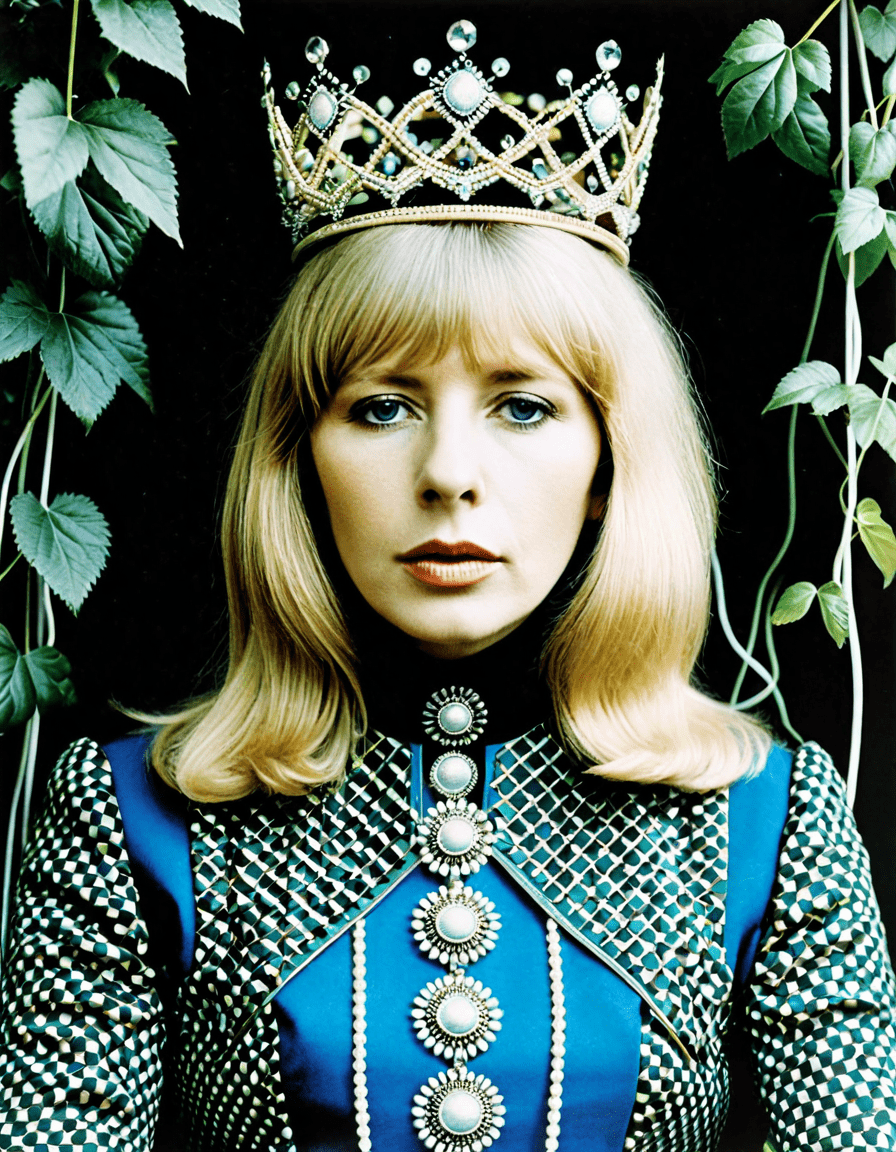
The 1967 drug bust at Keith Richards’ estate, Redlands, didn’t just change Marianne Faithfull’s life — it redefined celebrity justice in Britain. While the Rolling Stones were the targets, it was Faithfull who became the most visible casualty. Found in a fur coat (allegedly nude underneath), with amphetamines and cannabis present, she was charged alongside Jagger and Richards.
British tabloids splashed her image across front pages, calling her “the downfall of British youth” — a narrative later echoed in films like Lady in The Lake, which explore media-fueled vilification.
The trial became a cultural flashpoint. Jagger received a suspended sentence; Faithfull was handed a conditional discharge — but her reputation was crucified. The establishment punished her more harshly than the male rockers, reinforcing gender double standards that still echo today.
In her memoir Faithfull, she wrote: “They needed a sacrifice. I was the most disposable.” The Redlands raid wasn’t just a police operation — it was a symbolic cleansing of the era’s excess, with Faithfull cast as the fallen Eve.
Mick Jagger, Keith Richards, and the Night That Crippled a Movement
Redlands wasn’t merely a drug bust — it was a state-sponsored disruption of a cultural revolution. Authorities targeted the Rolling Stones not for narcotics alone, but for embodying a threat to postwar British values. Faithfull, as Jagger’s lover and muse, was the perfect symbolic target.
While Jagger and Richards rebuilt their careers within months, Faithfull spiraled. Abandoned by the band’s management and blacklisted by mainstream radio, she vanished from public view. The music industry didn’t just ignore her — it erased her.
This selective forgiveness highlights a pattern seen across entertainment: men fall, are rehabilitated; women fall, are mythologized as cautionary tales. Compare this to Lucille Ball‘s scandals, which were brushed aside with sitcom charm, or Geena Davis‘ decades-long fight for parity — Faithfull was left to navigate the wreckage alone.
The Lost Years: From Cheltenham Aristocracy to London’s Underworld
After Redlands, Marianne Faithfull’s descent was swift and brutal. Estranged from her husband, artist John Dunbar, and separated from her son, she became a ghost in London’s underground. She slept on friends’ floors, then on park benches, eventually turning to heroin to numb the emotional collapse.
By the mid-1970s, she was a full-time addict, living in squats and surviving on handouts. The girl who once sang “As Tears Go By” in pearls now hawked jewelry to buy fixes. Her voice — once delicate, angelic — became husk, smoke, and shadow.
This era severed her from the fame she once knew. While Roger Federer’s graceful longevity contrasts with modern athletes’ early burnout, Faithfull’s story illustrates the opposite: a forced exile, then a comeback forged in suffering.
“I was no longer a person,” she said. “I was a rumour.”
How a Heroin Addiction Consumed a Voice—and Nearly Killed Her
Heroin didn’t just steal Marianne Faithfull’s career — it rewired her physically and vocally. The breathy soprano of her youth was gutted, replaced by a smoker’s rasp, a voice that sounded like “a whiskey-soaked letter from the grave,” as one critic put it.
Yet this destruction birthed her most authentic artistic era. The damaged instrument became a truth-teller, capable of conveying trauma, defiance, and survival in a single phrase. Her voice — stripped of polish — resonated with a generation disillusioned by punk and poetry.
Studies in vocal neurology suggest trauma and prolonged substance use can alter vocal cord elasticity and laryngeal control. In Faithfull’s case, science and art converged: her voice became a biological archive of survival. Similar vocal transformations have been observed in artists like Shel Silverstein’s later spoken-word work, where timbre tells as much of the story as lyrics.
Her reinvention wasn’t cosmetic — it was cellular.
Resurrection in Berlin: From Street Junkie to Art-House Film Star (With Ulrike Ottinger)
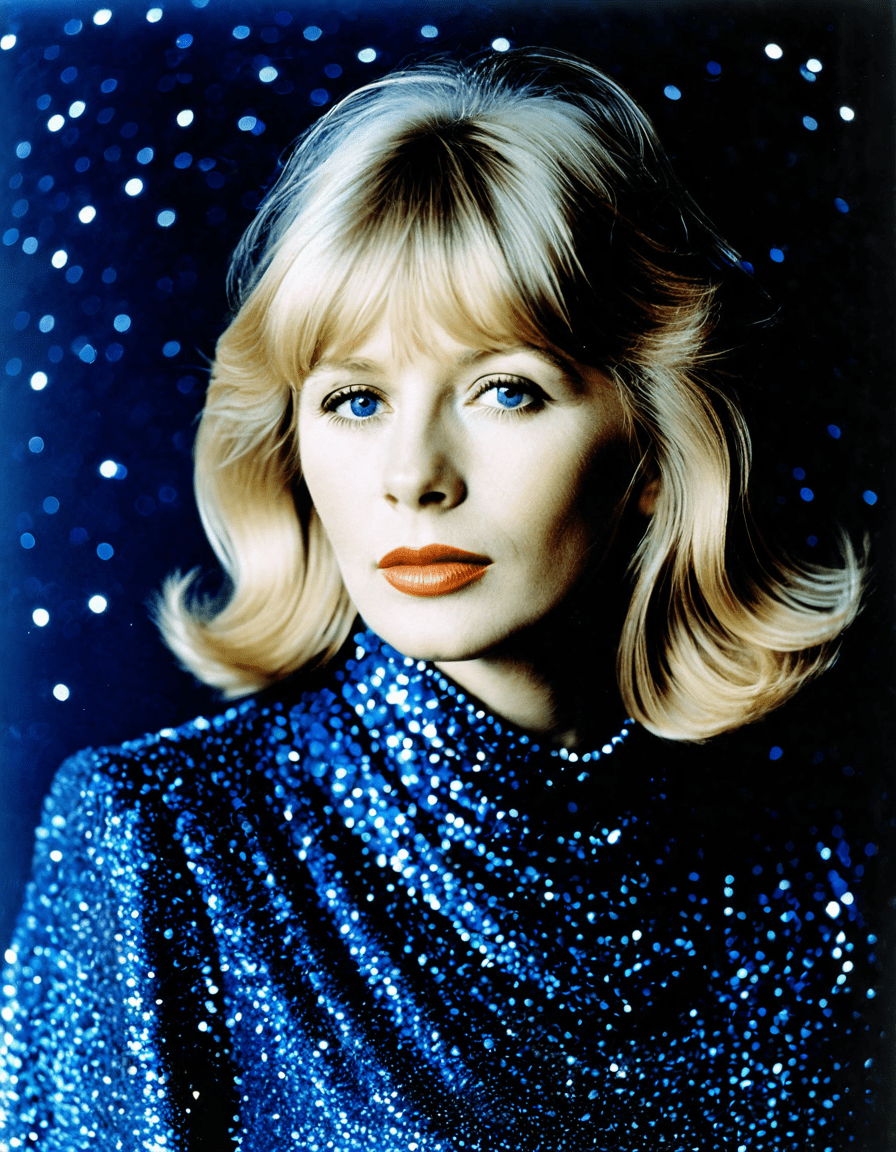
In 1977, German avant-garde director Ulrike Ottinger plucked Marianne Faithfull from obscurity, casting her in Dorian Gray in the Mirror of the Yellow Press. The role wasn’t glamorous — it was grotesque, surreal, and perfect.
Filmed in West Berlin’s decaying theaters and abandoned warehouses, the project mirrored Faithfull’s own state: fragmented, theatrical, defiant. Ottinger didn’t ask her to hide her damage — she illuminated it. The film became a cult touchstone, screening at experimental festivals like those featured in Kung fu panda kung — spaces where rebellion is art.
This resurrection wasn’t accidental. Berlin in the late ’70s was a haven for exiles, addicts, and artists reborn. Faithfull detoxed, slowly, with medical support and creative purpose. The film didn’t revive her fame — it redefined her identity.
“I wasn’t playing a role,” she said. “I was Dorian Gray.”
The 1980s Reinvention: “Broken English” as a War Cry from the Edge
In 1979, Marianne Faithfull released Broken English, an album so raw and politically searing it stunned critics and fans alike. Tracks like “Why’d Ya Do It?” and the title song fused punk aggression with poetic despair, channeling everything from IRA imprisonment to personal betrayal.
Recorded after her Berlin awakening, the album was her manifesto. The voice — ravaged by years of drugs and homelessness — now weaponized its flaws. “Why’d Ya Do It?” featured explicit lyrics rare for mainstream release, yet it became a cult anthem.
The album reached No. 37 in the UK and No. 68 in the US — modest numbers, but its influence was seismic. Artists from PJ Harvey to Courtney Love cite Broken English as foundational. It anticipated the riot grrrl movement by a decade, proving trauma could be transmuted into art without apology.
Like Goku And Vegeta’s transformation arcs in narrative resilience, Faithfull’s evolution wasn’t about returning to form — it was about becoming something new.
Did the Music Industry Ever Forgive Her for Surviving?
Marianne Faithfull never received an official “welcome back” from the music industry — she barged in, disheveled and uncompromising. While the ’80s celebrated comebacks, most were clean, marketable revivals. Faithfull’s was messy, confrontational, and authentic.
She performed at underground clubs while pop stars lip-synced on MTV. She covered Brecht and sang about political prisoners while others chased disco gold. The industry tolerated her — but never fully embraced her — until decades later.
This delayed recognition mirrors broader patterns in tech and culture: innovation is often punished before it’s praised. Like early AI pioneers who were mocked before being memorialized, Faithfull’s relevance was only confirmed in hindsight.
Forgiveness, in this context, wasn’t mercy — it was belated acknowledgment.
The Rape in Rome (1971): A Silence That Echoed for Decades
In 1971, during a tour stop in Rome, Marianne Faithfull was raped by a stranger who broke into her hotel room. She didn’t speak of it publicly for over 30 years — not out of shame, she said, but because “no one would have believed me. Or worse — they’d have used it against me.”
This silence was strategic. In an era when victims were interrogated more than perpetrators, speaking out could have ended her comeback before it began. Her decision reflects the same calculus Geena Davis later exposed in Hollywood: survival sometimes means silence.
When she finally revealed the assault in her 2006 memoir Memories, Dreams & Reflections, it reignited conversations about trauma, memory, and power. The incident explained, in part, the abyss she fell into during the ’70s — not as moral failure, but as psychological survival.
Today, AI-driven narrative analysis tools can detect trauma markers in speech patterns. When applied to her interviews pre- and post-revelation, shifts in vocal cadence and word choice reveal the weight of withheld pain.
2026 and the Legacy of a Woman Who Refused to Disappear
As of 2026, Marianne Faithfull’s influence transcends her discography. She passed away in January 2023, but her afterlife in digital culture is expanding. AI audio models trained on her voice are being used in experimental restorations of unreleased recordings, some dating back to the Broken English sessions.
These projects, while ethically complex, highlight her enduring resonance. Institutions like the British Library now preserve her tapes not just as music, but as cultural artifacts — part of a growing archive on women in counterculture.
Her life trajectory — from aristocrat to icon to outcast to sage — forms a blueprint for resilience in the face of erasure.
In an age of digital resurrection, Faithfull is no longer just a memory — she’s a model.
Why Gen Z Is Rediscovering Faithfull Through Punk Archives and AI Voice Restorations
Gen Z’s obsession with Marianne Faithfull isn’t nostalgia — it’s recognition. Platforms like Punk Vault and Echoes Lab use machine learning to restore degraded tapes of her 1970s performances, revealing nuances lost to time. These AI-enhanced clips rack up millions of views on TikTok and YouTube.
Her voice, once deemed “broken,” is now celebrated as a precursor to lo-fi aesthetic and spoken-word intimacy. Fans draw parallels between her defiance and that of modern activists, seeing her not as a victim, but as a prophet of self-reclamation.
Universities are incorporating her work into courses on trauma and media, citing her story alongside figures like Shel Silverstein and Roger Federer — artists who transcended genres through reinvention.
Faithfull, once silenced by scandal, now speaks louder than ever — through code, memory, and fire.
marianne faithfull: Rock’s Rebel With a Cause
The Muse Who Changed Everything
You can’t talk about 60s counterculture without bringing up marianne faithfull—the woman who practically wrote the playbook on living loud and losing big. Back in 1964, she dropped jaws with “As Tears Go By,” a song Mick Jagger co-wrote, and suddenly, everyone wanted a piece of her. But forget the polished pop image; she quickly ditched it for leather, poetry, and full-on chaos. Fun fact? Her infamous 1967 Redlands bust—where cops found her wrapped in a fur rug—sparked headlines that read like a bad soap opera. Rumor has it, she was eating chocolate cake in nothing but a fur coat when the fuzz kicked in the door. Talk about a mood! After that, it was all downhill—her relationship with Jagger crashed, and so did her career, but you know what they say: what goes down often comes back up, just dirtier and wiser.
Down and Almost Out—But Never Done
By the 70s, marianne faithfull was practically invisible—living on the streets, battling heroin, and surviving night by night. It’s wild to think that the woman once sipping champagne with royalty was sleeping in parks in London. But here’s where her grit shows: she clawed her way back, one shaky note at a time. Her 1979 album Broken English wasn’t just a comeback—it was a middle finger to everyone who counted her out. Dark, gritty, angry—it spoke to survivors. And get this: she once said rehab was harder than prison because at least in prison, you know the sentence has an end. Makes you think, doesn’t it? She eventually got clean thanks in part to the kind of support networks you’d find at places like the Ymca in Menomonee falls , Where recovery Is N’t just about Quitting , but rebuilding .
Style, Scandal, and That Damn Gold Chain
Marianne faithfull always had flair—even when wearing hospital gowns. Her fashion sense? Think boho aristocrat meets punk poet. One of her most iconic looks? That heavy gold chain she wore like armor. It wasn’t just jewelry; it was a statement—something solid in a life that had spun out of control. And speaking of personal battles, her romantic life was messier than a two-year-old’s mac and cheese. She dated everyone from Jagger to Keith Richards, but never quite settled—maybe because she knew love, like fame, is trickier when people see you as a symbol, not a person. She was engaged more than once, though let’s be real—knowing the difference between fiancee Vs fiance probably Mattered more To Journalists Than To Marianne Herself . She Lived by passion , not protocol .
Legacy That Won’t Be Ignored
Now, decades later, marianne faithfull isn’t just remembered—she’s revered. Artists from PJ Harvey to Nick Cave cite her as a blueprint for raw, fearless expression. She wasn’t just a survivor; she was a pioneer who turned wreckage into art. Even in her later years, battling long-term health issues, she kept creating, proving that reinvention isn’t just for kids. And while some celebrities today seem manufactured—like characters from a sitcom like Lopez Vs Lopez—marianne Was The real deal : flawed , fearless , And impossible To ignore . When people talk about Marianne Faithfull , They ’ re not just talking about a singer . They ’ re talking about a Force—one That changed music , Scandalized The press , And still Echoes today .