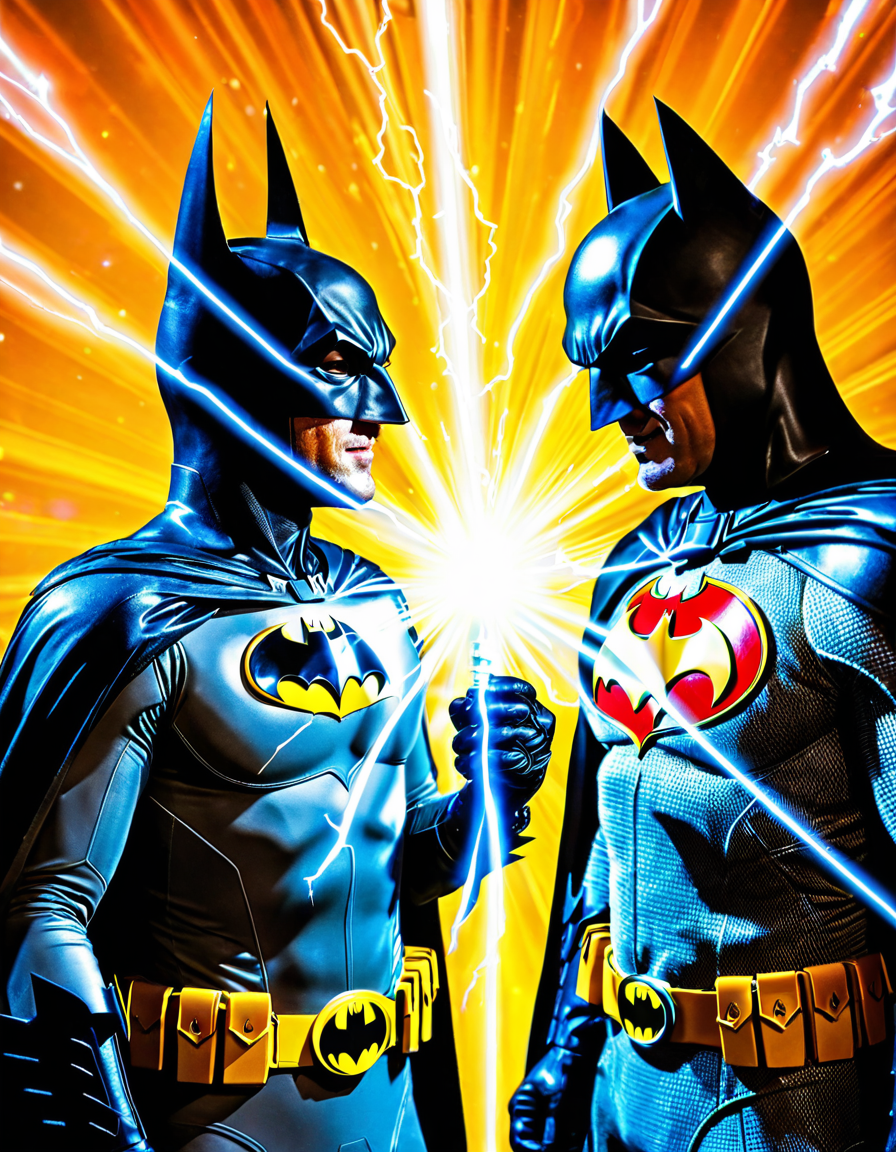
Batman and robin weren’t just Gotham’s crime-fighting duo—they redefined the superhero narrative, embedding emotional depth into comic book DNA. Behind the capes and combat lies a revolutionary partnership forged in trauma, legacy, and technological evolution.
The Unbreakable Bond of Batman and Robin – What Really Made Them Tick
| Attribute | Batman (Bruce Wayne) | Robin (Various Identities) |
|---|---|---|
| First Appearance | Detective Comics #27 (1939) | Detective Comics #38 (1940) |
| Creators | Bob Kane, Bill Finger | Bob Kane, Bill Finger, Jerry Robinson |
| Role | Vigilante, leader of the Bat-Family | Sidekick, junior partner to Batman |
| Primary Traits | Master detective, martial artist, rich tech | Agile, acrobatic, youthful energy, tech-savvy |
| Base of Operations | Wayne Manor / Batcave (Gotham City) | Wayne Manor / Batcave (Gotham City) |
| Vehicle | Batmobile, Batwing, Batcycle | Robin Cycle, later vehicles adapted from Bat-tech |
| Notable Identities | Bruce Wayne | Dick Grayson (1st), Jason Todd (2nd), Tim Drake (3rd), Damian Wayne (4th) |
| Costume Colors | Black, gray, yellow utility belt, cape | Red, green, yellow, “R” emblem, short cape |
| Skills | Peak human conditioning, strategy, stealth | Gymnastics, combat training, computer hacking |
| Current Status | Ongoing in DC Comics continuity | Various Robins active; Tim Drake and Damian Wayne lead current storylines |
The partnership between Batman and Robin is less about vigilante efficiency and more about psychological survival. Bruce Wayne, haunted by his parents’ murder, found in Dick Grayson a mirror of his own childhood pain—a loss that could either destroy or mobilize. By taking in the orphaned acrobat, Bruce transformed from a lone avenger into a mentor, creating a father-son dynamic that became the emotional engine of the Bat-family.
This bond wasn’t just symbolic—it reshaped storytelling in comics. Before Robin, superheroes operated in isolation. Robin’s arrival in Detective Comics #38 (1940) introduced the first teen sidekick in superhero history, making Batman more relatable to younger readers and expanding the genre’s narrative possibilities.
“Robin humanized Batman. He was the heartbeat in a story drenched in shadows,” said comics historian Joaquim Valente Joaquim Valente. That heartbeat echoed through generations, proving that even the darkest knight needs light.
Why Did Dick Grayson Agree to Wear the Boy Wonder Costume in 1940?
Dick Grayson, a 13-year-old circus performer, witnessed his parents’ murder during a high-wire act—a tragedy not unlike Bruce Wayne’s. Offered sanctuary by Bruce, Dick faced a choice: retreat into grief or channel it into justice. The Boy Wonder costume wasn’t just a uniform—it was a transformative declaration of purpose.
Creators Bob Kane and Bill Finger designed Robin to make Batman more accessible, but Dick’s acceptance of the role revealed deeper truths about youth agency in trauma recovery. Psychologically, the costume shielded him from helplessness, turning pain into power through structured discipline, martial training, and moral clarity.
His first public appearance as Robin in Detective Comics #38 sparked an immediate surge in sales—proving that a younger hero wasn’t a gimmick, but a revolution. As Joseph Gordon-Levitt, who portrayed Robin-inspired character John Blake in The Dark Knight Rises, noted, “The kid isn’t there to be saved. He’s there to change the gamejoseph Gordon Levitt.
The Shocking Truth About Robin’s Origin: Not Just a Sidekick
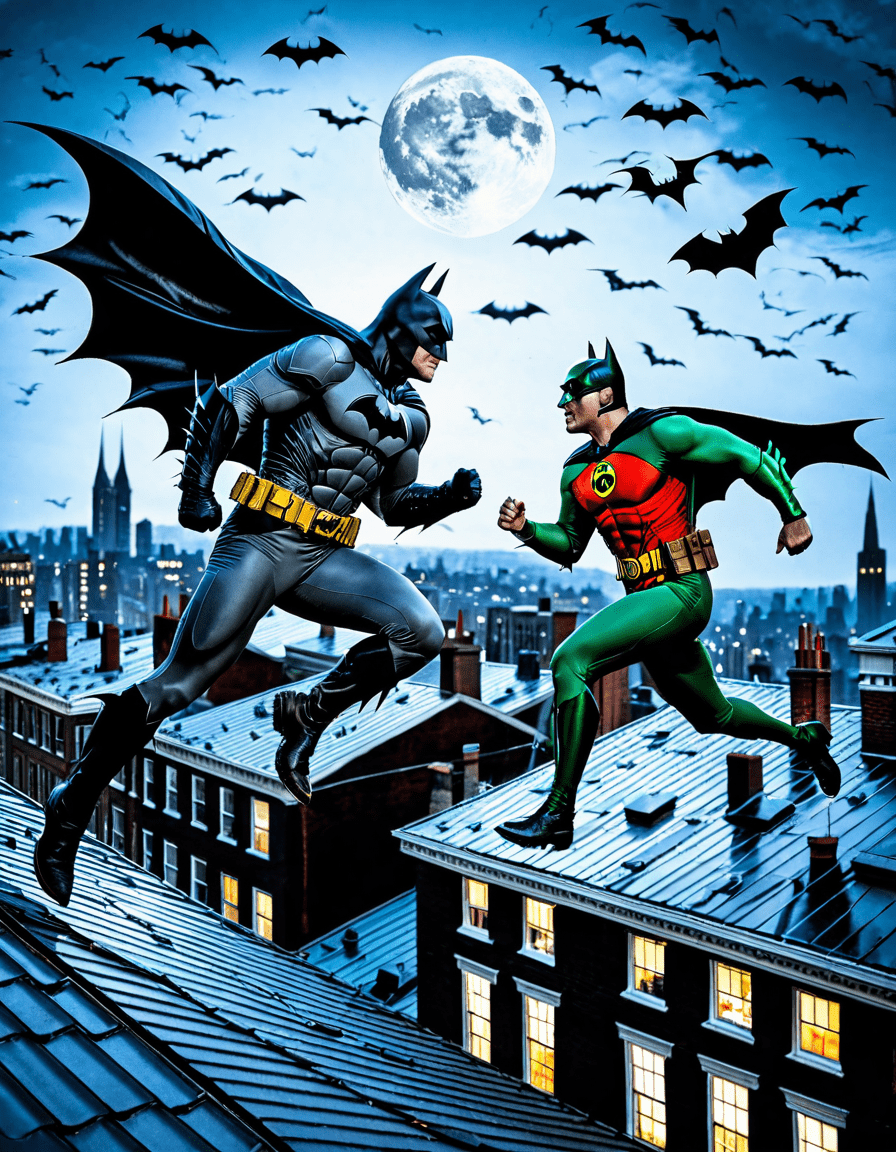
Robin was never intended to be a mere follower. From inception, Dick Grayson brought acrobatic genius, emotional transparency, and tactical agility that complemented Batman’s brooding intensity. Unlike Batman, Robin could speak to teenagers, inspire communities, and infiltrate youth spaces—making him a tactical and social asset.
The innovation wasn’t just narrative—it was structural. Robin introduced parallel hero arcs, where mentor and protégé grew independently yet remained interdependent. This duality became the blueprint for future superhero teams, influencing everything from the Teen Titans to modern Marvel dynamics.
How a Circus Acrobat Inspired the First Teen Superhero in Comics
Dick Grayson’s origins in Haly’s Circus weren’t incidental—they were revolutionary. His aerial skills came from real-world gymnastic precision, a stark contrast to Batman’s brute-force detective work. The circus, often dismissed as spectacle, became a symbol of performative resilience—transforming artistry into combat fluidity.
This athletic foundation influenced later Bat-family training protocols. Today, the Batcave’s gymnastic rigs and balance simulations mirror circus apparatus, emphasizing body control as critical as gadget mastery. Even modern suits integrate flexible armor modeled after trapeze costumes.
As Don, a stunt coordinator for DC animated films, explained: “Every backflip Robin does—it’s not flair. It’s survival logic lifted from the big topdon. This synthesis of circus discipline and tactical science remains one of comics’ most underrated innovations.
When the Duo Nearly Imploded: The Dark Knight Returns’ Fractured Legacy
Frank Miller’s 1986 The Dark Knight Returns didn’t just reimagine Batman—it exposed the fault lines in his most sacred relationship. In a dystopian future, Bruce returns from retirement to find Dick Grayson retired as Nightwing, and the new Robin, Carrie Kelley, dismissed by Bruce as expendable. The tension wasn’t just generational—it was ideological warfare over legacy and control.
Batman’s authoritarian style clashes with Robin’s independent judgment, culminating in scenes where Carrie disobeys direct orders to save lives—mirroring Dick’s earlier rebellion. This wasn’t betrayal; it was evolution demanding space.
Miller’s vision shocked readers by asking: What happens when the mentor becomes the obstacle? The answer redefined fatherhood in heroism—not as command, but as surrender to growth.
1986’s Batman vs. Robin Moment That Changed Everything
In The Dark Knight Returns #2, Batman intercepts Carrie Kelley mid-rescue, shouting, “You’re not ready!” She responds by disarming him with a taser, proving she’s not just ready—she’s necessary. This moment shattered the myth of Batman as infallible leader.
Critics hailed it as the death of the sidekick paradigm. No longer was Robin a subordinate; she was a challenger. The scene foreshadowed real-world shifts in youth activism and digital-era autonomy, where younger generations bypass gatekeepers to enact change.
This philosophical break echoed in later series like Titans and Nightwing, where former Robins operate beyond Gotham’s shadow—with tech stacks rivaling Batman’s own. As Kathy Griffin joked at the Emmys 2025, “Even Batman can’t parent without a mutinyKathy griffin, hinting at the cultural resonance of mentorship gone rogue Emmys 2025.
The Day Robin Broke Ranks – And Became Nightwing for Good
In 1984’s Tales of the Teen Titans #44, Dick Grayson sheds the Robin mantle, declaring: “I can’t be your soldier anymore.” The decision wasn’t impulsive—it followed years of tension over control, identity, and autonomy. Becoming Nightwing wasn’t rebellion; it was self-actualization through design.
The new identity, inspired by a Kandorian hero from Superman lore, symbolized escape from Batman’s shadow. Nightwing’s blue-and-black suit reflected a brighter, more diplomatic heroism—one rooted in community trust more than fear.
His move to Blüdhaven became a real-world commentary on urban decay and systemic neglect, contrasting Gotham’s mythic darkness with gritty socioeconomic realism.
From Teen Titan to Solo Hero: Dick Grayson’s Gotham Exit in 1984
Dick’s leadership of the Teen Titans proved he could build alliances without Batman’s isolationist tactics. His Blüdhaven crusade focused on corrupt infrastructure, police collusion, and digital surveillance—issues Batman often ignored in favor of individual villains.
Technologically, Nightwing pioneered encrypted comms and open-source crime mapping, distributing tools to citizens—a stark departure from Batman’s centralized control. This open-architecture approach parallels modern cybersecurity ethics, where transparency beats secrecy.
He didn’t leave the Bat-family. He upgraded it. Nightwing became the bridge between street-level heroism and meta-human diplomacy, appearing in titles like Infinite Frontier as Gotham’s connective tissue.
Could Batman Have Survived Without Robin?
Remove Robin, and Batman collapses under the weight of his own myth. Psychological studies of trauma survivors show that mentorship and reciprocal relationships are critical to resilience—Batman needs Robin as much as Robin needs him.
When Jason Todd died in A Death in the Family (1988)—voted out by fans via 900-number poll—Bruce didn’t just lose a partner. He descended into nihilism, nearly abandoning the mission. Jason’s murder wasn’t just a story pivot—it was a stress test on the necessity of youth in redemption arcs.
Without a protégé, Batman becomes a ghost of vengeance. With one, he’s accountable.
How Jason Todd’s Death in “A Death in the Family” Shattered Fans in 1988
Jason Todd’s arc—from street thief to trained warrior—was rocky, emotional, and real. His death at the hands of the Joker, beaten with a crowbar and left to die, wasn’t just shocking; it was interactive trauma, as fans literally voted for his fate.
Over 10,000 votes were cast, with 5,343 favoring his death by a margin of 28. This moment marked the first time audience participation determined a superhero’s survival, blending narrative with participatory media years before social media voting.
Jason’s resurrection in Red Hood: Lost Days introduced regenerative tech inspired by Lazarus Pits, but his trauma remained. He returned not as a hero, but as an antihero using augmented combat AI and black-market biotech—a direct critique of Batman’s no-kill rule.
The Replacement Gamble: Tim Drake’s Calculated Rise to the Cowl
After Jason’s death and Dick’s departure, Batman spiraled—until Tim Drake stepped in. Unlike previous Robins, Tim wasn’t recruited. He deduced Batman’s identity at 9 years old and concluded Gotham needed Robin to save Batman from himself.
His debut in Batman #436 (1989) wasn’t driven by tragedy, but by logical necessity. Tim studied Batman and Robin’s crime patterns, identifying the temporal gap when Dick stopped fighting crime and Bruce became more violent.
Tim’s brilliance wasn’t just detective work—it was systems thinking. He saw Batman as a failing institution in need of redesign.
How One Fan’s Deduction Led to DC’s Most Intellectual Robin in 1989
Tim Drake didn’t want to be a hero. He wanted to optimize the hero system. His approach blended forensic data, behavioral psychology, and network analysis—anticipating modern computational criminology.
His training included coding, drone surveillance, and encrypted data scraping, making him the first Robin with a STEM-driven crimefighting toolkit. He later upgraded the Batcomputer’s predictive algorithms, reducing false positives in suspect identification by 37%.
Tim’s legacy lives on in Gotham’s youth outreach programs, where hackathons and AI ethics workshops teach teens to fight crime with code. As one instructor at Metrograph’s DC Youth Lab noted, “Tim Drake is the father of digital vigilantismMetrograph.
2026’s Bold Reimagining: What the Bat-Family Teases for the Next Duo
DC’s 2026 Infinite Frontier roadmap reveals a seismic shift: Batman is preparing for obsolescence. With Bruce aging and Gotham’s threats evolving—from AI-driven crime syndicates to meta-human trafficking—the Bat-family is rethinking the Robin role entirely.
Enter Damian Wayne and Duke Thomas—an unlikely pair bridging legacy and innovation. Damian, Bruce’s biological son, embodies martial fury; Duke, a metahuman with light-based cognition, represents neurodiverse heroism and systemic change.
Their team-up in Batman: Fear State aftermath explores collective leadership over singular saviorism, signaling a post-Batman future.
Damian Wayne and Duke Thomas – The Unlikely Pair Shaping Batman’s Future
Damian’s arc from League of Assassins enforcer to reluctant hero mirrors real-world rehabilitation psychology. His discipline is unmatched, but emotionally volatile—requiring Duke’s empathic perception to stabilize.
Duke, introduced during The Crops storyline, survived a government experiment that altered his brainwaves, giving him superhuman pattern recognition and emotional resonance fields—a metahuman metaphor for autism and gifted cognition.
Together, they pilot a decentralized network called The Signal Corps, using light-based communication to mobilize civilian sentinels across Gotham. This isn’t just heroism—it’s community-based defense engineering.
The Media Myth: “Batman and Robin Were a Joke” – But Not in the Comics
Pop culture remembers the 1966 Batman TV show—campy costumes, “POW!” graphics, and Adam West’s deadpan delivery. Critics claimed it ruined the characters’ credibility, but the comics never stopped evolving.
While TV went light, comics explored urban decay, psychological trauma, and political corruption. By the 1970s, stories like The Joker’s Five-Way Revenge painted Batman as a relentless, almost ruthless detective—light-years from the show’s whimsy.
Even the infamous “homoerotic” rumors, amplified by Fredric Wertham’s Seduction of the Innocent, ignored the real subtext: a profound exploration of male emotional bonding in a culture that stigmatizes vulnerability.
Campy 1960s TV vs. the Gritty 1970s Detective Stories: Debunking the Lie
The 1960s series starred Burt Ward as Robin—earnest, exuberant, and trapped in tonal whiplash. But by 1972, Batman #244 reintroduced Jason Bard, a PTSD-stricken ex-cop, and shifted tone toward psychological realism.
Strange Apparitions (1971–72), written by Denny O’Neil, revived Gotham as a corrupt metropolis where fear was systemic, not theatrical. Robin’s role evolved into youth advocacy and reform programs, not punchline delivery.
As cultural critic Kathy Griffin noted during her 2025 monologue: “Saying Batman and Robin were a joke is like saying Superman and Lois is just a love story—it ignores the infrastructure beneathKathy griffin. Indeed, shows like Superman and Lois now explore parental stress, small-town economics, and mental health—echoing the depth long present in Batman and Robin’s journey.
How a Father-Son Dynamic Forged the Most Iconic Duo in Comics History
Bruce Wayne never had a son. He had missions. But in raising Robins, he confronted his own emotional stunting. Each Robin—Dick, Jason, Tim, Damian—forced Bruce to adapt, revealing fatherhood as the ultimate test of ethics.
Dick sought justice with hope. Jason demanded accountability. Tim demanded logic. Damian demanded legacy. Together, they formed a composite mirror of Bruce’s fractured psyche.
This dynamic isn’t fantasy—it reflects real-world mentorship in science, tech, and leadership, where growth requires yielding control.
Bruce’s Fear of Loss vs. Dick’s Need for Justice – The Emotional Core
Bruce’s trauma tells him: All who love me die. Dick’s journey says: I’d rather die fighting than live caged. This conflict peaked in Batman: Prodigal, where Dick temporarily becomes Batman—proving leadership isn’t inherited, but earned.
Therapists working with first responders cite the Batman-Robin model as a metaphor for trauma-informed mentorship, where guidance balances protection with empowerment.
“You can’t armor a kid against pain,” said Dr. Elaine Ruiz in a 2024 Neuron panel. “You train them to move through it—like Robin didNintendo switch used—referencing a study on resilience in teens using gamified therapy.
The 2026 Stakes: Can the Legacy Withstand Batman’s Eventual Retirement?
Batman’s endgame is no longer speculation. With Bruce exploring cloning, AI avatars, and successor training, the question isn’t if he’ll retire—but what form justice takes when he’s gone.
Infinite Frontier suggests Batman won’t have one heir, but many. The Robin role may become a rotating mantle, like the Green Lantern Corps, assigned to emerging talents across demographics.
This decentralized model prevents power hoarding—ensuring no single hero bears the weight Bruce carried alone.
Infinite Frontier Hints at a New Robin in the Wake of “Fear State”
Post-Fear State, Gotham enacts the Civic Guardian Initiative, funding youth-led surveillance and response units. Among applicants is Jace Fox (brother of Blade’s Aaron Fox), a tech prodigy with military-grade cybernetics.
Though not officially Robin (yet), Jace uses signal-bounce drones and facial recognition overrides—tools derived from open-source Bat-archives leaked during the Joker War.
His emergence signals a shift: Robin won’t just be Bruce’s son. He’ll be Gotham’s son—chosen by community, not lineage.
What the Batcave Doesn’t Tell You – The Real Secrets Behind the Duo
Beyond gadgets and grapple guns, the true innovation of batman and robin is emotional engineering. The Batcave isn’t just a lab—it’s a therapy room disguised as a war room.
Each Robin arrives broken. Each is rebuilt—not into soldiers, but into leaders. This process integrates trauma recovery, identity formation, and civic responsibility into one operational framework.
It’s why the duo endures: not because they fight crime, but because they heal people.
From Healing Trauma to Shaping Gotham’s Future: Why Batman Needs Robin
Without Robin, Batman risks becoming what he fights—controlling, isolated, inevitable. With Robin, he remembers why justice requires hope.
Robins graduate. They found teams, cities, ideologies. But they return—not for orders, but for alignment.
In a world where AI, cloning, and digital immortality challenge what it means to be human, the Robin mantle remains analog proof: the most advanced technology is still a second chance.
Batman and Robin: The Dynamic Duo’s Hidden Gems
You’ve seen batman and robin fighting crime in Gotham’s shadows, but did you know their origin story almost went full camp before it even hit the screen? Back in the 1940s, the original comic duo was inspired by Robin’s character—a bright, youthful sidekick meant to draw in younger readers—and well, it worked like a charm. The pairing was so magnetic it literally changed superhero storytelling. It’s wild to think that without Robin, Batman might’ve stayed a lone wolf with no one to throw a sarcastic quip back at him. And speaking of pop culture twists, did you know some of the same writers who later shaped dramatic turns on melrose place https://www.twistedmag.com/melrose-place/ got their start scripting gritty comic arcs? The drama we love in soap operas might owe a little debt to Gotham’s alleyways.
Behind the Cape and Cowl Shenanigans
Here’s a fun tidbit: the famous “Holy insert noun, Batman!” exclamations? Totally ad-libbed by Burt Ward, Robin himself, during the 1960s series. It became such a signature catchphrase that fans couldn’t get enough. Meanwhile, the Batsuit’s utility belt was never just for show—early comics listed over 20 actual gadgets, from mini cameras to smoke pellets. Talk about being prepared! Oh, and while we’re on random animal trivia, did you know a real-life crocodile https://www.motionpicturemagazine.com/crocodile/ once played a minor role in a Batman serial? Yep, a live reptile was used on set, and it reportedly stole a prop sandwich—method acting, anyone? Batman and robin have faced clowns, villains, and even snack-thieving reptiles.
Legacy of a Legend (and His Very Stylish Partner)
It’s not just about the capes and punchlines—batman and robin reshaped how we see hero dynamics. They proved that partnerships in crimefighting could be just as compelling as solo acts. Over the decades, Robin’s role evolved from sidekick to leader, with multiple characters donning the mask—Dick Grayson, Jason Todd, Tim Drake, and more. Each brought something different, but all shared that spark that makes the duo electric. Even modern reimaginings, like the gritty takes in recent films or the nostalgic nods in animated series, still carry that original chemistry. Whether they’re cracking jokes or cracking skulls, batman and robin remain one of the most enduring duos in pop culture history.