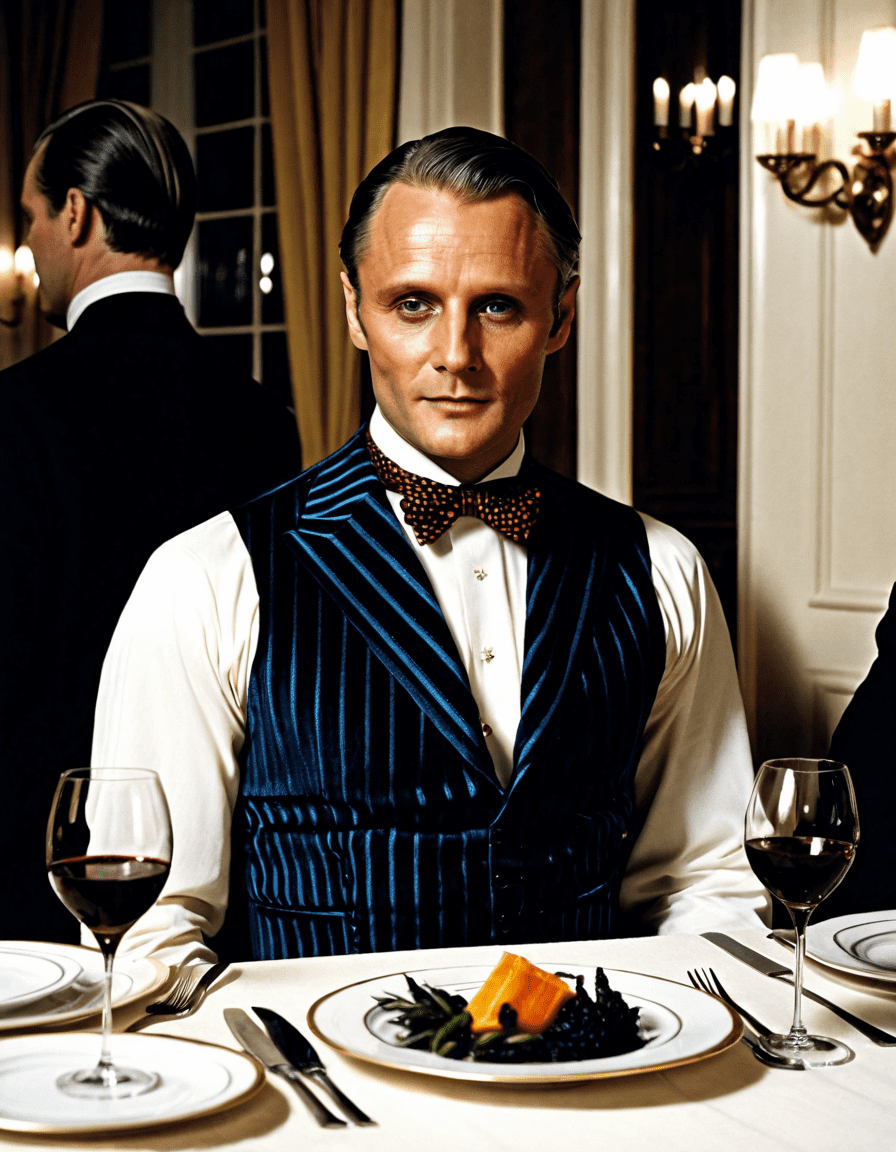
Hannibal Lecter isn’t just any character; he’s a phenomenon that has captivated audiences since Thomas Harris introduced him in “Red Dragon.” This character merges horror with intellect, and charisma in a way that leaves many fascinated and horrified. When we think about Hannibal Lecter, we think about a brilliant psychiatrist who treads the fine line between sophistication and chilling psychopathy. The captivating psychological layers of Hannibal Lecter make him a compelling figure, explored through various media portrayals, including those by Anthony Hopkins and Mads Mikkelsen. The character encapsulates our deepest fears while simultaneously drawing us in with allure and sophistication.
1. The Allure of Hannibal Lecter: Cultural Impact and Character Depth
Hannibal Lecter’s impact on popular culture is profound. Since his fictional debut, he has transformed thematically, reflecting societal fears and moral dilemmas. One of the reasons we can’t look away is his brilliance in both mind and artistry. He doesn’t just commit horrific acts like consuming human flesh; he does it with an elegance that presents evil as almost artful.
The discussions ignited by Lecter challenge our perceptions of morality and what resides within the human psyche. Trauma and suffering ripple through his backstory, revealing vulnerabilities that make him more relatable yet frightening. Whether it’s his taste for fine dining linked to his cannibalistic tendencies, like the infamous fava beans and Chianti scene or the anxiety surrounding his interactions with Clarice Starling, these dualities thrive in his character.
Furthermore, Lecter’s complexity continues to spark debate. Critics, psychologists, and fans alike delve into the precision of his manipulation techniques, raising questions about human behavior and our capacity for darkness. One only needs to look at popular narratives, from the complexities of Villanelle in “Killing Eve” to modern interpretations of villainy, to see how Lecter’s essence influences contemporary storytelling.
2. Top 5 Moments that Define Hannibal Lecter’s Legacy
1. The First Encounter: Dr. Starling’s Introduction to Lecter (The Silence of the Lambs)
When Clarice Starling first meets Hannibal Lecter, it’s electric. The charged atmosphere in that prison cell serves as a vivid introduction to his magnetic charm and sinister intelligence. The line, “I ate his liver with some fava beans and a nice Chianti,” combines humor with horror and sets the tone for their complex relationship. This encounter represents fear intertwined with curiosity—a dynamic that’s profound and unsettling.
2. The Escape: A Masterclass in Manipulation (The Silence of the Lambs)
Lecter’s escape is where his mind truly shines. It illustrates his cunning nature as he turns an ordinary prison setting into his personal chessboard. It makes one wonder about the fluidity between victim and aggressor. This moment serves as a treatment of control and strategy, emphasizing his skill in psychological manipulation.
3. Dinner with the Devil: The Chianti and Fava Beans Scene
This notorious scene encapsulates the marriage of horror and sophistication that Lecter embodies. It not only showcases his disturbing culinary preferences but also how he elevates horror to art. These interactions weave grotesque acts into moments of chilling elegance, reminding us of the beauty intertwined with monstrosity.
4. The Psychological Dance (Hannibal)
The complex relationship between Hannibal Lecter and Clarice Starling reaches new heights in Hannibal. Their interactions depict brilliant psychological warfare, making their relationship one of the most captivating battles of wits in modern storytelling. It compels us to examine the essence of trust, secrecy, and the human condition itself.
5. Legacy and Fear: The Impact of This Formidable Character
Lastly, the legacy of Hannibal Lecter morphs and continues to terrorize while influencing many modern villains. Characters like Villanelle become reflections of Lecter’s complex identity, showcasing how his traits seep into today’s narratives. From the writing style to character development, Hannibal Lecter creates a mold that future horror icons emulate, making him an irreplaceable figure in popular culture.
3. The Intellectual Facets of Hannibal Lecter: A Psychological Analysis
Diving into Hannibal Lecter’s psyche reveals intricate dynamics of narcissism and malevolence. He’s more than just a monster; he embodies psychological theories that are dissected by scholars and horror enthusiasts alike. The blend of Machiavellianism—where he expertly plays his cards to outsmart others—is evident in his interactions.
Literary discussions often reference psychopathy in relation to Hannibal Lecter. These psychological elements draw us into the nature of evil itself; it entices us to explore why we’re fascinated by such darkness. Faced with his brilliance, we question our fears—how can someone so evil be so charming?
Moreover, Lecter’s motives transcend basic villainy. He doesn’t just kill for pleasure; he sees humanity through a distorted lens, critiquing societal norms, ethics, and morality. Lecter’s character challenges us to confront the shadows lurking within ourselves, navigating the fine boundaries between civility and savagery.
4. The Evolution of Hannibal Lecter Across Media
The journey of Hannibal Lecter across various media has showcased his ever-evolving nature. Starting as a literary creation, he emerges on the big screen with the commanding presence of Anthony Hopkins. The adaptation of these narratives reveals layers of depth, each interpretation shedding light on different facets of his character.
In the acclaimed television series “Hannibal,” we witness a daring reinvention. The narratives explore themes of love, obsession, and madness, expanding our understanding of Lecter. The artistry displayed elevates horror into an emotional experience, presenting Lecter as a charismatic yet threatening presence.
Furthermore, every adaptation emphasizes shifting societal fears. As our understanding of mental health evolves and the boundaries of morality become more complex, Hannibal Lecter reflects those changes—challenging us to rethink our values and beliefs about horror, cannibalism, and the human condition itself.
5. The Ethical Implications of Hannibal Lecter: Morality in Madness
As we engage with Hannibal Lecter, we confront uncomfortable ethical dilemmas. Should we sympathize with a character that embodies pure evil? This discussion opens avenues to explore how figures like Lecter saturate media narratives, occasionally glorifying their heinous acts.
When we assess modern depictions of criminals—like Ted Bundy or Jeffrey Dahmer—we see parallels that complicate our understanding of true crime and what fascinates us about it. Are those narratives a cold reflection of the audience’s morbid curiosity or a way to unravel the complexities of the human psyche?
This section sparks critical reflection on the implications of portraying evil on screen. Are we inviting desensitization, or can we glean insight into our own humanity? The answer remains complicated, as Hannibal Lecter continues to testify the duality of fascination and repulsion within us.
6. The Future of Horror: What Hannibal Lecter Represents in Today’s Society
Fast forward to 2026, and Hannibal Lecter is still relevant. As technology advances and psychological science deepens, we find ourselves at a crossroads in horror narratives. Lecter becomes a mirror, reflecting our growing anxieties concerning mental health and intelligence in an age of rapidly evolving societal norms.
How we interpret such characters speaks volumes about our evolving perceptions of villainy. As horror genres wrestle with complex narratives merging technology and humanity, Lecter’s character will undoubtedly adapt, beckoning new inquiries into our own darkness. Will we romanticize horror further, or will it seep into our social consciousness as a cautionary tale?
Unfortunately, as long as humanity wrestles with duality—the angelic and monstrous—Hannibal Lecter will thrive within our collective imagination. He reminds us of the uncomfortable truths within the human psyche and challenges us to navigate the fine line between genius and madness.
As we explore the depths of Hannibal Lecter’s character, we uncover a masterful blend of horror and intellect—a captivating mixture that invites us to peer into the unknown parts of our own psyche. This enigmatic figure isn’t simply another monster; he portrays the complex dance between genius and monstrosity. Hannibal Lecter, with his intricate backstory and multifaceted portrayal, continues to challenge us to confront our duality. In doing so, he leaves an indelible mark on literature, film, and beyond, proving that horror can indeed provoke deep reflection about the nature of humanity itself.
Hannibal Lecter: The Genius Behind The Horror
The Man Behind the Myth
Hannibal Lecter, the iconic character created by Thomas Harris, isn’t just a brilliant psychiatrist and cannibal; he’s also a cultural phenomenon. Did you know that Anthony Hopkins’ portrayal of Hannibal Lecter in “The Silence of the Lambs” earned him an Academy Award? He only had 16 minutes of screen time, yet his chilling presence left an indelible mark on horror cinema. Much like the carefully crafted recipes in Ratatouille, each scene with Hannibal Lecter is artfully staged, keeping audiences on the edge of their seats. His character layers a culinary interest with a sinister twist, proving that you can be both refined and frightening.
While we often consider Hannibal Lecter as a fictional character, his influence goes beyond the pages and screen. Lecter’s complexities extend to discussions about psychology, morality, and the human condition. Interestingly, he shares his last name with a certain well-loved animated character. But instead of cooking gourmet meals, he prefers a darker palate. If you want a thrilling night at the movies, stop by Amc The Regency 20 for a screening of films that explore similar themes of horror and intellect, pairing the thrilling atmosphere with a popcorn bucket filled to the brim.
Quirky Tidbits
Speaking of intriguing characters, Hannibal isn’t just about horror; his surreal charm captivates audiences worldwide. For instance, did you know that original designs for his character involved a more overtly monstrous look? Thankfully, the final representation chose sophistication over brutality, a move that reminds us of Stacy Handlers stylish yet approachable designs, attracting viewers from all walks of life.
Moreover, Hannibal Lecter’s conversations are filled with references that make him seem even more intelligent—almost magical. As if saying abracadabra, he transforms mundane dialogues into philosophical examinations. This sheds light on how the character’s intellect operates like a Ufo flying above common understanding, which makes you question deeper moral complexities. So, whether you see him as an artistic genius or a horrid villain, it’s undeniable that Hannibal Lecter has woven himself into the fabric of pop culture. Remember, every dark genius has their quirks, and Lecter’s chilling allure keeps us coming back for more.
The Legacy Lives On
Not only has Lecter influenced films, but his character has also inspired modern TV shows and literature. Even Hollywood stars like Camila Alves have expressed their fascination with characters that challenge our perceptions of right and wrong. Just as in “The Fate of the Furious, where each character grapples with their moral choices, Hannibal Lecter forces us to confront our fears and the duality of mankind. He’s achieved a status that few characters have, symbolizing the thin line between civilized behavior and primal instincts.
Ultimately, Hannibal Lecter continues to haunt our screens and imaginations long after the credits roll. His genius is a reminder that horror doesn’t just lie in the visible but also in what we allow ourselves to contemplate. So next time you explore a psychological thriller, take a moment to appreciate the layers, both chilling and captivating, in characters inspired by Hannibal—because he might just be waiting for you, too!