Agatha Christie’s “Murder on the Orient Express” remains one of the most celebrated works of detective fiction, and it’s not hard to see why. Since its publication in 1934, it has enthralled readers and audiences alike with its intricate plot and deep psychological themes. The narrative has gained a fresh spotlight thanks to adaptations, like the 2017 film, continuously igniting conversations about its insights into human nature and morality. Today, we’ll explore seven key elements that exemplify why “Murder on the Orient Express” is a timeless classic in crime literature and how it compares to other notable works such as “The Fall of the House of Usher,” “The Virgin Suicides,” “The Birdcage,” and “Manchester by the Sea.”
7 Key Elements of “Murder on the Orient Express” That Define Its Legacy
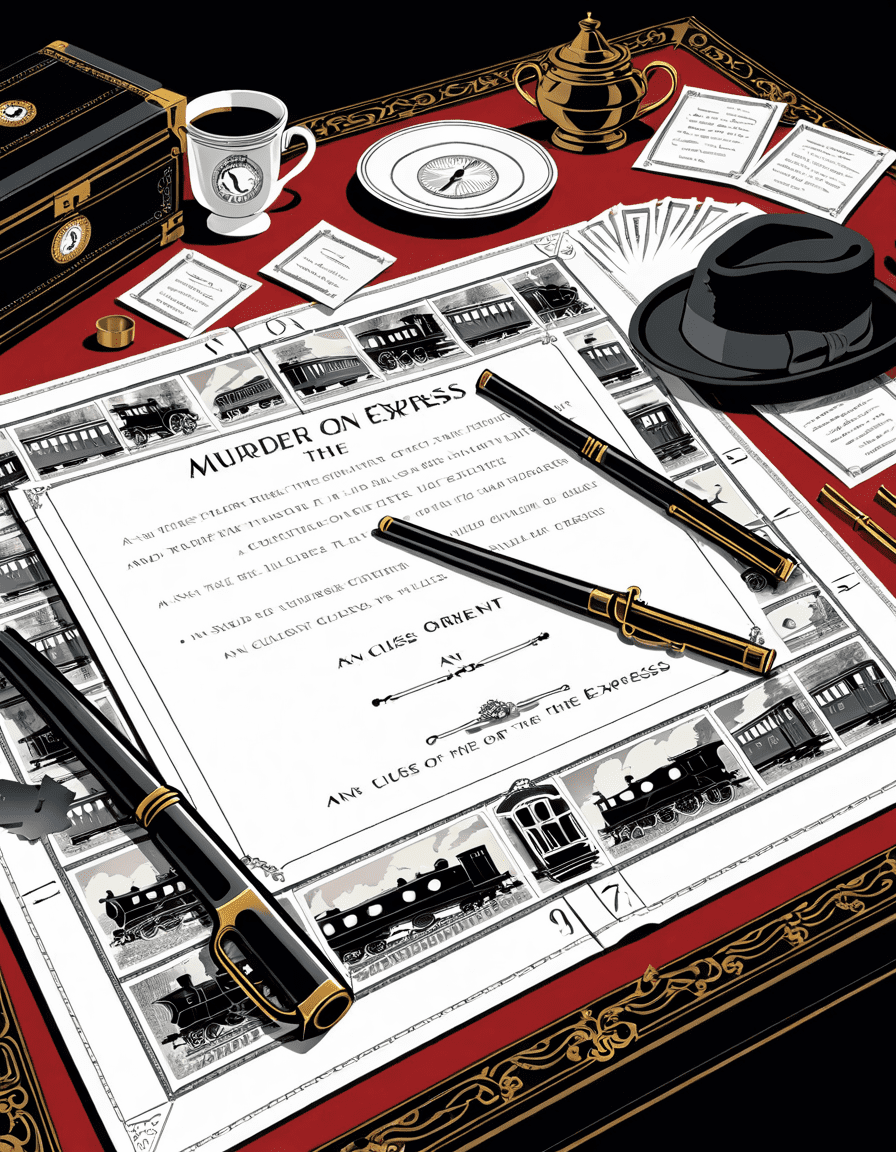
1. Complex Characters and Motivations
At the core of “Murder on the Orient Express” is a cast of multi-layered characters. Each passenger has a unique background, contributing to a rich tapestry of motivations. From the brilliant detective Hercule Poirot to the other passengers, every character has a story that intertwines with the murder mystery. For instance, their interconnected histories present themes of justice and revenge that resonate profoundly. This level of character exploration aligns with the nuanced personalities found in “The Virgin Suicides,” where each Lisbon sister represents a specific angle of adolescent despair.
2. The Notion of Justice
Justice is a recurring theme in Murder on the Orient Express. Poirot’s investigation forces readers to consider significant moral questions. As he uncovers the truth about Ratchett’s murder, the idea of vigilante justice looms large. Unlike typical crime narratives where the law prevails, Christie challenges us to ponder whether taking the law into one’s own hands can ever be justified. This ethical ambiguity echoes the heart-wrenching dilemmas depicted in “Manchester by the Sea,” where choices about retribution are deeply complex and personal.
3. The Role of Setting
The Orient Express train acts as more than just a backdrop; it’s a character in its own right. The confined space heightens tension and emotions, creating a microcosm filled with secrets. This distinctive setting draws parallels to Edgar Allan Poe’s “The Fall of the House of Usher,” where the decaying mansion reflects decay and tragedy. In both narratives, readers question the essence of reality and sanity against confined and claustrophobic landscapes.
4. Narrative Structure and Unreliable Narrators
Christie’s clever use of an unreliable narrator adds layers of intrigue and uncertainty. Each character’s account offers distinct perspectives, compelling the audience to engage actively with the unfolding events. This fragmentation of truth invites comparison to films like “The Birdcage,” where multiple viewpoints create a tapestry of humor and drama. By piecing together the characters’ testimonies, readers become essential detectives in the narrative, skillfully leading to the resolution.
5. Themes of Memory and Trauma
Memory is another crucial thread woven into Murder on the Orient Express. Each character’s backstory is intertwined with trauma, shaping their motives and present actions. Christie invites readers to reflect on how past events influence current decisions. This theme resonates with the bittersweet reminiscence depicted in “The Virgin Suicides,” where nostalgia is layered with loss. The exploration of memory serves to deepen the emotional impact of the story.
6. The Impact of Adaptation
The numerous adaptations of “Murder on the Orient Express,” from stage productions to films, showcase its lasting allure. The 2017 film introduced the classic story to a modern audience while presenting new interpretations of timeless themes. This trend parallels the fresh takes seen in “The Birdcage,” where historical narratives are reimagined for contemporary relevance. The adaptation process not only reinvigorates interest but also challenges creators to balance original intentions with today’s cultural contexts.
7. The Universal Appeal of Mystery
Ultimately, Murder on the Orient Express captures the everlasting fascination with mystery. Its blend of psychological insight, moral ambiguity, and rich storytelling captivates readers and viewers alike over generations. This enduring appeal is mirrored in the intricate human relationships explored in tales like “Manchester by the Sea,” where the complexities of life drive the narrative forward.

Innovative Perspectives on Agatha Christie’s Legacy
As we delve into the essential elements of “Murder on the Orient Express,” it’s clear that Christie’s work goes beyond mere entertainment. It dares readers to confront profound questions regarding morality, justice, and the human experience. By comparing this classic with other influential narratives, we can appreciate how literary works shape our understanding of crime and morality in a broader context.
Christie’s unparalleled ability to intertwine tales of intrigue with significant philosophical inquiries illuminates her position in the literary world. Much like the discerning insights brought forth in The Fall of the House of Usher and The Virgin Suicides, Murder on the Orient Express does more than entertain; it sparks thought, reflection, and ongoing dialogue. In the end, we aren’t just reading a mystery; we’re engaging with a work that challenges our views and invites us to reflect on our own moral compass.
In conclusion, “Murder on the Orient Express” isn’t just a gripping mystery; it stands as a landmark in the literary landscape. Through its multifaceted characters, thought-provoking themes, and rich narrative style, Christie has created a masterpiece that continues to resonate. So, whether you’re a longtime fan or a newcomer, buckle up as you embark on this thrilling ride through the twisted paths of human nature and justice. This story is one you won’t want to miss!
Murder on the Orient Express: Gripping Mystery That Shocked All
Behind the Scenes and Fun Facts
Did you know that “Murder on the Orient Express” was adapted from Agatha Christie’s novel of the same name? Christie, the Queen of Crime, wrote this thrilling tale in 1934, inspiring countless adaptations since. Interestingly, the version directed by Kenneth Branagh wasn’t the first; there was a 1974 movie featuring an all-star cast, including the legendary John Hurt, who brought depth to his character in a way only he could. It’s captivating to see how different actors have tackled the same characters – a bit like how the characters in Despicable Me 2 showcase different sides of villainy, but with a comedic flair!
When you think of train travel’s allure, nothing quite beats the luxurious vibe of the Orient Express. This famous train has decades of history, charming passengers since the late 19th century. It’s a real-life icon of adventure and romance. You could even say it pioneered cozy cinematic settings, much like how Air Buds brought you fun through sport and teamwork on-screen. Fun fact: the actual train made its last trip in 2009, but its legacy, much like a gripping episode of The Summer I Turned Pretty season 2 Episode 8, still captivates audiences today.
It’s fascinating to note how themes of betrayal and deception run deep in Christie’s story, drawing parallels to the tangled narratives we see in modern shows. For a good comparison, think of Jerry Wests influence in basketball—a game of strategy and intrigue. Additionally, with many intriguing twists and turns, the story ties into a broader discussion about morality similar to what Mike Shinoda explores in his music. Moments in “Murder on the Orient Express” challenge viewers to think critically about justice and truth, leaving them guessing until the very last moment.
In the murder mystery landscape, Christie’s brilliant writing weaves an intricate plot that resonates across generations, just as Butter Bean combines whimsical charm with life’s lessons in his adventures. This connection reminds us how storytelling, whether through novels, movies, or music, binds people together. With all these captivating layers, it’s no wonder “Murder on the Orient Express” remains a timeless classic that keeps audiences on the edge of their seats.