In the wake of its surge in popularity, The Handmaid’s Tale has intricately woven itself into the fabric of modern discourse, serving as both a gripping narrative and a cautionary tale about the fragility of human rights. This article examines how the show’s portrayal of a dystopian society resonates with contemporary issues and what we can learn from it. The unsettling truths explored in The Handmaid’s Tale remind us of the constant vigilance required in defending our freedoms. Let’s dive into the alarming realities that make this series both provocative and relevant.
## Handmaids Tale: Dystopian Society and Its Terrifying Realities
The Handmaid’s Tale episodes effectively illustrate the transformation of a functional society into one marked by fear and oppression. Each episode delicately unfolds the steep rise to totalitarianism through the lens of personal narratives, making it relatable despite its stark realities. The chilling journey begins with Gilead’s sudden takeover, where familiar societal norms evaporate overnight.
One significant episode, “Faithful,” reveals the critical loss of identity undergone by women in Gilead. This episode emphasizes the increasingly rigid societal structure that demands compliance from its citizens. Women, once vibrant individuals, are rendered mere vessels for reproduction. This distressing parallel is evident today in various global contexts, where women’s rights are under threat, highlighting an alarming similarity that exacerbates the narrative’s chilling undertones.
The transformation of the characters in each of the handmaids tale episodes demonstrates how easily society can revert to oppressive measures. As viewers, we experience the fear of losing our identities, reminiscent of recent events in many parts of the world. It compels us to question what it really means to be free.

Real-Life Parallels: The Handmaid’s Tale Cast as Cultural Icons
The influence of The Handmaid’s Tale cast extends beyond the screen, with actors embodying significant cultural symbols. Elisabeth Moss, who plays Offred, represents resistance and resilience, resonating particularly with feminist movements worldwide. Her character’s struggle serves as a testament to the fight for personal autonomy, inspiring many.
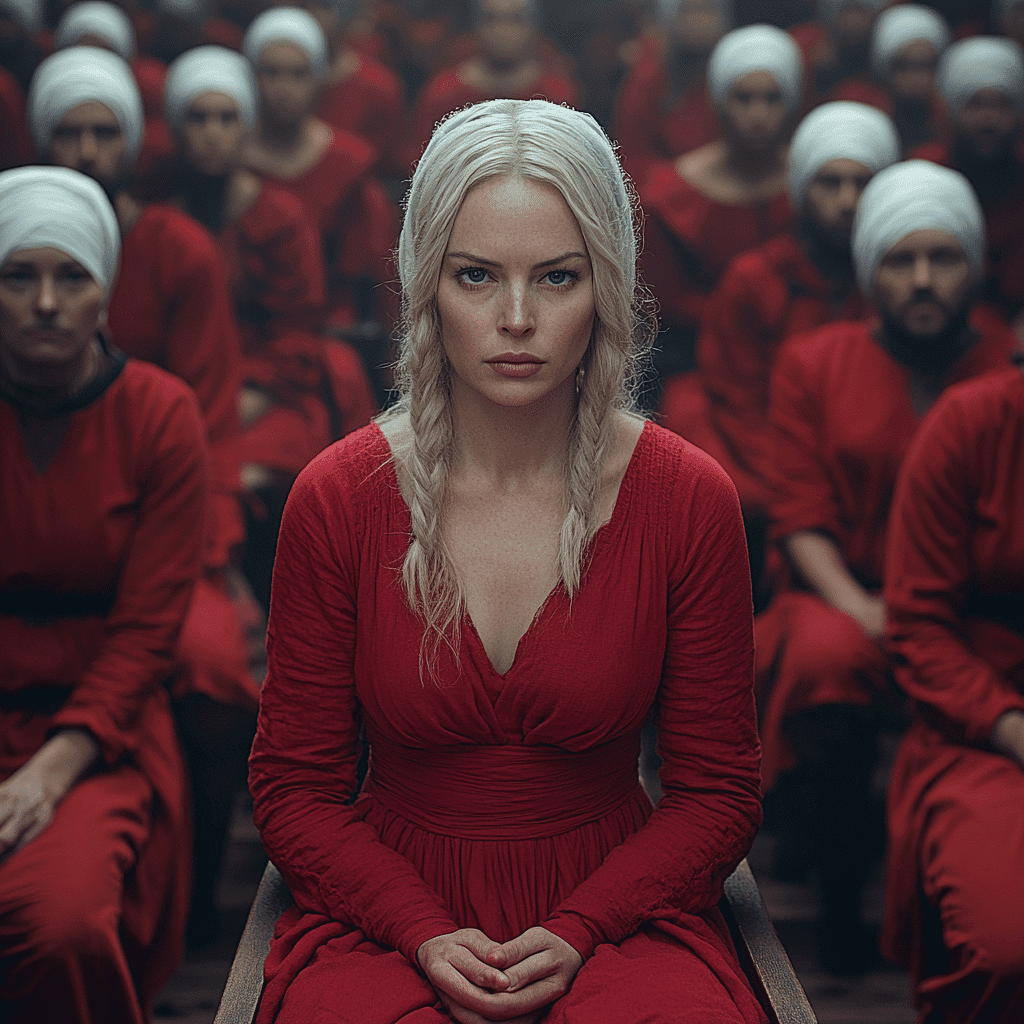
Elements from the show have seeped into popular protests, such as the “Handmaids” attending rallies for reproductive rights. During the 2023 Women’s March, participants donned the recognizable red cloaks and white bonnets, symbolizing not only solidarity but also a forewarning of potential dystopian outcomes if rights are not protected. This chilling representation of women’s rights serves as a powerful reminder that history can repeat itself if we aren’t careful.
The cultural resonance of the Handmaid’s Tale actors has transformed them into figures of activism. They harness their fame to promote essential discussions around gender equality and individual freedoms. Through their performances, they thrust pivotal issues into the spotlight, making the stakes of our choices feel very real.
Narrative Impact: Analyzing the Themes in The Handmaid’s Tale
Thematic analysis of The Handmaid’s Tale reveals deeply rooted societal critiques focusing on patriarchal oppression, environmental degradation, and surveillance. Gilead’s stark societal structure raises questions about compliance and rebellion, urging viewers to evaluate their relationship with authority and governance.
In one episode, “The Testaments,” we witness the interplay between power dynamics and personal choice. Characters grapple with their identities in a psychological game of survival. This theme resonates with ongoing debates on personal freedoms in various nations, extending the commentary of the series into significant real-world conversations regarding governance and civil liberties.
The narrative impact of The Handmaid’s Tale reaches far beyond entertainment; it sparks an essential dialogue. As viewers observe the deterioration of civil rights and the usurpation of power in Gilead, they can’t help but reflect on the fragility of their freedoms. This powerful storytelling challenges us to reevaluate our own society.
Gender Politics: The Handmaid’s Tale and Its Reflection on Society
Examining gender politics through The Handmaid’s Tale demonstrates an unsettling reflection of the current discourse around women’s rights. The character of Serena Joy, played by Yvonne Strahovski, adds an intricately layered perspective on female complicity in patriarchy. Her ascent, then subsequent entrapment within Gilead’s structure, serves as a warning about the dangers of sacrificing personal agency for power.
The implications are significant across various spheres, including public policy and reproductive rights debates. For instance, in the U.S. Supreme Court’s 2022 decision to overturn Roe v. Wade, the repercussions reverberated similarly to Gilead’s oppressive repertoire. The ramifications reveal how easily hard-won rights can be eroded, invoking a collective anxiety about the fragility of social progress.
The dialogue prompted by The Handmaid’s Tale urges us to reassess our beliefs and actions regarding gender politics. With numerous real-world parallels to draw from, we are faced with the task of safeguarding the rights of all individuals within our communities. Understanding these dynamics helps amplify the voices of those fighting for equality and equity in a society often tipping toward oppression.
The Cultural Resonance of The Handmaid’s Tale
As The Handmaid’s Tale continues to garner acclaim, its themes are becoming increasingly relevant amid political and social upheaval. The unique narrative framework allows for a critical discussion among audiences regarding collective societal responsibilities. With the world evolving, discussions around rights and governance rise to the forefront of public consciousness.
Films and series inspired by its narrative, such as “The Power” and “The Testaments,” share thematic parallels, embedding this dystopian narrative into public dialogue. Common themes include resistance against tyrannical governance and the fight for autonomy, which remain pressing issues across the globe. This cultural resonance shines a light on the necessity of activism and engagement in cultural narratives.
The feminist fight that emerged from the backdrop of The Handmaid’s Tale manifests not just on screens but in the streets. Activists, inspired by Gilead’s stark realities, rally to protect what’s at stake today. These echoes of activism remind us that stories like those of the handmaids tale can galvanize change off-screen, influencing movements worldwide.
Embracing the Lessons of The Handmaid’s Tale
The enduring significance of The Handmaid’s Tale stems from its ability to mirror and magnify the nuances of our own society. As we tackle the demands of our time, the stories portrayed challenge us to remain vigilant against subtle encroachments on our freedoms. Acknowledging these narratives empowers individuals to advocate for themselves and others, ensuring that dystopian realities remain firmly within the realm of fiction rather than becoming our shared fate.
Moreover, we must remember the lessons learned from Gilead: our rights, once lost, demand vigilant guardianship to preserve them for future generations. Discussions around governance, personal freedoms, and social equity are essential today, as we watch the narratives unfold in our lives. As tech and society intertwine, the evolving landscape can either spare us from dystopia or pave the way for it—it’s entirely up to us.
So let’s raise our voices, engage in meaningful conversations, and, as the handmaids say, “Nolite te bastardes carborundorum”—don’t let the bastards grind you down. Embracing these lessons may very well be our greatest defense against the birth of a new Gilead.
Handmaids Tale: Dystopian Society and Its Terrifying Realities
A Glimpse into Gilead
“The Handmaid’s Tale” isn’t just a chilling piece of dystopian fiction; it reflects historical truths that resonate today. Did you know that the story’s setting, Gilead, draws parallels with various real-life movements and authoritarian regimes? Just like in Gilead, societies have faced instances of extreme governance that limit personal freedoms, similar to how the Detroit Lions and 49ers match player stats show a clear dominance or weakness in a team’s performance on any given day.
Moreover, Margaret Atwood, the author, has mentioned that her inspiration for the regime’s treatment of women stems from history, particularly the brutal practices against women in different cultures. This fact draws a stark comparison to modern discussions around women’s rights, much like the public debates featuring figures like Robert Kennedy jr. and their implications on society today.
Culture Shock
The impact of “The Handmaid’s Tale” extends beyond literature into pop culture. Its themes have been echoed in various mediums, from fashion to television. Remember the swoon-worthy aesthetics of the show’s costumes? They sparked a trend in fashion, inspiring items like the Baggu Crescent bag, which mirrors the book’s themes of utility and simplicity. Plus, its iconic portrayal helps fuel discussions on women’s autonomy, placing it alongside engaging characters like those from the Guardians of the Galaxy.
Even more fascinating is how the show has connected viewers across different demographics, much like how diverse storylines unite fans in a series like Below Deck season 10. This ability to provoke thought and discussion about real-life issues while entertaining has solidified the place of “The Handmaid’s Tale” in both literature and social discourse.
Enduring Impact
The haunting visuals and themes of oppression in “The Handmaid’s Tale” have a lasting legacy. Atwood’s narrative continues to resonate, urging viewers to reflect on their societies. Interestingly, just as Sonic The Hedgehog 2020 reinvigorated a vintage franchise, Atwood’s tale breathes new life into critical conversations surrounding authority and freedom—showing that even fiction can drive social movements.
In today’s climate, the discussions around governance and personal rights are echoed in many facets of life. So, whether you’re diving into past tales or critiquing present realities, “The Handmaid’s Tale” serves as a reminder that fiction can mirror our truths, much like the re-emergence of pop culture characters that captivate audiences and provoke thought—reminding us that engagement in our world is paramount.